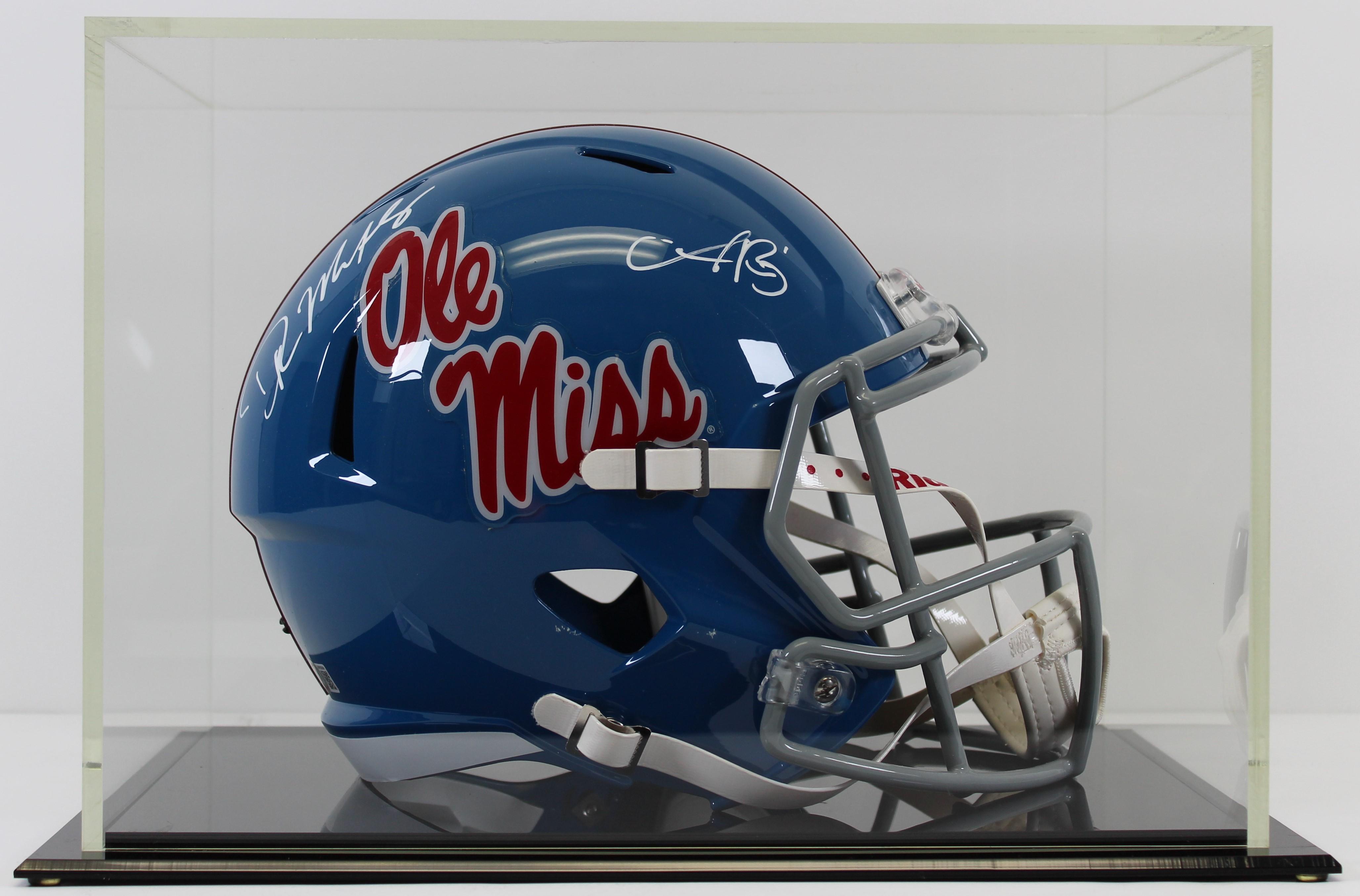
The parallel careers of A.J. Brown and D.K. Metcalf offer one of the most compelling cross-conference comparisons in modern professional football. Former college teammates at the University of Mississippi (Ole Miss), both wide receivers entered the National Football League in the 2019 draft class and quickly established themselves as physical freaks and dominant WR1s. Their trajectories highlight contrasting paths to stardom, distinct offensive schemes, and unique physical skill sets that continue to redefine the modern boundary receiver position.
The Ole Miss Foundation and the 2019 NFL Draft Class
The story of A.J. Brown and D.K. Metcalf begins in Oxford, Mississippi, where the two exceptionally talented wide receivers shared a collegiate locker room. During their time with the Ole Miss Rebels, they formed a formidable receiving corps that routinely stressed opposing Southeastern Conference (SEC) defensive backs. Despite playing alongside one another, their divergent physical traits and playing styles were already apparent to NFL scouts.
When the 2019 NFL Draft arrived, talent evaluators debated the ceiling and floor of both prospects. A.J. Brown was widely regarded as a polished route runner with elite yards-after-catch (YAC) ability, operating primarily out of the slot during portions of his collegiate career. D.K. Metcalf, conversely, captivated the scouting community at the NFL Scouting Combine with a historic athletic profile—measuring 6-foot-3 and 228 pounds while posting a blistering 4.33-second 40-yard dash alongside jaw-dropping strength and vertical numbers.
Despite Metcalf's otherworldly athletic metrics, concerns regarding his neck injury history and agility drill times caused him to slide on draft night. The Tennessee Titans selected A.J. Brown 51st overall in the second round, while the Seattle Seahawks traded up to select D.K. Metcalf just 13 picks later at 64th overall. Both franchises secured foundational offensive pieces outside of the first round, instantly transforming their respective receiving rooms.
Career Trajectories and Team Contexts
Since entering the league, both receivers have experienced significant success, though their paths have been shaped by the teams, quarterbacks, and offensive systems surrounding them.
A.J. Brown: From Nashville to Philadelphia
A.J. Brown hit the ground running with the Tennessee Titans, surpassing 1,000 receiving yards in each of his first two professional seasons. Operating in a run-heavy, play-action-reliant offense under head coach Mike Vrabel, Brown proved he could produce elite efficiency on relatively low target volumes. His combination of contact balance, play strength, and suddenness made him one of the most dangerous vertical and intermediate threats in the league.
In April 2022, a franchise-defining trade sent Brown to the Philadelphia Eagles during the NFL Draft in exchange for draft picks, including the 18th overall selection. Paired with quarterback Jalen Hurts—a close personal friend—and head coach Nick Sirianni, Brown elevated his production to new heights. In his first season in Philadelphia, he set a new franchise single-season record for receiving yards, helping propel the Eagles to Super Bowl LVII. His ability to win in isolation, dominate on slant routes, and stretch the field vertically unlocked the ceiling of the Eagles' passing offense.
D.K. Metcalf: Seattle's Physical Anchor
D.K. Metcalf stepped into a stable environment in Seattle, catching passes from future Hall of Fame quarterback Russell Wilson from 2019 through the 2021 season. Metcalf made an immediate impact, breaking the NFL rookie record for receiving yards in a playoff game during his debut postseason run. In 2020, he broke the franchise single-season receiving yards record with 1,303 yards, earning Pro Bowl and Second-team All-Pro honors.
Following Wilson's departure to Denver in 2022, Metcalf adapted seamlessly to shifting offensive schemes under head coach Pete Carroll and subsequent coordinator changes, maintaining his status as a premier perimeter target. Known for his durability, rare sideline tracking, and devastating blocking capabilities, Metcalf signed a lucrative contract extension with Seattle, anchoring the franchise's receiving corps through coaching transitions and quarterback changes, including the tenure of Geno Smith.
Statistical and Functional Profile Comparison
Evaluating A.J. Brown and D.K. Metcalf requires looking beyond raw box scores to examine how their physical traits and route trees translate to game day. Both players exceed 220 pounds, making them physical mismatches for traditional cornerbacks, yet their utilization patterns differ.
| Feature / Metric | A.J. Brown | D.K. Metcalf |
|---|---|---|
| Primary Physical Advantage | Elite contact balance and yards-after-catch | Historic straight-line speed and vertical leap |
| Route Specialization | Slants, crossers, deep digs, go routes | Go routes, back-shoulder fades, deep comebacks |
| Yards After Catch (YAC) | Consistently among league leaders in tackle evasion | Strong vertical separator with powerful open-field runs |
| Draft Position | 2019, Round 2, Pick 51 (Tennessee Titans) | 2019, Round 2, Pick 64 (Seattle Seahawks) |
| Primary Franchise | Philadelphia Eagles | Seattle Seahawks |
Physical Style and Blocking
Both receivers are celebrated for their physicality, which extends well beyond catching passes. They are two of the best blocking wide receivers in the NFL, frequently executing crack-back blocks on linebackers and sealing edges on outside zone runs. This willingness to embrace contact sets a tone for their respective offensive units.
A.J. Brown leverages his low center of gravity and immense play strength to break arm tackles. When defensive backs attempt to tackle him in the open field, Brown frequently initiates contact, turning short hitch routes into explosive gains.
D.K. Metcalf uses his towering frame and long stride to out-leverage defenders downfield. His ability to win contested catches in tight windows along the sideline makes him an elite red-zone and deep-threat target, particularly on go routes and fade passes where quarterbacks can trust his catch radius.
Frequently Asked Questions
Were A.J. Brown and D.K. Metcalf college teammates?
Yes, both wide receivers played together at the University of Mississippi (Ole Miss) from 2016 to 2018. Their dominant collegiate performances laid the groundwork for their concurrent rise as top-tier NFL wide receivers following the 2019 draft.
Who was drafted higher, A.J. Brown or D.K. Metcalf?
A.J. Brown was selected slightly higher in the 2019 NFL Draft. The Tennessee Titans drafted Brown 51st overall in the second round, while the Seattle Seahawks selected D.K. Metcalf 13 picks later at 64th overall, also in the second round.
What are the main differences in their playing styles?
While both possess elite size, A.J. Brown excels primarily as an intermediate and yards-after-catch weapon who thrives on slants and crossing routes with exceptional tackle-breaking ability. D.K. Metcalf is renowned for his historic straight-line speed, vertical tracking, and dominance on deep sideline routes.
How have team changes affected their production?
A.J. Brown saw a statistical boost and heightened national profile following his trade to the Philadelphia Eagles in 2022, where he broke franchise receiving records and reached Super Bowl LVII. D.K. Metcalf has maintained consistent production in Seattle despite transitioning through multiple offensive coordinators and starting quarterbacks.
Are A.J. Brown and D.K. Metcalf still active in the NFL?
Yes, both players remain elite, active starting wide receivers in the National Football League, continuing to anchor the passing attacks of the Philadelphia Eagles and Seattle Seahawks, respectively.
Conclusion and Legacy
The careers of A.J. Brown and D.K. Metcalf serve as a masterclass in evaluating wide receiver prospects outside of the first round. While their individual journeys took them to different conferences and offensive systems, both players have defined the modern standard for physical, productive wide receiver play. As they continue their professional primes, their shared origins at Ole Miss remain a fascinating footnote in an ongoing, friendly rivalry of two of football's most dominant athletes.