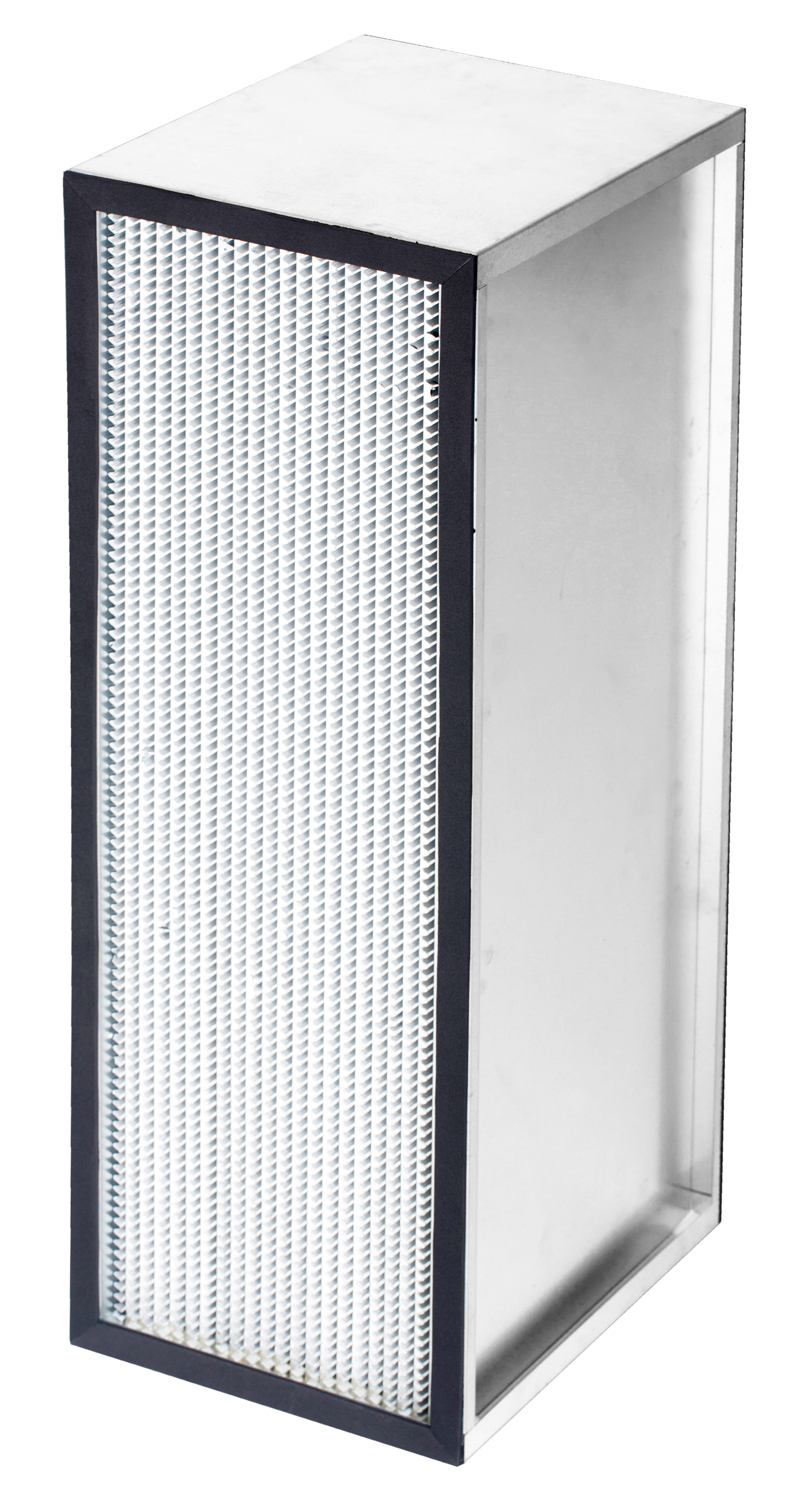
To effectively remove smoke from indoor air, you must utilize a dual-stage filtration approach: a True HEPA filter to capture microscopic solid particles (PM2.5) and a thick activated carbon filter to adsorb gaseous odors and volatile organic compounds (VOCs). For central HVAC systems, a filter with a MERV 13 rating or higher is required to trap fine smoke particulates.
Smoke is one of the most challenging indoor air pollutants to manage because it is not a single substance. It is a complex mixture of solid particles, liquid droplets, and gaseous chemicals. Whether you are dealing with the seasonal threat of wildfire smoke, persistent tobacco odors, or accidental cooking mishaps, understanding the physics of smoke filtration is essential for maintaining a healthy living environment. As of 2026, air purification technology has reached a point where near-total removal of smoke contaminants is possible, provided the correct hardware and ratings are selected.
Understanding the Two-Phase Nature of Smoke
To select the right filter, you must first understand what you are trying to remove. Smoke exists in two distinct phases: the particulate phase and the gas phase.
The Particulate Phase
The visible portion of smoke consists of tiny solid and liquid particles, often categorized as PM2.5 (particulate matter less than 2.5 microns in diameter). For context, a human hair is roughly 70 microns wide. Smoke particles are frequently much smaller, often ranging from 0.1 to 0.7 microns. These particles are dangerous because they can bypass the body's natural defenses in the nose and throat, lodging deep in the lungs and even entering the bloodstream.
The Gas Phase
The "smell" of smoke comes from the gas phase. This includes carbon monoxide, nitrogen oxides, and a cocktail of Volatile Organic Compounds (VOCs) like benzene, formaldehyde, and acrolein. Standard mechanical filters, no matter how high their particulate rating, cannot stop gases. This is why a "smoke filter" that only features a HEPA element will remove the visible haze but leave the toxic, lingering odor behind.
The Gold Standard: True HEPA Filtration
For the particulate phase of smoke, High-Efficiency Particulate Air (HEPA) filters are the industry standard. By definition, a True HEPA filter (standardized as H13 or H14 under the ISO 29463 and EN 1822 standards) must capture 99.97% of particles as small as 0.3 microns.
How HEPA Works on Smoke
Contrary to popular belief, HEPA filters do not act like a simple sieve. They use three primary mechanisms to trap smoke:
- Inertial Impaction: Larger smoke particles travel in a straight path and collide directly with the filter fibers.
- Interception: Mid-sized particles follow air currents but come close enough to a fiber to be "snagged."
- Diffusion: The smallest particles (under 0.1 microns) move erratically due to Brownian motion, causing them to eventually bump into and stick to a fiber.
Because smoke particles often fall into the "Most Penetrating Particle Size" (MPPS) range of 0.1 to 0.3 microns, only a True HEPA filter is dense enough to provide reliable protection. In 2026, many manufacturers offer "HEPA-type" or "HEPA-like" filters; these are often unregulated and may fail to capture the finest smoke particles. Always verify the H13 or H14 certification.
Neutralizing Odors with Activated Carbon
Because HEPA filters cannot trap gases, an Activated Carbon filter is mandatory for smoke removal. Activated carbon is charcoal that has been treated with oxygen to open up millions of tiny pores between the carbon atoms.
Adsorption vs. Absorption
Carbon works through adsorption—a process where gas molecules stick to the internal surface area of the carbon. A single gram of activated carbon can have a surface area of over 3,000 square meters.
When evaluating a smoke filter, the amount of carbon matters more than the marketing. Many "smoke" air purifiers use a thin, carbon-coated sponge or a "carbon pre-filter." These are effective for light dust but saturate almost instantly when exposed to heavy smoke from wildfires or indoor smoking. For serious smoke removal, look for filters containing 3 to 15 pounds of pelletized activated carbon. This ensures the filter has enough "holding capacity" to neutralize odors for months rather than days.
HVAC Filters: MERV Ratings for Smoke
If you are using your home's central heating and cooling system to scrub the air, you must look at the MERV (Minimum Efficiency Reporting Value) rating.
Standard fiberglass filters (MERV 1–4) are designed only to protect the HVAC equipment from large dust bunnies; they have zero effect on smoke. To filter smoke effectively through your vents, you need:
- MERV 13: The minimum recommended level for wildfire smoke. It captures about 50% of particles in the 0.3–1.0 micron range.
- MERV 14–16: These are significantly more efficient and are often found in hospital settings. A MERV 16 filter performs similarly to a HEPA filter for residential use.
Technical Caution: Higher MERV filters are thicker and more restrictive. Before installing a MERV 13 or 16 filter, consult an HVAC professional to ensure your system's blower motor can handle the increased static pressure. If the filter is too restrictive, it can cause the evaporator coil to freeze or the heat exchanger to crack.
Comparison of Smoke Filtration Technologies
| Filter Type | Primary Target | Effectiveness on Smoke | Best Use Case |
|---|---|---|---|
| Fiberglass (MERV 1-4) | Large Dust, Lint | 0% (Ineffective) | Protecting HVAC hardware only. |
| Pleated Cotton (MERV 8-11) | Pollen, Mold | 10-20% | General air cleaning, no smoke relief. |
| High-Efficiency (MERV 13-16) | Bacteria, Smoke | 50-95% | Whole-home wildfire protection. |
| True HEPA (H13/H14) | Fine Particulates | 99.97% | Portable units for bedrooms/offices. |
| Activated Carbon | VOCs, Odors, Gases | 100% (Gases only) | Removing the "smell" of tobacco or fire. |
| PECO/PCO | Chemical Vapors | Variable | Breaking down molecular bonds of smoke. |
Selecting the Right CADR for Smoke
When buying a portable air purifier specifically for smoke, the most important metric is the CADR (Clean Air Delivery Rate) for smoke. CADR measures the volume of filtered air an axial fan can produce, expressed in cubic feet per minute (CFM).
The Association of Home Appliance Manufacturers (AHAM) provides the testing standards for CADR. As a rule of thumb, use the "Two-Thirds Rule": The smoke CADR of your unit should be at least two-thirds of the room's square footage. For example, a 300-square-foot room requires a purifier with a smoke CADR of at least 200. In 2026, high-end units often feature dual-fans to achieve CADRs above 400, which is ideal for large living areas affected by outdoor smoke infiltration.
Maintenance and Filter Lifespan During Smoke Events
Smoke is an "oily" pollutant. Tobacco smoke contains tars, and wildfire smoke contains resins from burning wood. These substances act like glue, clogging the microscopic pathways in a HEPA filter much faster than standard household dust.
- Pre-filter Cleaning: Most smoke-specific purifiers have a washable or vacuumable pre-filter. During a heavy smoke event, clean this weekly to prevent the main HEPA filter from loading prematurely.
- Saturation Monitoring: Activated carbon has a finite capacity. Once the pores are full, the filter can actually begin to "off-gas," releasing odors back into the room. If your purifier starts to smell "sour" or like "dirty socks," the carbon is saturated and must be replaced immediately.
- Sensor Accuracy: Many 2026 air purifiers include onboard PM2.5 sensors. While useful, these sensors often use laser scattering which can be confused by high humidity. Use them as a general guide, but rely on your own senses and scheduled filter changes during prolonged smoke exposure.
DIY Solutions: The Corsi-Rosenthal Box
For those facing emergency smoke situations with limited access to commercial purifiers, the Corsi-Rosenthal Box remains a scientifically validated solution. By taping four MERV 13 filters to a 20-inch box fan, you create a high-volume air cleaner that rivals expensive commercial units in particulate removal.
While the DIY box is excellent at removing smoke particles, it lacks the heavy carbon mass required for odor removal unless you specifically integrate carbon pleats. However, for rapid reduction of PM2.5 during a wildfire, this remains the most cost-effective "emergency" air filter for smoke available.
Advanced Technologies: PECO and Ionization
In recent years, technologies like Photo Electrochemical Oxidation (PECO) and Bipolar Ionization have been marketed for smoke.
- PECO uses UV light and a catalyst to break down smoke molecules. It is effective for VOCs but should always be used in conjunction with a HEPA filter for particles.
- Ionizers work by charging particles so they stick to walls or floor surfaces. Caution: Many ionizers produce ozone as a byproduct. Ozone is a lung irritant that can react with smoke chemicals to create even more toxic ultra-fine particles. The EPA recommends avoiding ozone-generating air cleaners, especially in smoky conditions.
Frequently Asked Questions
Can a washable filter remove smoke?
No. Washable filters (electrostatic) typically have very low MERV ratings and cannot capture the fine PM2.5 particles found in smoke. Furthermore, washing a filter does not "reset" the chemical adsorption capacity of carbon. For smoke, disposable HEPA and carbon filters are the only effective options.
How long does it take an air filter to clear a smoky room?
This depends on the Air Changes per Hour (ACH). In a standard-sized room with a correctly sized purifier (CADR of 200+), you should see a 90% reduction in smoke particles within 15 to 30 minutes. However, lingering odors in fabrics and carpets may take much longer to neutralize.
Is MERV 13 enough for cigarette smoke?
MERV 13 will capture the majority of the physical ash and tar particles from cigarette smoke, but it will not stop the smell. Tobacco smoke contains over 7,000 chemicals, many in gas form. You must combine the MERV 13 HVAC filter with a dedicated activated carbon station to manage the odor of secondhand or thirdhand smoke.
Why does my air purifier turn red when I cook?
Cooking smoke, especially from searing meat or burning oil, releases massive amounts of PM2.5 and VOCs. Most modern air purifiers have an "Auto Mode" that uses an infrared or laser sensor to detect these spikes. The "red" light indicates the sensor has detected a high concentration of particles and is ramping up the fan speed to compensate.
Do plants filter smoke?
No. While plants can absorb trace amounts of some VOCs via their leaves and soil bacteria, they are entirely ineffective against the concentrated particulate matter and gas volumes found in smoke. You would need a virtual jungle in every room to match the performance of a single HEPA filter.
Summary of Recommendations
To successfully remove smoke from your environment in 2026, follow these steps:
- Identify the Source: If the smoke is external (wildfires), seal gaps in windows and doors. If internal (cooking/tobacco), source-point ventilation (exhaust hoods) should be your first line of defense.
- Choose the Hardware: Use a portable air purifier with a True HEPA (H13) filter and at least 3 lbs of activated carbon.
- Check the Ratings: Ensure the Smoke CADR is appropriate for your room size (2/3 rule).
- Upgrade HVAC: If you have a central system, install a MERV 13 filter, ensuring your system can handle the airflow resistance.
- Monitor and Replace: Change filters more frequently during smoke "seasons." Do not wait for the "change filter" light if you can still smell smoke.
Effective smoke removal is a matter of physics. By combining high-density mechanical filtration with chemical adsorption, you can ensure that the air inside your home remains safe and breathable, regardless of the conditions outside.