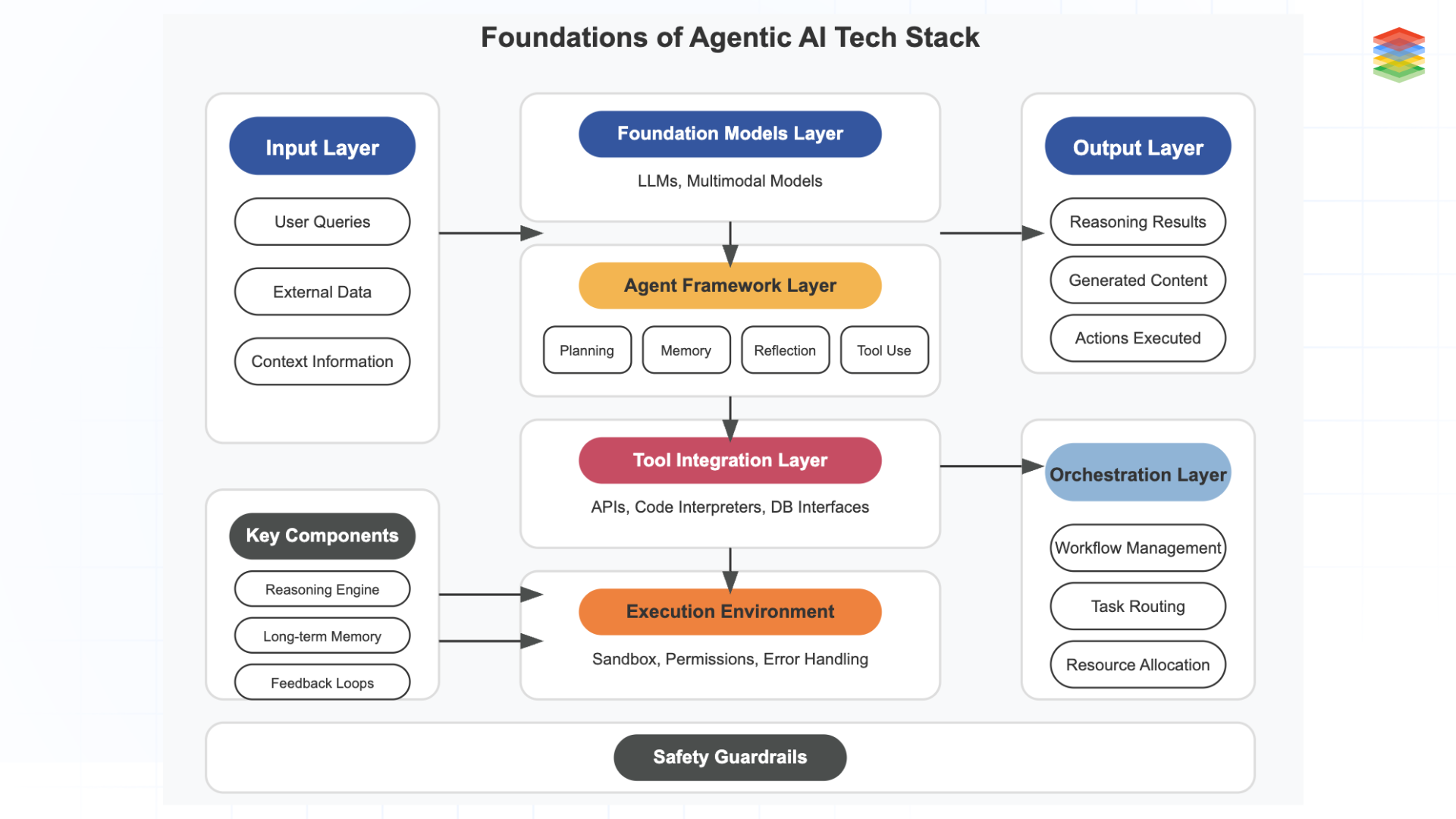
Securing AI infrastructure in 2026 requires a multi-layered approach that integrates data governance, hardware-level isolation, and rigorous model access controls. As organizations scale generative AI and predictive modeling, they must address evolving regulatory mandates, secure supply chains for large language models, and enforce zero-trust architecture across distributed cloud environments to mitigate data leakage and unauthorized inference.
The State of AI Infrastructure Security in 2026
As of 2026, the integration of Artificial Intelligence (AI) into enterprise workflows has moved beyond experimental pilot programs into critical operational infrastructure. This shift necessitates a move away from perimeter-based security models toward data-centric protection. The primary security challenge today is not just protecting the cloud environment, but protecting the model weights, training datasets, and inference prompts from sophisticated extraction and poisoning attacks.
Cloud Service Providers (CSPs) have updated their shared responsibility models to account for the unique risks of AI. While providers are responsible for the security of the underlying hardware—including high-performance computing (HPC) nodes and GPU clusters—the consumer is responsible for the security of the model implementation, data lifecycle, and prompt engineering protocols.
Key Security Pillars for AI Cloud Environments
1. Hardware and Compute Isolation
In 2026, AI workloads often rely on multi-tenant cloud environments. To prevent side-channel attacks where an adversary might attempt to infer information from shared hardware cache, security teams must enforce Trusted Execution Environments (TEEs) and Confidential Computing instances. By encrypting data in use—not just at rest or in transit—organizations can ensure that even CSP administrators cannot access the raw data being processed by AI models.
2. Data Governance and Provenance
Training data is the intellectual property foundation of any AI infrastructure. Security requirements now mandate strict data lineage tracking. Organizations must implement automated tagging and data classification tools to ensure that sensitive personally identifiable information (PII) or proprietary intellectual property does not bleed into fine-tuning datasets. Tools that provide an immutable audit trail of every data source used in model training have become a compliance standard under global data sovereignty laws.
3. Model Security and Inference Defense
Securing the model itself requires protection against adversarial inputs. "Prompt injection" and "jailbreaking" are no longer just theoretical vulnerabilities; they are active threats. Infrastructure security must include a Web Application Firewall (WAF) layer specifically tuned for Large Language Models (LLMs) that scans incoming prompts for malicious intent and outgoing responses for sensitive data leakage (PII masking).
Comparative Matrix: Security Controls by Infrastructure Tier
The following table summarizes the security responsibility and recommended controls for AI infrastructure components in the 2026 landscape.
| Infrastructure Tier | Primary Security Focus | Recommended 2026 Control | Responsibility |
|---|---|---|---|
| Compute/GPU | Side-channel prevention | Confidential Computing (TEEs) | CSP |
| Data Storage | Data leakage prevention | Homomorphic Encryption/Masking | Customer |
| Model Hosting | Prompt manipulation | LLM-specific WAF/Gateway | Customer |
| Deployment | Access control | Identity-based RBAC/ABAC | Customer |
| Network | Exfiltration blocking | Micro-segmentation | CSP/Customer |
Addressing Regulatory Compliance in 2026
Organizations operating in 2026 are subject to a more granular regulatory environment than in previous years. The implementation of AI-specific security requirements often intersects with existing frameworks such as SOC2, ISO 27001, and region-specific mandates like the EU AI Act.
Compliance is no longer a one-time audit but a continuous validation process. Organizations must prove that their "AI Bill of Materials" (AIBOM) is maintained, listing all datasets, third-party libraries, and model architectures involved. Failure to maintain these records can result in significant operational disruption and legal liability, especially when models are used for financial or healthcare decision-making.
Identity and Access Management (IAM) for AI Agents
With the rise of autonomous AI agents—software that can execute tasks without constant human intervention—IAM systems have been stressed. Static permissions (Read/Write) are insufficient. 2026 best practices dictate the use of Just-In-Time (JIT) access and Attribute-Based Access Control (ABAC).
For example, an AI agent tasked with analyzing customer sentiment should have access to read-only historical ticket data, but it must be cryptographically barred from accessing the production database containing customer billing information. This is achieved through policy-as-code deployments that restrict API access based on the agent's verified identity and specific context-aware constraints.
Best Practices for Incident Response
Even with the most robust security architecture, incidents will occur. AI-specific incident response plans must be distinct from standard cyber-incident plans.
- Model Sanitization: Maintain the ability to instantly revert to a previous, verified version of a model if poisoning is detected.
- Telemetry Analysis: Monitor inference latency and output patterns; spikes in these metrics often indicate an ongoing "model stealing" attack where an adversary is querying the model to reproduce its capabilities.
- Data Redaction Audit: If a breach occurs, the ability to trace exactly which subsets of training data were exposed is critical for compliance reporting.
Frequently Asked Questions (FAQ)
What is the most critical threat to AI infrastructure in 2026? Data exfiltration during model inference is the primary threat. Adversaries exploit public-facing AI endpoints to extract sensitive information from the underlying training data or to bypass safety filters that guard intellectual property.
How does Confidential Computing differ from standard cloud encryption? Standard encryption protects data at rest (on disk) and in transit (over the network). Confidential Computing protects data while it is being actively processed in the CPU or GPU memory, ensuring that even if a CSP is compromised, the data remains encrypted and inaccessible.
Are there standardized frameworks for AI infrastructure security? Yes, most organizations are aligning with the NIST AI Risk Management Framework (AI RMF), which has seen significant updates by 2026 to include technical cloud-native security controls specific to generative AI deployments.
What is an AI Bill of Materials (AIBOM)? An AIBOM is a formal record of the components that make up an AI system, including the model architecture, training datasets, fine-tuning configurations, and third-party software dependencies. It provides transparency required for regulatory auditing and security vulnerability scanning.
Should I use open-source or proprietary models for better security? Both have distinct risks. Proprietary models offer managed security provided by the vendor, while open-source models allow for deeper, private inspection and self-hosting. For highly sensitive infrastructure, self-hosted open-source models are often preferred as they keep the data entirely within the organization's private cloud perimeter.
Recommended Next Steps
To ensure your infrastructure meets 2026 standards, perform a formal audit of your current AI stack. First, verify that all high-compute nodes are running within Confidential Computing environments. Second, deploy an LLM-aware gateway to act as an intermediary between your user interfaces and your models. Finally, integrate automated AIBOM generation into your CI/CD pipeline to maintain compliance with emerging regulatory requirements.