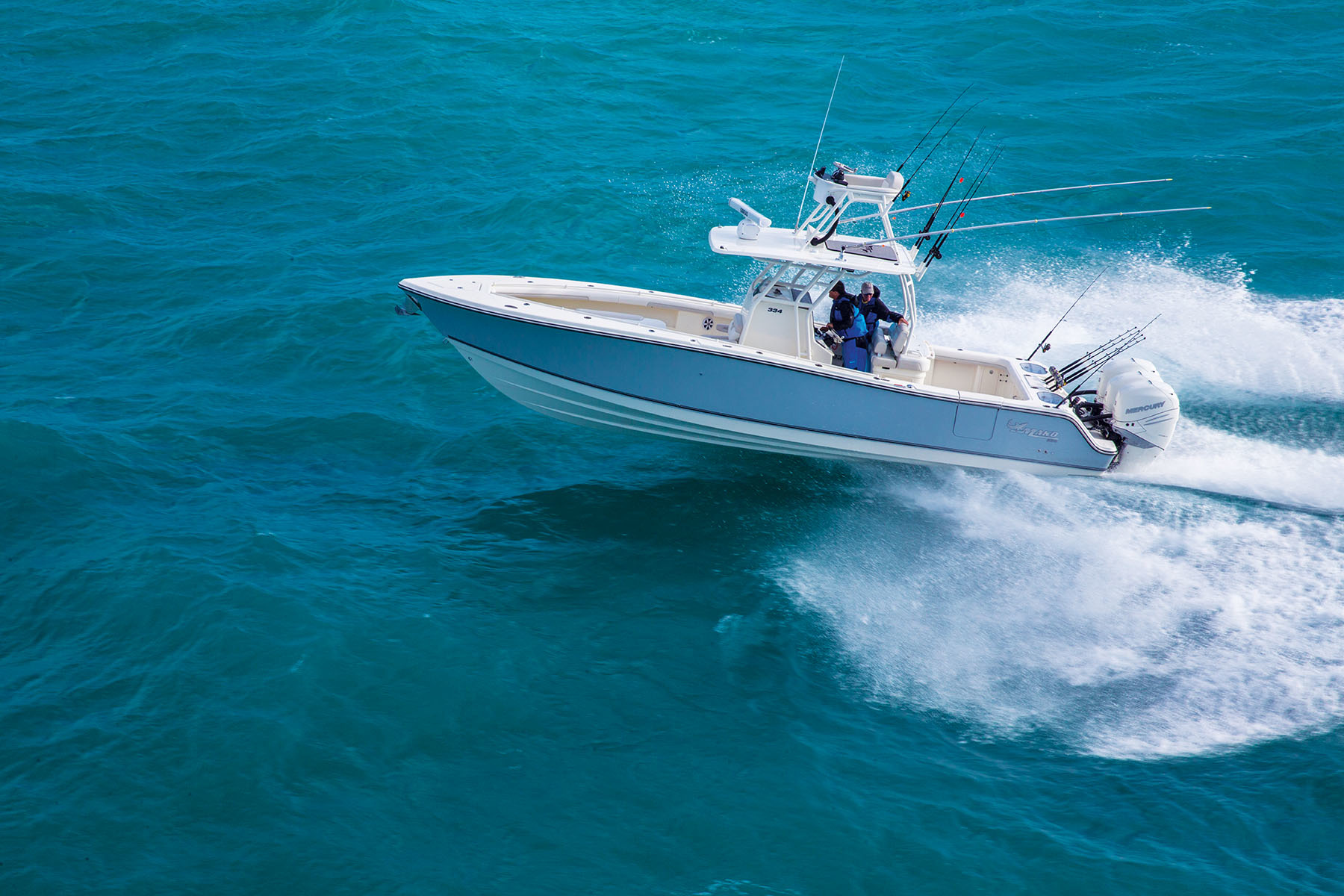
Acquiring an affordable offshore boat involves balancing hull design, safety features, and operational costs to ensure the vessel can handle blue-water conditions without requiring a premium budget. Success in this market relies on prioritizing structural integrity and propulsion reliability over luxury finishes, often achieved by targeting specific pre-owned models or entry-level production builds designed for coastal and near-shore utility.
Defining "Offshore Capability" on a Budget
The term "offshore boat" implies a vessel designed to handle the dynamic conditions of the open ocean—beyond the protection of bays, sounds, and inlets. When evaluating affordability, the primary goal is to identify a boat that provides a safe platform for fishing or cruising in these environments.
A boat suitable for offshore work must feature a deep-V hull design to pierce through chop, high gunwales (the top edge of the boat's side) for passenger safety, and self-bailing cockpits to manage water ingress. Many buyers mistakenly look for the largest boat for their money; however, a smaller, high-quality hull with a well-maintained outboard engine is significantly safer than a large, neglected vessel with aging, unreliable propulsion. In the 2026 market, "affordable" is typically defined as a combination of a lower initial acquisition cost and the ability to maintain the vessel without exorbitant specialized repairs.
The Trade-off: New Entry-Level vs. Proven Pre-Owned
When seeking affordability, buyers face two primary paths: purchasing a new entry-level model or investing in a mid-range, used boat.
1. New Entry-Level Models Manufacturers like Tidewater, Sea Hunt, and certain lines from Carolina Skiff provide "base-model" configurations. These are often stripped-down versions of their larger siblings, lacking premium upholstery, advanced navigation suites, or luxury teak accents. By opting for a lower horsepower engine package and manual features, you can secure a new boat with a full manufacturer warranty. The primary benefit here is peace of mind regarding the engine’s integrity and the lack of hidden fatigue in the fiberglass.
2. The Pre-Owned Market The used market is where the most significant value is found, provided the buyer performs due diligence. Models from the 2010s by reputable brands like Boston Whaler, Grady-White, or Mako often represent better build quality than modern budget brands. The key is to find boats where the hull is sound, even if the electronics are dated. Replacing a GPS unit is inexpensive; repairing hull delamination or replacing a cracked transom is financially ruinous.
Key Factors for Verification
Before finalizing any purchase, you must verify the condition of the vessel's vital systems. In 2026, many older boats are reaching the end of their design life for electrical systems and fuel tanks.
- Engine Hour Logs: Always request the computer diagnostic report for the engine. A "low-hour" boat that has sat for five years is often more problematic than a boat with higher hours that was used and serviced regularly.
- Transom Integrity: The transom is the structural point where the engine mounts. Use a small rubber mallet to tap the area around the motor mounts; a dull, "thudding" sound is ideal, while a sharp, hollow sound can indicate internal rot or water saturation in the core.
- Wiring and Electrical: Open the center console and inspect the wiring bus. If the wiring is a "spaghetti" of unorganized, corroded, or spliced cables, walk away. Electrical failure is the leading cause of stranding for offshore vessels.
Comparison of Hull Types for Offshore Use
| Hull Type | Characteristics | Best For | Offshore Suitability |
|---|---|---|---|
| Deep-V | Sharp entry, steep deadrise | Handling rough ocean chop | High |
| Modified-V | Flatter, more stable at rest | Inshore and calm near-shore | Moderate |
| Catamaran | Dual hulls, high stability | Reducing pitch and roll | High |
| Flat Bottom | Shallow draft, stable | Shallow bays and estuaries | Low (Dangerous) |
Practical Steps to Mitigating Long-Term Costs
Affordability is not just about the sticker price; it is about the "total cost of ownership." Offshore boats require significantly more maintenance than freshwater craft due to the corrosive nature of saltwater.
1. Maintenance Schedule Adherence The single most expensive component of any offshore boat is the outboard motor. Sticking strictly to the manufacturer's maintenance intervals—specifically regarding fuel filters, water pumps (impellers), and lower unit gear oil—is the only way to avoid catastrophic engine failure.
2. The "Electronic Refresh" Strategy Instead of buying a boat with a high-end, factory-installed navigation system, look for a hull that has been stripped or has older, non-functional electronics. Use the savings to install a modern, mid-range chartplotter and transducer yourself. This ensures you are using current technology and understand exactly how your safety systems are wired.
3. Proper Storage If you cannot afford a slip in a marina, consider a high-quality trailer. Keeping an offshore boat out of the water when not in use drastically reduces bottom fouling and the risk of galvanic corrosion, which can destroy aluminum parts and engine components.
Common Mistakes to Avoid
- Ignoring the Trailer: If your boat is trailerable, the trailer is your primary insurance policy against highway accidents. Check for rust on the frame and ensure the wheel bearings are serviced annually.
- Overestimating Range: Many "affordable" boats have smaller fuel tanks to save weight and space. Always calculate your range based on the "one-third rule"—one-third of your fuel to get out, one-third to get back, and one-third in reserve for emergencies.
- Lack of Safety Gear: Never skimp on safety equipment to save money for cosmetic upgrades. An EPIRB (Emergency Position Indicating Radio Beacon), a robust VHF radio, and life jackets that exceed the minimum coast guard requirements are non-negotiable for offshore transit.
Frequently Asked Questions
What is the minimum size for an offshore boat? While you can technically go offshore in smaller vessels, 21 feet is generally considered the threshold for a safe, versatile offshore boat. A 21-footer typically provides the beam (width) and hull depth necessary to handle moderate swells without taking on water or becoming unstable.
How do I tell if a hull is "waterlogged"? A waterlogged boat will feel significantly heavier than the manufacturer's listed dry weight. If you are purchasing a used boat, ensure it is weighed on a trailer at a truck scale. If it weighs hundreds of pounds more than the hull specification, the internal foam or core may have absorbed water, which is a major red flag.
Is an inboard or outboard engine better for a budget offshore boat? Outboards are generally better for budget-conscious owners. They are easier to access for maintenance, easier to replace, and can be tilted completely out of the water to prevent corrosion. Inboard engines, while offering better weight distribution, often require more complex and expensive professional maintenance.
Do I need a dual-engine setup for safety? Dual engines are safer, but they effectively double your maintenance costs and fuel consumption. If you are on a budget, a single, modern, reliable outboard engine with a well-maintained "kicker" motor (a small, secondary emergency outboard) is often the more cost-effective and practical solution.
What is the most important document to check when buying used? The Title and the Hull Identification Number (HIN). Verify the HIN against the state records to ensure there are no liens on the boat and that the hull has not been salvaged or modified in a way that violates manufacturer safety standards.
Final Recommendation
For the prospective buyer in 2026, the most prudent path is to search for a clean, five-to-ten-year-old fiberglass hull from a manufacturer with a history of building deep-V center consoles. Focus your budget on a professional marine survey before purchase—this cost, usually ranging from $300 to $800, is the best investment you can make to avoid buying a vessel with hidden structural defects. Prioritize an engine with verified service records, and dedicate your remaining budget to high-quality safety and communication gear. By maintaining the engine properly and storing the hull out of the water, you can enjoy reliable offshore performance without the excessive cost of a new flagship vessel.