Adaptive learning artificial intelligence transforms traditional classroom dynamics by moving education away from rigid, one-size-fits-all instruction and toward continuous, data-driven personalization that supports both individual students and teachers.
The integration of adaptive learning artificial intelligence into modern educational environments represents one of the most profound structural shifts in pedagogy since the widespread adoption of digital textbooks. For generations, the standard classroom model has relied on a synchronous approach: a single educator delivers a unified lesson to a cohort of twenty to thirty students, pacing instruction to meet a generalized average. This model inevitably leaves advanced learners unchallenged while struggling students fall behind. Adaptive learning systems dismantle this static framework by leveraging machine learning algorithms to evaluate real-time student responses, continuously recalibrating instructional pathways, difficulty levels, and content presentation to match individual cognitive needs.
Understanding this transformation requires examining the underlying technologies, the shifting responsibilities of educators, the psychological impacts on learners, and the infrastructural and ethical challenges schools face when deploying these systems.
The Technological Core of Adaptive Learning Systems
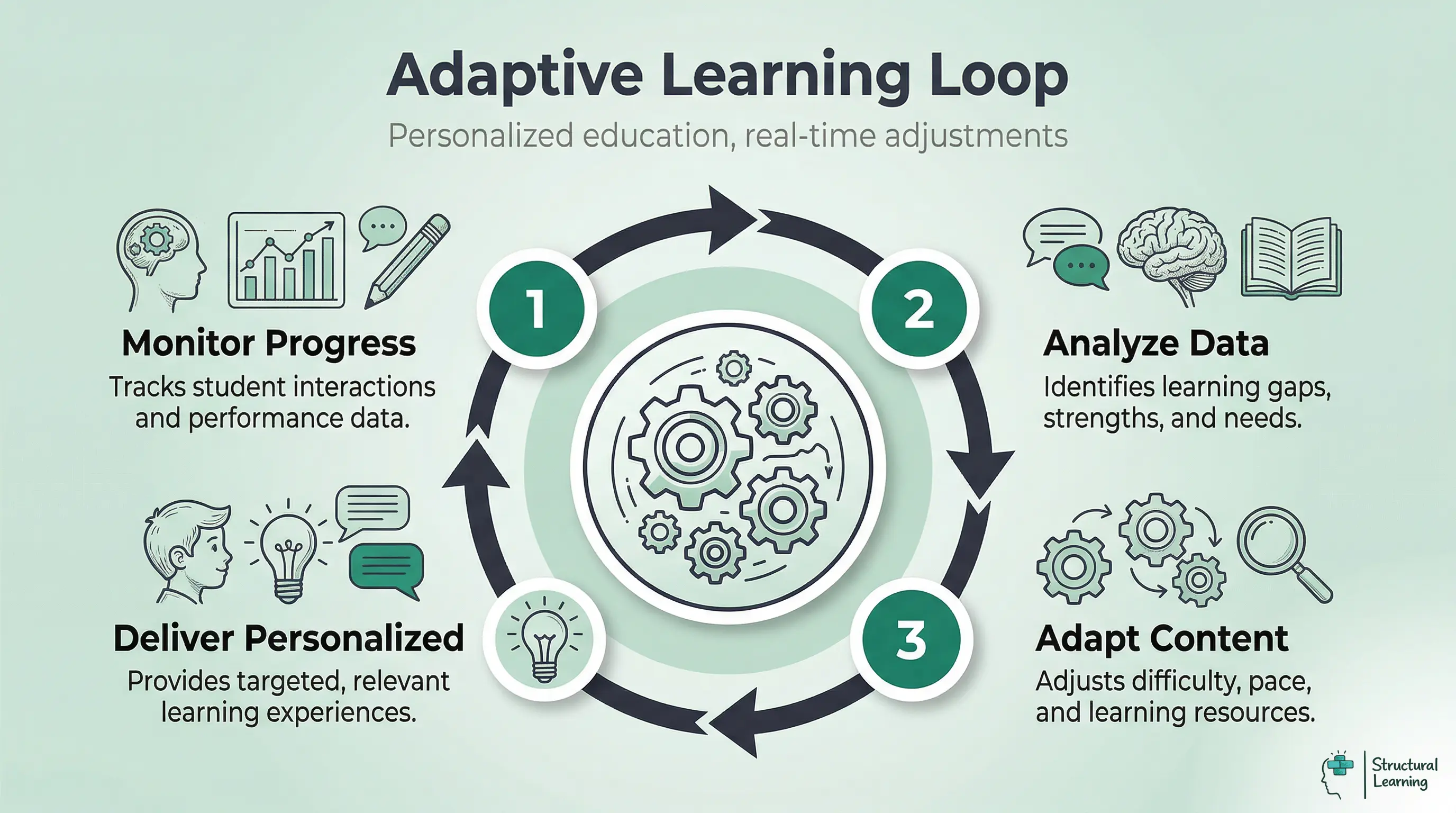
To appreciate how artificial intelligence alters the classroom, one must first understand how these platforms function beneath the user interface. Unlike traditional computer-assisted instruction—which typically uses rigid branching logic to route a student down a predetermined remediation path based on a wrong answer—modern adaptive learning tools utilize sophisticated item response theory and neural networks. These engines analyze a vast array of telemetry data:
- Response accuracy on formative assessments.
- Time-on-task metrics for specific problem sets or reading passages.
- Interaction patterns, such as hesitation before selecting an answer or frequent toggling between reference materials.
- Historical performance trends across broader subject domains.
By processing these inputs in real time, the algorithm constructs a dynamic knowledge map for every student. If a high school algebra student stumbles on quadratic equations, the system does not merely present a simpler problem; it diagnoses whether the deficit lies in factoring, graphing, or basic arithmetic, subsequently serving targeted micro-lessons designed to shore up that specific prerequisite. This granular level of personalization ensures that no two students experience the exact same learning journey, even within the same course.
The Evolving Role of the Educator: From Transmitter to Facilitator
A common misconception among critics is that adaptive learning artificial intelligence aims to replace human teachers with autonomous algorithms. In practice, the opposite is occurring. By automating the repetitive, low-level mechanics of teaching—such as grading multiple-choice quizzes, tracking attendance data, and sorting students into basic skill tiers—adaptive systems free instructors to focus on high-value human pedagogy.
In a modern classroom augmented by adaptive software, the teacher's role shifts from a traditional lecturer standing at the front of the room to a facilitator, mentor, and learning strategist. Teachers utilize real-time dashboards provided by these platforms to monitor class-wide comprehension heat maps. Instead of discovering a student's misunderstanding weeks later via a graded midterm, an educator can see mid-lesson which students are stalled on a specific concept and intervene proactively.
| Traditional Classroom Dynamic | Adaptive AI-Augmented Dynamic |
|---|---|
| Instructional Pace | Uniform pacing dictated by the class average. |
| Teacher Focus | Delivering lectures and grading formative assessments. |
| Feedback Loop | Delayed by days or weeks via periodic testing. |
| Student Agency | Low; passive reception of teacher-led material. |
This structural reorganization allows educators to dedicate their limited time to fostering critical thinking, guiding collaborative projects, and providing the social-emotional support that machines cannot replicate. The relationship between teacher and student becomes more collaborative and diagnostic rather than evaluative and hierarchical.
Psychological and Behavioral Shifts in Students
The transition to data-driven, adaptive classrooms profoundly alters how students perceive themselves, their capabilities, and the learning process itself. In a conventional classroom, social comparison is inescapable. Grades are often public, pacing is uniform, and students quickly categorize themselves as either "smart" or "slow."
Adaptive learning systems help mitigate this psychological friction by individualizing the experience. Because every student is working on material calibrated specifically to their current zone of proximal development, the stigma associated with remediation begins to dissolve. A struggling student works on foundational concepts without public exposure, while an advanced learner tackles complex extensions without social isolation.
However, this shift also introduces new behavioral dynamics that require careful management:
- Erosion of Frustration Tolerance: Because adaptive algorithms tend to smooth out learning friction by continuously adjusting difficulty downward when a student struggles, some learners may develop a lower tolerance for productive struggle—the cognitive discomfort essential for deep learning.
- Algorithmic Dependency: Students can become reliant on the system's micro-hints and immediate feedback loops, potentially struggling with self-directed problem-solving when removed from the digital interface.
- Motivation and Gamification: Many adaptive platforms incorporate gamified elements—such as points, streaks, and badges—which can boost initial engagement but risk shifting student motivation from intrinsic curiosity to extrinsic reward chasing.
Infrastructure, Equity, and Implementation Hurdles
Despite the pedagogical advantages, deploying adaptive learning artificial intelligence across diverse educational landscapes is far from frictionless. The success of these systems depends heavily on robust technological infrastructure that many school districts, particularly in rural or underfunded areas, currently lack.
Reliable broadband internet access, modern computing devices for every student, and continuous IT support are non-negotiable prerequisites. When schools attempt to implement adaptive software without adequate hardware, the resulting technical glitches frustrate teachers and disrupt the learning continuity that the algorithms are designed to provide.
Furthermore, equity concerns loom large over the deployment of educational technology. Critics and researchers point to several systemic risks:
- Algorithmic Bias: If the training data used to build machine learning models lacks diversity, the system may misinterpret the learning patterns, dialects, or cognitive approaches of minority and marginalized students, leading to flawed instructional paths.
- The Digital Divide: Students who have access to high-end adaptive tutoring software at home, funded by affluent districts or private purchase, pull further ahead of peers whose interaction with AI is strictly limited to under-resourced school hours.
- Data Privacy and Surveillance: Adaptive platforms collect vast quantities of behavioral and cognitive telemetry data on minors. Ensuring compliance with strict privacy regulations, such as the Family Educational Rights and Privacy Act and the Children's Online Privacy Protection Act, requires rigorous oversight that many school districts are ill-equipped to manage independently.
Comparative Overview of Educational Technology Paradigms
To contextualize the current shift, it is helpful to contrast adaptive learning artificial intelligence with earlier generations of educational technology.
[Static Textbooks] ---> [Computer-Assisted Instruction] ---> [Adaptive Learning AI] (Fixed Content) (Branching Logic / Remediation) (Real-Time Neural Mapping)
Early digital tools simply digitized paper textbooks or used linear, branching paths that treated all students within a broad category identically. Adaptive learning systems represent a qualitative leap forward because they treat learning as a continuous, non-linear function. They do not merely digitize old methods; they rewrite the operational logic of how content is delivered, assessed, and mastered.
Frequently Asked Questions
Does adaptive learning artificial intelligence eliminate the need for traditional lectures?
No. While adaptive platforms reduce the time spent on whole-class lectures by handling direct instruction of foundational facts and procedural skills, lectures still play a vital role. Teachers use whole-group sessions to inspire curiosity, frame complex conceptual themes, model critical thinking, and build a cohesive classroom community.
How do adaptive systems handle students with learning disabilities or neurodivergence?
High-quality adaptive platforms offer sophisticated accessibility features and granular diagnostic tools that can identify specific learning gaps associated with dyslexia, dyscalculia, or attention deficits. By adjusting text presentation, reading speeds, and the frequency of formative checks, these systems can provide targeted accommodations that would be difficult for a single teacher to manage simultaneously for thirty students.
Are student data and learning metrics secure within these platforms?
Data security varies significantly depending on the vendor and the district's procurement policies. Educational institutions must demand strict data governance agreements, ensuring that student data is anonymized, never sold to third parties, and used exclusively for educational optimization rather than targeted commercial advertising.
Can adaptive learning software replace homework and out-of-class practice?
Many schools utilize adaptive platforms for out-of-class practice because the software can provide immediate feedback when students are working independently at home. However, educators must balance screen time and ensure that homework remains manageable to prevent digital fatigue.
Practical Next Steps for Educational Leaders
For school administrators and instructional leaders looking to navigate the shift in classroom dynamics brought by adaptive learning artificial intelligence, a structured approach is essential:
- Audit Existing Infrastructure: Assess current hardware, network bandwidth, and device-to-student ratios before purchasing software licenses.
- Prioritize Professional Development: Invest heavily in teacher training. Educators must learn not just how to navigate the software interface, but how to interpret telemetry dashboards to drive small-group instruction.
- Establish Clear Privacy Protocols: Work with legal counsel and district IT teams to review vendor privacy policies, ensuring absolute compliance with student data protection laws.
- Pilot Before Scaling: Implement adaptive software in a controlled pilot cohort—such as a single grade level or specific subject department—to evaluate teacher workload, student engagement, and technical reliability before district-wide rollout.
By treating artificial intelligence as a powerful pedagogical instrument rather than a silver bullet, educational institutions can successfully harness adaptive learning to create more equitable, responsive, and effective classrooms.