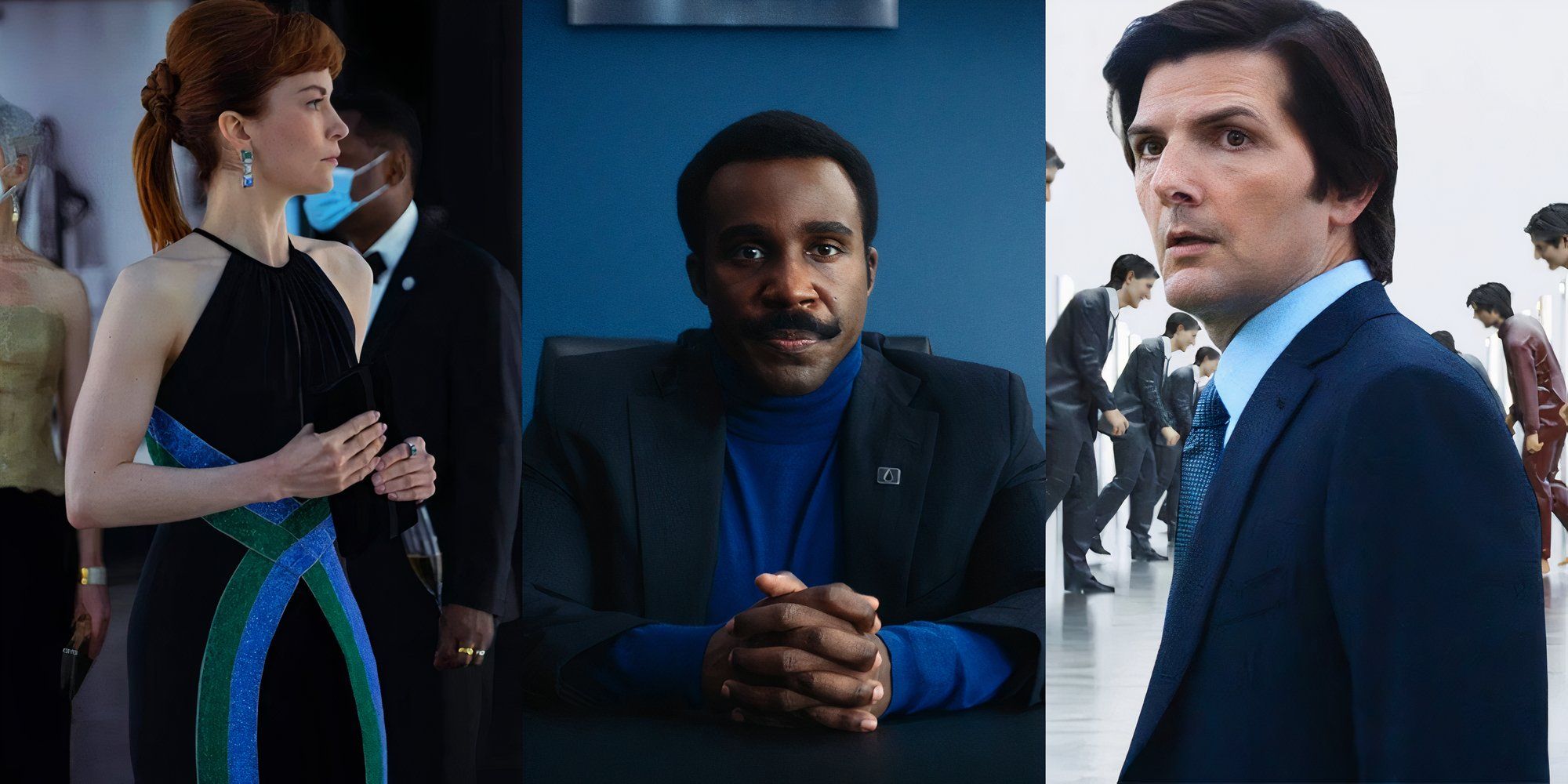
Adam Scott’s portrayal of Mark Scout in the Apple TV+ psychological thriller Severance serves as the narrative anchor for the series, anchoring a complex exploration of identity, grief, and corporate exploitation. By embodying a character who is surgically divided between his work and personal lives, Scott navigates the fine line between the detached, docile "Innie" and the mourning, grieving "Outie," providing a masterclass in nuanced, dual-layered performance.
Understanding the Premise: The Severance Procedure
The core conflict of Severance revolves around the "severance" procedure—a hypothetical neurosurgical operation that creates a permanent, non-overlapping divide in a person’s memories. Once the procedure is complete, the individual’s consciousness is split into two distinct entities: the "Outie," who lives in the outside world, and the "Innie," who exists exclusively within the windowless, labyrinthine hallways of Lumon Industries.
For Adam Scott’s character, Mark Scout, this divide is not merely a job description; it is a profound coping mechanism. His Outie is a widower struggling with the profound loss of his wife, Gemma. By electing to undergo the procedure, the Outie Mark effectively offloads eight hours of his daily sorrow, leaving him with no memory of his grief while he is "on the clock." Meanwhile, the Innie Mark—a man with no life, no memories, and no exit strategy—is trapped in a perpetual cycle of office drudgery, creating a claustrophobic existential crisis that drives the show’s central mystery.
The Dual Performance: Technique and Nuance
What distinguishes Adam Scott’s performance in Severance is his ability to play two versions of the same man who ostensibly share the same brain but possess entirely different life experiences and emotional architectures.
The Outie: Burdened by Memory
The Outie version of Mark Scout is characterized by lethargy, alcoholism, and a hollowed-out demeanor. He lives in a state of suspended animation, moving through his suburban life with a heavy, muted physicality. Scott plays this version with a palpable sense of exhaustion. The Outie’s primary motivation is avoidance; he is a man attempting to hide from his own trauma by compartmentalizing his existence. When Scott portrays the Outie, his posture is slumped, his gaze is frequently averted, and his vocal delivery is monotone and subdued, reflecting the emotional drain of mourning.
The Innie: A Tabula Rasa
In contrast, the Innie version of Mark is a man of limited experience but rapidly developing awareness. Initially, the Innie Mark is a corporate "team lead" who blindly adheres to the cryptic rules of the Macrodata Refinement department. As the season progresses, Scott shifts his performance to reflect the Innie’s awakening. He moves with more rigidity, mirroring the corporate environment’s sterile nature, but his eyes convey an emerging sense of curiosity and burgeoning rebellion. Watching Scott transition between these modes often requires subtle micro-expressions, where a single tilt of the head or a shift in the jawline signals to the audience which version of the character is currently in control.
The Role of Environment in Shaping Character
The architectural design of the show acts as a third participant in Scott’s performance. The Lumon office is characterized by blindingly bright lights, an infinite maze of white corridors, and a retro-futuristic aesthetic that emphasizes the sterility of the work environment.
For the actor, the set serves as a psychological barrier. The Innie cannot perceive the outside world; his reality is defined by the fluorescent glow and the hum of the computers. Scott’s performance is deeply tethered to this physical space. By keeping the Innie confined to this environment, the writers and Scott emphasize the lack of agency the character possesses. The contrast between the dark, shadowy world of the Outie’s home life and the overwhelming, artificial brilliance of the office highlights the inherent cruelty of the severance experiment.
Comparison of the Two Identities
To better understand how Scott differentiates the two personas, it is useful to look at their contrasting attributes. The following table highlights the distinct characteristics that Scott brings to each iteration of Mark Scout:
| Attribute | Outie Mark | Innie Mark |
|---|---|---|
| Primary Motivation | Escaping grief over his wife | Gaining freedom and understanding |
| Environment | Suburban home; town of Kier | The sterile Lumon office |
| Physicality | Slumped, tired, heavy | Rigid, alert, efficient |
| Emotional State | Deeply sad, cynical, detached | Curious, anxious, repressed |
| Memory Access | Knowledge of life outside Lumon | Zero memory of the outside world |
The Ethical Implications of the Performance
Through Adam Scott’s work in Severance, the audience is invited to grapple with the ethics of consciousness. Is the Innie a separate person, or is he merely a subordinate version of the Outie? This question forms the backbone of the series.
Scott’s performance forces the viewer to empathize with the Innie, who is effectively a slave to his Outie counterpart’s desire for convenience. This dynamic creates a "tortured self" scenario, where the actions of the Outie directly condemn the Innie to a life of imprisonment. Scott handles this moral complexity with a level of restraint that prevents the show from becoming a simple morality play. Instead, he allows the viewer to see that both versions of Mark are victims of the same predatory system.
Filming the Split: Technical Challenges
From a production standpoint, filming scenes where the transition occurs or where the two versions might theoretically intersect requires meticulous timing. While the show largely avoids the "split-screen" trope in favor of psychological depth, the technical challenge for Scott was maintaining continuity between scenes that were often shot out of order.
He had to track the "progression of discovery" for the Innie, ensuring that he didn’t act too knowledgeable early on, and conversely, ensuring that the Outie’s gradual unraveling remained consistent with his level of sobriety and emotional stability at any given time. This required a level of internal discipline that is rarely required in standard television dramas, elevating the role beyond the standard "protagonist in a mystery" trope.
Common Questions About Adam Scott in Severance
Does Adam Scott play two different characters in the show?
Yes, effectively. While they share the same physical body, the Innie and Outie are distinct personas. The Innie has no memory of the world outside of Lumon, while the Outie has no memory of his eight hours inside the office.
Why is Mark Scout willing to undergo the procedure?
The character’s wife, Gemma, died in a car accident. The Outie version of Mark is unable to cope with the pain of her absence. He chooses the severance procedure so that for eight hours a day, he does not have to consciously experience the agony of his loss.
How does Adam Scott prepare for such a dual role?
While specific acting techniques are personal, Scott has noted in various interviews that he relies heavily on the script’s strict adherence to the rules of the world. By staying grounded in the specific "rules" of what each version of Mark does and does not know, he ensures the integrity of the performance.
Is the Innie version of Mark aware of the show's mystery?
As the series progresses, the Innie version of Mark becomes the driving force behind investigating the mystery of Lumon. His lack of prior knowledge makes him a "blank slate" investigator, which allows him to approach the office’s strange occurrences with a curiosity the Outie would likely ignore.
Will Adam Scott continue in the role for future seasons?
As of 2026, Adam Scott remains the central figure of the series. The show’s structure allows for significant shifts in character development, and his portrayal of the dual-nature Mark continues to be the foundation upon which the narrative is built.
Final Recommendations for Viewers
If you are currently watching Severance, pay close attention to Adam Scott’s eyes during transition scenes. The subtle shift from the hollowed-out, red-eyed gaze of the Outie to the sharper, more questioning intensity of the Innie provides the best roadmap for understanding the psychological toll of the severance procedure. For a better appreciation of the show’s craft, consider re-watching the first three episodes specifically looking at how Scott modifies his vocal pitch and pacing when addressing his coworkers versus his interactions with characters like Mrs. Selvig.