Adam Jones is best known as the distinctive, visual-arts-trained lead guitarist for the progressive metal band Tool, celebrated for his intricate riffing, heavy use of effects, and unique compositional style. His approach blends dense metallic textures with ambient soundscapes, defining the modern heavy rock landscape.
Introduction to Adam Jones
Adam Jones occupies a unique position in modern rock and metal. As the primary guitarist for Tool, a band renowned for complex time signatures, philosophical lyrical themes, and long album cycles, Jones has cultivated a distinctive sonic identity. Rather than relying on traditional fast-paced solos or standard blues-based licks, he constructs monolithic riffs, atmospheric noise, and mathematically precise rhythmic patterns that lock in with drummer Danny Carey and bassist Justin Chancellor.
Beyond his musical contributions, Jones is an accomplished visual artist, sculptor, and special effects professional who worked in Hollywood before Tool achieved mainstream success. This background profoundly influences the band's identity, as Jones directs many of their cryptic music videos, designs their physical packaging, and oversees the striking visual aesthetics of their live performances. This overview examines his early life, his gear setup, his signature style, and his enduring cultural impact on contemporary guitar playing.
Formative Years and Early Career in Special Effects
Before achieving global recognition as a musician, Adam Jones spent considerable time honing his skills in the visual arts. Born in Libertyville, Illinois, Jones played violin during his youth before transitioning to bass and eventually guitar. However, his early professional aspirations leaned heavily toward the film industry rather than the concert stage.
Jones moved to Los Angeles, where he attended the Hollywood Make-Up Design and Film School. His talents in sculpting and special effects landed him work on high-profile Hollywood feature films. He collaborated with master creators like Rick Baker, working on creature design, makeup effects, and stop-motion animation. His film credits include notable productions such as Predator 2, Jurassic Park, Terminator 2: Judgment Day, Edward Scissorhands, and Ghostbusters II.
This practical experience in practical effects and cinematic storytelling proved pivotal for his future musical career. When Tool formed in Los Angeles in 1990—alongside vocalist Maynard James Keenan, drummer Danny Carey, and original bassist Paul D'Amour (who was later replaced by Justin Chancellor)—Jones brought a cinematic sensibility to the band. His Hollywood background directly informed the surreal, unsettling claymation and stop-motion music videos that became a hallmark of Tool's breakthrough era.
Musical Style and Guitar Technique
Adam Jones’s guitar style is a masterclass in economy, restraint, and rhythmic precision. Where many heavy metal guitarists prioritize speed, sweep-picking, and neoclassical scales, Jones focuses on texture, timing, and heavy groove. His playing is heavily anchored in drop-D tuning and variations thereof, allowing him to produce thick, resonant power chords with minimal physical fingering.
Rhythmic Complexity and Interlocking Grooves
Tool’s music is famous for utilizing odd time signatures—such as 7/8, 9/8, or shifting meters that defy easy counting. Jones treats his guitar less like a traditional melodic lead instrument and more like a percussive element that weaves through Danny Carey’s polyrhythmic drumming. His riffs often act as repeating, hypnotic motifs that build tension over several minutes before resolving into massive, earth-shattering climaxes.
Textural Soundscapes and Ambient Noise
In addition to his crunching heavy distortion, Jones excels at creating eerie, ambient soundscapes. He frequently utilizes delay, flanger, and chorus pedals to generate washes of sound that fill the spaces between heavy riffs. By manipulating volume swells, slide guitar techniques, and pick scrapes, he adds an organic, almost industrial texture to Tool’s catalog.
Signature Gear and Rig Architecture
A major component of Adam Jones’s iconic tone is his meticulous, highly specific approach to guitar gear. While many contemporary guitarists cycle through digital modelers and endless pedals, Jones maintains a remarkably consistent analog-heavy rig anchored around vintage amplification.
Guitars
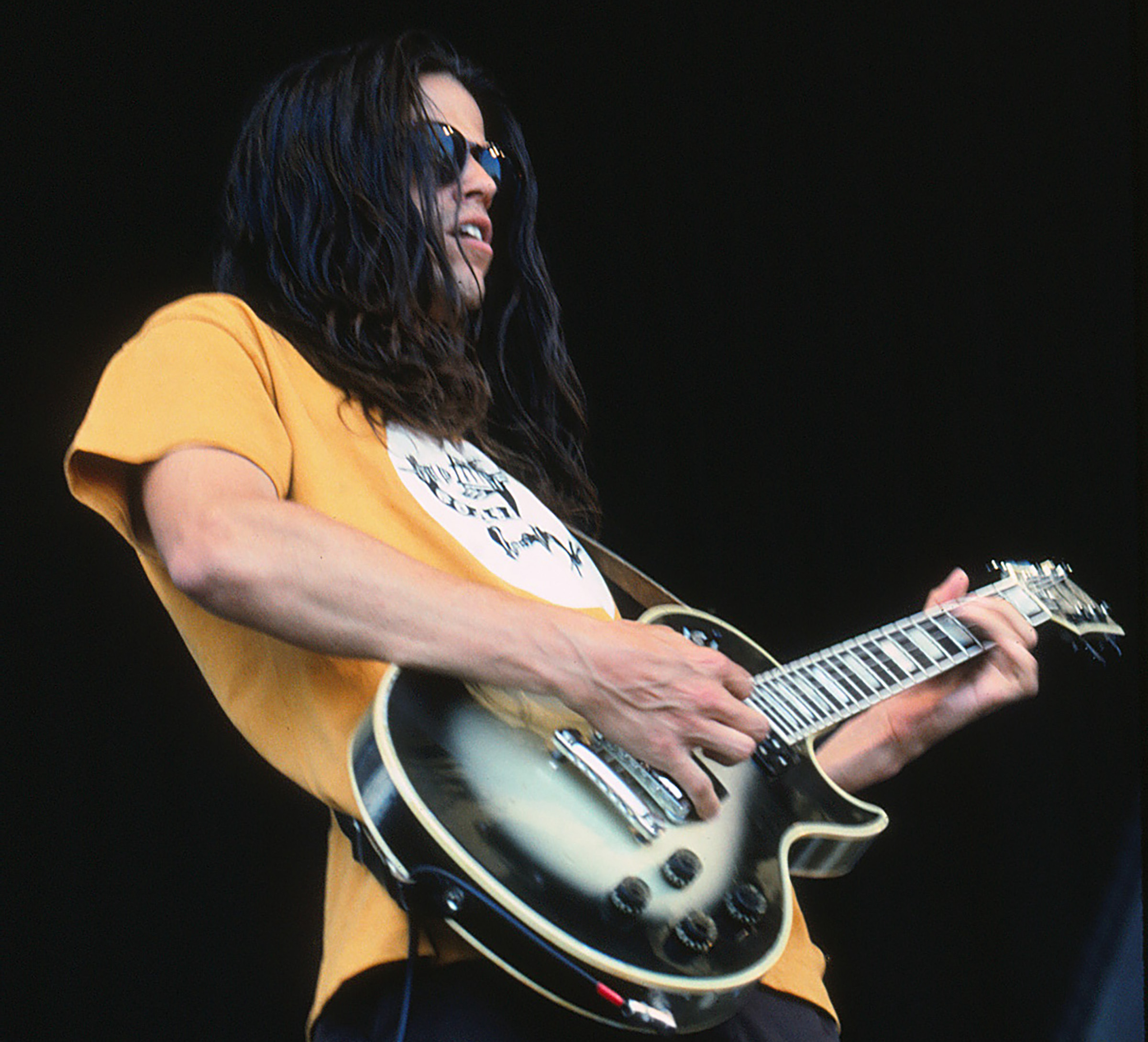
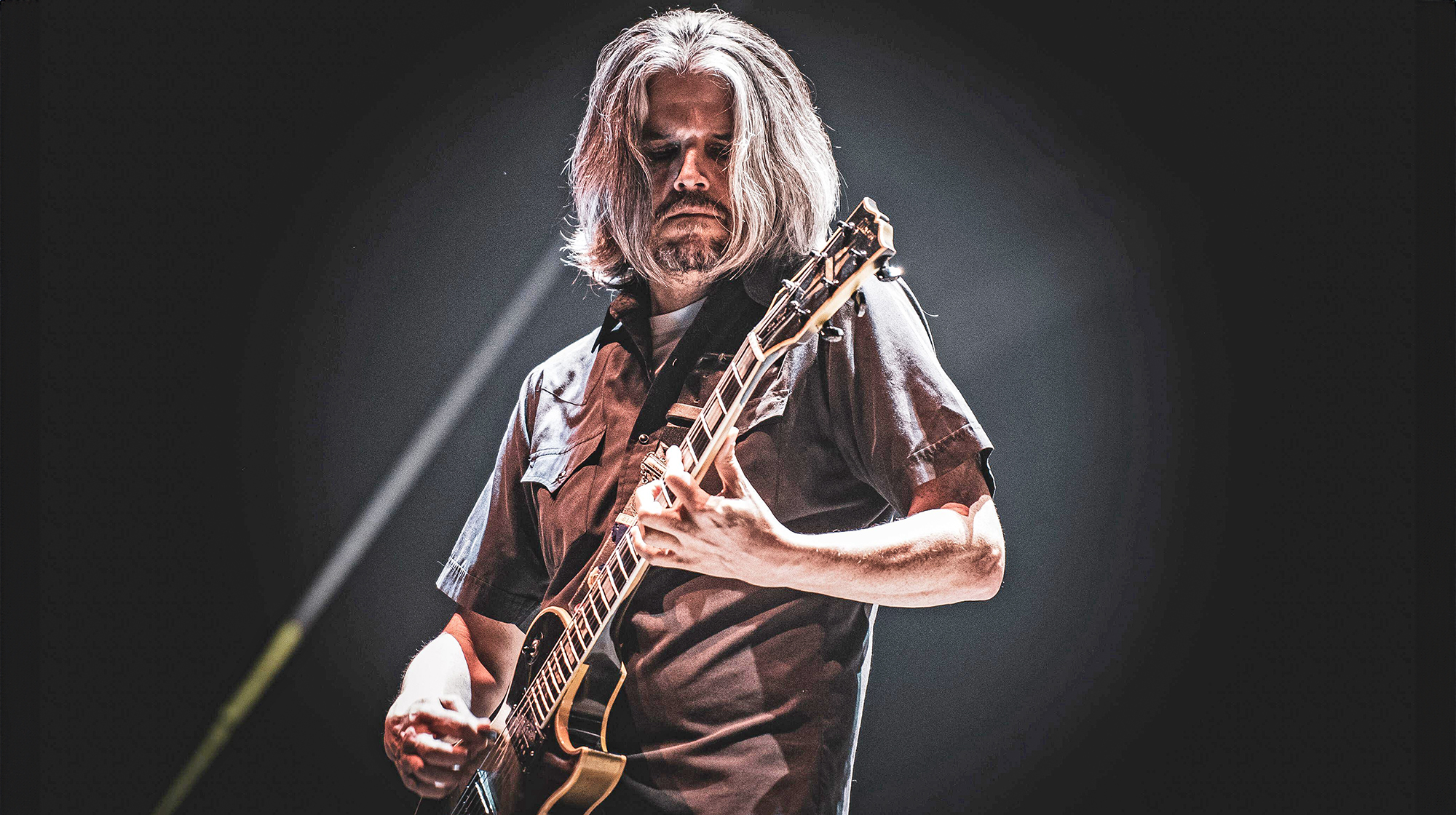
Jones is almost exclusively associated with vintage Gibson Les Paul guitars, specifically late-1970s models featuring "Silverburst" finishes. The most famous among these is his 1979 Gibson Les Paul Custom Silverburst, which serves as his primary recording and live instrument. Gibson has honored this legacy by releasing multiple official Adam Jones Signature Les Paul models, making his exact specifications available to the public.
Amplification
The cornerstone of Jones’s tone is a multi-amp setup that blends clean and distorted channels simultaneously. He historically pairs a modified Marshall Super Lead (often a 1976 non-master-volume model) with a Mesa/Boogie Dual Rectifier. This combination provides both the tight, mid-range punch of the Marshall and the thunderous low-end saturation of the Mesa/Boogie.
Effects Pedals
Jones uses a carefully curated selection of effects pedals to shape his signature atmosphere. His pedalboard typically includes:
- Boss DD-3 Digital Delay: Used for slapback and rhythmic delays.
- Ibanez Tube Screamer (historically an original TS9): Used primarily as a clean boost to push the front end of his Marshall amplifiers into tighter distortion.
- Dunlop Custom Shop Jim Dunlop Adam Jones Cry Baby Wah: A signature wah pedal tuned to his exact vocal-like sweep preferences.
- MXR Flanger and Phase 90: Used to add swirling, jet-like motion to heavy passages.
Comparative Overview of Career Segments
To understand the evolution of Adam Jones as a musician, it is helpful to examine the distinct phases of his career, from underground alternative metal originators to stadium-filling progressive giants.
| Career Phase | Key Albums / Projects | Musical Focus | Visual & Cultural Impact |
|---|---|---|---|
| Formative Era (1990–1995) | Opiate, Undertow | Heavy, aggressive alternative metal; aggressive drop-D riffs; raw production. | Emergence of claymation music videos; dark, visceral aesthetic. |
| Progressive Peak (1996–2006) | AEnima, Lateralus, 10,000 Days | Complex time signatures; extended song structures; cinematic ambience. | Grammy awards; iconic holographic packaging; surreal live projection art. |
| Modern Legacy (2019–Present) | Fear Inoculum | Masterclass in mature tone control; deeply layered sonic architecture. | Long-awaited return to streaming platforms; high-end signature instrument releases. |
Visual Arts Contributions and Direction
It is impossible to separate Adam Jones the musician from Adam Jones the visual artist. Within Tool, Jones acts as the primary visual director. He conceptualizes the band's album art, stage design, and promotional materials.
His work on albums like Lateralus and 10,000 Days pushed the boundaries of physical CD packaging, incorporating transparent overlays, stereoscopic 3D lenses, and intricate occult-inspired illustrations. On stage, Jones orchestrates immersive visual displays that synchronize complex lighting rigs, laser shows, and surreal video backdrops, transforming a standard rock concert into a multidisciplinary art installation.
Cultural Impact and Legacy
Adam Jones has left an indelible mark on the landscape of modern rock guitar. He proved that heavy metal does not require lightning-fast shredding to be compelling, complex, or emotionally resonant. Instead, his disciplined approach—valuing space, tone, rhythm, and artistic integrity above all else—has inspired generations of alternative and progressive metal guitarists.
Through his rare combination of cinematic visual direction and uncompromising sonic architecture, Jones remains one of the most influential and singular guitarists of the modern era.
Frequently Asked Questions
What kind of guitar does Adam Jones play?
Adam Jones primarily plays vintage Gibson Les Paul Custom guitars, most notably a 1979 model featuring a Silverburst finish. He has also collaborated with Gibson to release official signature replicas of this exact instrument for collectors and players.
What tuning does Adam Jones use?
Jones primarily relies on drop-D tuning (DADGBE) for the vast majority of Tool's catalog, occasionally utilizing variations and drop tunings that allow him to easily execute heavy, low-end power chords while maintaining flexibility across the fretboard.
Did Adam Jones work in Hollywood before joining Tool?
Yes. Before achieving fame with Tool, Jones worked as a professional special effects artist and sculptor in Hollywood. He collaborated with industry legends like Rick Baker and contributed creature effects and makeup to major feature films such as Jurassic Park and Terminator 2: Judgment Day.
How does Adam Jones achieve his signature guitar tone?
His tone is achieved by blending multiple amplifiers simultaneously—specifically pairing a vintage modified Marshall Super Lead with a Mesa/Boogie Dual Rectifier. He supplements this setup with classic analog pedals, including digital delays, flangers, and overdrive pedals used as boosts.
Next Actions and Further Exploration
For those looking to dive deeper into the work of Adam Jones, exploring Tool’s foundational albums Lateralus and AEnima offers a comprehensive masterclass in modern guitar composition and texture. Additionally, examining his signature gear specifications through official Gibson and Dunlop releases provides valuable insight for guitarists seeking to replicate his legendary tone.