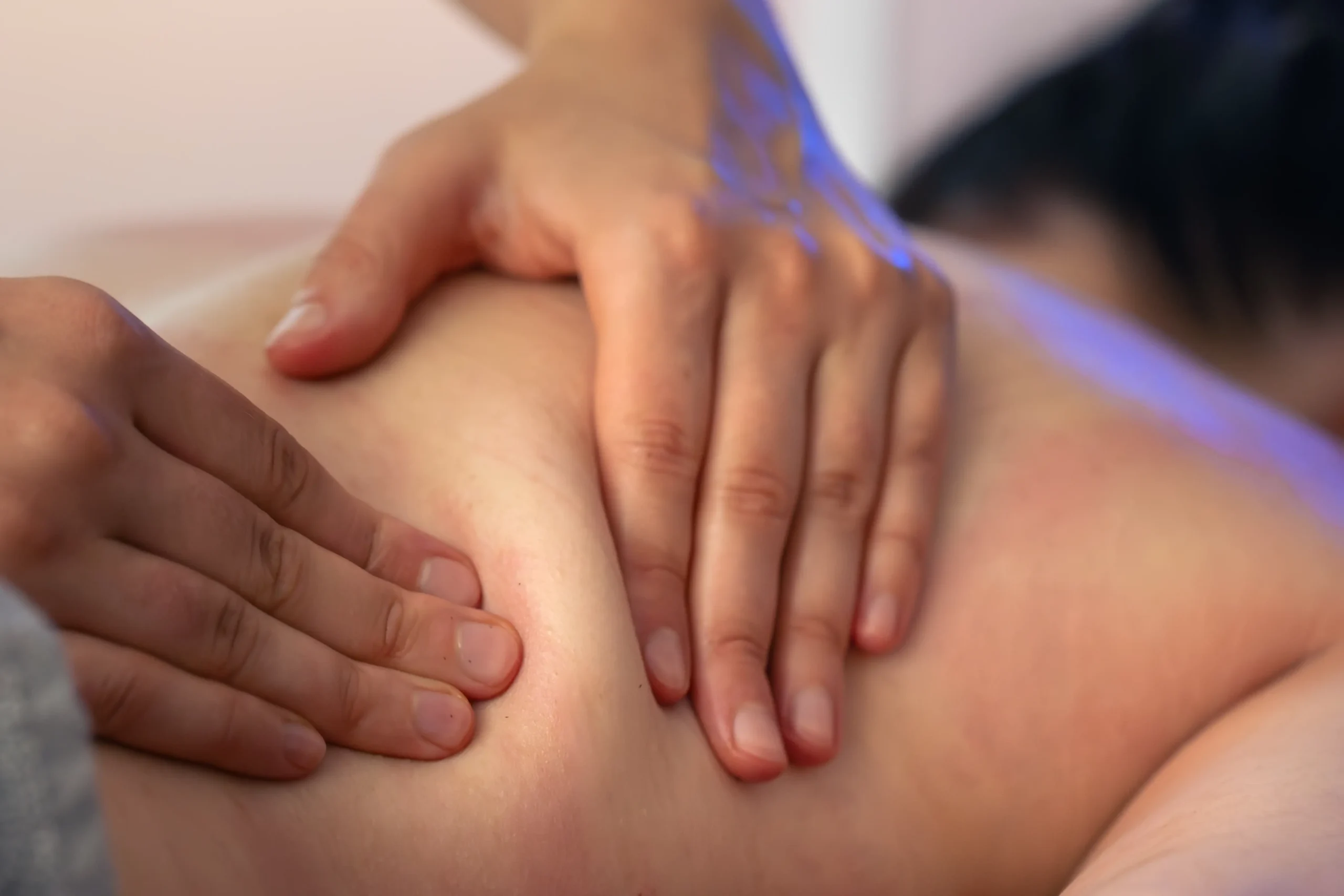
Acupressure points on the back, such as the Kidney Shu (B23) for lower back pain and the Jian Jing (GB21) for shoulder tension, provide relief by stimulating the nervous system to release endorphins. Applying firm pressure for 1–3 minutes helps improve circulation, reduce muscle stiffness, and restore energetic balance within the body’s meridian pathways.
Acupressure is a foundational element of Traditional Chinese Medicine (TCM) that has gained significant traction in mainstream Western wellness protocols by 2026. Unlike acupuncture, which utilizes needles, acupressure relies on physical pressure—applied by thumbs, fingers, or specialized tools—to stimulate specific points along the body’s meridians. The back is home to some of the most influential "Shu" points, which are believed to connect directly to internal organs and the central nervous system. For individuals suffering from chronic stiffness, sedentary fatigue, or acute muscle strain, understanding how to navigate these points offers a portable, cost-free method of pain management.
The Physiological Mechanism of Back Acupressure
To understand why pressing a specific spot on the lower back can alleviate pain, one must look at both TCM theory and modern physiological science. In TCM, back pain is often viewed as a "stagnation" of Qi (vital energy) or blood. By stimulating specific points, you are essentially "unblocking" the flow, allowing the body to heal itself.
From a 2026 biomedical perspective, acupressure functions through the Gate Control Theory of Pain. When you apply pressure to an acupoint, you stimulate large-diameter sensory fibers. These fibers send signals to the spinal cord faster than the smaller fibers that carry pain signals. Effectively, the pressure "shuts the gate" on pain sensation. Furthermore, the mechanical stimulation of these points triggers the brain to release endorphins and encephalins, the body's natural painkillers, while simultaneously reducing cortisol levels.
Increased local blood circulation is another critical benefit. Deep pressure causes vasodilation in the microvessels surrounding the muscles of the spine. This flush of fresh, oxygenated blood helps remove metabolic waste products like lactic acid, which often contribute to that "nagging" ache after a long day of work.
Primary Acupressure Points for Lower Back Relief
The lower back (lumbar region) is the most common area for musculoskeletal complaints. The following points are part of the Bladder Meridian, which runs down the entire length of the back.
B23: Kidney Shu (Shenshu)
Located at the level of the lower border of the spinous process of the second lumbar vertebra, roughly two finger-widths lateral to the spine. This is arguably the most vital point for lower back health.
- Why it works: In TCM, the kidneys govern the bones and the lower back. Stimulating B23 is believed to "tonify" or strengthen the kidney energy.
- How to find it: Place your hands on your waist. Your thumbs will naturally rest on your back. Slide them toward the spine until you feel the large muscles (erector spinae). The point is in the center of that muscle mass, level with your belly button.
- Application: Use your thumbs to apply steady, stationary pressure. Breathe deeply for one minute. It is common to feel a dull ache here, which indicates the point is "active."
B47: The Will’s Chamber (Zhishi)
Located four finger-widths lateral to the spine, on the same horizontal level as B23.
- Why it works: This point is frequently used for extreme fatigue and chronic lower back pain that radiates into the hips. It is also associated with the emotional aspect of "willpower" in TCM.
- Application: Since this point is further from the spine, it is often easier to reach with your knuckles or a massage ball. It helps release the outer layer of the lumbar fascia.
B48: Womb and Vitals (Yanggang)
Located in the center of the buttock, roughly two finger-widths to the side of the sacrum (the large triangular bone at the base of the spine).
- Why it works: While technically in the gluteal region, B48 is essential for lower back relief because it addresses sciatica and hip tension that pulls on the lumbar vertebrae.
- Application: This point requires deeper pressure. Many find success by lying on their back and placing a tennis ball or a firm acupressure tool under this spot, allowing gravity to do the work.
Acupressure Points for Mid and Upper Back Relief
The upper back and shoulders often bear the brunt of "tech neck" and postural stress. The following points focus on the thoracic and cervical regions.
GB21: Shoulder Well (Jian Jing)
Located at the highest point of the shoulder muscle (trapezius), midway between the side of the neck and the edge of the shoulder bone.
- Why it works: This is a "heavy hitter" for neck stiffness, headaches, and shoulder tension. It helps "descend" the energy that gets stuck in the upper body due to stress.
- Caution: This point should be avoided during pregnancy as it is known to induce labor.
- Application: Pinch the muscle between your thumb and index finger, or use the opposite hand's fingers to press downward firmly.
B10: Celestial Pillar (Tianzhu)
Located one finger-width below the base of the skull, on the large vertical muscles on both sides of the spine.
- Why it works: B10 is excellent for relieving exhaustion, heavy-headedness, and upper back stiffness that originates from the cervical spine.
- Application: Use your middle fingers to press upward toward the base of the skull. Close your eyes and let your head tilt back slightly to deepen the contact.
B38: Vital Diaphragm (Gaohuangshu)
Located between the spine and the shoulder blade (scapula), level with the heart.
- Why it works: This point is often where "knots" form. It is traditionally used for respiratory issues and emotional grief, both of which can cause the mid-back to tighten and round forward.
- Application: This point is difficult to reach alone. Using a "hook" style massage tool or leaning against a corner of a wall can provide the necessary leverage to reach the muscle fibers between the scapula and the spine.
Comparative Overview of Back Acupoints
| Point Code | Traditional Name | General Location | Primary Benefit |
|---|---|---|---|
| B23 | Shenshu | Lower back (level with navel) | Chronic lower back pain, fatigue |
| B47 | Zhishi | Outer lower back (beside B23) | Hip tension, sciatica, stress |
| GB21 | Jian Jing | Top of the shoulder | Neck stiffness, headaches, "tech neck" |
| B10 | Tianzhu | Base of the skull | Stress-related upper back tension |
| B38 | Gaohuangshu | Between shoulder blades | Mid-back knots, postural alignment |
| B54 | Weizhong | Back of the knee crease | Acute lower back spasms, stiffness |
Step-by-Step Guide to a Back Acupressure Session
To achieve lasting relief, the method of application is just as important as the location of the point. Following a structured protocol ensures safety and maximizes the neurological response.
- Preparation and Posture: Find a comfortable position. For lower back points, sitting on a firm chair or lying on your side is often best. For upper back points, sitting upright with relaxed shoulders is ideal. Ensure your hands are warm; cold fingers can cause muscles to contract defensively.
- Locating the "Tender Spot": Use your fingertips to palpate the general area described for each point. You are looking for a spot that feels slightly more sensitive, "zingy," or dense than the surrounding tissue. This is often referred to as the "trigger point" or the active acupoint.
- Applying Pressure: Use a steady, perpendicular pressure. You can use your thumb, the knuckle of your index finger, or the end of a blunt tool.
- Level 1 (Light): For general relaxation.
- Level 2 (Medium): A "good hurt" or a dull ache. This is the therapeutic range.
- Level 3 (Firm): Only used for thick muscle groups like the glutes or traps.
- The "De Qi" Sensation: In 2026, practitioners still emphasize the "De Qi" sensation—a feeling of heaviness, numbness, or tingling that radiates from the point. When you feel this, you know you have engaged the nervous system.
- Breathing and Timing: Hold the pressure for 60 to 90 seconds. While holding, take slow, diaphragmatic breaths. On each exhale, imagine the muscle melting away from the pressure.
- Release and Integration: Release the pressure slowly. Do not snap your hand away. Gently rub the area in a circular motion to restore surface circulation.
Safety Guidelines and Contraindications
While acupressure is generally safe, certain conditions require caution or total avoidance of specific points.
- Pregnancy: As mentioned, points like GB21 and certain points on the lower back/sacrum (like the Bladder points in the sacral region) can stimulate uterine contractions. Always consult a prenatal specialist before attempting back acupressure during pregnancy.
- Acute Injuries: Never apply heavy pressure to a site of a recent fracture, disc herniation (in the acute phase), or severe inflammation. Acupressure is a supportive therapy, not a replacement for emergency orthopedic care.
- Skin Conditions: Avoid areas with open wounds, rashes, or contagious skin infections.
- Blood Thinners: If you are on anticoagulant medication, use very light pressure to avoid deep bruising.
In many modern healthcare settings as of 2026, acupressure is used as a "bridge" therapy. It is often recommended by physical therapists to help patients relax their muscles before performing corrective exercises. According to the National Center for Complementary and Integrative Health (NCCIH), integrative approaches like acupressure can significantly improve the quality of life for those with chronic pain conditions.
Frequently Asked Questions
How often should I perform acupressure on my back?
For chronic tension, 2–3 times a day is generally recommended. However, even a single session can provide temporary relief from acute stress. It is better to perform short, consistent sessions (5–10 minutes) than one long, aggressive session that might leave the muscles feeling bruised.
Can I use acupressure mats for these back points?
Yes, acupressure mats are an excellent way to stimulate multiple Bladder Meridian points simultaneously. Since the mats have thousands of plastic spikes, they provide a broad "diffuse" stimulation rather than the targeted "local" stimulation of a thumb. They are particularly effective for B23, B47, and B38 when lying flat.
Why does the pain sometimes feel worse immediately after pressing?
This is often a "rebound" effect. If the pressure was too intense, the muscle may have gone into a protective spasm. Alternatively, as blood flow returns to a stagnant area, you may become more aware of the underlying soreness. Always start with light pressure and build up gradually.
Do I need to see a professional to get results?
While a trained practitioner can find points with more precision and provide a more relaxing environment, self-acupressure is highly effective for maintenance. Many people use a combination of professional sessions and daily self-care to manage back health.
Is there a specific point for sciatica?
B54 (Weizhong), located exactly in the center of the crease at the back of the knee, is the "command point" for the lower back and is frequently used for sciatica. Even though it isn't on the back itself, it is one of the most powerful points for releasing the lumbar spine.
Next Steps for Long-Term Relief
To make the most of back acupressure, integrate it into a broader postural hygiene routine. Use the points described here—specifically B23 and GB21—during your work breaks to counteract the physical strain of sitting. Combine these techniques with gentle spinal mobility exercises, such as the "Cat-Cow" stretch or pelvic tilts, to ensure that the "unblocked" energy and improved circulation lead to functional movement. If your back pain is accompanied by numbness, tingling down the legs, or loss of strength, seek a consultation with a medical professional to rule out structural nerve compression.