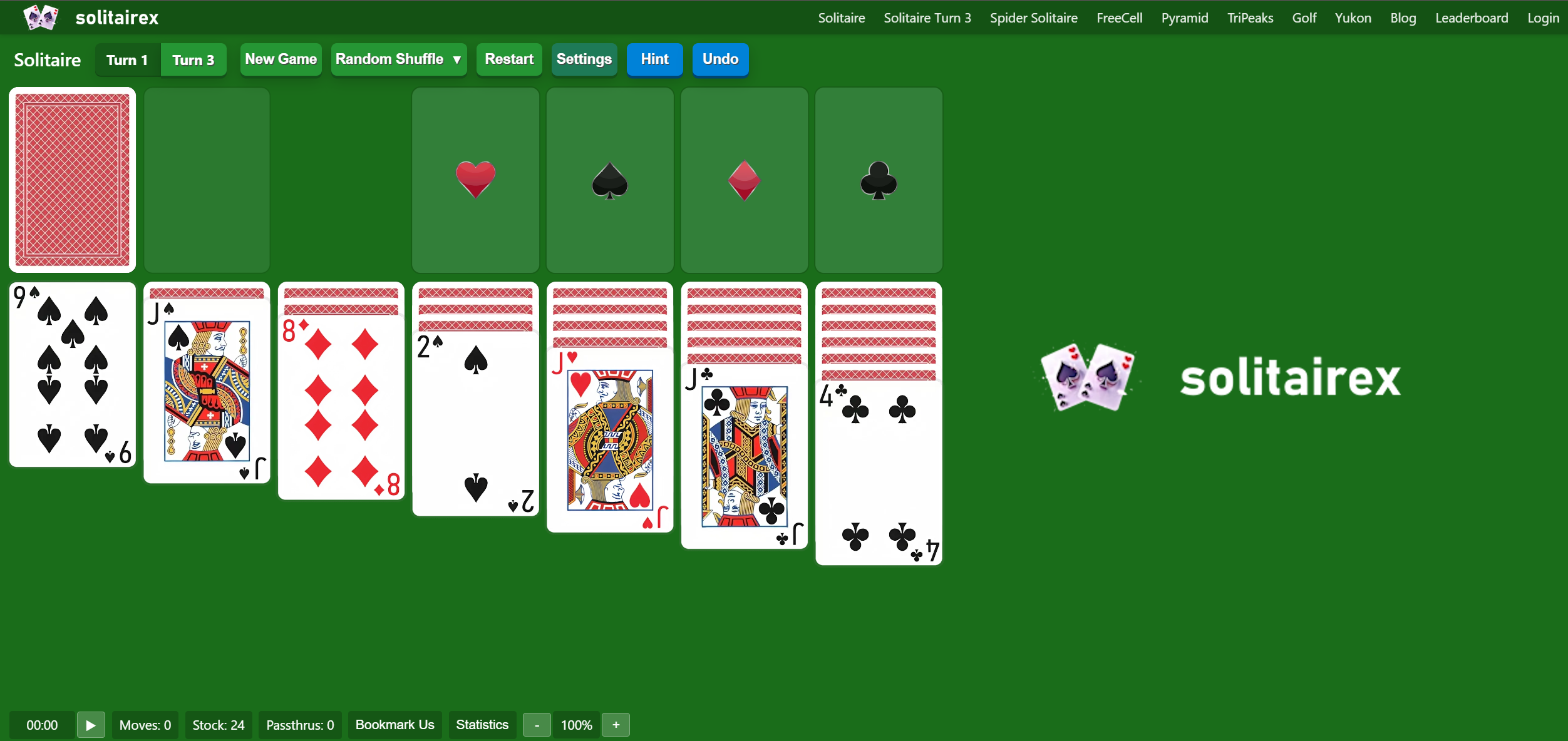
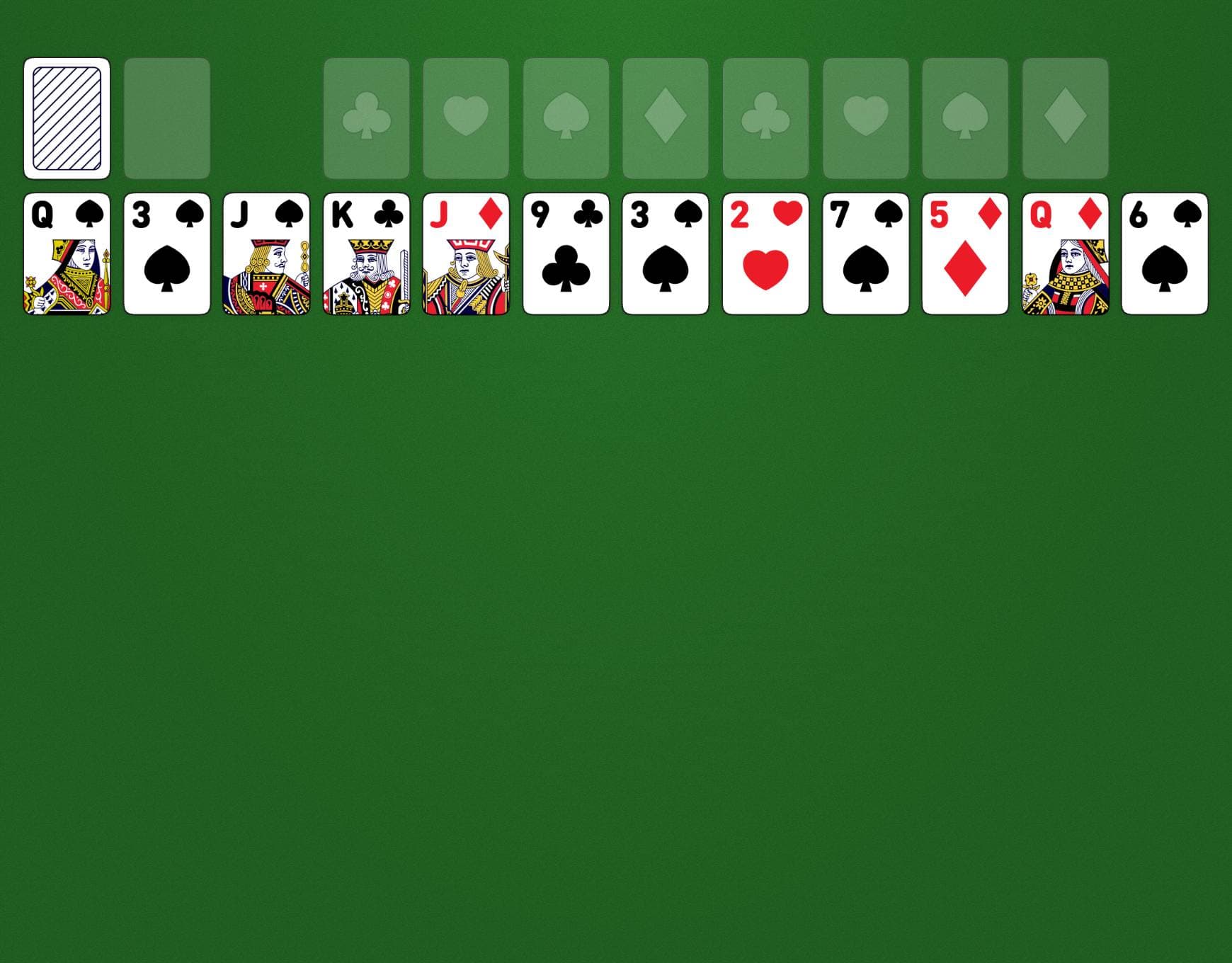
Ace Solitaire is a specialized, strategic variation of the classic card game that prioritizes the early liberation and management of Aces to build foundation piles. Unlike standard Klondike, where the player often focuses on moving cards between columns to expose hidden values, Ace Solitaire demands a disciplined approach to foundation building, as the Aces are typically moved to the top positions at the very beginning of the game. By understanding the core mechanics and the mathematical necessity of tracking remaining cards, players can significantly increase their win rate in this challenging format.
The Core Concept of Ace Solitaire
At its heart, Ace Solitaire is defined by the immediate removal of the four Aces from the deck to serve as the base for the four suit piles. While many casual players treat solitaire as a game of chance, Ace Solitaire is a game of resource management. The "Ace" in the title signifies the game’s primary strategic pillar: the foundation piles must be started with the Aces immediately, meaning the player must then find and maneuver the corresponding twos, threes, and eventually the kings of each suit to complete the game.
The difficulty arises because the deck is depleted of these foundation-starting cards right from the start. In many versions of this game, the remaining 48 cards are laid out in a tableau where the rules for moving cards—often involving alternating colors and descending order—must be applied with extreme caution. Because you cannot use Aces to "hide" other cards in the foundation, you are restricted to moving cards within the tableau until you can successfully build sequences that lead to the next card in a foundation sequence.
Prerequisites and Setup
Before starting a game, it is essential to ensure you are playing by the standard ruleset that distinguishes Ace Solitaire from other variants like FreeCell or Spider.
- The Deck: A standard 52-card deck is required.
- Foundation Placement: The four Aces are extracted from the deck before play begins. These are placed in a horizontal row at the top of the playing area.
- Tableau Layout: The remaining 48 cards are dealt into rows. In most versions, this results in eight columns of six cards each.
- Objective: To move all remaining cards onto the foundation piles, sorted by suit, starting from the Ace and ending with the King.
Understanding this initial state is critical. Because you start with the foundation piles ready to receive cards, your entire goal is to uncover the "low" cards (the 2s, 3s, and 4s) trapped beneath the "high" cards (the Jacks, Queens, and Kings).
Strategic Gameplay: Why and How
The primary challenge in Ace Solitaire is the "locked card" problem. Because you have already placed the Aces, you have no buffer zone. Every move you make must be calculated to prevent a situation where the cards you need to progress are buried at the bottom of a column that you cannot access because the tableau rules prevent you from moving a stack.
Managing the Tableau
The tableau functions as your workspace. You must move cards to expose lower-value cards. A common mistake is moving cards simply because they can be moved. In Ace Solitaire, you should only move a card if it directly contributes to one of two goals:
- Foundation Advancement: Does moving this card expose a 2, 3, or 4 that can go to a foundation pile?
- Column Clearing: Does moving this card allow me to empty a column to move a King or a large sequence, thereby uncovering a buried card?
The Importance of Sequences
While building sequences in the tableau (e.g., placing a red 7 on a black 8), you are essentially creating a temporary holding area. However, keep in mind that every card placed into a sequence is "locked" until the card above it is moved. If you bury a 2 under a Queen, you have effectively paralyzed that column until you can move the Queen, which usually requires finding a Jack to place it on, and so on. This "cascade effect" is the primary cause of losses in Ace Solitaire.
Common Mistakes and Troubleshooting
New players often struggle with the transition from traditional Solitaire to the Ace-first model. Below are the most frequent pitfalls and how to mitigate them.
- Over-committing to Sequences: Players often build long chains in the tableau. If you build a chain of six cards, you have effectively hidden six cards that might have been essential for your foundation. If you cannot move those cards to the foundation piles, you have essentially destroyed your own mobility.
- Ignoring Empty Columns: An empty column is the most valuable resource in Ace Solitaire. Use empty columns to move entire sequences, not just individual cards. Clearing a column should be a higher priority than moving a single card to a foundation pile if that card is not immediately needed.
- The King Trap: Placing a King in a column is necessary to build a sequence, but be aware that once a King is placed, that column is permanently restricted at the top. Only place a King when you are certain that the cards you need are not buried beneath it.
Comparative Overview of Solitaire Variants
To better understand where Ace Solitaire fits, it helps to compare it against other popular variants. The table below outlines how the "Foundation Start" rule impacts gameplay.
| Variant | Foundation Start | Tableau Movement | Complexity |
|---|---|---|---|
| Ace Solitaire | Aces placed first | Alternating color | High |
| Klondike | Aces revealed during play | Alternating color | Moderate |
| FreeCell | Aces revealed during play | Alternating color | Very High |
| Spider | No foundation piles | Suit-based matching | Moderate |
In this comparison, Ace Solitaire is unique because it forces a top-down approach. While other games require you to build the foundation piles gradually, Ace Solitaire requires you to treat the foundation as the destination and the tableau as a transit system that you must clear as rapidly as possible.
Troubleshooting Your Strategy
If you find yourself stuck, look for these specific indicators:
- The "Hidden Suit" Problem: If you have three foundations moving steadily but one suit is stalled, you have likely buried the missing cards of that suit deep in your tableau. Your priority must shift entirely to clearing that specific column.
- Foundation Over-building: Sometimes, players move too many cards to the foundation. While it seems counterintuitive, there are times when you need a 5 of Hearts in the tableau to move a 6 of Hearts, but you have already moved the 5 to the foundation. Always check if you need a card for a move in the tableau before sending it to the foundation, unless it is a 2 or 3.
- Cycle Analysis: If no moves are possible, analyze the top cards of every column. If the top cards are all higher than the cards currently required for the foundation, the game is likely in a dead-end state.
Advanced Tips for 2026 Play
As of 2026, many digital platforms offer "Undo" features and "Hint" systems. Use these as learning tools rather than crutches. If you use a hint, ask yourself why that move was suggested. Did it free up a 2? Did it clear a column? Understanding the logic behind the suggestion is the fastest way to improve your manual play. Furthermore, track your win rate by suit. If you find you consistently lose with a specific suit, you may be biased in how you organize your tableau, often leaving that specific suit for last.
Frequently Asked Questions
Does Ace Solitaire require a different deck than Klondike? No, Ace Solitaire uses a standard 52-card deck. The only difference is the initial setup where the four Aces are removed to establish the foundation piles before the tableau is populated.
Is it possible to win every game of Ace Solitaire? No. Like many solitaire variants, some distributions of cards are mathematically impossible to solve. The game is designed to challenge your decision-making, and even expert players will encounter scenarios where the cards are effectively locked against any possible winning move.
Why should I move Aces first instead of during play? Moving the Aces first is the defining rule of this variant. It changes the goal of the game from "revealing the Aces" to "managing the remaining cards." It simplifies the end-game but makes the mid-game management much more difficult.
What is the best way to clear columns? Focus on moving cards to the foundation piles as soon as they become available. Once a column has fewer than three cards, it becomes significantly easier to move the remaining cards to either other columns or the foundations.
Can I move Kings to empty spaces? Yes. In almost all variations, an empty column can be filled with a King. Use this to your advantage to manage the board, but ensure you are not creating a blockage by placing the King prematurely.
What do I do if I am stuck with no moves? If no moves are available in the tableau and nothing can be added to the foundations, the game is stalled. If you are playing a digital version, use the "Undo" button to go back to the point where you made your last series of moves, as one of those decisions likely caused the deadlock.
Final Recommendation
To master Ace Solitaire, treat the game as a series of forced choices rather than a casual puzzle. Start by clearing your Aces, then aggressively prioritize moves that reduce the number of cards in your tableau columns. Your goal is to keep the "low" cards (2, 3, 4) moving toward the foundations as quickly as possible. When you reach a point where no more foundation moves are possible, pivot your focus entirely to exposing the cards beneath your existing tableau piles. By maintaining empty columns as a buffer for your sequences, you will find that the game becomes significantly more manageable and your completion rate will improve.