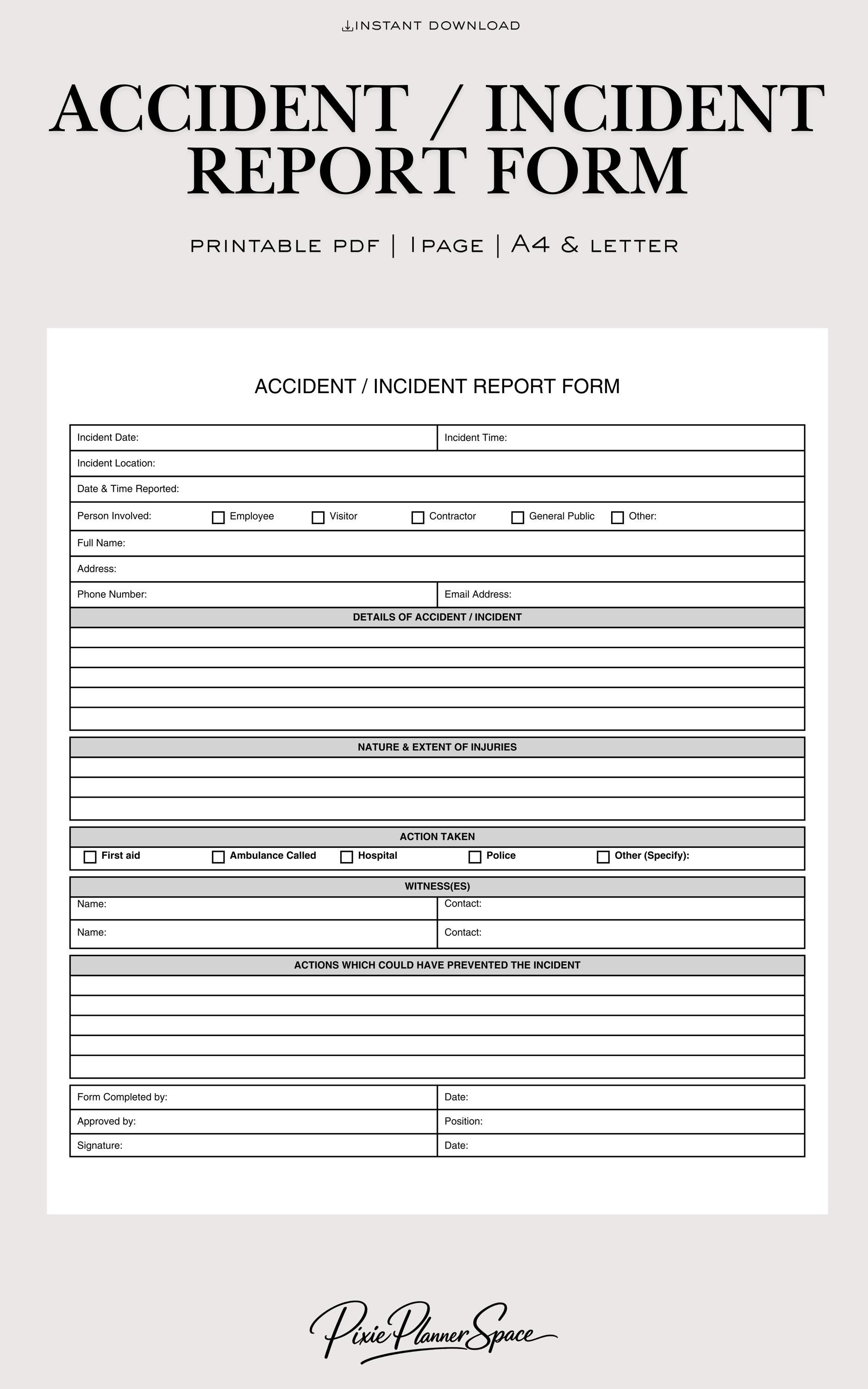
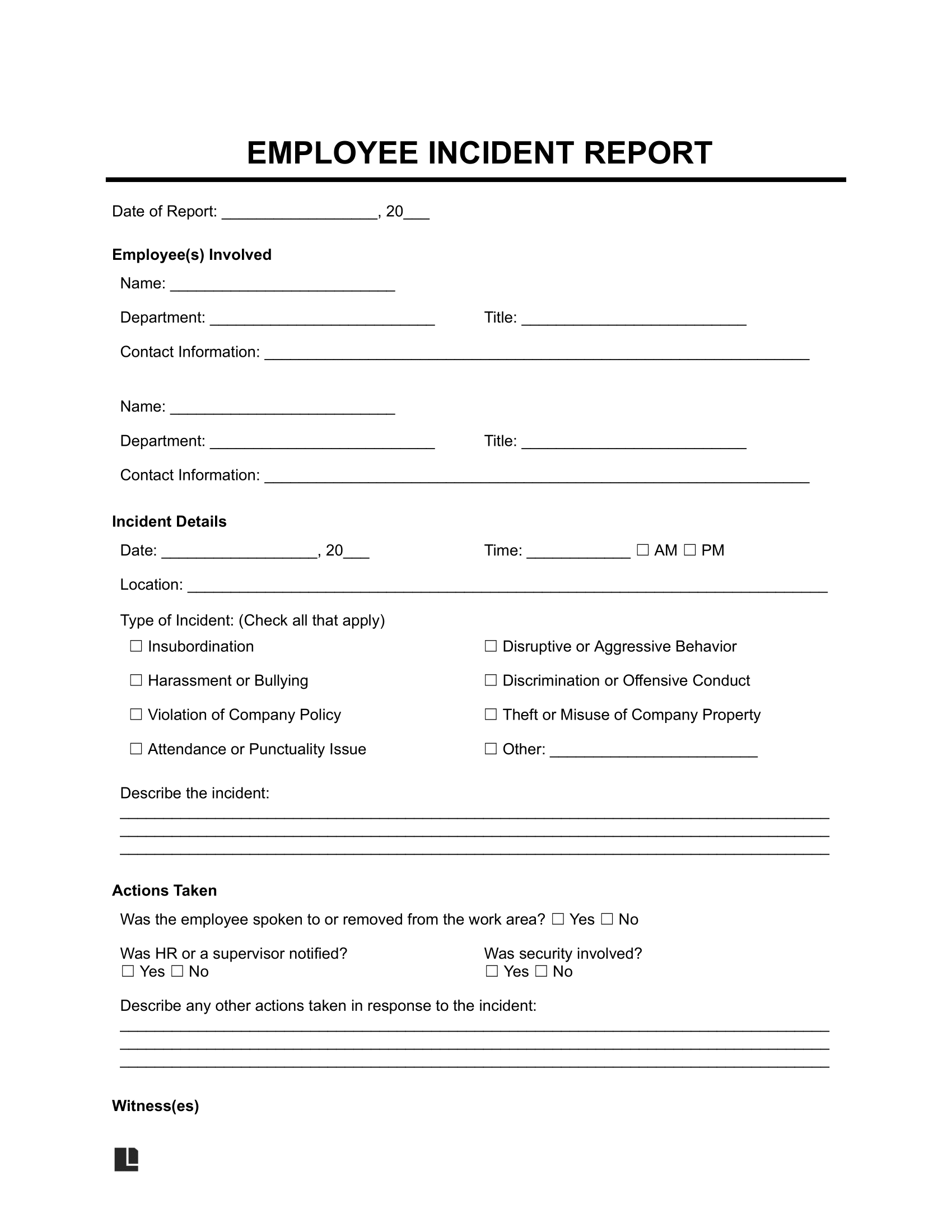
An accident incident report form PDF is a standardized document used to record the details of an unplanned event, injury, or near-miss within a workplace or professional environment. In 2026, these digital forms serve as the primary record for legal compliance, insurance claims, and internal safety audits, ensuring all critical data is captured accurately and securely.
The Vital Role of Accident and Incident Reporting
Accident and incident reporting is the cornerstone of any robust Occupational Health and Safety (OHS) program. While the terms "accident" and "incident" are often used interchangeably, professional safety standards in 2026 maintain a clear distinction. An accident typically refers to an event that resulted in physical harm, property damage, or environmental impact. An incident is a broader term encompassing both accidents and "near-misses"—events where no harm occurred, but the potential for injury was present.
Utilizing a PDF format for these reports has become the global standard due to the document's ability to maintain formatting across different devices, support digital signatures, and integrate with automated safety management systems. Organizations use these forms not merely to fulfill a bureaucratic requirement but to identify patterns, mitigate risks, and prevent future recurrences.
A well-documented report provides a factual timeline that protects both the employer and the employee. For the employer, it demonstrates a commitment to safety and provides a defense against fraudulent claims. For the employee, it ensures that injuries sustained on the job are officially recognized, facilitating access to workers' compensation and medical benefits.
Essential Components of a Professional Incident Report PDF
To be legally and operationally effective, an accident incident report form must be comprehensive. In 2026, standard templates have evolved to capture more granular data than previous decades, reflecting a deeper understanding of human factors and environmental variables.
1. Administrative Identification
This section includes the basic "who, when, and where." It must capture the exact date and time of the occurrence, the specific location (often including GPS coordinates in field-based industries), and the names of the individuals involved. It is also standard practice to include the name and title of the person completing the report, as well as the names of any supervisors present at the time.
2. Detailed Description of the Event
This is the narrative core of the document. It requires a chronological account of what happened leading up to, during, and immediately following the incident. High-quality forms prompt the user to avoid subjective language (e.g., "he was careless") in favor of objective observations (e.g., "the employee did not engage the safety guard"). In 2026, many PDFs include fields for embedding digital photographs or links to video surveillance footage.
3. Injury and Damage Assessment
If an injury occurred, the form must detail the nature of the harm (e.g., laceration, strain, inhalation) and the specific body part affected. For property or equipment damage, the report should specify the machinery involved and the estimated severity of the damage. This section is critical for insurance adjusters who rely on contemporaneous notes to process claims.
4. Witness Statements and Contact Information
Witnesses provide an external perspective that is vital for verifying the narrative. A standard PDF form includes dedicated sections for witness names, their relationship to the company, and their verbatim accounts of the event. Ensuring this data is captured immediately is essential, as memories fade and external influences can alter a witness's perception over time.
5. Root Cause Analysis and Corrective Actions
Modern incident reports go beyond documenting the "what" to explore the "why." This section often utilizes the "Five Whys" technique or a similar methodology to identify systemic failures, such as inadequate training, faulty equipment, or poor lighting. Finally, the form must outline the immediate and long-term actions taken to prevent a recurrence, assigning responsibility and deadlines for these tasks.
Why the PDF Format is Superior for Safety Documentation
In 2026, the transition from paper to digital documentation is nearly complete, and the PDF (Portable Document Format) remains the preferred medium for several technical and legal reasons.
- Integrity and Non-Repudiation: Once a PDF is finalized and digitally signed, it becomes difficult to alter without leaving a digital trail. This is crucial for legal proceedings where the authenticity of a document is under scrutiny.
- Fillable Form Technology: Modern PDFs are not static pages but interactive tools. They utilize drop-down menus, checkboxes, and required fields that prevent the submission of incomplete reports. This ensures data consistency across the organization.
- Mobile Compatibility: Safety officers in the field can access and complete a PDF form on a tablet or smartphone. This allows for real-time reporting, which significantly increases the accuracy of the data compared to reports written hours or days later.
- Accessibility and Archiving: PDF/A (the ISO-standardized version of PDF for long-term archiving) ensures that incident reports remain readable for decades, regardless of how software evolves. This is vital for industries with long-term liability exposure, such as construction or chemical manufacturing.
Regulatory Compliance and Legal Standards
Reporting is not just a best practice; it is a legal mandate in most jurisdictions. The requirements for what must be included in an accident report are often dictated by national or regional safety authorities.
United States: OSHA Requirements
In the U.S., the Occupational Safety and Health Administration (OSHA) requires most employers with more than 10 employees to keep a record of serious work-related injuries and illnesses. The OSHA Form 301 (Injury and Illness Incident Report) is the standard upon which many private PDF forms are based. Failure to maintain these records or provide them to OSHA officials upon request can result in significant financial penalties. For more information, visit the OSHA Recordkeeping Page.
United Kingdom: RIDDOR
In the UK, the Health and Safety Executive (HSE) enforces the Reporting of Injuries, Diseases and Dangerous Occurrences Regulations (RIDDOR). Specific types of incidents, such as "specified injuries" or those resulting in more than seven days of incapacitation, must be reported to the HSE. A standardized incident report PDF helps UK businesses ensure they are capturing the specific data points required by HSE RIDDOR guidelines.
European Union: GDPR and Privacy
With the increased focus on data privacy in 2026, accident report PDFs must be handled in compliance with the General Data Protection Regulation (GDPR). Because these forms contain sensitive personal and medical data, they must be stored securely, with access restricted to authorized personnel such as HR managers and safety officers.
Comparison: Digital PDF vs. Traditional Paper Reporting
The following table highlights why organizations have shifted toward digital PDF solutions for incident reporting.
| Feature | Paper-Based Reporting | Digital PDF Reporting (2026) |
|---|---|---|
| Data Accuracy | High risk of illegible handwriting and missing fields. | Built-in validation and mandatory fields ensure clarity. |
| Submission Speed | Physical transport required; may take days to reach HR. | Instant submission via email or cloud sync. |
| Media Integration | Limited to physical photos attached with clips/staples. | Direct embedding of high-res photos and video links. |
| Searchability | Requires manual filing and physical searching. | Full-text search and automated indexing for trends. |
| Security | Susceptible to loss, fire, or unauthorized viewing. | Encrypted storage with multi-factor authentication. |
| Environmental Impact | High paper consumption and storage space needs. | Zero paper waste; minimal digital storage footprint. |
Step-by-Step Guide to Completing an Incident Report PDF
Completing an accident report can be a high-stress task. Following a structured process ensures that no critical details are overlooked.
- Secure the Scene and Provide Care: Before touching the form, ensure that the injured person is receiving medical attention and that the area is safe from further hazards.
- Access the Form Immediately: Open the fillable PDF on a mobile device or workstation while the details are fresh.
- Gather Fact-Based Evidence: Speak to the people involved and any witnesses. Use a camera to document the conditions of the site, equipment settings, and any visible injuries or damage.
- Complete the Narrative Chronologically: Start from the beginning of the shift or the start of the specific task. Describe the sequence of events leading up to the incident.
- Identify Contributing Factors: Look beyond the obvious. Was the floor wet? Was the employee working an overtime shift? Was the equipment overdue for maintenance?
- Review and Sign: In 2026, most forms require a digital signature from both the reporter and a supervisor. This signifies that the information provided is true and accurate to the best of their knowledge.
- Distribute and Archive: Send the completed PDF to the necessary departments (HR, Safety, Legal) and ensure it is saved in the company's secure document management system.
Common Mistakes to Avoid in Incident Documentation
Even with a high-quality PDF template, the value of the report depends on the quality of the input. Common pitfalls include:
- Using Vague Language: Avoid words like "unlucky," "careless," or "accidental." Instead, use descriptive verbs and nouns: "The forklift struck the shelving unit at approximately 5 mph."
- Delayed Reporting: The longer the gap between the event and the report, the less accurate the data. Ideally, the PDF should be initiated within the same work shift.
- Assigning Blame: The purpose of the report is prevention, not punishment. Focusing on "who is at fault" often obscures the "why it happened," which prevents meaningful safety improvements.
- Neglecting "Near-Misses": Many organizations only report when someone is hurt. However, reporting near-misses provides a proactive way to fix hazards before they cause an actual injury.
- Incomplete Follow-Up: A report that identifies a hazard but doesn't document a corrective action is a legal liability. Always close the loop by documenting how the issue was resolved.
Advanced Features in 2026 Incident Report PDFs
As of 2026, the technology surrounding PDF forms has advanced significantly to include:
- Automated Workflow Triggers: When a "Serious Injury" checkbox is marked, the PDF software can automatically notify senior management and the legal department.
- AI-Assisted Analysis: Some enterprise-level PDF readers can scan incident narratives for keywords and automatically categorize the incident type or suggest potential root causes based on historical data.
- Dynamic Fields: The form changes based on user input. For example, if "Vehicle Accident" is selected, the form automatically generates fields for driver's license numbers and insurance policy details.
- Blockchain Timestamper: To ensure absolute integrity, some organizations now use blockchain technology to create a permanent, unalterable timestamp for every submitted report.
Frequently Asked Questions
Is a PDF incident report legally binding in court?
Yes, in most jurisdictions, a digitally signed PDF is considered a legal document. Under acts like the ESIGN Act in the U.S. or the eIDAS regulation in the EU, electronic signatures carry the same weight as handwritten ones. However, the document must be generated and stored in a way that proves it has not been tampered with since the signature was applied.
Who should fill out the accident report form?
Typically, the immediate supervisor of the area where the incident occurred should complete the report. However, the involved employee or a dedicated safety officer may also be responsible depending on company policy. The key is that the person filling it out must have a direct understanding of the event or have interviewed those who do.
How long should we keep accident report PDFs on file?
Retention periods vary by industry and jurisdiction. OSHA generally requires records to be kept for five years. However, for incidents involving toxic exposure or long-term health risks, many legal experts recommend keeping the files for up to 30 years. Always consult with your legal department to establish a retention policy that meets local statutes of limitations.
Can I use a generic accident report template for my business?
While generic templates provide a good starting point, they should be customized to reflect the specific hazards of your industry. A construction company needs different fields (e.g., fall protection equipment used) than a retail store (e.g., floor cleaning logs). Customizing your PDF ensures that you capture the most relevant data for your risk profile.
Should I report an incident if no one was hurt?
Absolutely. These are known as "near-misses." Reporting them allows the organization to address a hazard before it results in a future injury. In the safety industry, this is often referred to as the "Safety Triangle" or "Bird's Triangle" theory, which suggests that for every major injury, there are hundreds of near-misses that went unaddressed.
Final Recommendation
To ensure the safety and legal protection of your organization in 2026, move away from paper-based reporting and adopt a standardized, fillable accident incident report form PDF. Prioritize templates that include mandatory fields for root cause analysis and corrective actions. By treating these documents as valuable data sources rather than mere compliance burdens, you can transform your incident reporting process into a proactive tool for workplace safety and operational excellence.