To understand motion, one must distinguish between speed—the rate at which an object covers distance—and acceleration—the rate at which that speed or direction changes over time. Speed is a scalar quantity measuring magnitude, while acceleration is a vector quantity requiring both magnitude and direction. Measurement involves tools ranging from simple stopwatches to advanced MEMS accelerometers and GNSS tracking.
Understanding the mechanics of how objects move is fundamental to physics, engineering, and daily life. Whether you are analyzing the performance of a high-speed rail system in 2026 or simply monitoring your fitness via a smartwatch, the principles of speed and acceleration remain the core pillars of kinematics. While these terms are often used interchangeably in casual conversation, they represent distinct physical properties with unique mathematical foundations and measurement requirements.
The Fundamental Nature of Speed
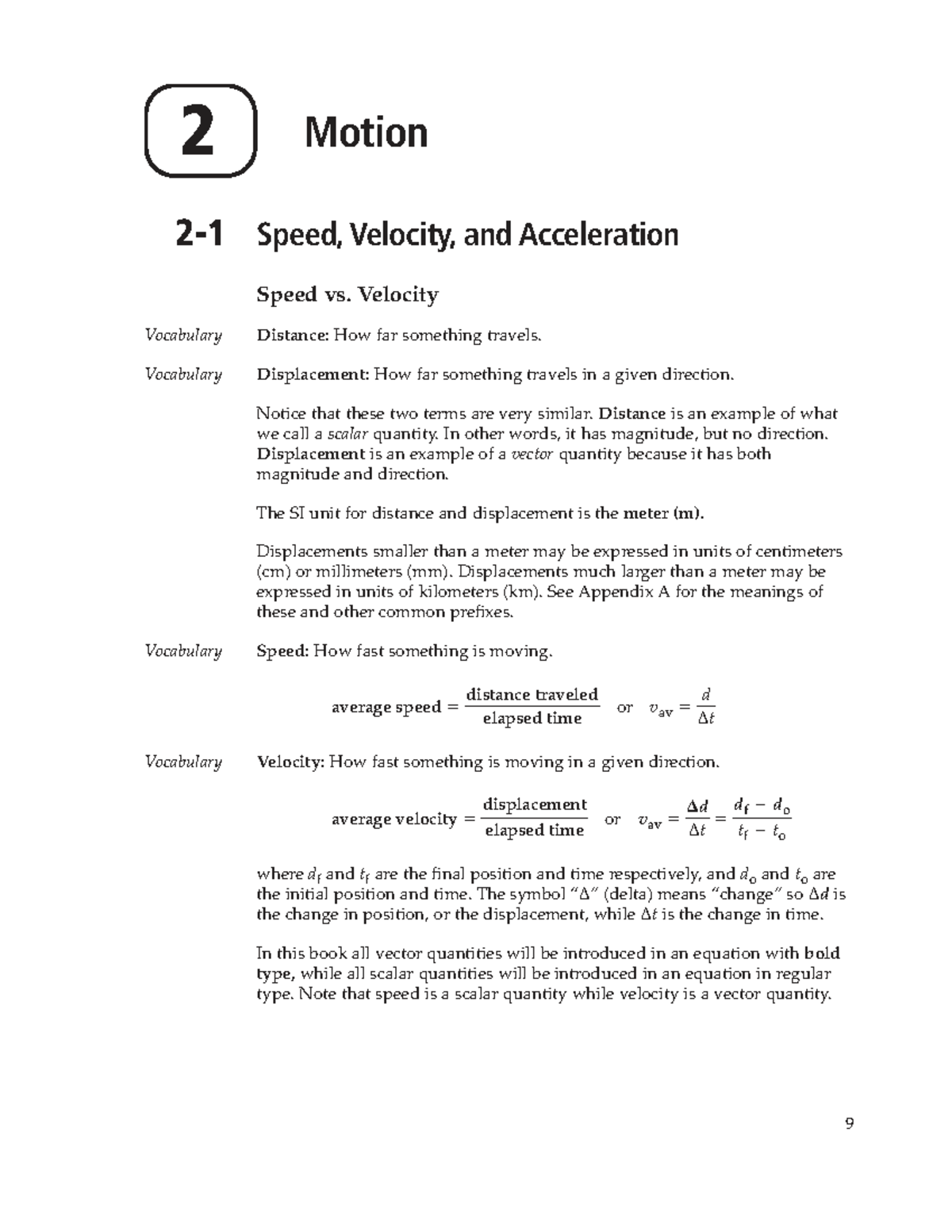
Speed is defined as the rate of change of position of an object in any direction. It is a scalar quantity, meaning it is fully described by a magnitude (a numerical value) without a specific direction. In the International System of Units (SI), speed is measured in meters per second (m/s), though kilometers per hour (km/h) and miles per hour (mph) are common in automotive and aviation contexts.
Average Speed vs. Instantaneous Speed
When discussing speed, it is vital to differentiate between the average over a duration and the specific value at a single moment.
Average speed is the total distance traveled divided by the total time elapsed. It does not account for stops, starts, or variations in pace during the journey. For instance, if a vehicle travels 100 kilometers in two hours, its average speed is 50 km/h, even if it spent thirty minutes stuck in traffic at 0 km/h and another hour at 80 km/h.
Instantaneous speed, conversely, is the speed of an object at a specific point in time. This is what a car's speedometer displays. Mathematically, it is the limit of the average speed as the time interval approaches zero. In 2026, high-frequency GPS sensors and optical encoders allow us to measure instantaneous speed with millisecond precision, providing real-time data for autonomous driving algorithms and sports performance analytics.
Velocity: The Vector Counterpart
While the prompt focuses on acceleration and speed, speed cannot be fully mastered without acknowledging velocity. Velocity is the vector version of speed; it includes the direction of travel. If an object moves at 60 km/h due north, its speed is 60 km/h, but its velocity is 60 km/h north. This distinction is critical because an object can have a constant speed but a changing velocity if it is turning—a concept that leads directly into the definition of acceleration.
Defining Acceleration in Classical Mechanics
Acceleration is the rate at which an object's velocity changes over time. Because velocity includes both speed and direction, acceleration occurs if the object speeds up, slows down, or changes its direction of travel.
The Mechanics of Change
The standard formula for average acceleration ($a$) is:
$$a = \frac{v_f - v_i}{t}$$
Where:
- $v_f$ is the final velocity.
- $v_i$ is the initial velocity.
- $t$ is the time interval.
Because it measures the change in velocity (m/s) over time (s), the SI unit for acceleration is meters per second squared ($m/s^2$). An acceleration of $1 m/s^2$ means that every second, the object's velocity increases by 1 meter per second.
Positive, Negative, and Zero Acceleration
- Positive Acceleration: Occurs when the velocity of an object increases in the direction of motion. For a car moving forward, pressing the gas pedal creates positive acceleration.
- Negative Acceleration (Deceleration): Occurs when the velocity decreases. It is important to note that "negative" refers to the direction of the acceleration vector relative to the velocity. If an object is moving in a positive direction and slows down, the acceleration is negative.
- Zero Acceleration: This does not mean the object is stationary. It means the object is moving at a constant velocity (constant speed in a straight line). A train moving at a steady 200 km/h on a perfectly straight track has zero acceleration.
Centripetal Acceleration
One of the most frequently misunderstood concepts is acceleration during circular motion. Even if a car maintains a constant speed of 30 mph while driving in a circle, it is accelerating. This is because its direction is constantly changing, which means its velocity is changing. This "center-seeking" acceleration is known as centripetal acceleration, and it is calculated based on the square of the speed divided by the radius of the turn ($a = v^2/r$).
Essential Measurement Technologies and Tools
In 2026, the measurement of speed and acceleration has reached unprecedented levels of accuracy, moving far beyond the mechanical tachometers of the past. Modern industries rely on a suite of sensors to capture motion data.
MEMS Accelerometers
Micro-Electro-Mechanical Systems (MEMS) are the most common way to measure acceleration today. These tiny sensors are found in smartphones, vehicle airbag systems, and industrial machinery. They typically consist of a microscopic "mass" suspended by springs. When the device accelerates, the mass shifts, changing the electrical capacitance between the mass and fixed electrodes. The sensor converts this change into a digital signal. High-end MEMS used in aerospace can detect changes as small as a fraction of a "g" (the acceleration due to gravity).
Global Navigation Satellite Systems (GNSS)
Modern GNSS (which includes GPS, Galileo, GLONASS, and BeiDou) provides highly accurate speed measurements through two primary methods:
- Positional Differentiation: Calculating the distance between two recorded coordinates and dividing by the time interval.
- Doppler Shift: Analyzing the frequency shift of the satellite signal caused by the receiver's motion. This method is often more accurate for instantaneous speed than simple positional changes.
Radar and LiDAR
Law enforcement and autonomous vehicles utilize Radar (Radio Detection and Ranging) and LiDAR (Light Detection and Ranging). Radar uses the Doppler effect—measuring the frequency change of reflected radio waves—to determine speed. LiDAR uses rapid laser pulses to create 3D maps and calculate the speed of objects by measuring how quickly the distance to those objects is changing.
Photogates and Stroboscopic Analysis
In laboratory settings, photogates are used to measure the speed of objects passing through an infrared beam. When the beam is broken, a timer starts; when a second beam is broken, it stops. This allows for extremely precise calculations of speed over short distances, which is essential for verifying laws of motion in physics education.
Detailed Comparison of Motion Metrics
The following table clarifies the differences between the core concepts of kinematics to help in selecting the right measurement approach.
| Feature | Speed | Velocity | Acceleration |
|---|---|---|---|
| Quantity Type | Scalar (Magnitude only) | Vector (Magnitude + Direction) | Vector (Rate of change of Velocity) |
| SI Unit | Meters per second (m/s) | Meters per second (m/s) | Meters per second squared ($m/s^2$) |
| What it measures | How fast an object moves. | How fast and in what direction. | How quickly motion changes. |
| Formula | $Distance / Time$ | $\Delta Displacement / \Delta Time$ | $\Delta Velocity / \Delta Time$ |
| Common Tool | Speedometer, GPS | GNSS, Compass + Speedometer | Accelerometer, IMU |
| Example | 20 m/s | 20 m/s North | $5 m/s^2$ East |
Practical Applications Across Industries
The measurement of acceleration and speed is not merely an academic exercise; it drives innovation across several critical sectors as of 2026.
Automotive Safety and Autonomous Driving
In the automotive industry, acceleration data is the primary trigger for safety systems. Sensors detect the massive negative acceleration associated with a collision to deploy airbags in milliseconds. Furthermore, autonomous vehicles use a fusion of speed and acceleration data from LiDAR and Inertial Measurement Units (IMUs) to navigate complex environments, ensuring smooth lane changes and safe braking distances.
Sports Science and Biomechanics
Professional athletes use wearable sensors to track "explosiveness," which is essentially high positive acceleration from a stationary start. By measuring the acceleration of a sprinter or the swing speed of a golfer, coaches can identify mechanical inefficiencies. These measurements help in optimizing performance while minimizing the risk of injury caused by improper load distribution.
Aerospace and Seismology
In aerospace, precise acceleration measurement is required for inertial navigation, allowing aircraft and spacecraft to determine their position without external signals. In seismology, highly sensitive accelerometers (seismometers) measure the acceleration of the Earth's crust during tectonic shifts, providing early warnings for earthquakes and analyzing the structural integrity of buildings.
Common Pitfalls in Measurement and Interpretation
Even with advanced tools, several factors can lead to errors in speed and acceleration data.
- Signal Noise: In MEMS sensors, vibrations from a vehicle's engine can introduce "noise" into acceleration readings. Engineers use low-pass filters to smooth this data, but over-filtering can lead to a lag in real-time reporting.
- GNSS Limitations: GPS-based speed measurement is notoriously unreliable in "urban canyons" (areas with tall buildings) or tunnels where satellite signals are blocked or reflected.
- Inertial Drift: IMUs that calculate speed by integrating acceleration over time suffer from "drift." Small errors in acceleration measurement accumulate, leading to increasingly inaccurate speed and position data over long durations. This is typically corrected using "Kalman filtering" to merge IMU data with absolute reference points like GNSS.
Mathematical Problem-Solving: A Step-by-Step Example
To calculate the acceleration of a vehicle, follow this systematic approach:
- Identify Initial Velocity ($v_i$): Determine the starting speed. (e.g., $10 m/s$).
- Identify Final Velocity ($v_f$): Determine the speed after the change. (e.g., $30 m/s$).
- Determine the Time ($t$): How long did the change take? (e.g., $5 seconds$).
- Apply the Formula: $a = (v_f - v_i) / t$.
- Calculate: $(30 - 10) / 5 = 20 / 5 = 4 m/s^2$.
This result indicates that the vehicle increased its speed by 4 meters per second every second for the duration of the measurement.
FAQ: Understanding Motion Dynamics
What is the difference between deceleration and negative acceleration?
While often used interchangeably, "negative acceleration" is a more precise scientific term. Acceleration is a vector. If an object is moving in the negative direction (e.g., left on a graph) and speeds up, its acceleration is negative, but it is not "decelerating" in the sense of slowing down. Deceleration specifically refers to any acceleration that opposes the direction of motion, causing a reduction in speed.
Why is acceleration measured in meters per second squared ($m/s^2$)?
The unit reflects the definition: the change in velocity (meters per second) divided by time (seconds). Mathematically, $(m/s) / s$ simplifies to $m/s^2$. It represents how many "meters per second" the speed changes during each "second."
Can an object have a high speed but zero acceleration?
Yes. A classic example is a commercial airplane cruising at a steady 900 km/h in a straight line. Because the speed is constant and the direction is unchanging, the acceleration is zero, despite the high speed.
How do smartphones measure my steps and speed?
Smartphones use a combination of a 3-axis MEMS accelerometer and GPS. The accelerometer detects the specific "impact" patterns of your gait (steps), while the GPS tracks your change in geographical position over time to calculate walking or running speed.
Is gravity considered a form of acceleration?
Yes. On Earth, gravity exerts a constant downward acceleration on all objects. The standard value for this acceleration, denoted as $g$, is approximately $9.81 m/s^2$. This means a free-falling object (ignoring air resistance) will increase its speed by 9.81 m/s every second it falls.
Recommendation for Further Action
To master the practical application of these concepts, it is recommended to utilize modern data-logging software such as Phyphox or Vernier Graphical Analysis. These tools allow you to use the internal sensors of your smartphone to record real-time acceleration and speed data. By performing simple experiments—such as recording the acceleration of an elevator or the centripetal force during a car turn—you can bridge the gap between theoretical formulas and physical reality. For professional-grade accuracy, always ensure sensors are calibrated against known standards, such as those provided by the National Institute of Standards and Technology (NIST).