Accelerated MSN programs, commonly known as direct-entry MSN programs, allow individuals holding a bachelor's degree in a non-nursing field to transition into the nursing profession at the master’s level. These intensive programs typically span 24 to 36 months, integrating foundational nursing education with advanced graduate training to prepare students for both RN licensure and specialized leadership or clinical roles.
Understanding the Direct-Entry MSN Framework
For professionals looking to pivot their careers into healthcare, the accelerated Master of Science in Nursing (MSN) for non-nursing majors represents a rigorous but highly efficient pathway. Traditionally, entering nursing required a second bachelor’s degree (BSN). However, the direct-entry model recognizes the value of a student's previous undergraduate education, regardless of the subject matter—be it psychology, business, engineering, or the arts.
In 2026, these programs have become a vital solution to the global nursing shortage, particularly for roles requiring advanced clinical judgment and administrative oversight. The curriculum is structured to be "front-loaded." The initial 12 to 15 months of the program focus on the fundamental skills required to pass the National Council Licensure Examination for Registered Nurses (NCLEX-RN). Once students pass this exam and obtain their RN license, the remainder of the program shifts toward graduate-level coursework, focusing on a specific nursing track such as Clinical Nurse Leadership (CNL), Nurse Education, or Nursing Administration.
It is important to distinguish these programs from traditional MSN programs, which require applicants to already be licensed Registered Nurses with a BSN. Direct-entry pathways are specifically designed for "career changers" who need to bridge the gap between their current expertise and the professional nursing standard.
Eligibility and Academic Prerequisite Requirements
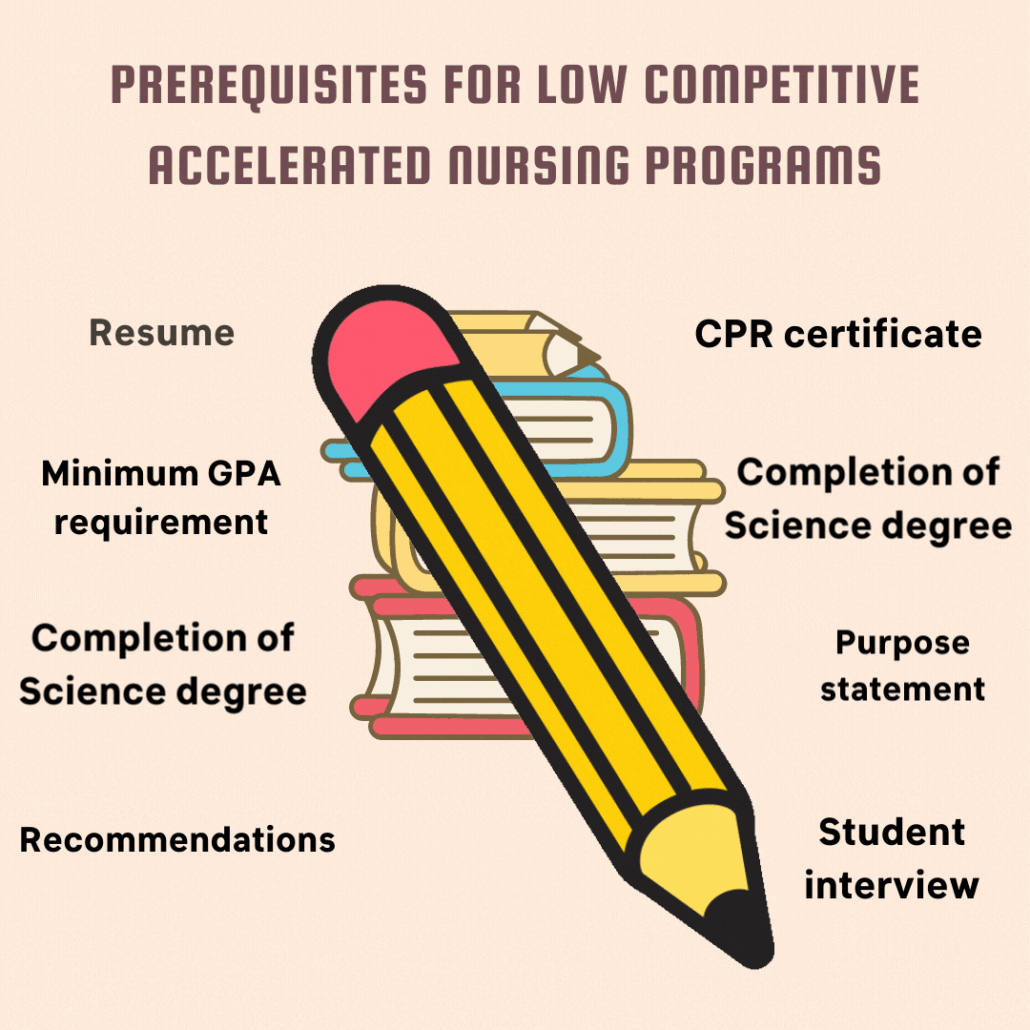
Because accelerated MSN programs condense several years of education into a truncated timeframe, the admission requirements are stringent. Most institutions seek candidates with a strong academic pedigree, as the pace of learning leaves little room for remediation.
Undergraduate Degree and GPA
Applicants must hold a baccalaureate degree from a regionally accredited institution. While the major does not need to be science-related, a competitive GPA is essential. Most top-tier programs in 2026 require a minimum cumulative GPA of 3.0 on a 4.0 scale, though many successful applicants possess a 3.5 or higher.
Mandatory Prerequisite Coursework
Before beginning the MSN curriculum, students must complete specific science and social science prerequisites. These are typically completed at a community college or through the university’s own "bridge" courses. Common requirements include:
- Anatomy and Physiology I & II (with labs): Often required to have been completed within the last five to seven years.
- Microbiology (with lab): Focuses on pathogens and immune responses.
- General or Organic Chemistry (with lab): Provides the foundational understanding of pharmacology and biochemistry.
- Human Growth and Development: Covers the lifespan from infancy to geriatrics.
- Statistics: Essential for understanding evidence-based practice and nursing research.
- Nutrition: Focuses on the role of diet in disease prevention and management.
Holistic Admission Factors
Beyond grades, admissions committees evaluate the candidate’s "fit" for the profession. This often includes a personal statement explaining the motivation for switching to nursing, letters of recommendation from academic or professional supervisors, and sometimes a synchronized interview. Some programs may also require the GRE (Graduate Record Examination), though many institutions have moved toward a test-optional model if the applicant’s GPA is sufficiently high.
The Two-Phase Curriculum Structure
The structure of an accelerated MSN for non-nursing majors is unique because it combines undergraduate-level clinical training with graduate-level theory.
Phase 1: The Pre-Licensure Component
The first phase is an "immersion" period. During this time, students learn the fundamentals of nursing, including health assessment, pharmacology, pathophysiology, and medical-surgical nursing. This phase is characterized by heavy clinical rotations in hospitals, where students work under the supervision of faculty and preceptors. By the end of this phase, students have met the state’s requirements to sit for the NCLEX-RN.
Phase 2: The Graduate Specialty Component
After becoming a licensed RN, the student officially enters the MSN portion of the program. Unlike the first phase, which is generalized, the second phase allows for specialization. Common tracks for direct-entry students include:
- Clinical Nurse Leader (CNL): A role focused on improving patient outcomes and coordinating care at the "point of care" (on the hospital unit).
- Nurse Educator: Preparing students to teach in academic or clinical settings.
- Nursing Informatics: Managing and communicating data to improve healthcare efficiency.
- Nurse Administrator: Focusing on the business and leadership aspects of healthcare facilities.
Note that while some direct-entry programs offer Nurse Practitioner (NP) tracks, many of these programs are being phased into the Doctor of Nursing Practice (DNP) level. Prospective students should verify if their chosen program culminates in an MSN or if it serves as a gateway to a DNP.
Comparison: Accelerated MSN vs. Accelerated BSN (ABSN)
Choosing between an MSN and a BSN depends on your long-term career goals. Both allow you to become an RN, but the MSN offers a higher ceiling for leadership and salary.
| Feature | Accelerated BSN (ABSN) | Direct-Entry MSN |
|---|---|---|
| Duration | 12–18 Months | 24–36 Months |
| Degree Awarded | Bachelor of Science in Nursing | Master of Science in Nursing |
| Target Audience | Career changers seeking entry-level RN | Career changers seeking leadership/advanced roles |
| Primary Focus | Generalist bedside nursing | Specialty leadership or clinical focus |
| Average Cost | $40,000 – $80,000 | $60,000 – $120,000 |
| Salary Potential | Standard RN starting salary | Higher potential for management/specialty pay |
| Advanced Roles | Requires further graduate school | Qualifies for many leadership/educator roles |
Financial Considerations and ROI
The cost of an accelerated MSN is a significant investment. In 2026, tuition for these programs varies widely based on whether the institution is public or private. Public state universities may offer lower tuition for residents, often ranging from $60,000 to $85,000 for the total program. Private institutions can exceed $130,000.
Funding Options
- Federal Student Loans: Since these are graduate programs, students are eligible for Federal Direct Unsubsidized Loans and Grad PLUS Loans.
- HRSA Nurse Corps Scholarship Program: The Health Resources and Services Administration (HRSA) offers scholarships to nursing students in exchange for a commitment to work in a Health Professional Shortage Area (HPSA) after graduation.
- Employer Tuition Reimbursement: Many hospitals will pay for a portion of a nurse's graduate education if the nurse agrees to work for the facility for a set period (usually 2–3 years).
- Private Scholarships: Organizations like the American Association of Colleges of Nursing (AACN) offer various grants for graduate students.
The Return on Investment (ROI) for an MSN is generally high. According to 2026 labor statistics, nurses with a master's degree earn significantly more over their lifetime compared to those with a BSN, particularly as they move into management, clinical leadership, or specialized roles where the median salary often exceeds $110,000 annually.
Accreditation and Quality Verification
When researching programs, it is non-negotiable that the program be accredited by a recognized body. Accreditation ensures that the education meets national standards for safety and quality.
- CCNE (Commission on Collegiate Nursing Education): Most common for MSN programs.
- ACEN (Accreditation Commission for Education in Nursing): Also highly reputable and covers all levels of nursing education.
Furthermore, students must ensure the program is approved by the State Board of Nursing in the state where they intend to practice. If a program is not state-approved, graduates may be ineligible to sit for the NCLEX-RN, rendering the degree useless for clinical practice. You can verify a program's status via the National Council of State Boards of Nursing (NCSBN).
The Intensity of the Accelerated Pace
Potential students must understand that "accelerated" is not a marketing term—it is a description of the workload. A direct-entry MSN often requires full-time commitment, making it nearly impossible to maintain external employment.
A typical week involves:
- 12 to 16 hours of classroom or online lectures.
- 16 to 24 hours of clinical rotations at a hospital.
- 20+ hours of self-directed study, lab practice, and assignments.
The emotional toll is also a factor. Transitioning from a non-clinical background to a high-stakes hospital environment requires resilience. Programs often provide "Simulation Labs" where students practice on high-fidelity mannequins before touching a real patient. This helps bridge the gap between theory and practice, but the learning curve remains steep.
Post-Graduation: Transitioning to the Workforce
Graduates of accelerated MSN programs face a unique transition. They enter the workforce with a master's degree but zero years of clinical experience as an RN. This can create a "gap" where the graduate has the academic credentials of a leader but the clinical skills of a novice.
To address this, most 2026 healthcare systems offer Nurse Residency Programs. These are year-long mentorship programs for new graduates that provide additional support in a specific specialty (like ICU or ER). It is highly recommended that direct-entry MSN graduates work at the bedside for at least 1–2 years before moving into the leadership or educator roles their degree qualifies them for. This "floor experience" provides the necessary context for the advanced theory learned during the master's portion of their studies.
Frequently Asked Questions
Can I become a Nurse Practitioner through a direct-entry MSN program?
Yes, some programs offer a Direct-Entry MSN with a Nurse Practitioner (NP) specialty. However, these programs are longer (often 3–4 years) and are increasingly being replaced by the Doctor of Nursing Practice (DNP) degree. If your goal is to be an NP, you should check if the program provides the necessary clinical hours and eligibility for NP certification exams.
Is it harder to get into a direct-entry MSN than a traditional BSN?
Generally, yes. Because these programs are designed for a specific niche and often have smaller cohort sizes, the competition is high. Admissions committees look for a combination of high GPA, relevant volunteer or healthcare experience, and strong leadership potential.
Can I work while enrolled in an accelerated MSN program?
It is strongly discouraged. Most programs explicitly advise students against working more than 10 hours a week, if at all. The schedule of clinical rotations changes frequently and requires full availability, making traditional employment schedules incompatible with the curriculum.
Will I be "overqualified" for entry-level nursing jobs with an MSN?
No. In the current 2026 healthcare market, there is no such thing as being overqualified for a nursing role. While you will start at the same clinical level as BSN graduates, your MSN may make you a more attractive candidate for future promotions and specialized committees within the hospital.
What is the NCLEX-RN and when do I take it?
The NCLEX-RN is the national licensing exam required to practice as a Registered Nurse. In a direct-entry MSN program, you typically take this exam after completing the "pre-licensure" portion of the curriculum (usually at the end of the first year or midway through the second), allowing you to work as an RN while finishing your master's coursework.
Strategic Recommendation for Prospective Students
Before applying, conduct a thorough self-assessment of your financial stability and academic readiness. If you have been out of school for more than five years, consider taking one or two science prerequisites at a local college to "test the waters" and refresh your study habits. Once you are ready, prioritize programs with high NCLEX-RN pass rates (above 90%) and strong clinical partnerships with major hospital systems. Your focus should not just be on getting the degree, but on ensuring you have the clinical foundation necessary to be a safe and effective practitioner.