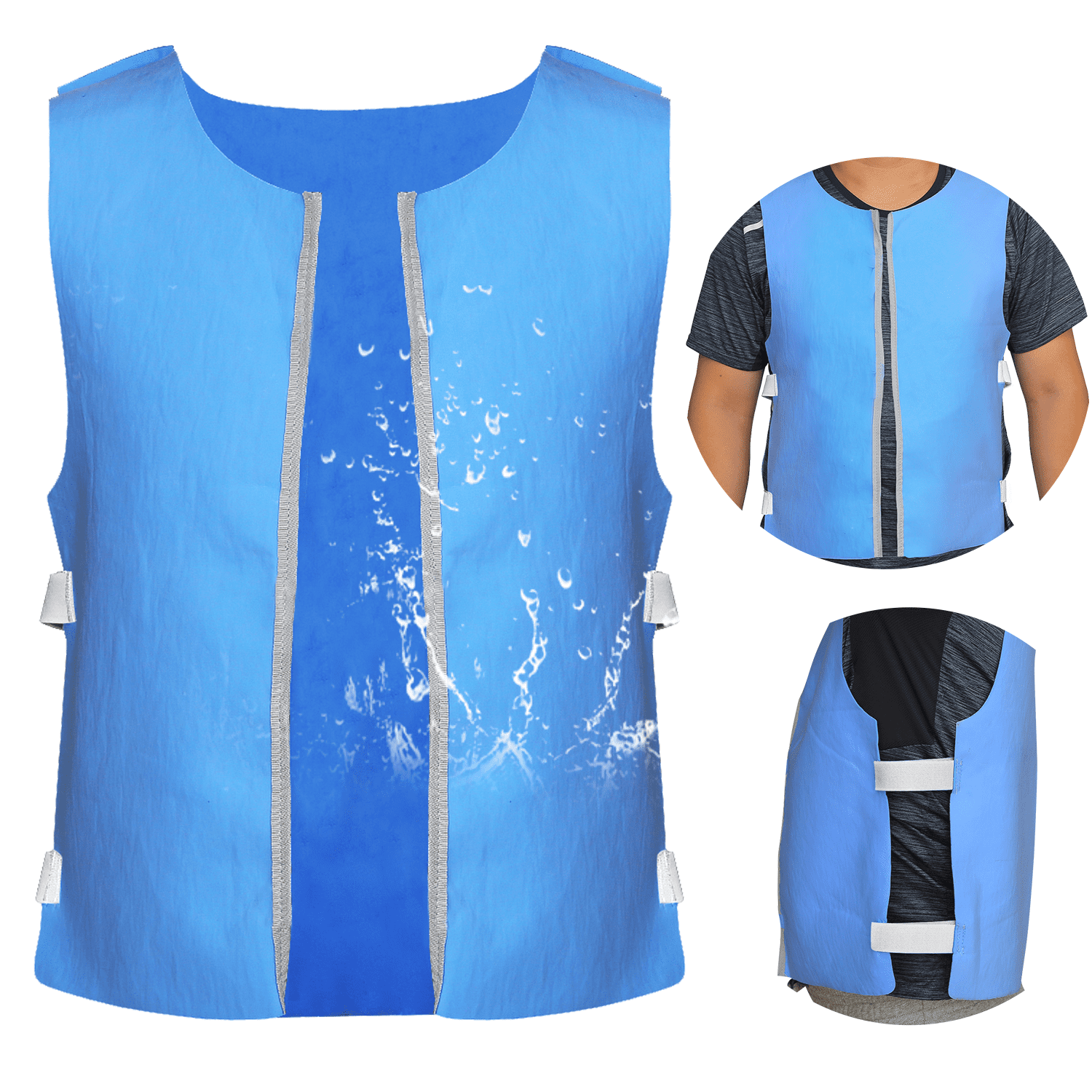
An F1 cooling vest uses advanced Phase Change Materials (PCM) or gel-based inserts to absorb body heat and lower core temperatures during pre-race preparation or red-flag intervals. By establishing a thermal buffer, these vests delay the onset of heat exhaustion, preserve cognitive function, and reduce cardiovascular strain in cockpits that often exceed 50°C.
The cockpit of a Formula 1 car is one of the most hostile environments in professional sports. Drivers are encased in multiple layers of fire-retardant Nomex, seated inches away from a high-performance power unit, and subjected to radiant heat from the track surface and neighboring cars. In extreme climates, such as the 2026 Singapore Grand Prix or the high-humidity rounds in Miami and Qatar, the ambient temperature inside the car can soar to 60°C (140°F). Because F1 cars do not have air conditioning and every gram of weight is scrutinized, traditional cooling systems are non-existent during the race. This is where the cooling vest becomes a vital piece of "invisible" performance hardware.
1. Pre-Cooling the Core to Expand Thermal Capacity
The primary function of an F1 cooling vest is "pre-cooling." Human performance begins to degrade the moment the core body temperature rises above its natural equilibrium. By wearing a cooling vest for 20 to 40 minutes before the race begins, a driver can artificially lower their skin and core temperature slightly below normal levels.
This creates a "thermal buffer." Think of the human body as a heat sink; by starting the race at a lower temperature, the driver has a larger capacity to absorb the inevitable heat generated by physical exertion and the car’s environment before reaching the "critical threshold" where performance drops. This delay is crucial in the first 15–20 minutes of a race, where high-intensity maneuvers and defensive driving require maximum focus.
2. Utilizing Advanced Phase Change Materials (PCM)
Modern F1 cooling vests, developed by technical partners like Alpinestars or Sparco, rarely rely on simple ice packs. Ice is often too cold, causing vasoconstriction—a process where blood vessels narrow, actually trapping heat inside the core rather than letting it escape. Instead, these vests use Phase Change Materials (PCM).
PCM technology involves substances that absorb and release thermal energy during the process of melting and freezing. For example, a PCM insert might be engineered to maintain a constant temperature of 15°C (59°F). As the driver's body heat warms the vest, the material begins to melt. During this phase transition from solid to liquid, the material absorbs a massive amount of "latent heat" without increasing in temperature itself. This provides a steady, controlled cooling effect that is far more efficient and comfortable for the athlete than the aggressive, skin-numbing cold of ice.
3. Mitigating Cardiovascular Strain and Heart Rate Spikes
When a driver is subjected to extreme heat, the heart has to work significantly harder. It must pump blood not only to the muscles to provide oxygen for driving but also to the skin's surface to facilitate cooling through sweat evaporation. This competition for blood flow leads to a higher heart rate for the same level of physical output—a phenomenon known as "cardiac drift."
By using a cooling vest during the grid build-up, the body does not have to work as hard to maintain homeostasis before the green light. Studies in sports science have shown that pre-cooled athletes exhibit lower heart rates during the initial stages of high-intensity exercise. In the context of 2026 F1 regulations, where cars are heavier and require more physical input to manage complex energy recovery systems, keeping the heart rate stable is a key competitive advantage.
4. Preserving Cognitive Function and Reaction Times
At 300 km/h, a split-second delay in reaction time can be the difference between a podium finish and a catastrophic collision. High internal temperatures are directly linked to cognitive decline, including reduced spatial awareness, slower processing speeds, and increased irritability.
The cooling vest acts as a neuro-protective layer. By keeping the blood flowing to the brain at a lower temperature, the driver maintains higher levels of "executive function." This allows them to manage the myriad of steering wheel settings—adjusting brake bias, differential settings, and MGU-K harvesting—while simultaneously defending their position on track. The psychological comfort of being cool also prevents the "panic response" that heat stress can trigger, allowing for more calculated, calm decision-making under pressure.
5. Rapid Thermal Recovery During Red Flags
Grand Prix racing is often interrupted by red flags for accidents or track repairs. During these periods, drivers return to the pit lane, where the lack of airflow makes the heat even more oppressive. Without the 200+ mph wind speed to help sweat evaporate, a driver’s core temperature can spike dangerously while they sit stationary in the cockpit.
Teams immediately deploy cooling vests during these intervals. A driver will unzip their race suit and don the vest to "dump" the accumulated heat. This rapid recovery phase is essential for resetting the driver’s physical state. It prevents the heat-soak from the car's engine—which is no longer being cooled by moving air—from transferring directly into the driver’s body.
6. Reducing Total Sweat Loss and Dehydration
In a typical hot-weather race, an F1 driver can lose between 3kg to 5kg of body weight through perspiration. Excessive fluid loss leads to a decrease in blood volume, which further exacerbates heart rate issues and muscle cramping.
While a vest worn before the race cannot stop sweat loss during the race, it significantly reduces the "pre-race" fluid loss. If a driver is standing on the grid in 35°C ambient heat for 30 minutes without a cooling vest, they are already starting the race in a state of fluid deficit. The cooling vest ensures that the driver begins the event fully hydrated, with their sweat glands "rested" and ready to provide maximum evaporative cooling once the race suit is fully sealed and the helmet is on.
7. Strategic Deployment via Anatomical Mapping
High-performance cooling vests are not designed as simple tank tops. They are anatomically mapped to target areas where blood flow is closest to the skin surface—specifically the chest, upper back, and sometimes the neck.
By cooling the blood as it passes through the large vessels in the torso, the vest effectively uses the driver’s own circulatory system as a liquid cooling loop. The chilled blood travels to the extremities and the brain, providing a systemic cooling effect rather than just a localized one. This "radiator" approach is the most efficient way to lower internal temperatures without adding the excessive bulk that would interfere with the driver's range of motion or the fit of their custom-molded carbon fiber seat.
8. Integration with Fire-Retardant Safety Standards
In 2026, safety regulations regarding fire protection are stricter than ever. A cooling vest cannot simply be a consumer-grade plastic ice wrap. It must be integrated into the driver’s safety cell without compromising the fire-retardant integrity of the Nomex kit.
Modern vests are constructed with flame-resistant outer shells. The "8th way" they keep drivers cool is by being so low-profile and safe that they can be worn under the race suit right up until the final minutes before the formation lap. This seamless integration means there is no "thermal gap" between the cooling phase and the racing phase. The driver stays cool while they are strapped into the car, ensuring that their temperature is at its absolute lowest the moment the five red lights go out.
Comparison of Driver Cooling Technologies
| Technology | Cooling Method | Duration | Best Use Case | Primary Advantage |
|---|---|---|---|---|
| Ice Gel Vests | Frozen Gel Packs | 20-30 Mins | Pre-race Grid | Very high initial heat absorption. |
| PCM Vests | Phase Change Polymer | 40-90 Mins | Pre-race & Red Flags | Constant, regulated temperature; no skin shock. |
| Active Liquid Loops | Pumped Chilled Water | Constant | GT/Endurance Racing | Continuous cooling; rarely used in F1 due to weight. |
| Dry Ice Blowers | Forced CO2/Air | Instant | Pit Garage | Rapidly lowers skin temperature during stops. |
FAQ
Do F1 drivers wear cooling vests during the actual race?
Generally, no. F1 drivers do not wear cooling vests during the race because of the added weight and the fact that once the PCM material melts or the ice thaws, the vest becomes an insulator, actually trapping heat against the body. Instead, they rely on pre-cooling and the car's hydration system. However, in extreme heat, some drivers may use ultra-thin, lightweight cooling layers that provide a brief benefit in the opening laps.
How heavy are these cooling vests?
A professional-grade PCM cooling vest typically weighs between 1kg and 2kg. While this sounds light, in the world of F1 where engineers fight over milligrams, this weight is significant. This is another reason they are primarily used on the grid and removed just before the formation lap, as the car's "ballast" and "minimum weight" calculations do not account for a melting vest.
Is the cooling vest different from the hydration system?
Yes. The cooling vest is an external wearable designed to lower body temperature via conduction and phase change. The hydration system (the "drink button") is an internal system consisting of a fluid bladder and a pump that delivers water or electrolyte solution through a tube in the helmet. One cools from the outside in, the other from the inside out.
Why don't F1 cars have built-in seat cooling?
Weight and packaging are the primary obstacles. A seat cooling system would require a compressor or a large reservoir of chilled liquid, pumps, and tubing, adding several kilograms to the car. Furthermore, F1 seats are custom-carbon shells with minimal padding; adding a cooling layer would compromise the driver's "feel" for the chassis and the safety of the HANS (Head and Neck Support) device integration.
Can these vests be used in other sports?
Absolutely. The technology used in F1 cooling vests is widely adopted by marathon runners, cyclists, and industrial workers in high-heat environments (like steel mills). The F1 versions are simply the "pinnacle" versions, optimized for weight, anatomical fit, and fire safety.
How long does it take to "charge" a cooling vest?
PCM vests can be "recharged" in a refrigerator or even a bucket of ice water in about 20 to 30 minutes. Unlike ice, which needs to reach sub-zero temperatures, PCM materials only need to be cooled below their specific transition temperature (e.g., 15°C) to solidify and be ready for use again.
Practical Recommendation for Amateur Racers
For those in karting or amateur track days, heat exhaustion is a genuine risk that is often overlooked. While you may not have a team of engineers, you can adopt the F1 "Pre-Cooling" strategy. Investing in a mid-range PCM cooling vest (which maintains a temperature around 15-21°C) can significantly improve your lap consistency and safety. Wear the vest for 30 minutes before your session, and keep it in a portable cooler between stints. This simple habit mimics the professional "thermal buffering" technique, ensuring your brain remains sharp and your muscles remain efficient even in the height of summer.