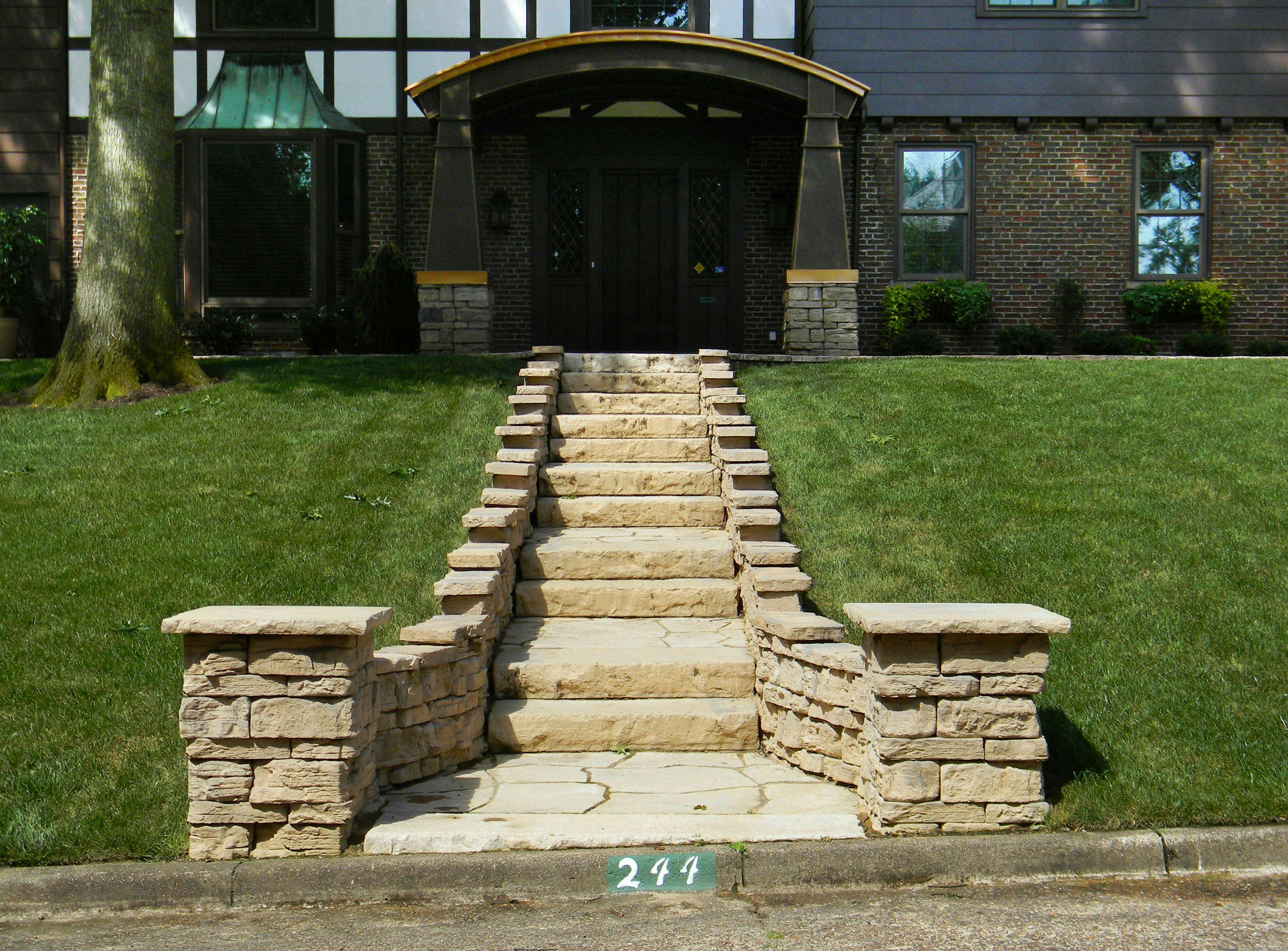
Rosetta Dimensional Steps are premium precast concrete units designed to replicate the rugged, weathered appearance of natural stone while providing the uniform dimensions required for safe and efficient stair construction. These steps solve the primary challenge of using natural flagstone—irregularity—by offering a consistent 7-inch rise, making them a preferred choice for high-end residential and commercial landscaping projects that demand both aesthetic beauty and structural reliability.
As we move through 2026, the hardscaping industry continues to favor materials that combine artisanal craftsmanship with industrial-grade precision. Rosetta Hardscapes, a brand under the Belgard and Oldcastle APG umbrella, has refined its Dimensional Step line to meet more rigorous environmental standards and architectural trends. Whether you are a professional contractor or a homeowner planning a multi-level patio, understanding the technical nuances of these units is essential for a successful installation.
Below are seven key insights into Rosetta Dimensional Steps, covering everything from material engineering to long-term maintenance.
1. The Precision of the 7-Inch Rise and Safety Standards
One of the most significant advantages of Rosetta Dimensional Steps over natural stone is the absolute consistency of the rise. In natural stone staircases, treads often vary by fractions of an inch, creating a "stumble hazard" as the human brain expects a rhythmic, even gait when ascending or descending.
Eliminating the "Stumble Zone"
Building codes generally mandate a maximum rise of 7 to 7.75 inches for outdoor steps. Rosetta Dimensional Steps are manufactured with a fixed 7-inch rise. This uniformity ensures that every step in a flight is identical, which is critical for universal accessibility and meeting local building regulations. In 2026, as residential safety audits become more common for insurance purposes, the use of dimensionally stable products like Rosetta provides a layer of protection against liability.
Slip Resistance and Surface Texture
While the steps are uniform in height, their surfaces are anything but flat and slippery. The manufacturing process uses molds taken from actual weathered stone. This creates a high-relief texture that provides natural "tooth" for foot traffic, even when wet. Unlike smooth-poured concrete or certain types of polished granite, the rugged surface of a Dimensional Step helps prevent hydroplaning underfoot during rain or snow.
2. Wet-Cast Concrete Engineering vs. Dry-Cast Alternatives
To understand the durability of Rosetta products, one must distinguish between wet-cast and dry-cast concrete. Most standard paving stones are dry-cast, which involves a "no-slump" concrete mixture compressed at high pressure. Rosetta Dimensional Steps are wet-cast.
High Detail and Density
Wet-cast concrete has a higher water-to-cement ratio, which allows the mixture to flow into the fine crevices of a mold. This is why Rosetta steps can replicate the look of natural clefts, fossils, and weathered edges so accurately. Beyond aesthetics, the wet-cast process produces a denser product that is significantly more resistant to the freeze-thaw cycles prevalent in northern climates.
Resistance to De-Icing Salts
In 2026, environmental and chemical resilience is a top priority for hardscape longevity. Wet-cast units like Rosetta steps have lower permeability than dry-cast blocks. This means that salt-saturated water—common in winter—is less likely to penetrate the surface and cause internal "spalling" or crumbling. However, it is still recommended to use calcium chloride-based de-icers rather than harsh rock salt to preserve the integral color of the concrete over decades.
3. Structural Dimensions and Weight Logistics
Planning a project with Rosetta Dimensional Steps requires a clear understanding of their physical footprint. These units are massive, and their weight is a testament to their stability once set in place.
Standardized Sizing for Modular Design
Most Rosetta Dimensional Steps are produced in a 4-foot length, though 3-foot and 6-foot variations exist in specific regional markets. The standard depth is 18 inches, and the height is a constant 7 inches. This 18-inch depth is intentional; it allows for a significant "overlap" when stacking steps, ensuring that the weight of the upper step helps pin the lower step into the base material.
Handling and Equipment Requirements
A single 4-foot Rosetta Dimensional Step weighs approximately 475 pounds (215 kg). This is not a product that can be safely installed by hand. In 2026, the use of vacuum lifts or mechanical clamps attached to a skid steer or mini-excavator is the industry standard. Attempting to "manhandle" these units often leads to chipped edges or, more importantly, worker injury. Proper planning for equipment access to the installation site is a prerequisite for any project involving these steps.
4. Advanced Base Preparation and Drainage
The longevity of a stone staircase is determined entirely by what lies beneath it. Because Rosetta steps are heavy and rigid, they are susceptible to "tipping" or "heaving" if the base is not engineered correctly.
The Non-Frost-Susceptible Base
The foundation should consist of at least 6 to 12 inches of compacted, angular crushed stone (often referred to as 3/4" minus or Grade 5 gravel). This material provides the structural "bridge" between the soil and the step. In 2026, many engineers are moving away from using "stone dust" or "fines" as a leveling layer, as these materials hold water and contribute to frost heaving. Instead, a clean, open-graded stone (No. 57 stone) wrapped in geotextile fabric is becoming the preferred method for superior drainage.
Managing Hydrostatic Pressure
When steps are built into a hillside, they act as a dam for groundwater. Without proper drainage, water pressure can build up behind the steps, eventually pushing them out of alignment. Integrating a perforated drain pipe (French drain) behind the bottom step and ensuring the side "returns" of the steps are backfilled with clear stone will allow water to escape, preserving the integrity of the staircase for the long term.
5. Aesthetic Versatility and 360-Degree Texturing
A common complaint with cheaper precast steps is that the "back" or "sides" are smooth and unattractive, forcing the installer to hide them within a wall or soil. Rosetta Dimensional Steps feature full-perimeter texturing.
Open-Ended Staircase Designs
Because all sides are textured to look like natural stone, you can design "open-ended" stairs where the sides of the steps are visible. This allows for more creative landscaping, such as "wrap-around" steps that lead into a garden or steps that transition seamlessly into a Rosetta Outcropping wall system.
Integrated Color Blending
Rosetta uses integral pigments, meaning the color is mixed throughout the concrete, not just sprayed on the surface. This is vital in 2026, as any minor chips or scratches that occur over years of use will not reveal a bright white concrete interior. Common color palettes include "Canyon," "Gidley," and "Pacific Grey," designed to mimic the limestone, sandstone, and granite found across North America.
6. Installation Efficiency and Labor Savings
While the initial cost of Rosetta Dimensional Steps is higher than poured concrete or basic timber steps, the total "installed cost" is often lower when labor is factored in.
Time-to-Completion Benefits
Installing a flight of natural stone steps requires a mason to individually level, shim, and mortar stones of varying thicknesses. This can take days for a single flight. In contrast, a skilled crew with a mini-excavator can install a 10-step Rosetta flight in a few hours. Because the units are perfectly square and uniform, they "self-level" to a degree, requiring only minimal adjustments with a dead-blow mallet.
Comparison Table: Step Material Performance
| Feature | Rosetta Dimensional Steps | Natural Flagstone | Poured Concrete |
|---|---|---|---|
| Rise Consistency | Perfect (7") | Variable (Needs Shimming) | High (Form-Dependent) |
| Installation Speed | Fast (Modular) | Slow (Custom Fitting) | Moderate (Curing Time) |
| Durability | High (Wet-Cast) | High (Variable by Stone) | Moderate (Prone to Cracking) |
| Visual Appeal | High (Natural Look) | Premium (Authentic) | Low (Industrial/Basic) |
| Maintenance | Low (Minimal Re-leveling) | Moderate (Mortar Repair) | Moderate (Sealing/Patching) |
7. Maintenance and Longevity in 2026 Climates
In 2026, sustainability and "life-cycle value" are central to property management. Rosetta Dimensional Steps are designed to be a "generational" product, meaning they should last 30 to 50 years with minimal intervention.
Routine Cleaning and Sealing
While not strictly required, applying a high-quality, breathable silane-siloxane sealer every 3–5 years can enhance the color and provide an extra layer of protection against oil spills or organic staining from fallen leaves. It is crucial to avoid "film-forming" sealers that create a shiny plastic look, as these can trap moisture inside the concrete and lead to white hazy spots known as efflorescence.
Addressing Settling
Even with a perfect base, some minor settling can occur over a decade due to extreme weather events. The modular nature of Rosetta steps makes them "repairable." Unlike a cracked poured-concrete staircase that must be demolished, a single Rosetta step can be lifted, the base re-leveled, and the step reset without affecting the rest of the structure.
Practical Recommendations for Next Actions
If you are considering Rosetta Dimensional Steps for your 2026 project, follow these steps to ensure a professional outcome:
- Site Assessment: Determine the total "vertical rise" and "horizontal run" of your slope. Divide the total rise by 7 to determine exactly how many steps you need.
- Order Overages: Always order one extra step than the calculation suggests. Having a spare is cheaper than paying for a second delivery if a unit is damaged during a difficult installation.
- Verify the Base: Ensure your contractor (or you) uses a vibratory plate compactor on the base material. Hand-tamping is insufficient for the 475-lb weight of these units.
- Check Local Codes: While the 7-inch rise is standard, some jurisdictions require specific handrail configurations for any staircase with more than three risers.
Frequently Asked Questions
Can I use Rosetta Dimensional Steps for a pool area?
Yes. The slip-resistant texture makes them excellent for pool surrounds. However, if you have a salt-water pool, it is highly recommended to seal the steps to prevent salt-crystallization from affecting the surface texture over time.
Do these steps require mortar or adhesive?
Generally, no. The weight of the steps (475 lbs each) and the 18-inch depth provide enough friction and gravity-lock to keep them in place. However, for the very top step (the "landing"), applying a bead of high-strength concrete adhesive can provide extra security.
How do Rosetta steps compare in price to natural stone in 2026?
Typically, Rosetta steps cost about 20-30% less than high-quality natural stone steps when you include the cost of labor. While the material price per unit is similar to natural stone, the reduction in man-hours for installation provides the primary savings.
Are there different textures available?
Rosetta offers different "families" of steps. The Dimensional line features straight edges and a more formal, contemporary-natural look. If you want something more rugged and irregular, you might look at the Rosetta Grand Ledge or Irregular Step lines, which use the same wet-cast technology but with "broken" edge profiles.
Can I install these steps myself?
Only if you have access to a machine with a lifting capacity of at least 700 lbs (to account for the step and the attachment) and a helper. This is a heavy-duty masonry project and is generally categorized as a "difficult" DIY task.