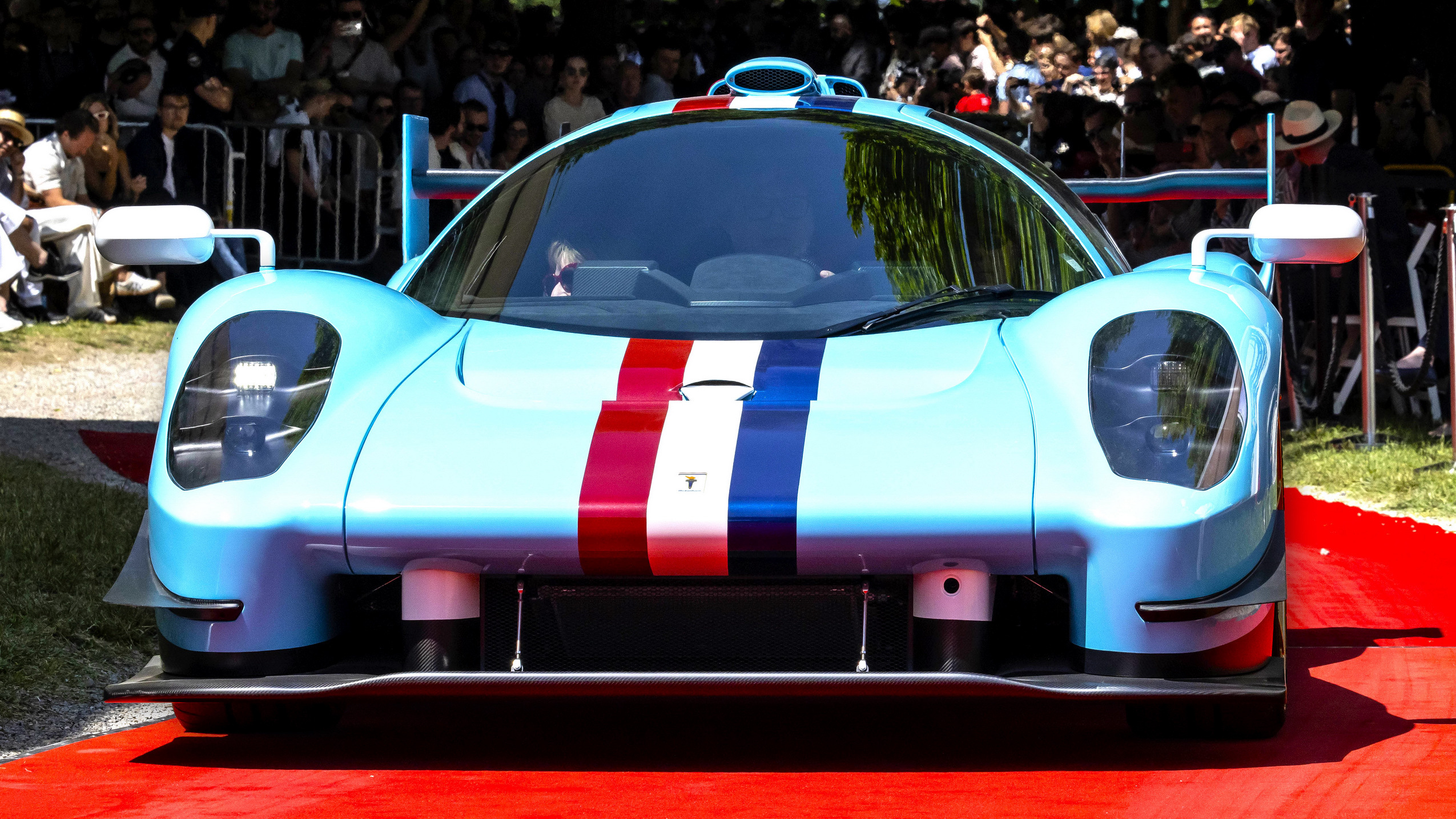
The Scuderia Cameron Glickenhaus SCG 003S is an ultra-exclusive, American-engineered hypercar designed to bridge the gap between uncompromising FIA-homologated endurance racing prototypes and street-legal track cars. Developed by filmmaker, collector, and team owner James Glickenhaus, the SCG 003S showcases a modular carbon-fiber chassis, twin-turbocharged power, and aerodynamic downforce levels that rival dedicated GT3 competition machines while maintaining compliance for road registration.
Introduction to the SCG 003S Heritage
The Scuderia Cameron Glickenhaus SCG 003S represents a rare breed in the modern automotive landscape: a boutique hypercar built from the ground up by a racing team that tests its creations in the most grueling environments on Earth. Unlike mass-produced manufacturers who build street cars and occasionally adapt them for the track, Glickenhaus approached the project in reverse. The racing variant, known as the SCG 003C (Competizione), was conceived first to conquer the 24 Hours of Nürburgring. The "S" designation stands for Stradale, signifying the road-legal iteration that brings race-bred engineering directly to public highways.
Understanding the SCG 003S requires looking beyond standard hypercar metrics like straight-line acceleration or luxury cabin appointments. It is a purist driving machine focused on aerodynamics, weight savings, modular adaptability, and mechanical feedback. As automotive technology shifts toward electrification and heavy hybrid batteries, the SCG 003S remains a testament to lightweight carbon-fiber construction and internal combustion performance.
Fact 1: Built on a Modular Racing DNA Architecture
The foundational engineering of the SCG 003S is rooted in its modular carbon-fiber tub. Unlike many low-volume boutique manufacturers who source chassis frames from mainstream suppliers or adapt existing monocoques, Scuderia Cameron Glickenhaus engineered a bespoke carbon composite structure designed specifically to transition between a street-legal sports car and a GT3-class endurance racer with minimal modification.
This modularity is not merely a marketing term; it is a structural reality. The core tub remains identical between the track-only "C" model and the road-legal "S" model. In the racing environment, the car must endure punishing vertical loads, high-speed compression through the Nürburgring’s Flugplatz, and multi-hour endurance stresses. When translated to the Stradale, this rigidity translates into exceptional handling precision. Drivers do not experience chassis flex, allowing the suspension geometry to operate precisely as intended by the engineers.
Furthermore, the design incorporates a removable engine bay structure. If a team or owner damages the rear subframe during a track session or minor road incident, the modular architecture allows technicians to unbolt and replace major structural components far more efficiently than traditional unibody or bonded aluminum spaceframe designs would allow.
Fact 2: Powered by a Twin-Turbocharged V6 Engine
While early iterations of the SCG 003 concept explored various powerplant options—including a Honda-derived HPD twin-turbo V6 used in racing and a proposed BMW V8 for early road car concepts—the production-spec SCG 003S utilizes a heavily tuned, race-derived 3.5-liter twin-turbocharged V6 engine. This powerplant is managed by advanced electronic engine control units designed to deliver explosive mid-range torque while complying with strict emissions and sound regulations for road use.
The technical specifications of the engine highlight its racing pedigree:
- Displacement: 3.5 liters
- Induction: Dual turbochargers with air-to-air intercoolers
- Power Output: Approximately 800 horsepower (depending on tuning configuration)
- Torque: Over 600 lb-ft delivered across a broad power band
- Transmission: 7-speed dual-clutch paddle-shift gearbox sending power to the rear wheels
This engine choice prioritizes a low polar moment of inertia. By utilizing a compact V6 layout rather than a massive V12 or quad-turbo W16, engineers placed the weight lower and closer to the center of the car. This configuration enhances turn-in response and reduces the pendulum effect during high-speed direction changes, giving the driver immediate feedback through the steering wheel.
Fact 3: Generates Immense Downforce for Cornering Agility
Aerodynamics define the exterior silhouette of the SCG 003S. Every vent, splitter, diffuser, and wing is functional, sculpted through extensive computational fluid dynamics (CFD) and wind tunnel testing rather than stylistic preference alone. At high speeds, the car generates downforce levels that far exceed conventional supercars, allowing it to corner with lateral grip figures that push past 2.0 G on sticky track tires.
The aerodynamic package includes:
- Front Splitter and Canards: Direct high-pressure air around the front wheels to reduce drag and increase front-end bite.
- Underbody Venturi Tunnels: Create a low-pressure zone beneath the car, sucking the vehicle to the tarmac without inducing excessive drag.
- Adjustable Rear Wing: Generates massive rear axle stability under heavy braking and high-speed cornering phases.
This massive aerodynamic load transforms the driving experience at speed. While traditional road cars feel lighter and more precarious as velocity increases, the SCG 003S feels increasingly planted the faster it travels. This characteristic requires drivers to recalibrate their mental mapping of cornering speeds, as the car can negotiate sweeping bends at velocities that would induce terminal understeer or oversteer in standard high-performance vehicles.
Fact 4: Hand-Built Production and Bespoke Customization
Manufactured in limited quantities, the SCG 003S is not mass-produced on an assembly line. Each vehicle is meticulously hand-assembled by master technicians, allowing for a high degree of personalization for every client. Owners work directly with the Scuderia Cameron Glickenhaus team to specify exterior carbon fiber finishes, custom paint schemes, interior upholstery materials, and tailored seating configurations to fit the driver's exact body dimensions.
This bespoke manufacturing model ensures that no two SCG 003S examples are identical. The interior strips away unnecessary luxury items in favor of exposed carbon fiber, Alcantara, lightweight racing harnesses, and driver-focused instrumentation. Climate control and basic infotainment are integrated, but the primary focus remains on the man-machine interface. Buyers are investing not just in a vehicle, but in a personalized piece of automotive craftsmanship that carries direct lineage to cars that have competed against factory efforts from major global brands like BMW, Porsche, and Audi.
Fact 5: Proven Endurance Racing Pedigree
The most defining characteristic of the SCG 003S is that its development cycle was validated in the crucible of competitive motorsport. Scuderia Cameron Glickenhaus utilized the 24 Hours of Nürburgring—widely regarded as the toughest endurance race in the world—as its primary testing ground.
| Competition Metric | SCG 003C (Racing Variant) | SCG 003S (Stradale Variant) |
|---|---|---|
| Primary Purpose | FIA GT3 / Nürburgring 24h | Road-Legal Track Day & Highway |
| Chassis | Modular Carbon-Fiber Tub | Modular Carbon-Fiber Tub |
| Aero Package | Full Endurance Wing & Splitter | Homologated Road Aero Configuration |
| Suspension | Pushrod Double Wishbone | Pushrod Double Wishbone |
| Target Audience | Professional / Pro-Am Teams | Private Collectors & Driving Purists |
By racing the 003C variant, the engineering team identified weak points in cooling, suspension geometry, and electrical durability under extreme thermal and mechanical stress. These real-world racing lessons were directly integrated into the design and engineering of the SCG 003S road car. When an owner takes the Stradale to a track day, they are driving a machine equipped with dampers, brakes, and structural components validated by factory racing drivers in a 24-hour endurance battle.
Technical Specifications and Performance Overview
To summarize the engineering scope of the vehicle, the following technical overview outlines the core parameters of the SCG 003S:
- Chassis Construction: Carbon fiber monocoque with tubular subframes
- Body Panels: Autoclaved carbon fiber
- Suspension: Independent double wishbone with pushrod-operated dampers
- Brakes: Ventilated carbon-ceramic discs with multi-piston calipers
- Dry Weight: Approximately 1,300 kg (2,866 lbs), varying by specification
Frequently Asked Questions
Is the SCG 003S street legal in the United States?
Yes, the SCG 003S is designed to be road-legal, though registration pathways vary significantly by state due to low-volume vehicle manufacturing regulations. Many owners register their vehicles under specialized low-volume or kit-car regulatory frameworks, depending on local jurisdiction laws.
How many SCG 003S models were built?
Production numbers for the SCG 003 series are extremely limited. Scuderia Cameron Glickenhaus manufactured only a small handful of chassis, making both the 'C' and 'S' variants exceptionally rare sights at car shows, private track days, and automotive collections worldwide.
What is the difference between the SCG 003C and SCG 003S?
The "C" stands for Competizione, which is a dedicated, FIA-compliant race car built for GT3 competition. The "S" stands for Stradale, which is the road-legal variant equipped with features necessary for highway and street use while retaining the core chassis, engine architecture, and aerodynamic philosophy of the racer.
How much does an SCG 003S cost?
When new, the base price of the SCG 003S was set in the multi-million dollar range, reflecting the extensive hand-built carbon fiber construction, bespoke engineering, and low production volume. Current market values fluctuate depending on provenance, exact specification, and collector demand.
Can the SCG 003S be serviced by standard mechanics?
No. Due to its exotic carbon-fiber construction, race-derived engine management systems, and specialized suspension geometry, the SCG 003S requires specialized technical expertise. Maintenance and major servicing are typically handled directly by Scuderia Cameron Glickenhaus or authorized specialist race shops.
Conclusion and Next Actions
The Scuderia Cameron Glickenhaus SCG 003S stands as a remarkable achievement in boutique automotive engineering. By combining a race-proven modular carbon chassis, twin-turbo V6 power, and functional endurance aerodynamics, it delivers an authentic racing experience for the road. Prospective buyers, automotive historians, and track enthusiasts looking to explore the SCG 003S further should consult official Scuderia Cameron Glickenhaus archives or verified exotic car brokers specializing in low-volume homologation specials to review specific chassis histories and verification documents.