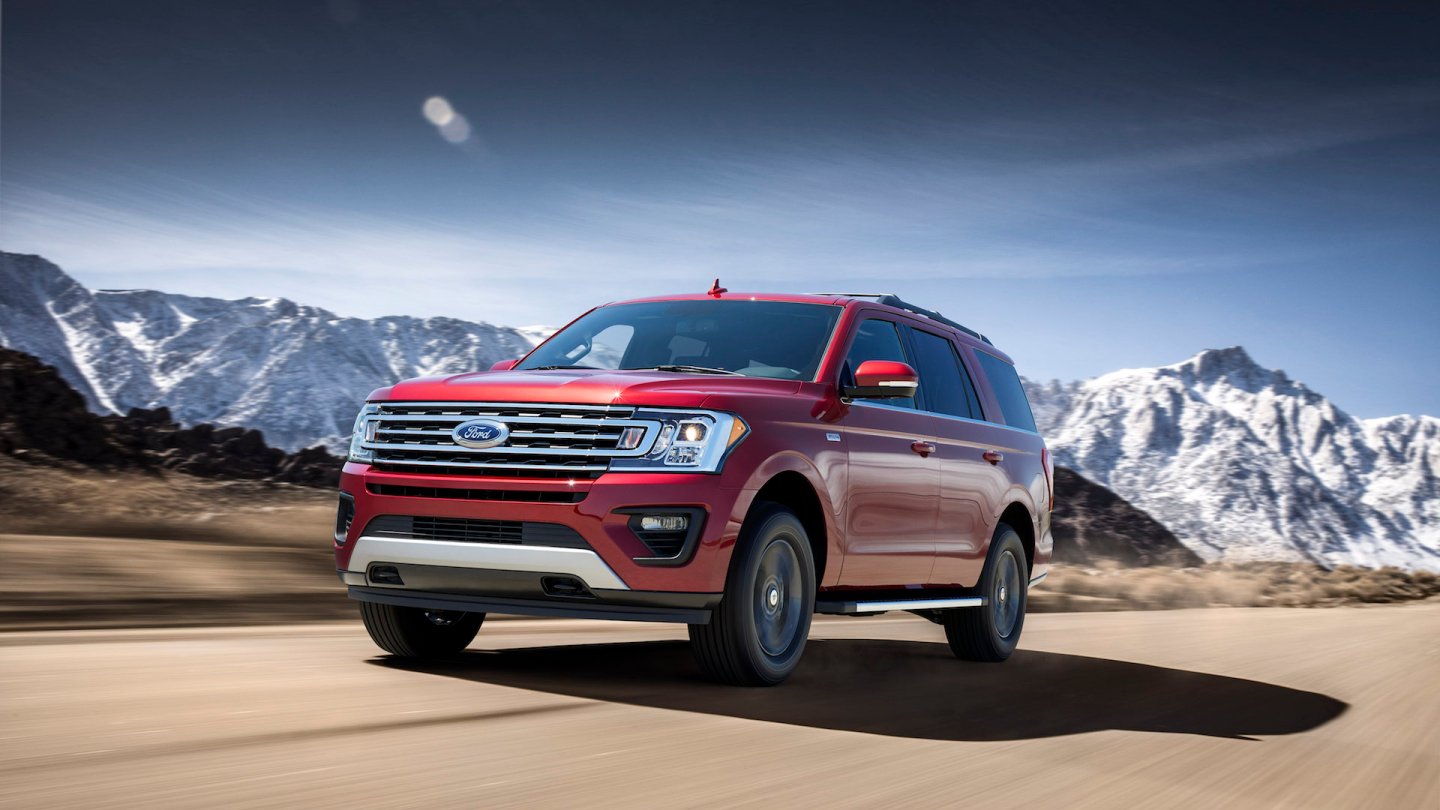
The 2018 Ford Expedition achieves an EPA-estimated fuel economy of 17 mpg city, 24 mpg highway, and 20 mpg combined for standard rear-wheel-drive models, while four-wheel-drive configurations and the longer MAX body style see slight reductions down to 16-17 mpg city and 21-22 mpg highway.
When shopping for a full-size, three-row utility vehicle, fuel economy is rarely the primary selling point, yet it remains one of the most critical factors for long-term ownership costs. The 2018 model year marked a massive, ground-up redesign for the Ford Expedition. Dropping its previous steel-intensive architecture in favor of a high-strength, military-grade aluminum-alloy body mated to a high-strength steel frame, Ford shaved over 300 pounds off the SUV's curb weight. This weight reduction, combined with the adoption of a second-generation 3.5-liter EcoBoost twin-turbocharged V6 engine and a segment-first 10-speed automatic transmission, radically shifted the efficiency baseline for the full-size American utility class. Understanding how these mechanical components translate to real-world miles per gallon helps prospective buyers, road-trippers, and towing enthusiasts gauge what to expect at the fuel pump.
Engineering the 2018 Powertrain for Efficiency
The efficiency profile of the 2018 Ford Expedition is driven entirely by its powertrain architecture. Gone are the days of the thirsty naturally aspirated V8 engines that once dominated the full-size SUV segment. Instead, Ford staked its entire full-size truck and SUV lineup on forced induction and high-ratio gearboxes.
The 3.5L EcoBoost V6 Engine
At the heart of the vehicle is a 3.5-liter twin-turbocharged EcoBoost V6. In the standard XLT and Limited trims, this engine produces 375 horsepower and 470 pound-feet of torque. Stepping up to the top-tier Platinum trim unlocks a higher-output tune, boosting performance to 400 horsepower and 480 pound-feet of torque. Twin turbochargers allow the engine to produce massive low-end torque—peaking at just 2,250 RPM—which means the vehicle does not need to aggressively rev its engine or drop multiple gears to get off the line or pass traffic. This directly preserves fuel during urban driving cycles where heavy stop-and-go maneuvers typically penalize large vehicles.
The 10-Speed SelectShift Automatic Transmission
Partnering with the EcoBoost engine is a 10-speed automatic transmission developed jointly with General Motors. Traditional 6-speed or 8-speed transmissions often leave gaps in gear ratios, forcing the engine to operate outside its optimal thermal and mechanical efficiency band during acceleration or cruising. The 10-speed unit provides a wider overall gear ratio spread (7.34:1) with closer steps between gears. This allows the engine to maintain a low, relaxed cruising RPM at highway speeds—often spinning well under 2,000 RPM at 70 mph—which significantly curbs fuel consumption on long highway stretches.
EPA Fuel Economy Ratings by Configuration
The EPA ratings for the 2018 Ford Expedition vary based on two main structural choices: standard versus long-wheelbase (MAX) bodies, and rear-wheel drive (RWD) versus four-wheel drive (4WD).
Standard Wheelbase (Expedition)
The standard-length model serves as the baseline for the platform's highest efficiency numbers.
- Rear-Wheel Drive (RWD): Rated at 17 mpg in the city, 24 mpg on the highway, and 20 mpg combined.
- Four-Wheel Drive (4WD): Rated at 17 mpg in the city, 22 mpg on the highway, and 19 mpg combined. Adding the mechanical hardware, transfer case, and extra weight of the 4WD system extracts a penalty primarily on the highway cycle, dropping efficiency by 2 mpg.
Long Wheelbase (Expedition MAX)
The Expedition MAX adds nearly a foot of total length, expanding cargo capacity behind the third row significantly. This increase in length adds roughly 100 pounds of curb weight and alters the aerodynamics slightly.
- Rear-Wheel Drive (RWD): Rated at 17 mpg city, 23 mpg highway, and 19 mpg combined.
- Four-Wheel Drive (4WD): Rated at 16 mpg city, 21 mpg highway, and 18 mpg combined.
| Model Variant | Drive Type | City MPG | Highway MPG | Combined MPG |
|---|---|---|---|---|
| Standard Expedition | RWD | 17 | 24 | 20 |
| Standard Expedition | 4WD | 17 | 22 | 19 |
| Expedition MAX | RWD | 17 | 23 | 19 |
| Expedition MAX | 4WD | 16 | 21 | 18 |
Real-World Fuel Economy vs. EPA Estimates
While laboratory EPA testing provides a standardized baseline, real-world driving conditions frequently diverge from these figures, particularly for turbocharged engines.
The EcoBoost Paradox
EcoBoost engines are engineered to deliver small-displacement fuel economy when driven conservatively, paired with V8-like power when the turbochargers spool up under heavy throttle. In real-world operation, this dual-nature creates a wide variance in fuel economy. Owners who maintain a light throttle foot, anticipate traffic stops, and cruise at or near posted highway speed limits frequently match or even exceed the EPA highway rating of 22 to 24 mpg.
Conversely, aggressive driving, frequent heavy acceleration, or maintaining speeds well in excess of 75 mph forces the turbochargers to work continuously, dumping extra fuel into the combustion chambers to manage cylinder temperatures and generate boost. Under heavy boot, real-world fuel economy can easily drop into the 11 to 13 mpg range.
Aerodynamics and Speed
Standing nearly 6.5 feet tall with a boxy, commanding silhouette, the 2018 Expedition pushes a massive wall of air. Aerodynamic drag increases exponentially with speed. Driving at 80 mph instead of 65 mph requires significantly more horsepower to overcome wind resistance, rendering the 10-speed transmission's high overdrive gears less effective and causing fuel economy to plummet by 3 to 5 mpg on open interstate drives.
Fuel Economy While Towing
With a maximum towing capacity of up to 9,300 pounds when properly equipped with the Heavy-Duty Trailer Tow Package, the 2018 Expedition is a popular choice for hauling travel trailers, boats, and livestock trailers. However, towing fundamentally changes the physics of fuel consumption.
When pulling a heavy, un-aerodynamic trailer, the vehicle's engine operates under constant load, keeping the turbochargers spooled and forcing the 10-speed transmission to downshift frequently to maintain momentum on inclines.
- Light Trailers (Pop-up campers, small utility trailers): Expect fuel economy to drop into the 12 to 15 mpg range.
- Heavy Loads (Large enclosed cargo trailers, mid-size travel trailers, boats): Fuel economy typically plummets to between 8 and 11 mpg.
To maximize efficiency while towing, drivers should utilize the vehicle's dedicated Tow/Haul mode, which alters shift schedules to prevent "gear hunting" and utilizes engine braking to reduce brake wear on descents. Maintaining moderate speeds (around 60 to 65 mph) while towing also helps prevent catastrophic drops in fuel range.
Factors Influencing Daily Fuel Efficiency
Beyond driving style and towing status, several mechanical and environmental factors directly impact how many miles per gallon a 2018 Expedition delivers on a day-to-day basis.
Tire Selection and Inflation
Many 2018 Expeditions left the factory with heavy-duty all-season tires, but owners frequently upgrade to aggressive all-terrain or mud-terrain tires for aesthetic or off-road utility. All-terrain tires feature deeper, heavier tread blocks and softer rubber compounds that increase rolling resistance. Swapping highway tires for rugged off-road tires can instantly penalize fuel economy by 1 to 2 mpg. Furthermore, maintaining proper tire pressure is essential; low tire pressure increases rolling resistance, forcing the engine to work harder to maintain speed.
Climate Control and Accessories
The sheer volume of the Expedition cabin means the dual-zone automatic climate control system works overtime in extreme ambient temperatures. Running the air conditioning compressor at maximum capacity draws mechanical and electrical load from the engine, shaving roughly 0.5 to 1 mpg off city driving efficiency. Additionally, utilizing auxiliary electronics, seat heaters, and roof racks or cargo boxes creates additional aerodynamic drag and electrical draw.
Fuel Grade Selection
The 3.5L EcoBoost engine is engineered to run on standard 87-octane regular unleaded gasoline, making it cost-effective to fill up. However, the engine management computer is capable of utilizing its knock sensors to advance ignition timing if premium 91- or 93-octane fuel is detected. While Ford does not require premium fuel for daily driving, independent testing indicates that running higher-octane fuel can yield a modest improvement in power output and a slight bump in real-world efficiency under heavy loads or hot weather conditions, though the fuel cost differential usually outweighs the minor efficiency gain.
Maintenance Practices to Optimize Fuel Economy
As a vehicle ages, mechanical wear and tear can gradually degrade fuel efficiency. Keeping a 2018 Expedition operating at peak efficiency requires adherence to a strict maintenance schedule.
Spark Plug and Ignition Maintenance
Direct-injection turbocharged engines are notoriously hard on spark plugs. The extreme heat and cylinder pressures inside an EcoBoost engine demand clean, properly gapped spark plugs. Worn spark plugs lead to incomplete combustion, misfires, and a noticeable drop in fuel economy. Replacing spark plugs every 30,000 to 45,000 miles is a critical preventative measure for maintaining factory-level efficiency.
Induction System Cleaning
Because direct-injection fuel injectors spray fuel directly into the combustion chamber rather than the intake tract, fuel does not wash over the back of the intake valves. Over tens of thousands of miles, carbon buildup can accumulate on the intake valves of EcoBoost engines, restricting airflow and disrupting the air-fuel mixture. Periodic professional intake valve cleaning or using top-tier detergents can preserve optimal airflow and combustion efficiency.
Fluid and Filter Management
Restricted airflow from a clogged engine air filter forces the turbochargers to work harder to pull air into the engine, wasting energy. Similarly, fresh synthetic 5W-30 motor oil ensures that internal engine friction is kept to an absolute minimum across all moving parts, reducing parasitic energy loss within the rotating assembly.
Frequently Asked Questions
What is the fuel tank capacity of the 2018 Ford Expedition?
The standard-wheelbase 2018 Ford Expedition features a 23.2-gallon fuel tank, while the extended Expedition MAX is equipped with a larger 28.3-gallon fuel tank to offset its slightly lower fuel economy and cater to long-distance travelers.
Does the 2018 Ford Expedition require premium fuel?
No, the 2018 Ford Expedition is designed to run on standard 87-octane regular unleaded gasoline. While premium fuel can optimize performance under heavy towing or high ambient temperatures, it is not required for daily commuting or standard driving.
Why does my 2018 Expedition get worse fuel economy than the EPA rating?
Real-world fuel economy frequently falls short of EPA estimates if you regularly drive at high highway speeds (above 75 mph), tow heavy loads, drive primarily in dense urban stop-and-go traffic, use heavy all-terrain tires, or carry a significant amount of cargo and passengers.
How does the 2018 Expedition fuel economy compare to older V8 models?
The 2018 model represents a massive efficiency leap over the pre-2018 Expedition models, which utilized a 5.4-liter naturally aspirated V8 engine. Those older V8 models typically struggled to achieve 13-14 mpg in mixed driving and rarely exceeded 18 mpg on the highway, making the 2018 EcoBoost V6 substantially more efficient.
Can I improve the fuel economy of my 2018 Expedition aftermarket?
While aftermarket tuners, cold-air intakes, and exhaust systems are popular, their impact on real-world fuel economy is often negligible or negative unless paired with conservative driving habits. The most effective ways to improve efficiency are maintaining proper tire pressure, replacing worn spark plugs, removing unnecessary roof racks or cargo carriers, and reducing highway cruising speeds.
Conclusion and Ownership Perspective
The 2018 Ford Expedition successfully bridged the gap between heavy-duty utility and modern fuel efficiency by abandoning traditional V8 power in favor of advanced turbocharging and a 10-speed transmission. Achieving up to 24 mpg on the highway for a full-size, three-row SUV capable of seating eight passengers and towing heavy loads is an impressive engineering feat. While aggressive driving, high-speed interstate cruising, and heavy towing will quickly push fuel consumption into the teens or lower, mindful driving habits and diligent mechanical maintenance allow owners to extract dependable, class-competitive efficiency from this platform.