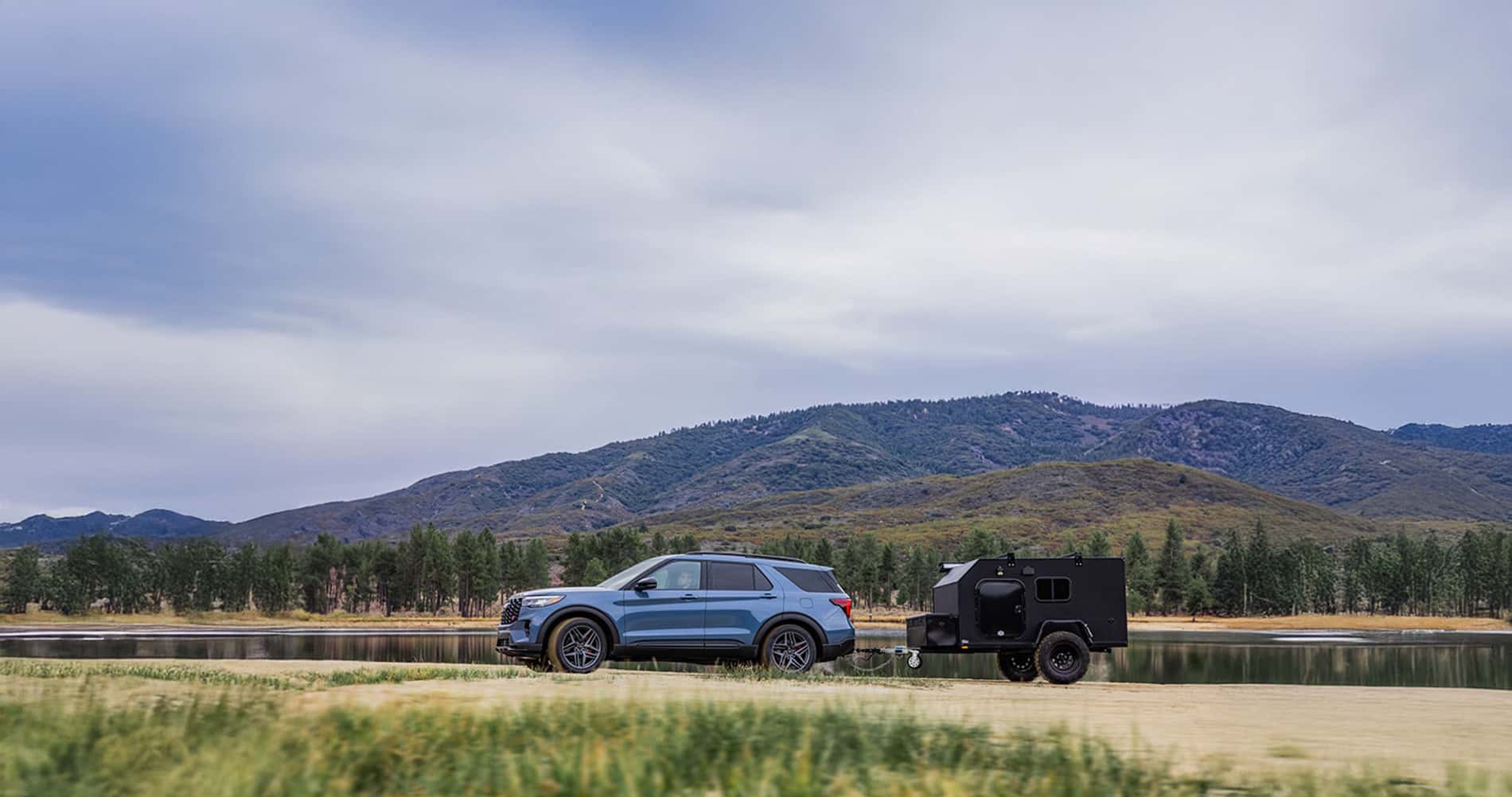
The 2016 Ford Explorer offers a maximum towing capacity of 5,000 pounds when properly equipped with the 3.5L Ti-VCT V6 or the 3.5L EcoBoost® V6 engine and the Class III Trailer Tow Package. Models featuring the 2.3L EcoBoost® four-cylinder engine are rated to tow up to 3,000 pounds, while standard configurations without a factory tow package are typically limited to 2,000 pounds.
Understanding the towing capabilities of a 2016 Ford Explorer requires looking beyond a single maximum figure. Because this model year introduced a significant mid-cycle refresh—including a new engine option and updated technology—the "real world" capacity depends heavily on the powertrain, the installed tow package, and the total weight of passengers and cargo inside the vehicle. As of 2026, these vehicles remain popular on the secondary market for families and outdoor enthusiasts, making it essential to verify the specific mechanical limits of a decade-old SUV before hitching up a trailer.
Breaking Down Towing Capacity by Engine Type
For the 2016 model year, Ford offered three distinct engine choices for the Explorer. Each engine has a specific Gross Combined Weight Rating (GCWR), which is the total allowable weight of the fully loaded vehicle and the fully loaded trailer combined.
1. 3.5L Ti-VCT V6 (Naturally Aspirated)
The standard 3.5L V6 was the workhorse of the 2016 lineup, found in the Base, XLT, and Limited trims. It produces 290 horsepower and 255 lb-ft of torque.
- Standard Capacity: 2,000 lbs.
- Maximum Capacity: 5,000 lbs (Requires Class III Trailer Tow Package). This engine is preferred by many long-term owners for its simplicity and reliability. When equipped with the Class III package, it provides a balanced towing experience for medium-sized boats or travel trailers.
2. 2.3L EcoBoost® I-4
New for 2016, the 2.3L EcoBoost replaced the previous 2.0L engine. It was a significant upgrade, offering 280 horsepower and 310 lb-ft of torque. Unlike the 2.0L engine it replaced, the 2.3L was specifically engineered to handle moderate towing duties.
- Maximum Capacity: 3,000 lbs. While 3,000 pounds is sufficient for a pair of jet skis or a small utility trailer, it is important to note that this engine cannot be configured to reach the 5,000-pound threshold, regardless of aftermarket additions.
3. 3.5L EcoBoost® V6 (Twin-Turbo)
Standard on the Sport and Platinum trims, this engine is the performance leader of the 2016 Explorer range, delivering 365 horsepower and 350 lb-ft of torque.
- Standard Capacity: 2,000 lbs (without package).
- Maximum Capacity: 5,000 lbs (Requires Class III Trailer Tow Package). While the maximum rating is the same as the naturally aspirated V6 (5,000 lbs), the 3.5L EcoBoost provides a much easier towing experience. The high torque output at low RPMs allows the vehicle to maintain highway speeds on inclines and merge into traffic with more confidence.
The Role of Factory Towing Packages
One of the most common mistakes owners make is assuming that because they have a V6 engine, they can automatically tow 5,000 pounds. In reality, the mechanical cooling and electrical infrastructure are just as important as the engine itself.
Class II Trailer Tow Package
Typically associated with the 2.3L EcoBoost engine, the Class II package prepares the vehicle for lighter loads. It usually includes a frame-mounted hitch and a wiring harness. Without this package, attempting to tow 3,000 pounds can lead to engine overheating or transmission strain, as the vehicle lacks the optimized cooling configurations.
Class III Trailer Tow Package
To reach the 5,000-pound maximum, the 2016 Explorer must have the factory-installed Class III package. According to the 2016 Ford RV & Trailer Towing Guide, this package includes:
- Engine Oil Cooler: Helps maintain engine temperatures under the high stress of towing.
- High-Capacity Radiator: Provides additional cooling surface area.
- Frame-Mounted Hitch Receiver: A heavy-duty receiver designed for higher tongue weights.
- 4-pin and 7-pin Wiring Harness: Allows for the connection of trailer lights and electric brakes.
Caution: If you are buying a used 2016 Explorer in 2026, do not rely solely on the presence of a hitch. Many owners install aftermarket hitches for bike racks. Check the window sticker or run the VIN through a Ford decoder to ensure the vehicle has the internal cooling upgrades required for the 5,000-pound rating.
Technical Specifications and Weight Limits
When calculating your towing needs, you must consider several different weight metrics. Exceeding any of these can compromise safety and lead to mechanical failure.
| Specification | 2.3L EcoBoost | 3.5L V6 (Ti-VCT) | 3.5L EcoBoost (V6) |
|---|---|---|---|
| Max Towing Capacity | 3,000 lbs | 5,000 lbs | 5,000 lbs |
| Max Tongue Weight | 300 lbs | 500 lbs | 500 lbs |
| Standard GCWR | 7,900 lbs | 7,100 lbs | 7,300 lbs |
| Max GCWR (w/ Tow Pkg) | 8,000 lbs | 9,900 lbs | 10,200 lbs |
| Transmission | 6-Speed SelectShift | 6-Speed SelectShift | 6-Speed SelectShift |
Understanding Tongue Weight
Tongue weight is the downward force exerted by the trailer coupler onto the hitch ball. For the 2016 Explorer, this should be between 10% and 15% of the total loaded trailer weight. For a 5,000-pound trailer, the tongue weight would be 500 pounds. It is vital to remember that tongue weight counts toward your vehicle's Payload Capacity. If you have five adults in the car and 500 pounds on the hitch, you may exceed the Gross Vehicle Weight Rating (GVWR) of the Explorer itself.
Payload vs. Towing
The payload capacity is often the "hidden" limit. In 2016, the Explorer's payload typically ranged from 1,200 to 1,500 pounds depending on the trim level. If your trailer has a 500-pound tongue weight, you only have about 700 to 1,000 pounds left for passengers, fuel, and cargo inside the SUV.
Performance and Handling Features
The 2016 Ford Explorer was designed with several software-based features to make towing safer and more manageable.
Trailer Sway Control
Standard on all 2016 models, Trailer Sway Control is an extension of the AdvanceTrac® with Roll Stability Control (RSC) system. It uses sensors to monitor the motion of the vehicle. If the system detects trailer sway, it automatically applies precise braking to individual wheels and adjusts engine torque to help the driver regain control.
Tow/Haul Mode
Models equipped with the 6-speed SelectShift® automatic transmission feature a dedicated Tow/Haul mode. When activated via a button on the gear shifter, the transmission shifts into higher gears at higher speeds to keep the engine in its power band. More importantly, it provides "engine braking" when descending hills, reducing the risk of overheating the vehicle's brakes.
Intelligent 4WD and Terrain Management
While the Explorer is a front-wheel-drive-based platform, many 3.5L models come with Intelligent 4WD. This system is particularly useful when pulling a boat up a slippery ramp or towing a trailer on gravel roads. The Terrain Management System allows you to select "Sand," "Mud/Ruts," or "Grass/Gravel/Snow" modes to optimize traction while under load.
Real-World Towing Considerations in 2026
As of 2026, the 2016 Ford Explorer is a decade-old vehicle. If you intend to use it for towing, there are several maintenance and safety factors that become more critical with age.
1. Transmission Health
The 6F50 and 6F55 transmissions used in the 2016 Explorer are generally robust, but towing puts significant heat stress on the fluid. If the vehicle has 100,000 miles or more, a full transmission fluid exchange (not just a drain and fill) is highly recommended before towing a heavy trailer. Dark or burnt-smelling fluid is a sign that the transmission may struggle under the load of a 5,000-pound trailer.
2. Rear Suspension Components
Towing causes the rear of the vehicle to squat. Over time, the rear shocks and bushings on a 2016 model can wear out. If the rear of the Explorer sags significantly when a trailer is attached, it can cause the front wheels to lose traction and reduce steering effectiveness. Upgrading to heavy-duty shocks or using a Weight Distribution Hitch (WDH) is recommended for trailers over 3,000 pounds. Note that Ford allows the use of weight-distributing hitches on the Explorer to help level the load.
3. Braking Capacity
While the Explorer has competent brakes, a 5,000-pound trailer will significantly increase stopping distances. In many jurisdictions, trailers over 1,500 or 2,000 pounds are legally required to have their own braking systems. Because the 2016 Explorer does not come with a built-in brake controller from the factory (unlike the F-150), you will need to install an aftermarket electronic brake controller (such as a Tekonsha or Curt unit) to operate the trailer's electric brakes.
Comparison with 2016 Competitors
To put the Explorer's 5,000-pound limit in perspective, it is helpful to look at how it compared to other mid-size SUVs available in the same year.
- Toyota Highlander (2016): Max towing of 5,000 lbs. Similar to the Explorer, it required the V6 engine and a tow package.
- Honda Pilot (2015/2016): Max towing of 5,000 lbs (with AWD) or 3,500 lbs (with FWD).
- Dodge Durango (2016): Max towing of up to 7,400 lbs (with the Hemi V8). The Durango remained the class leader for those needing to tow more than 5,000 pounds but less than what a full-size SUV requires.
- Chevrolet Traverse (2016): Max towing of 5,200 lbs.
The Explorer remained a "middle-of-the-road" option—highly capable for most family needs, but not intended for heavy-duty livestock trailers or large car haulers.
Frequently Asked Questions
Can I tow 5,000 lbs with a 2016 Explorer FWD?
Yes, as long as it has the 3.5L V6 engine and the Class III Trailer Tow Package. While All-Wheel Drive (AWD) provides better traction on slippery surfaces, Ford's official rating for the FWD V6 models with the proper package remains 5,000 pounds. However, be cautious of front-wheel spin when accelerating from a stop on an incline with a heavy trailer.
What happens if I tow over the 5,000 lb limit?
Towing beyond the rated capacity is dangerous and can lead to catastrophic failure of the transmission, brakes, or frame. Furthermore, in the event of an accident, towing over the manufacturer's limit can result in insurance claims being denied and may lead to legal liability.
Do I need a Weight Distribution Hitch for the 2016 Explorer?
Ford recommends a weight-distributing hitch for trailers that exceed certain weights to maintain vehicle level and steering control. Generally, for any trailer approaching the 5,000-pound limit, a weight distribution system with sway control is a wise investment that significantly improves highway stability.
Can I add a tow package to my Explorer if it didn't come with one?
You can add an aftermarket hitch and wiring, but you cannot easily replicate the factory "Trailer Tow Package." The factory package includes specialized engine and transmission cooling components. Adding a hitch to a base model allows you to tow up to 2,000 pounds safely, but you should not attempt to tow 5,000 pounds without the upgraded cooling systems found in the factory-equipped models.
Is the 2016 Ford Explorer 2.3L EcoBoost good for towing?
The 2.3L EcoBoost is excellent for "light" towing. With 310 lb-ft of torque, it feels very capable when pulling small campers or utility trailers up to 3,000 pounds. However, it lacks the heat management and structural reinforcement required for the heavier 5,000-pound loads.
Final Recommendations for 2016 Explorer Owners
If you are planning to utilize the towing capacity of a 2016 Ford Explorer in 2026, follow these steps to ensure a safe experience:
- Verify the Equipment: Locate your VIN and use an online decoder or contact a Ford dealer to confirm if your vehicle has the Class III Trailer Tow Package (53G).
- Check the Tires: Ensure your tires are rated for the load and are not more than six years old, regardless of tread depth. Dry-rotted tires are a leading cause of blowouts under the heat of towing.
- Install a Brake Controller: If your trailer has electric brakes, you must install an aftermarket controller. The 2016 Explorer is "pre-wired" for a controller, but the unit itself must be purchased and plugged in under the dash.
- Practice Loading: Keep the heaviest items in the trailer centered over the trailer axles to maintain a proper 10-15% tongue weight.
- Scale the Load: If you are close to the 5,000-pound limit, take your fully loaded rig to a CAT scale at a truck stop. This is the only way to know for certain if you are within your GVWR and GCWR limits.
The 2016 Ford Explorer remains a versatile choice for towing, provided you respect its mechanical limits and ensure that the vehicle's cooling and braking systems are maintained to peak standards.