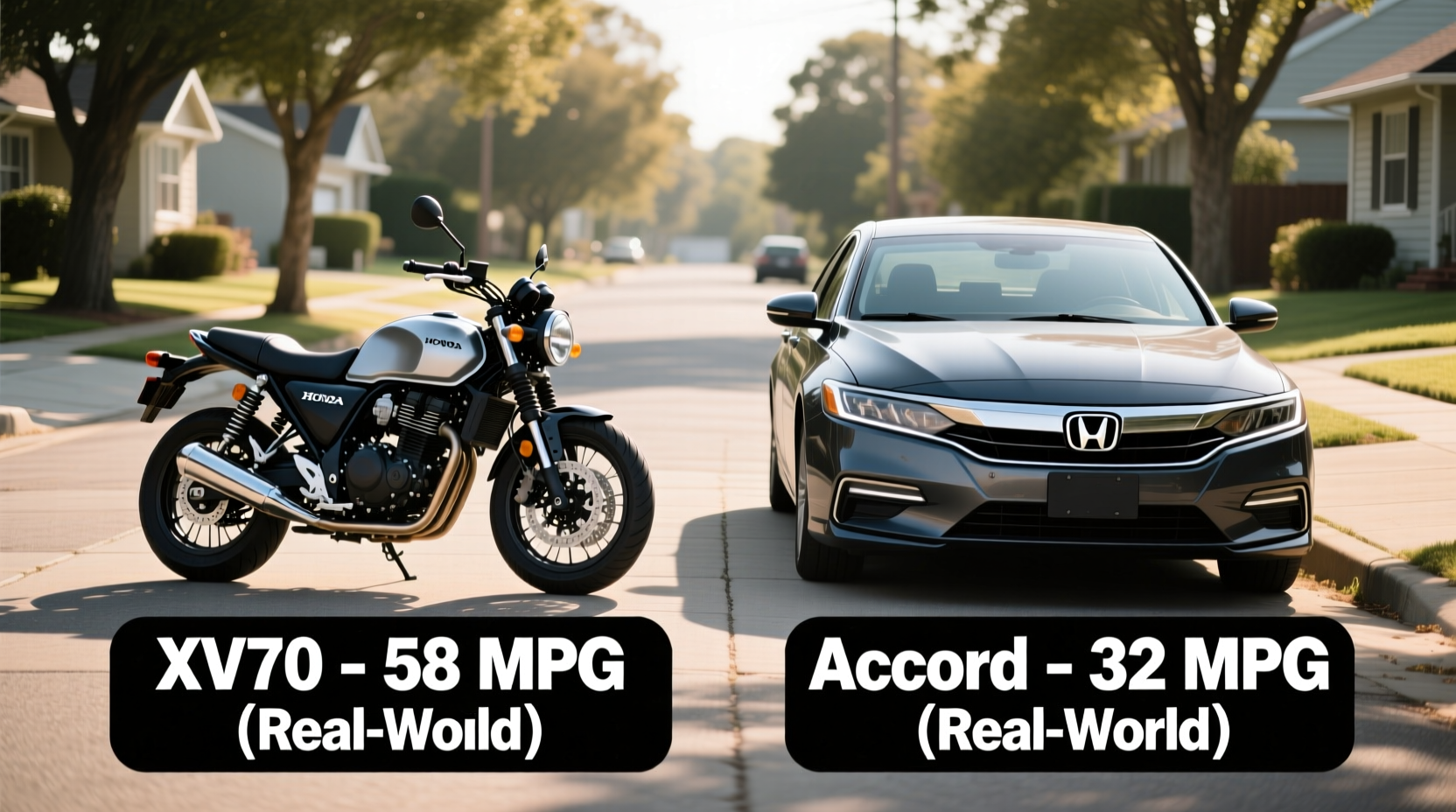
The 2014 Honda Accord delivers between 21 combined mpg for performance V6 coupe configurations and up to 47 combined mpg for the Accord Hybrid. For the mainstream 2.4-liter four-cylinder sedan with a continuously variable transmission (CVT), fuel economy sits at an EPA-rated 27 mpg city, 36 mpg highway, and 30 mpg combined.
Real-world gas mileage depends directly on powertrain selection, body style, transmission mechanics, and operational habits. The ninth-generation Accord introduced direct-injection engines and modern hybrid architecture, creating significant variation in mileage figures depending on how the vehicle was built and how it is driven.
2014 Honda Accord Official EPA Fuel Economy Ratings
The 2014 model year featured three core powertrain families: a 2.4-liter inline-4 engine (Earth Dreams direct injection), a 3.5-liter V6, and a two-motor hybrid system. Within these families, transmission choices—a continuously variable transmission (CVT), a six-speed manual, or a conventional six-speed automatic—substantially altered mileage ratings published by the U.S. Department of Energy and EPA.
| Model / Trim Configuration | Engine Size | Transmission | City MPG | Highway MPG | Combined MPG |
|---|---|---|---|---|---|
| Accord Sedan (LX, EX, EX-L) | 2.4L I4 | CVT Automatic | 27 | 36 | 30 |
| Accord Sedan Sport | 2.4L I4 | CVT Automatic | 26 | 34 | 29 |
| Accord Sedan (LX, Sport, EX) | 2.4L I4 | 6-Speed Manual | 24 | 34 | 27 |
| Accord Coupe (LX-S, EX, EX-L) | 2.4L I4 | CVT Automatic | 26 | 34 | 29 |
| Accord Coupe (LX-S, EX) | 2.4L I4 | 6-Speed Manual | 24 | 34 | 27 |
| Accord Sedan (EX-L V6, Touring) | 3.5L V6 | 6-Speed Automatic | 21 | 34 | 25 |
| Accord Coupe (EX-L V6) | 3.5L V6 | 6-Speed Automatic | 21 | 32 | 25 |
| Accord Coupe (EX-L V6) | 3.5L V6 | 6-Speed Manual | 18 | 28 | 22 |
| Accord Hybrid (Base, EX-L, Touring) | 2.0L I4 Hybrid | e-CVT | 50 | 45 | 47 |
| Accord Plug-In Hybrid (PHEV) | 2.0L I4 PHEV | e-CVT | 47 / 115 MPGe | 46 / 115 MPGe | 46 / 115 MPGe |
(Note: In 2014, EPA window stickers originally advertised the Accord Hybrid at 50 mpg city / 45 mpg highway / 47 mpg combined. In updated EPA test recalculations, hybrid cycles often reflect a 47/44/45 mpg distribution under stricter real-world correlation standards.)
Powertrain Variations: Why Engine Choice Matters
The gap between the most efficient 2014 Accord (the Hybrid at 47 combined mpg) and the thirstiest variant (the V6 manual coupe at 22 combined mpg) is more than double. Understanding why these variations occur requires a look under the hood.
The 2.4-Liter Earth Dreams Inline-4
The bulk of 2014 Accords sold featured the direct-injected 2.4-liter K24W engine. Direct injection sprays atomized fuel straight into the combustion chamber rather than the intake port, allowing a higher compression ratio (11.1:1) and leaner burning during light engine loads.
Standard trims produce 185 horsepower. When paired with Honda's CVT, the engine remains in its most thermally efficient operating range during steady highway cruising and gradual acceleration.
However, the Accord Sport trim alters these numbers slightly. Due to a dual-exhaust system that bumps output to 189 horsepower and larger, heavier 18-inch alloy wheels, rolling resistance and aerodynamic drag increase. This reduces the Sport trim's rating to 26 mpg city and 34 mpg highway—a 1 to 2 mpg loss across cycles compared to an LX or EX riding on 16- or 17-inch wheels.
The 3.5-Liter J35Y V6
The 3.5-liter V6 produces 278 horsepower and delivers strong passing power, but consumes more fuel during cold starts, idling, and heavy throttle application.
In the sedan and automatic coupe, Honda mitigates this consumption using Variable Cylinder Management (VCM). When cruising at steady highway speeds, VCM deactivates three of the six cylinders, temporarily running the engine as a three-cylinder unit to conserve fuel. This technology enables the automatic V6 sedan to achieve an impressive 34 mpg on the highway—matching the manual four-cylinder.
In contrast, the V6 6-speed manual coupe does not feature VCM. Aimed at driving enthusiasts, this configuration runs on all six cylinders at all times and utilizes aggressive, shorter gear ratios. As a result, its highway fuel economy plummets to 28 mpg, with city efficiency dropping to 18 mpg.
The Accord Hybrid and Plug-In Hybrid
The 2014 Accord Hybrid utilized Honda’s innovative Sport Hybrid Intelligent Multi-Mode Drive (i-MMD) system. Unlike conventional hybrids that route power through planetary gear sets, the 2014 Accord Hybrid primarily uses its 2.0-liter Atkinson-cycle four-cylinder engine as an on-board generator to power an electric traction motor.
At typical city speeds, the gas engine rarely drives the wheels directly; it operates intermittently at peak efficiency to charge the lithium-ion battery or feed power to the motor. At highway cruising speeds, a mechanical lock-up clutch engages, allowing the gasoline engine to directly drive the front axle through a single tall gear ratio. This unique architecture yields extraordinary urban efficiency, achieving 50 mpg in low-speed, stop-and-go driving environments where traditional internal combustion engines perform at their worst.
The Plug-In Hybrid (PHEV) variant features a larger 6.7 kWh lithium-ion pack, offering approximately 13 miles of purely electric range before defaulting to standard hybrid operation.
How Transmission Choice Dictates Consumption
Transmission engineering represents the second largest factor governing 2014 Accord fuel efficiency.
Continuously Variable Transmission (CVT) vs. 6-Speed Manual
For decades, manual transmissions provided better fuel economy than traditional torque-converter automatics. The 2014 Accord marked an era where automatic technology permanently surpassed manuals.
- The 2.4L CVT continuously adjusts pulley diameters to match load and speed, holding engine revs as low as 1,500 to 1,800 RPM at 65 mph.
- The 2.4L 6-Speed Manual is limited by fixed physical gear ratios. At 65 mph, the manual runs closer to 2,200 to 2,500 RPM, consuming more fuel over identical distances. In city stop-and-go driving, human shift patterns cannot match the automated fuel-cutoff and ratio optimization programmed into the CVT control module.
Real-World Driving Factors That Impact Accord MPG
While EPA laboratory tests establish a baseline, real-world operating conditions cause substantial divergence from window-sticker figures.
1. Speed and Aerodynamic Drag
Highway fuel consumption increases non-linearly with vehicle speed due to aerodynamic resistance.
- Cruising at 60 to 65 mph, a 2.4L CVT Accord Sedan can easily hit or exceed its 36 mpg EPA rating, frequently reaching 38 to 40 mpg on flat ground.
- Increasing speed to 75 to 80 mph increases aerodynamic drag by over 30%, pulling highway fuel economy down to roughly 31 to 33 mpg.
2. Ambient Temperature and Climate Control
Cold weather degrades fuel efficiency through several pathways:
- Engine warm-up cycles: The engine's computer runs a richer fuel mixture until coolant reaches roughly 185°F (85°C) to protect components and warm the catalytic converter.
- Winter-blend gasoline: Refineries blend fuel with higher proportions of butane in the winter to assist cold-weather ignition. Butane contains lower energy density per gallon than summer-blend fuels, cutting real-world mileage by 2% to 5%.
- Hybrid sensitivity: In sub-freezing temperatures, the 2014 Accord Hybrid's battery cannot accept or discharge high currents efficiently. The internal combustion engine must run frequently simply to supply cabin heat via the heater core, reducing winter hybrid mileage from 47 mpg down to 35–38 mpg.
3. Wheel and Tire Sizing
Tire dimensions directly affect unsprung weight and rolling resistance.
- An Accord LX rides on 205/65R16 tires on lightweight 16-inch wheels.
- An Accord Sport or Touring uses wider 235/45R18 tires.
The wider tread surface increases rolling resistance, while the heavier wheel-and-tire combination requires more torque to rotate from a stop. Underinflated tires degrade efficiency further: every 1-pound-per-square-inch (psi) drop across all four tires typically lowers gas mileage by roughly 0.2%.
4. Use of the "ECON" Button
Most 2014 Accords include a green dashboard button labeled ECON. Pressing it alters electronic vehicle parameters to prioritize efficiency:
- Throttle response: Softens pedal sensitivity, remapping throttle input so that rapid depressions open the throttle body more gradually.
- CVT behavior: Keeps the transmission in taller gear ratios longer and dampens sudden downshifts.
- Air conditioning: Cycles the A/C compressor less frequently and reduces fan blower speed, drawing less mechanical power off the engine's serpentine belt.
- Cruise control: Allows the vehicle to scrub a few miles per hour on steep uphill grades rather than aggressively downshifting to maintain an exact speed.
Using ECON mode rarely boosts steady, flat-road cruising economy, but it can recover 1 to 3 mpg in urban commutes and rolling highway terrain.
Common Causes of Dropping Fuel Economy in Aging 2014 Accords
As 2014 models age and log high mileage, mechanical wear can reduce fuel economy. If an Accord that once delivered 32 mpg combined suddenly drops to 25 mpg under identical driving conditions, several components require inspection.
Direct Injection Carbon Buildup
The 2.4L K24W was among Honda's earliest mass-market applications of direct injection. In traditional port-injected engines, fuel constantly washes over the backs of the intake valves, keeping them free of debris. In direct-injected engines, fuel never touches the intake valves.
Over time, oil mist from the Positive Crankcase Ventilation (PCV) system bakes onto the hot valve stems, creating carbon deposits. This buildup restricts intake airflow, disturbs combustion tumble, degrades power, and increases fuel consumption.
Failing Oxygen and Air/Fuel Ratio Sensors
The primary upstream air/fuel ratio sensor monitors unburned oxygen in the exhaust stream to adjust injector pulse width. As these sensors age, their response times slow down before an official diagnostic trouble code (like P0135 or P0171) triggers the Check Engine light. A sluggish upstream sensor often defaults the fuel mixture slightly rich, degrading fuel economy by 10% to 15%.
VCM System Performance (V6 Models)
On 3.5L V6 models, the Variable Cylinder Management spool valve and oil pressure switches must function properly for the rear cylinder bank to disengage. If the VCM system detects abnormal engine oil pressure or temperature, it disables cylinder deactivation. The vehicle continues to run normally without dashboard warnings, but fuel consumption increases noticeably during highway driving.
Transmission Fluid Degradation
Honda's first-generation direct-injection CVTs are sensitive to fluid condition. Worn, oxidized fluid increases belt slip and hydraulic pump drag, forcing the transmission to run hotter and less efficiently. Honda specifies HCF-2 fluid for four-cylinder CVTs. Using incorrect standard ATF fluid will degrade efficiency and damage transmission internal components.
Practical Troubleshooting Checklist for Poor Fuel Economy
If a 2014 Accord is burning noticeably more fuel than its factory specifications, run through this prioritized mechanical evaluation:
- Verify Tire Pressures: Ensure tires are cold-inflated to the doorjamb placard specification (typically 32 to 33 psi).
- Scan for Stored Diagnostic Trouble Codes (DTCs): Check for pending codes related to misfires (P0300–P0304), catalytic efficiency (P0420), or EVAP purges.
- Inspect the Engine Air Filter: A clogged or rodent-nested filter restricts intake volume, forcing the engine computer to adjust fuel trim.
- Inspect Spark Plugs: The factory iridium spark plugs (NGK DILKAR7G11GS on 2.4L engines) are rated for 100,000 miles. Beyond that threshold, electrode erosion widens the spark gap, weakening spark kernel development and resulting in incomplete combustion.
- Clean the Throttle Body and Mass Air Flow (MAF) Sensor: Spray residues off the MAF wire with dedicated sensor cleaner, and clear carbon around the throttle plate to re-establish proper idle airflow parameters.
- Check for Dragging Brake Calipers: The ninth-generation Accord's rear brake calipers and slide pins can seize due to road salt and dust. A dragging caliper introduces continuous mechanical friction, generating excessive heat and sapping fuel economy.
Frequently Asked Questions
What is the realistic fuel economy for an everyday 2014 Accord 2.4L?
Most drivers average between 26 and 29 mpg in mixed suburban and city conditions, and between 34 and 38 mpg on long highway road trips driven at moderate speeds (under 70 mph). Aggressive acceleration or dense stop-and-go urban traffic will pull mixed numbers down toward 23 to 25 mpg.
Does the 2014 Accord V6 require premium fuel to get its rated MPG?
No. Honda designed both the 2.4-liter four-cylinder and the 3.5-liter V6 to run on standard 87-octane regular unleaded gasoline. Using premium 91 or 93-octane fuel will not improve fuel efficiency or engine performance, as the factory engine-control programming is calibrated for regular unleaded.
Why does the 2014 Accord Hybrid get better gas mileage in the city than on the highway?
The hybrid's electric traction motor handles primary low-speed propulsion, capturing braking energy that would otherwise be lost as heat and storing it in the battery. At higher highway speeds, aerodynamic drag increases, and the gas engine must engage through a direct-drive clutch to power the wheels continuously, leading to slightly lower highway efficiency (45 mpg) compared to city cycles (50 mpg).
How much fuel does the green ECON button actually save?
In typical driving, the ECON mode saves between 1 and 3 mpg, mainly during stop-and-go driving and moderate commuting. It achieves this by dampening throttle inputs, softening cruise-control responses, and reducing the air-conditioning compressor's workload. It provides little to no fuel savings during steady, flat-road cruising at fixed speeds.
Why is my Accord V6 manual getting significantly worse mileage than my friend's V6 sedan?
The V6 coupe with a 6-speed manual does not have Honda's Variable Cylinder Management (VCM) system, meaning all six cylinders fire constantly. Furthermore, the manual gearbox features shorter, performance-oriented gear ratios that keep engine RPM higher at highway speeds compared to the 6-speed automatic sedan.
Final Recommendation and Next Steps
To maximize fuel efficiency in a 2014 Honda Accord, start by confirming that your baseline mechanics are sound:
- Keep tires inflated to 33 psi cold.
- Replace engine spark plugs if the vehicle has crossed 100,000 miles.
- Service the transmission with genuine Honda HCF-2 (for CVTs) or Honda DW-1 (for 6-speed automatics).
Once maintenance is up to date, adapt your driving habits. Highway fuel efficiency drops precipitously above 70 mph. Keeping your cruising speed between 65 and 70 mph, engaging the ECON mode during dense traffic or urban commutes, and coasting early into decelerations will deliver real-world mileage that matches or exceeds original EPA estimates.