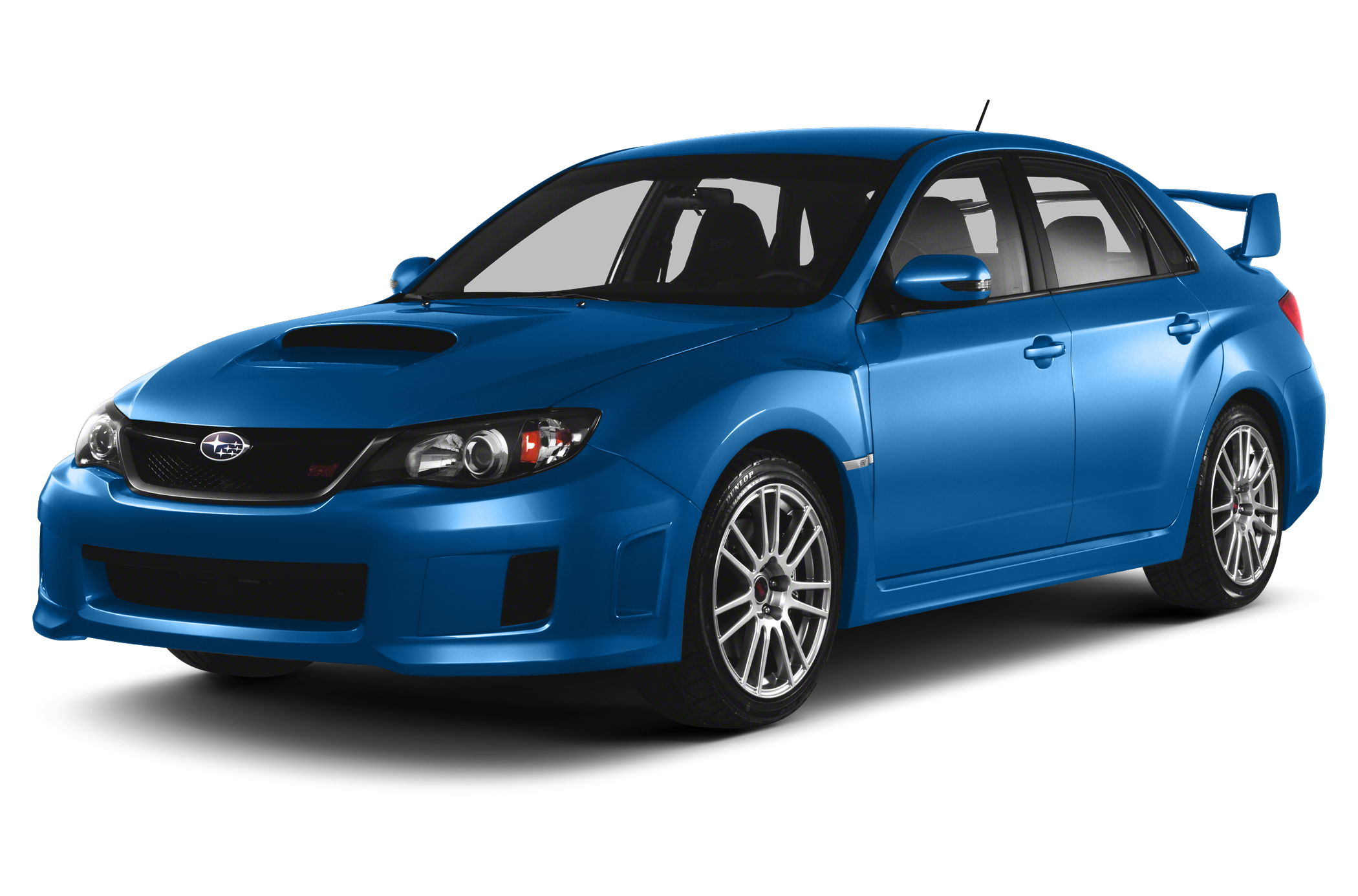
The 2013 Subaru Impreza originally sold for an MSRP between $17,895 and $23,000. Over its lifespan, its market value followed standard vehicle depreciation until the 2020–2022 used car market surge caused an abnormal price spike. Today, a typical 2013 Impreza sells on the private and retail market for between $4,500 and $7,500.
Model Overview and Original Pricing
Understanding the historical pricing trajectory of the 2013 Subaru Impreza requires distinguishing between the standard fourth-generation Impreza passenger car and its performance derivatives. In 2013, the standard Impreza (chassis code GP for the 5-door hatchback and GJ for the 4-door sedan) was in its second year of production after a complete redesign for the 2012 model year. The high-performance WRX and WRX STI variants remained on the older, wide-body third-generation platform (GV/GR chassis) with turbocharged 2.5-liter engines.
The standard 2013 Impreza targeted fuel-conscious commuters wanting all-weather capability. It featured a naturally aspirated 2.0-liter double overhead cam (DOHC) FB20 boxer engine producing 148 horsepower and 145 lb-ft of torque, paired with either a five-speed manual transmission or Subaru's Lineartronic continuously variable transmission (CVT). Every trim featured Subaru's standard Symmetrical All-Wheel Drive (AWD).
Original retail pricing spanned several trims across both body styles:
- Base 2.0i: The entry-level manual sedan carried a manufacturer's suggested retail price (MSRP) of approximately $17,895, while the five-door hatchback started at $18,395. It included basic conveniences such as power windows, keyless entry, and an auxiliary audio input.
- 2.0i Premium: Priced from $19,595 (sedan) to $20,095 (hatchback), this trim added 16-inch alloy wheels, an upgraded six-speaker audio system, cruise control, and the option for an All-Weather Package (heated seats, heated mirrors, and windshield wiper de-icers).
- 2.0i Limited: Available solely with the Lineartronic CVT, the Limited started around $21,595 for the sedan and $22,095 for the hatchback. It included leather-trimmed upholstery, automatic climate control, fog lights, and standard All-Weather equipment.
- 2.0i Sport Premium and Sport Limited: Exclusive to the five-door hatchback, these outdoor-styled variants retailed between $20,295 and $22,595. They offered two-tone body accents, standard roof rails, 17-inch gunmetal alloy wheels, and unique interior trim.
These baseline MSRPs established the starting floor against which more than a decade of depreciation, market disruptions, and mechanical track records have interacted.
The Historical Value Trajectory: 2013 to Current Market Conditions
The market value of the 2013 Subaru Impreza did not decline in a straight line. Instead, it experienced standard initial depreciation, followed by an unprecedented market-wide appreciation phase during the global supply chain crisis, before settling into a mature, high-mileage pricing band.
- Original MSRP (2013): $18,000 - $23,000
- Standard 3-Year Drop: -35% to -40%
- 2016 Valuation: $11,500 - $14,500
- Pre-Pandemic Baseline: -55% to -65%
- 2019 Valuation: $6,500 - $9,500
- Pandemic Bubble Spike: +25% to +40%
- 2021–2022 Peak: $9,500 - $13,000
- Post-Pandemic Correction & Aging
- Current Valuation: $4,500 - $7,500
2013–2016: Early Ownership and Standard Three-Year Depreciation
During its first three years on the road, the 2013 Impreza held its value slightly better than front-wheel-drive competitors in the compact segment, such as the Ford Focus or Chevrolet Cruze. The combination of standard all-wheel drive, Top Safety Pick status from the Insurance Institute for Highway Safety, and strong brand equity in Northern and mountainous regions created steady secondary-market demand.
By late 2016, off-lease 2013 Imprezas with 36,000 to 45,000 miles routinely traded between $11,500 and $14,500. This represented roughly 35% to 40% depreciation from original retail value, a performance roughly on par with segment leaders like the Honda Civic and Toyota Corolla.
2017–2019: Maturation and Mechanical Headwinds
As the vehicle aged from four to seven years, secondary-market supply increased and vehicle mileage crossed into the 60,000-to-100,000-mile range. During this window, prices declined toward traditional mature-car levels, ranging from $6,500 for high-mileage base models to $9,500 for clean, low-mileage Sport Limited hatchbacks.
Value retention during this phase faced downward pressure due to widespread consumer reports regarding excessive oil consumption in early FB20 engines, alongside emerging reliability concerns regarding early Lineartronic CVT valve bodies. Although Subaru addressed these issues through technical service bulletins, customer satisfaction campaigns, and class-action settlement warranties, prospective buyers used these known vulnerabilities to negotiate prices downward.
2020–2022: The Pandemic-Era Used Vehicle Price Distortion
Between late 2020 and mid-2022, microchip shortages, factory shutdowns, and scarce new-car inventory forced used vehicle prices to historic highs. The 2013 Impreza defied traditional depreciation models entirely during this period.
Vehicles that traded for $7,500 in 2019 appreciated to wholesale and retail values between $9,500 and $13,000 in 2021 and 2022, despite adding tens of thousands of miles. Budget-conscious consumers sought fuel-efficient, reliable commuters with all-weather capability, driving secondary demand for sub-$15,000 vehicles beyond available inventory. In some regional markets, pristine Sport Limited hatchbacks with under 80,000 miles sold at prices nearing their initial 2013 wholesale dealer invoice.
2023–2025: Market Normalization and Aging Reality
Beginning in late 2022 and accelerating through 2024, the broader used automobile market cooled. Higher automotive loan interest rates, stabilized new-vehicle production, and swelling dealer inventories caused rapid price deflation across eight- to twelve-year-old passenger vehicles.
By 2025, the 2013 Impreza transitioned from an everyday commuter asset into the high-mileage, sub-$10,000 older-used-car tier. Most examples in operation had accumulated between 110,000 and 170,000 miles. Values dropped steadily back toward normal age-adjusted levels, shedding the pandemic premium.
Current Market Reality
In the current automotive environment, the 2013 Subaru Impreza trades primarily as an entry-level, budget-friendly commuter vehicle. Typical retail transactions across dealerships settle between $5,200 and $7,500 for operational, well-maintained units. Private-party transactions typically range from $4,000 for higher-mileage (150,000+ miles) sedans to $6,500 for well-documented, rust-free Sport hatchbacks.
At this operational stage, trim level exerts far less influence on market value than physical condition, mechanical history, transmission health, and regional road salt exposure.
2013 Subaru Impreza Value Over Time: Model & Trim Breakdown
The table below details estimated average private-party transaction values for standard-mileage examples across major ownership milestones, illustrating how each trim depreciated over time.
| Model / Trim Level | Original MSRP (2013) | 3-Year Value (2016) | 6-Year Value (2019) | Market Peak (2021–2022) | Current Value |
|---|---|---|---|---|---|
| 2.0i Sedan (5-Speed Manual) | $17,895 | $10,800 | $6,200 | $8,800 | $4,200 – $4,800 |
| 2.0i Sedan (Lineartronic CVT) | $18,895 | $11,400 | $6,600 | $9,200 | $4,500 – $5,200 |
| 2.0i Premium Hatchback (CVT) | $20,095 | $12,600 | $7,400 | $10,400 | $5,000 – $5,900 |
| 2.0i Limited Sedan (CVT) | $21,595 | $13,200 | $7,900 | $11,100 | $5,200 – $6,200 |
| 2.0i Sport Premium Hatch (CVT) | $20,795 | $13,100 | $8,100 | $11,500 | $5,500 – $6,600 |
| 2.0i Sport Limited Hatch (CVT) | $22,595 | $14,200 | $8,800 | $12,600 | $6,200 – $7,500 |
Values reflect average clean-condition private-party sales based on national averages; regional prices in snowy climates often carry a 10% to 15% premium.
Core Mechanical Factors Influencing Ongoing Resale Value
As vehicles pass a decade of service life, pricing ceases to track clean depreciation algorithms and instead aligns directly with mechanical risk. The 2013 Impreza features three distinct mechanical and physical considerations that dictate whether an individual car commands top-of-market pricing or sells at a salvage-adjacent discount.
- Key Valuation Factors for Aging 2013 Subaru Imprezas
- FB20 Engine Oil Consumption: Settlement work verified?
- Lineartronic CVT: Valve Body / TCC Solenoid failure codes (P0700)?
- Chassis Rust & Suspension Wear: Rear crossmember rust present?
1. The FB20 Engine and Oil Consumption Settlement
The 2013 model year utilized an early version of the FB20 engine featuring low-tension piston rings intended to maximize fuel economy. In practice, many early FB engines suffered from accelerated oil consumption. This issue prompted widespread consumer complaints, technical service bulletins, and an eventual major class-action settlement (In re Subaru Adult Oil Consumption Litigation).
Under the settlement, Subaru extended the powertrain warranty to 8 years or 100,000 miles and paid for short-block engine replacements for vehicles failing an official dealership oil consumption test.
Today, that extended warranty period has expired for every 2013 Impreza. Consequently:
- An Impreza with verified documentation of an updated short-block replacement holds a substantial valuation premium (typically $600 to $1,000 over an unverified vehicle).
- Vehicles that consume a quart of oil every 1,000–1,500 miles without repair represent an ongoing maintenance risk, frequently deterring educated second-hand buyers or depressing cash offers.
2. Lineartronic CVT Reliability and Valve Body Failures
The continuously variable transmission in early fourth-generation Imprezas represents the single largest financial failure point affecting market value. While Subaru extended the CVT warranty to 10 years or 100,000 miles to reassure owners, all 2013 models have aged out of this protection.
The most common failure mode involves the transmission valve body—specifically the torque converter clutch (TCC) solenoid—which triggers dashboard warning lights (AT Oil Temp, Check Engine, Vehicle Dynamics Control) and generates diagnostic trouble code P0700 paired with P2764.
- Replacing a valve body at an independent specialty shop or dealership typically costs between $1,200 and $2,200.
- A catastrophic mechanical internal chain failure requires a full transmission replacement, running between $4,500 and $7,000—a repair cost that directly exceeds the total market value of the entire vehicle.
- Because of this risk, vehicles exhibiting transmission shudder, hesitation, or pending OBD-II codes trade at severe discounts. Conversely, units with a recently replaced OEM valve body or a documented five-speed manual transmission avoid this specific vulnerability and retain value more consistently.
3. Corrosion and Structural Integrity
Subaru vehicles are disproportionately registered in northern US states, Canada, and high-altitude regions where road salt and chemical liquid de-icers (magnesium chloride) are applied heavily in winter. The 2013 Impreza platform is susceptible to aggressive corrosion in specific areas:
- Rear suspension subframes and crossmembers
- Rear quarter-panel doglegs adjacent to the passenger doors
- Front lower control arm assemblies and brake lines
A 2013 Impreza located in the Rust Belt showing through-panel corrosion or heavily rusted subframe mount points often struggles to clear $3,000, as passing local safety inspections requires expensive fabrication or component replacement. Conversely, vehicles from dry southern or western regions preserve clear structural integrity, allowing them to capture peak private-market values even when carrying high mileage.
Market Dynamics: Body Style, Trim, and Transmission Differences
Valuation data reveals clear divergence between body styles, options, and mechanical configurations on the secondary market.
Hatchback vs. Sedan Premium
The 5-door hatchback variant of the 2013 Impreza has consistently retained value better than its 4-door sedan counterpart. Originally selling for only a $500 to $1,000 premium when new, used 5-door hatchbacks consistently command a $800 to $1,400 premium over identical-condition sedans on the used market.
Utility explains this spread. The hatchback offers 22.5 cubic feet of cargo volume behind the rear seats, expanding to 52.4 cubic feet when folded flat. This utility appeals strongly to outdoor enthusiasts, dog owners, and campus commuters who specifically seek Subaru hatchbacks for their functional packaging.
Manual vs. Lineartronic CVT Dynamics
When the 2013 Impreza was new, the Lineartronic CVT commanded a $1,000 premium over the base 5-speed manual transmission. A decade later, that pricing dynamic has partially inverted:
- The 5-speed manual transmission is viewed by budget-oriented used car buyers as significantly less risky than an aging CVT, given that manual clutch replacements are inexpensive and routine compared to CVT replacements.
- While the market for manual transmissions is smaller in absolute terms, manual-transmission hatchbacks—especially in Sport Premium trims—experience higher price floors and sell faster than CVT models with unverified transmission maintenance histories.
Step-by-Step Valuation and Pre-Purchase Inspection Protocol
Whether you are pricing a 2013 Subaru Impreza to sell or evaluating one to purchase, calculating an accurate value requires looking past basic book values to examine condition-specific details. Use this evaluation protocol to pinpoint where a specific car lands within its current $4,500–$7,500 market range.
- Valuation Audit Workflow
- Physical & Structural
- Check rear subframe & wheel arches
- Check front lower control arms
- Verify title status (Exclude salvage)
- Mechanical Health
- Scan for cleared codes (P0700/P2764)
- Inspect oil level & service records
- Test CVT cold & at operating temp
- Final Pricing Determination
- Clean / Documented: $6,000 - $7,500
- Average / Commuter: $4,800 - $5,800
- Deferred Maintenance: Under $4,000
- Physical & Structural
Step 1: Scan for Cleared Diagnostic Trouble Codes
Before test driving, connect an OBD-II scanner to the vehicle’s diagnostic port underneath the driver's side dashboard. Inquire about or review emissions readiness monitors. Unscrupulous private sellers or marginal dealers sometimes clear the check engine light immediately prior to a showing to hide active valve body codes (such as P2764) or catalytic converter degradation codes (P0420). If multiple readiness monitors show "Not Ready," the car was likely cleared recently, concealing potential four-figure repairs.
Step 2: Evaluate Cold-Start and Operational CVT Behavior
Start the vehicle from a dead cold state. Observe the engine idle and listen for abnormal timing chain clatter or valve tap. Shift into Reverse, pause, and shift into Drive:
- Engagement should be smooth, with less than a one-second delay.
- A severe shudder, thud, or prolonged hesitation when selecting Drive indicates internal pressure leakage or solenoid deterioration within the CVT valve body.
- Drive the vehicle until the blue engine coolant light turns off and the vehicle reaches full operating temperature. Perform several stops and moderate accelerations; if the vehicle shudders violently as it comes to a stop, the torque converter clutch is sticking, requiring immediate mechanical attention.
Step 3: Verify the Oil Consumption and Head Gasket Status
Inspect the oil dipstick level immediately. The FB20 engine features an inverted oil filter mounted on top of the engine block near the front serpentine belt, making visual inspection straightforward.
- Look underneath the engine for signs of active valve cover gasket, timing cover, or cam carrier seepage.
- Unlike earlier EJ-series Subaru engines, the FB20 uses timing chains rather than rubber timing belts and exhibits far fewer head gasket breaches. However, the timing chain front cover is sealed using liquid RTV silicone; re-sealing a leaking timing cover requires pulling the engine, which can cost $1,500 to $2,200 in labor.
Step 4: Perform a Undercarriage Structural Inspection
Turn the steering wheel fully to lock and inspect the front lower control arm rear bushings. These large rubber-filled bushings frequently tear and leak hydraulic damping fluid by 100,000 miles, costing $400 to $700 to replace.
Next, shine a flashlight directly behind the rear wheels onto the rear subframe assembly. Flaking surface paint is common, but deep, layered structural rust scale or perforations along the welded seams require immediate disqualification or a $1,500 price deduction for component replacement.
Frequently Asked Questions
What was the original sticker price of a 2013 Subaru Impreza?
The base 2013 Subaru Impreza 2.0i sedan started at an MSRP of $17,895 with a 5-speed manual transmission, while the five-door hatchback started at $18,395. Mid-level Premium trims carried sticker prices between $19,595 and $20,095. Range-topping trims, including the 2.0i Limited sedan and 2.0i Sport Limited hatchback equipped with leather interiors and optional navigation packages, reached original MSRPs between $22,500 and $24,000.
Why did 2013 Impreza prices jump significantly during 2021 and 2022?
Used car prices across North America spiked due to severe new-car inventory shortages caused by global semiconductor and supply-chain deficits. This forced budget-oriented buyers into the older used-vehicle segment. Because the 2013 Impreza offered standard all-wheel drive, high safety ratings, and modern fuel efficiency (up to 36 mpg highway) in an accessible price bracket, secondary-market demand far outstripped supply. This pushed transaction prices upward by 25% to 40% across all trim levels.
Does the 2013 Subaru Impreza have the notorious head gasket issues of older Subarus?
No, the 2013 Impreza does not suffer from the recurring head gasket failures that impacted third-generation and older Subarus powered by the EJ25 engine. The 2013 Impreza uses the FB20 engine, which features redesigned coolant jackets, multi-layer steel (MLS) head gaskets, and a chain-driven valvetrain. The primary mechanical concerns for the 2013 FB20 are oil consumption past the piston rings and fluid leaks around the front timing chain cover, rather than internal or external head gasket failures.
Is a 2013 Subaru Impreza a reliable used purchase today?
A 2013 Impreza can provide dependable daily transportation if two specific components—the engine short-block and the CVT valve body—have been inspected, serviced, or previously replaced under warranty. Buyers should avoid examples lacking maintenance records, displaying fluid leaks around the timing cover, or demonstrating hesitation upon transmission engagement. Finding a well-documented example or opting for the 5-speed manual transmission significantly reduces ongoing ownership risks.
Which 2013 Impreza trim holds the highest resale value?
The 2.0i Sport Limited 5-door hatchback retains the highest resale value. Its combination of practical cargo volume, roof rails, unique two-tone exterior styling, leather interior, and all-weather equipment creates stronger secondary demand than basic 2.0i or Premium sedans. In comparable mechanical and cosmetic condition, a Sport Limited hatchback consistently sells for $1,000 to $1,500 more than an equivalent base sedan.
Practical Recommendation: Pricing and Buying Guidance
If you are selling a 2013 Subaru Impreza, gather all service documentation showing regular oil change intervals, CVT fluid changes, and any dealer campaigns or warranty replacements regarding the engine or transmission. Highlighting that your vehicle does not burn excessive oil or has already had its CVT valve body replaced will immediately separate your listing from troubled units, justifying an asking price at the upper end of the valuation band ($6,500–$7,500).
If you are buying, treat any vehicle with an unverified mechanical history as an immediate risk for a $1,500–$2,000 CVT valve body repair or steady oil consumption. Before agreeing to a purchase price, spend $150 to $200 on an independent pre-purchase inspection (PPI) performed by a shop specializing in Japanese or Subaru vehicles. Instruct the technician specifically to check the transmission diagnostic log for historical codes, examine the front timing cover for active oil seepage, and inspect the structural integrity of the rear subframe. Factoring these verified inspection points into your initial offer ensures you acquire the car at a price that leaves adequate financial cushion for the maintenance demands common to a decade-old all-wheel-drive vehicle.