IAS 19 sets the financial reporting standard for employee benefits, requiring companies to recognize pension and post-employment obligations directly on their balance sheets. Understanding the 19 key structural shifts within the standard helps finance professionals, actuaries, and corporate treasurers navigate defined benefit accounting, remeasurement tracking, and transparent financial disclosures.
Introduction to IAS 19 Employee Benefits and Accounting Modernization
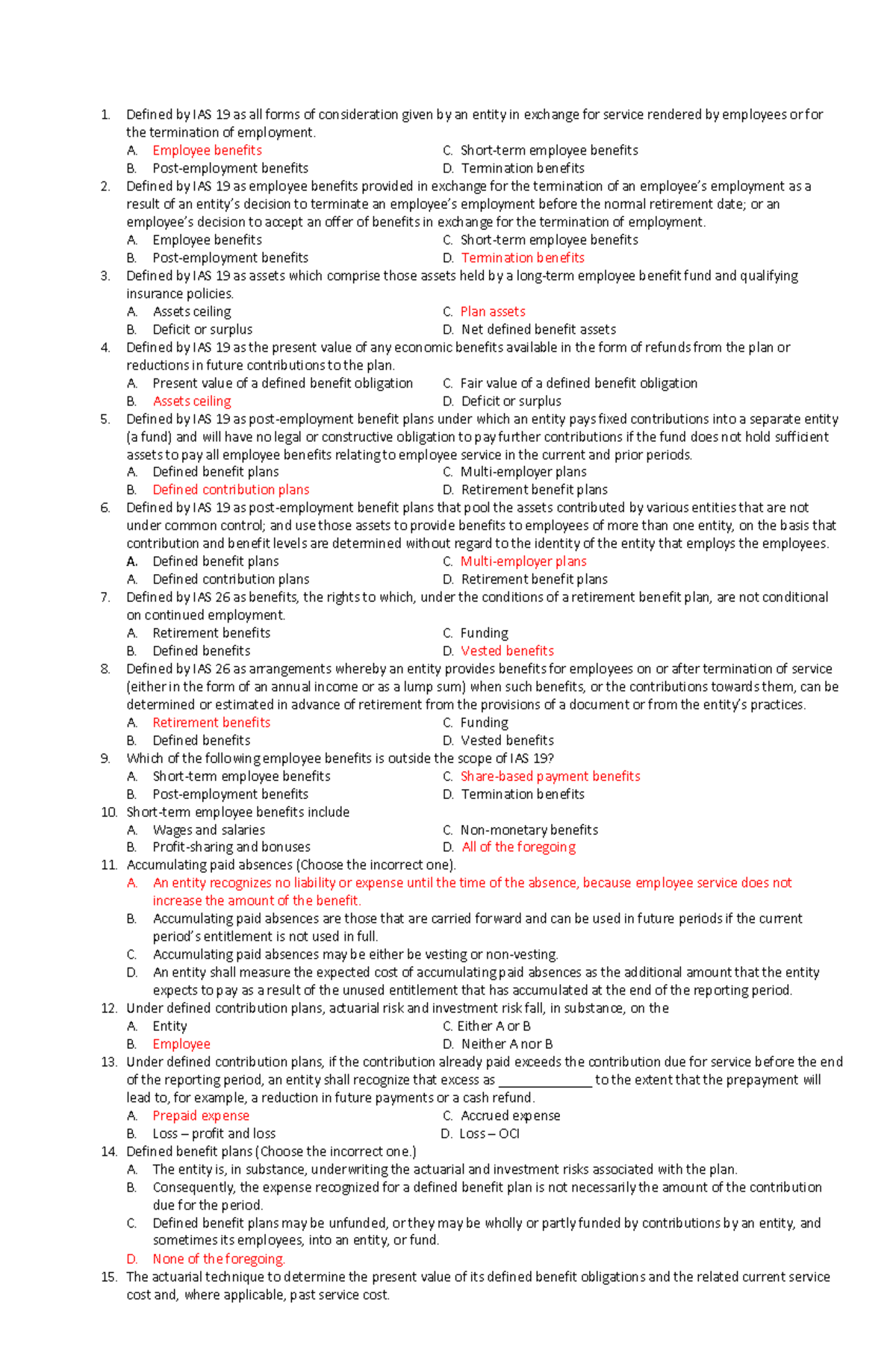
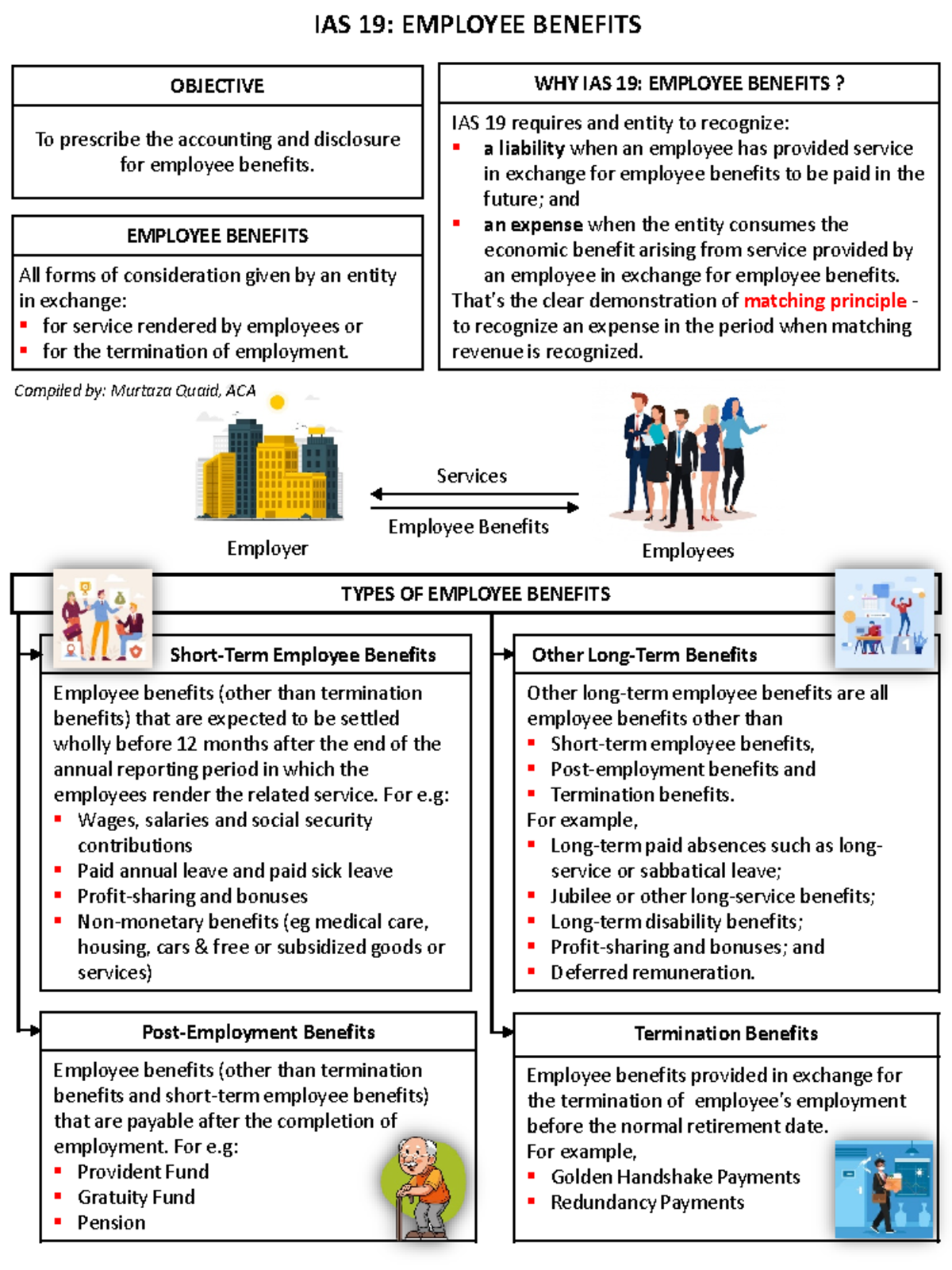
International Accounting Standard (IAS) 19 prescribes the accounting and disclosure rules for employee benefits, ensuring that organizations account for short-term benefits, post-employment benefits, other long-term benefits, and termination benefits. Over successive updates, particularly the major structural overhaul introduced by the International Accounting Standards Board (IASB), IAS 19 transformed how entities measure and present the financial health of their corporate pension and healthcare plans.
Navigating these regulations requires distinguishing between defined contribution plans—where an entity's obligation is fixed by periodic contributions—and defined benefit plans, where the employer bears actuarial and investment risks. The evolution of IAS 19 removed historical smoothing mechanisms, altered income statement presentation, and expanded footnote disclosures. Below is a comprehensive examination of the key shifts that define modern IAS 19 compliance, providing finance teams with the technical clarity needed for accurate financial statement preparation.
1. Elimination of the Corridor Approach for Actuarial Gains and Losses
One of the most consequential adjustments in the history of IAS 19 was the complete removal of the corridor mechanism. Previously, entities could defer the recognition of actuarial gains and losses outside a specified "corridor" (typically 10% of the greater of the defined benefit obligation or plan assets), amortizing those amounts over the average remaining working lives of participating employees.
Under the revised standard, the corridor method is prohibited. All actuarial gains and losses must be recognized immediately in Other Comprehensive Income (OCI) in the period in which they occur. This structural shift eliminates balance-sheet volatility smoothing, ensuring that the net defined benefit liability or asset reported on the statement of financial position reflects the exact funded status of the plan as of the reporting date.
2. Immediate Recognition in Other Comprehensive Income (OCI)
Closely tied to the elimination of the corridor method is the mandate to route actuarial remeasurements directly through OCI. This separation protects the operating profit line from the vagaries of fluctuating discount rates and volatile demographic assumptions.
Items recognized in OCI are never subsequently recycled to profit or loss, though entities may transfer cumulative gains or losses within equity (such as retained earnings). This accounting treatment provides financial statement users with a clear distinction between operational performance and financing costs associated with long-term employee benefits.
3. Replacement of Expected Return on Plan Assets with Net Interest
Historically, the calculation of pension expense included an expected return on plan assets, which often diverged from the actual return and generated accounting variances. IAS 19 replaced this concept with the net interest approach.
Under the net interest model, the finance cost or income on the net defined benefit liability or asset is calculated by multiplying the net defined benefit liability (or asset) by the discount rate used to measure the obligation at the start of the annual period. This ensures consistency between the discount rate applied to liabilities and the rate applied to assets, removing subjective management estimates regarding long-term asset performance.
4. Disaggregation of Defined Benefit Cost Components
The standard divides the defined benefit cost into distinct components, each requiring specific presentation within the financial statements. These components are:
- Service cost: Comprising current service cost, past service cost, and gains or losses on settlements.
- Net interest on the net defined benefit liability (asset): Calculated using the discount rate applied to the net balance.
- Remeasurements of the net defined benefit liability (asset): Comprising actuarial gains and losses, the return on plan assets (excluding amounts included in net interest), and any change in the effect of the asset ceiling.
Entities must present service cost and net interest on the net defined benefit liability within profit or loss, while remeasurements are restricted to OCI.
5. Immediate Recognition of Past Service Cost
Past service cost—arising from plan amendments or curtailments that alter the present value of the defined benefit obligation for employee service in prior periods—must now be recognized immediately in profit or loss when the plan amendment or curtailment occurs.
The previous practice of amortizing past service cost on a straight-line basis over the vesting period is no longer permitted. If a plan amendment reduces benefits, creating a negative past service cost, that credit must also be recognized immediately as a reduction in pension expense.
6. Strict Definition and Recognition of Termination Benefits
IAS 19 establishes rigorous criteria for recognizing liabilities and expenses associated with termination benefits. An entity must recognize a liability and expense for termination benefits at the earlier of when the entity can no longer withdraw the offer of those benefits and when it recognizes restructuring costs under IAS 37 Provisions, Contingent Liabilities and Contingent Assets.
For termination benefits resulting from an employee's decision to accept an offer in exchange for benefits, the obligation is measured based on the number of employees expected to accept. If benefits are enhancements to post-employment benefits, the standard applies post-employment accounting principles.
7. Clarification of Short-Term Versus Long-Term Employee Benefits
The standard draws a sharp line between short-term employee benefits (due within 12 months after the end of the period in which employees render service) and other long-term employee benefits (such as long-service leave or jubilee benefits).
While short-term benefits are expensed on an undiscounted basis, other long-term employee benefits are measured using the projected unit credit method, mirroring defined benefit pension accounting. Crucially, however, all actuarial gains and losses for other long-term benefits are recognized immediately in profit or loss, rather than OCI.
8. Enhanced Disclosure Objectives and Transparency
IAS 19 significantly expands disclosure requirements to help users evaluate the characteristics of defined benefit plans, the amounts recognized in financial statements, and the risks arising from those plans. Entities must disclose:
- Detailed reconciliations of opening to closing balances for plan assets and obligations.
- Sensitivity analyses showing how the defined benefit obligation would have been affected by reasonably possible changes in actuarial assumptions.
- Descriptions of plan characteristics and associated funding arrangements.
- Information regarding asset-liability matching (ALM) strategies.
9. Rigorous Application of the Asset Ceiling Test
Under IAS 19, a net defined benefit asset cannot exceed the present value of any economic benefits available in the form of refunds from the plan or reductions in future contributions to the plan. This limitation is known as the asset ceiling.
Calculating the asset ceiling requires entities to project future service and funding rules, discounting any surplus using the same discount rate applied to the obligation. Changes in the effect of the asset ceiling are recognized in OCI, preventing entities from inflating their balance sheets with unrecoverable pension surpluses.
10. Mandated Use of High-Quality Corporate Bond Yields for Discount Rates
The discount rate used to reflect the time value of money under IAS 19 must be determined by reference to market yields at the end of the reporting period on high quality corporate bonds. In countries where there is no deep market in such bonds, entities must use government bond yields.
This requirement introduces significant volatility into balance sheet valuations. When corporate bond yields drop, the present value of the obligation rises, increasing liabilities and expanding OCI remeasurement losses, regardless of the underlying operational performance of the business.
11. Inclusion of Plan Administration Costs in Service Cost
The treatment of administrative costs associated with running pension plans underwent revision. Costs that are managed by the plan itself (excluding costs of managing plan assets) are now treated as an expense that reduces the return on plan assets or is factored into service cost.
Specifically, administration costs related to the management of plan assets are deducted from the return on plan assets, whereas other administration costs are recognized in profit or loss as part of the service cost when the service is rendered.
12. Accounting for Taxes Related to Plan Assets
Taxes payable by the plan itself—such as taxes on investment income or capital gains—are factored directly into the actuarial measurement of the return on plan assets. They are recognized in OCI as part of remeasurements.
Taxes that are payable by the employer outside the plan structure follow standard tax accounting principles under IAS 12 Income Taxes, separating corporate tax obligations from operational plan costs.
13. Comprehensive Treatment of Multi-Employer Plans
Many employers participate in multi-employer plans that pool assets from various unrelated entities. IAS 19 distinguishes between defined contribution multi-employer plans and defined benefit multi-employer plans.
If sufficient information is not available to use defined benefit accounting for a multi-employer plan structured as a defined benefit plan, the entity must account for it as if it were a defined contribution plan, while providing specific supplementary disclosures regarding the plan's deficit or surplus and the entity's expected participation level.
14. Group Plans and State Plans
For entities within a group that participate in a defined benefit plan sharing risks between group entities, IAS 19 outlines how to allocate the net defined benefit cost across individual group financial statements.
State plans, established by legislation to operate under public schemes, are generally accounted for as defined contribution plans unless the entity has a legal or constructive obligation regarding future benefits beyond the statutory contributions.
15. Risk Sharing and Conditional Benefits
Modern pension designs often involve risk-sharing features between employers and employees, or conditional indexing rules. IAS 19 mandates that these features must be fully captured within the projected unit credit actuarial valuation.
Actuaries must model the probability of benefit adjustments, conditional indexation, and employee cost-sharing mechanisms to ensure the reported obligation reflects the contractual reality of the plan rules.
16. Settlement Accounting and Curtailment Mechanics
A settlement occurs when an entity enters into a transaction that eliminates all further legal or constructive obligation for part or all of the benefits provided under a defined benefit plan.
Upon settlement, the entity must recognize a gain or loss in profit or loss, calculated as the difference between the present value of the defined benefit obligation being settled and the settlement price. Curtailments, which reduce the expected future service of current employees, are recognized simultaneously with past service costs.
17. Interaction with IFRIC 14 (IAS 19 - The Limit on a Defined Benefit Asset, Minimum Funding Requirements and their Interaction)
While technically a separate interpretation, IFRIC 14 operates in tandem with IAS 19 to govern asset ceilings and minimum funding requirements.
Entities must analyze whether a minimum funding requirement creates an additional liability. If the required contributions cannot be recovered through refunds or reduced future contributions, the entity must recognize an additional liability under IAS 37 or adjust the asset ceiling under IAS 19.
18. Actuarial Assumptions: Mortality, Turnover, and Salary Growth
IAS 19 requires unbiased and mutually compatible actuarial assumptions regarding demographic and financial variables.
Demographic assumptions include mortality rates (often reflecting generational improvements and longevity risk), employee turnover, disability, and early retirement rates. Financial assumptions cover discount rates, future salary increases, benefit changes, and medical cost trends. These assumptions must reflect current market expectations and demographic realities.
19. Transition Provisions and Comparative Restatements
Whenever an entity adopts amendments to IAS 19 or transitions to full compliance, retrospective application is generally required under IAS 8 Accounting Policies, Changes in Accounting Estimates and Errors.
Comparative financial statements must be restated to reflect the removal of the corridor method, the adoption of net interest, and the updated presentation of OCI items, ensuring historical comparability across reporting periods.
Comparison of Pre-Revision and Modern IAS 19 Standards
| Feature | Pre-Revision IAS 19 Approach | Modern IAS 19 Standard |
|---|---|---|
| Actuarial Gains/Losses | Deferred via corridor method; amortized over working lives. | Recognized immediately in Other Comprehensive Income (OCI). |
| Return on Plan Assets | Calculated using an expected return on assets estimate. | Replaced by net interest on net defined benefit liability/asset. |
| Past Service Cost | Amortized on a straight-line basis over the vesting period. | Recognized immediately in profit or loss when the plan is amended. |
| Administrative Costs | Varied by jurisdiction and company policy; often netted flexibly. | Standardized: asset management taxes in OCI, others in service cost. |
| Disclosure Focus | High-level summary of obligations and plan assets. | Granular sensitivity analysis, risk disclosures, and asset-liability mapping. |
Frequently Asked Questions
What is the primary purpose of IAS 19 Employee Benefits?
IAS 19 prescribes the accounting and financial reporting standards for all forms of employee benefits. Its primary purpose is to ensure that entities recognize a liability when an employee has provided service in exchange for future benefits, and an expense when the entity consumes the economic benefit arising from employee service.
How are actuarial gains and losses treated under current IAS 19 rules?
Under current rules, the corridor approach is prohibited. All actuarial gains and losses must be recognized immediately in Other Comprehensive Income (OCI) during the period in which they occur. They are never reclassified into profit or loss in subsequent periods.
What is the net interest approach in IAS 19?
The net interest approach calculates the financing cost or income on a defined benefit plan by multiplying the net defined benefit liability or asset at the start of the period by the discount rate used to measure the obligation. This replaced the expected return on plan assets model.
Why is the discount rate critical in IAS 19 valuations?
The discount rate determines the present value of future pension and post-employment obligations. Under IAS 19, this rate must be based on market yields of high-quality corporate bonds. Fluctuations in corporate bond yields directly impact balance sheet liability valuations and OCI remeasurements.
Can a net defined benefit asset exceed the plan surplus?
No. Under the asset ceiling test defined in IAS 19, a net defined benefit asset is restricted to the present value of any economic benefits available in the form of refunds from the plan or reductions in future contributions.
Practical Next Actions
Finance professionals and corporate reporting teams preparing financial statements under IFRS must audit their existing pension valuation models to verify alignment with IAS 19 requirements. Confirm that actuarial valuation reports utilize high-quality corporate bond discount rates, ensure that past service costs are expensed immediately without amortization, and review OCI disclosures for comprehensive transparency. Engage external actuaries early in the reporting cycle to model sensitivity analyses and validate asset ceiling constraints before final financial statement sign-off.