Securing cash back or statement credits on your auto insurance involves leveraging specific policyholder reward programs, credit card perks, digital banking apps, and cash-back shopping portals that partner with insurance carriers. While traditional auto insurance operates strictly on risk assessment and premium payments, several financial ecosystems allow consumers to earn a percentage of their spending back, effectively lowering the overall cost of vehicle ownership.
Understanding Auto Insurance Cash-Back Mechanisms
The concept of getting cash back on auto insurance is distinct from standard policy discounts like safe-driver incentives, multi-car bundles, or paperless billing reductions. While traditional discounts lower the gross premium billed by the insurance carrier, cash-back mechanisms involve post-purchase rebates, credit card reward statements, or third-party platform incentives that return a portion of the fiat currency or point equivalents directly to the consumer.
Navigating this space requires separating legitimate financial products from promotional gimmicks. Insurance carriers rarely issue direct cash-back checks out of nowhere unless it is a statutory policy dividend (common with mutual insurance companies) or a prorated refund following policy cancellation. Therefore, modern cash-back rewards on auto insurance typically materialize through three primary channels: dedicated credit card rewards structures, neobanking apps with automated insurance rewards, and targeted insurance shopping portals.
Evaluating these options demands an understanding of how insurance payments are processed. Because insurance premiums are recurring monthly or semi-annual expenses, they represent high-value transactions. Optimizing these transactions can yield significant financial returns over the life of a multi-year policy, provided the consumer avoids interest charges on credit cards or administrative fees levied by insurers for specific payment methods.
Financial Tools and Credit Card Reward Structures
The most reliable method for capturing a return on auto insurance spending is utilizing credit cards optimized for insurance categories or general cash-back accumulation. Many credit card issuers classify insurance payments under general "travel and insurance," "business services," or simply "other purchases," while a select few recognize insurance as a distinct spending category or allow high flat-rate returns.
Flat-Rate vs. Category-Specific Cash Back
When selecting a credit card to pay auto insurance premiums, consumers generally choose between flat-rate cash-back cards and category-specific rewards cards.
- Flat-Rate Cards: Cards that offer an unconditional 1.5% to 2% cash back on all purchases provide a consistent, hassle-free return. Because auto insurance bills can range from several hundred to over a thousand dollars per billing cycle, a 2% return translates to substantial annual savings without requiring complex category tracking.
- Category-Specific Cards: Some financial institutions periodically feature insurance or utilities under rotating quarterly categories, offering 5% cash back up to a specific spending cap. Additionally, certain business credit cards reward operational expenses, which can legally and safely encompass commercial or personal vehicle insurance if structured correctly through sole proprietorships or registered business entities.
Minimizing Processing Fees
A critical financial hurdle when using credit cards for auto insurance is transaction processing fees. Many insurance providers charge a convenience fee (ranging from 2% to 3.5%) for credit card payments, which can completely negate a 1.5% or 2% cash-back reward. Before routing your auto insurance payment through a rewards credit card, verify whether your carrier levies a credit card surcharge. If the fee exceeds your cash-back percentage, the transaction results in a net financial loss, making ACH bank transfers or fee-free debit options a wiser choice.
Neobanks, Fintech Apps, and Insurtech Rewards
The rise of digital-first banking and insurance technology (insurtech) has introduced novel pathways for earning cash back directly on insurance products. Neobanks and financial super-apps frequently partner with insurance brokers or direct carriers to offer integrated purchasing experiences bundled with cash-back incentives.
How Fintech Portals Facilitate Cash Back
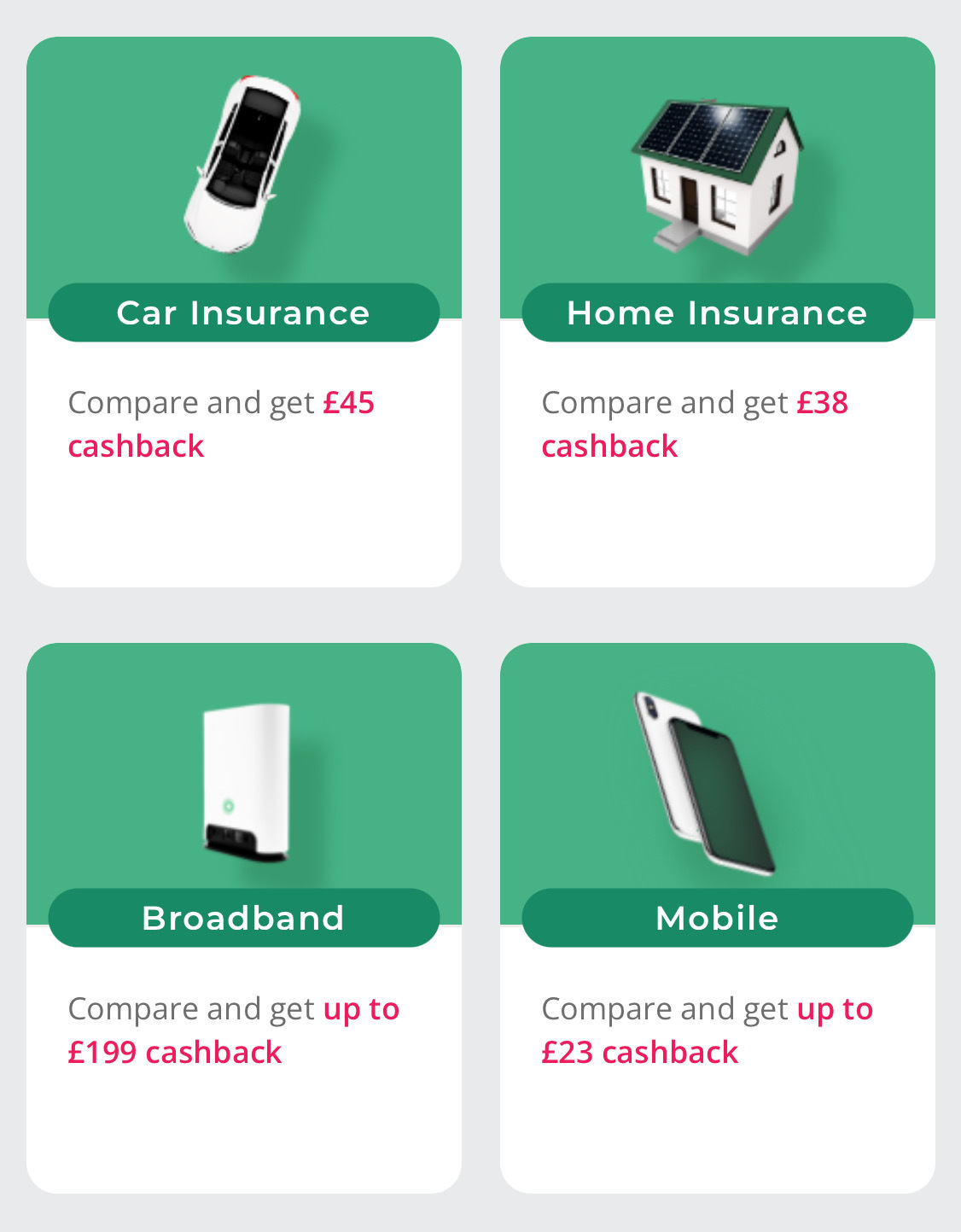
Fintech platforms often operate as digital insurance marketplaces. When a user shops for, compares, and purchases an auto insurance policy through these applications, the platform earns an affiliate commission from the insurance carrier. To attract market share, these fintech companies pass a portion of that commission back to the consumer in the form of an immediate statement credit, an account deposit, or redeemable points.
- Shopping Portals: Similar to retail cash-back extensions, certain financial platforms feature insurance partners. Activating the portal before obtaining a quote and finalizing the policy ensures tracking pixels record the transaction, qualifying the user for the advertised cash-back reward.
- Automated Savings and Round-Ups: Some banking apps analyze recurring bills like auto insurance and offer loyalty tiers that boost savings yields or provide annual cash bonuses based on maintaining active utility and insurance auto-pay profiles linked to their checking accounts.
Mutual Insurance Dividends vs. Cash-Back Incentives
It is vital to distinguish between commercial cash-back programs and mutual insurance policyholder dividends. While both result in money returning to the policyholder, their mechanics differ entirely.
Stock insurance companies are owned by shareholders; profits are distributed to investors, meaning policyholders generally do not receive dividends unless structured through specific reward programs. Conversely, mutual insurance companies are owned by their policyholders. In profitable underwriting years, mutual insurers may declare policyholder dividends. These dividends can be taken as a cash payout, applied as a credit toward the next premium payment, or left to accumulate interest.
| Feature | Credit Card / Fintech Cash Back | Mutual Insurance Policy Dividends | Traditional Policy Discounts |
|---|---|---|---|
| Origin | Credit card issuer or fintech platform | The insurance carrier's financial performance | Risk-mitigation profiles and policy bundling |
| Delivery Method | Statement credit, direct deposit, or points | Check, premium credit, or account deposit | Immediate reduction in the quoted premium |
| Guaranteed | Yes, based on spending terms and conditions | No, dependent on annual underwriting surplus | Yes, as long as eligibility criteria are met |
| Processing Fees | Subject to carrier credit card fees | None (applied internally or paid directly) | None (applied directly to pricing model) |
Step-by-Step Guide to Securing Cash Back on Your Policy
Successfully capturing cash back on your auto insurance requires a methodical approach that balances reward acquisition against base premium costs. Chasing a 2% cash-back reward while paying a 20% higher base premium to an expensive carrier results in a net financial loss.
- Audit Your Current Policy and Rates: Before exploring rewards, shop the market to ensure your base auto insurance premium is competitively priced. Use independent insurance comparison tools or state insurance commissioner guides to benchmark rates.
- Evaluate Payment Processing Rules: Contact your insurance provider's billing department and ask explicitly: "Do you charge any processing fees, convenience fees, or surcharges for paying premiums via credit card or digital wallet?"
- Select the Optimal Payment Instrument:
- If there are no processing fees, use a flat-rate 2% cash-back card or a category-specific card matching the current quarter.
- If processing fees apply and exceed your reward rate, utilize a rewards checking account or fintech app that offers cash back on debit transactions or bill-pay features without surcharges.
- Explore Fintech Marketplaces: Check if major digital banking platforms or shopping portals offer sign-up bonuses or cash-back incentives for switching or renewing your auto policy through their ecosystem.
- Track and Verify Payouts: Keep detailed records of your billing statements, cash-back portal activation receipts, and credit card reward ledger entries to ensure the promised cash back posts correctly.
Common Pitfalls and Limitations
Attempting to maximize financial rewards on insurance products frequently exposes consumers to operational blind spots. Recognizing these traps prevents unexpected expenses from eroding your savings.
- The Surcharge Trap: As noted earlier, absorbing a 3% credit card processing fee to earn 1.5% cash back yields a net negative return. Always calculate the net yield ($\text{Reward Percentage} - \text{Processing Fee Percentage}$).
- Interest Charges: Carrying a balance on a credit card to pay an auto insurance premium incurs annual percentage rates (APRs) that vastly outweigh any cash-back incentive. Cash back is only effective if the credit card bill is paid in full every month.
- Policy Coverage Compromises: Never select an inferior insurance carrier or drop vital coverages (such as adequate liability limits or uninsured motorist protection) merely because a platform offers a cash-back incentive or sign-up bonus. The financial exposure of an underinsured accident far exceeds any cash-back reward.
- Churning Restrictions: Some promotional cash-back offers on insurance policies require a multi-month commitment or impose clawback clauses if the policy is cancelled prematurely. Read the fine print regarding cancellation penalties.
Frequently Asked Questions
Can I get cash back if I pay my auto insurance premium in full?
Yes. Paying an auto insurance premium in full for a 6-month or 12-month term often qualifies you for a paid-in-full discount from the carrier. When combined with a high-limit cash-back credit card (assuming no processing fees apply), paying in full maximizes both the upfront insurance discount and the total dollar amount eligible for credit card cash back.
Do insurance companies offer cash back for safe driving?
Some telematics and usage-based insurance programs offer participation incentives or renewal discounts for safe driving, but these typically manifest as premium reductions rather than direct cash-back payouts. However, certain fintech apps partner with telematics programs to provide gift cards or statement credits based on driving scores.
Will using a credit card for insurance affect my credit score positively?
Using a credit card to pay auto insurance helps build payment history and rewards accumulation if managed responsibly. However, if the insurance premium pushes your credit utilization ratio above 30% of your total limit, it can temporarily suppress your credit score until the balance is paid off.
Are cash-back rewards on insurance taxable?
In most jurisdictions, cash-back rewards earned from credit cards or shopping portals are viewed by tax authorities as rebates on purchases rather than taxable income. However, business-related cash back or promotional sign-up bonuses tied to commercial auto policies may have distinct tax reporting requirements, necessitating consultation with a qualified tax professional.
What should I do if my cash-back portal fails to track my insurance purchase?
If you used a digital shopping portal or fintech app to purchase insurance and the cash back fails to register, immediately contact the platform’s customer support. Provide your policy confirmation number, date of purchase, and proof of transaction. Reputable platforms maintain manual tracking appeal processes for verified user transactions.
Conclusion and Next Actions
Capturing cash back on auto insurance requires balancing payment optimization tools with sound insurance fundamentals. Begin by verifying that your current premium is competitive and that your insurer does not levy penalizing credit card processing fees. Next, align your billing cycle with a flat-rate or category-optimized cash-back credit card, or explore vetted fintech marketplaces that offer direct statement credits for policy acquisition. Always prioritize adequate liability coverage and financial stability over promotional rewards, ensuring that your quest for cash back enhances—rather than compromises—your financial security.