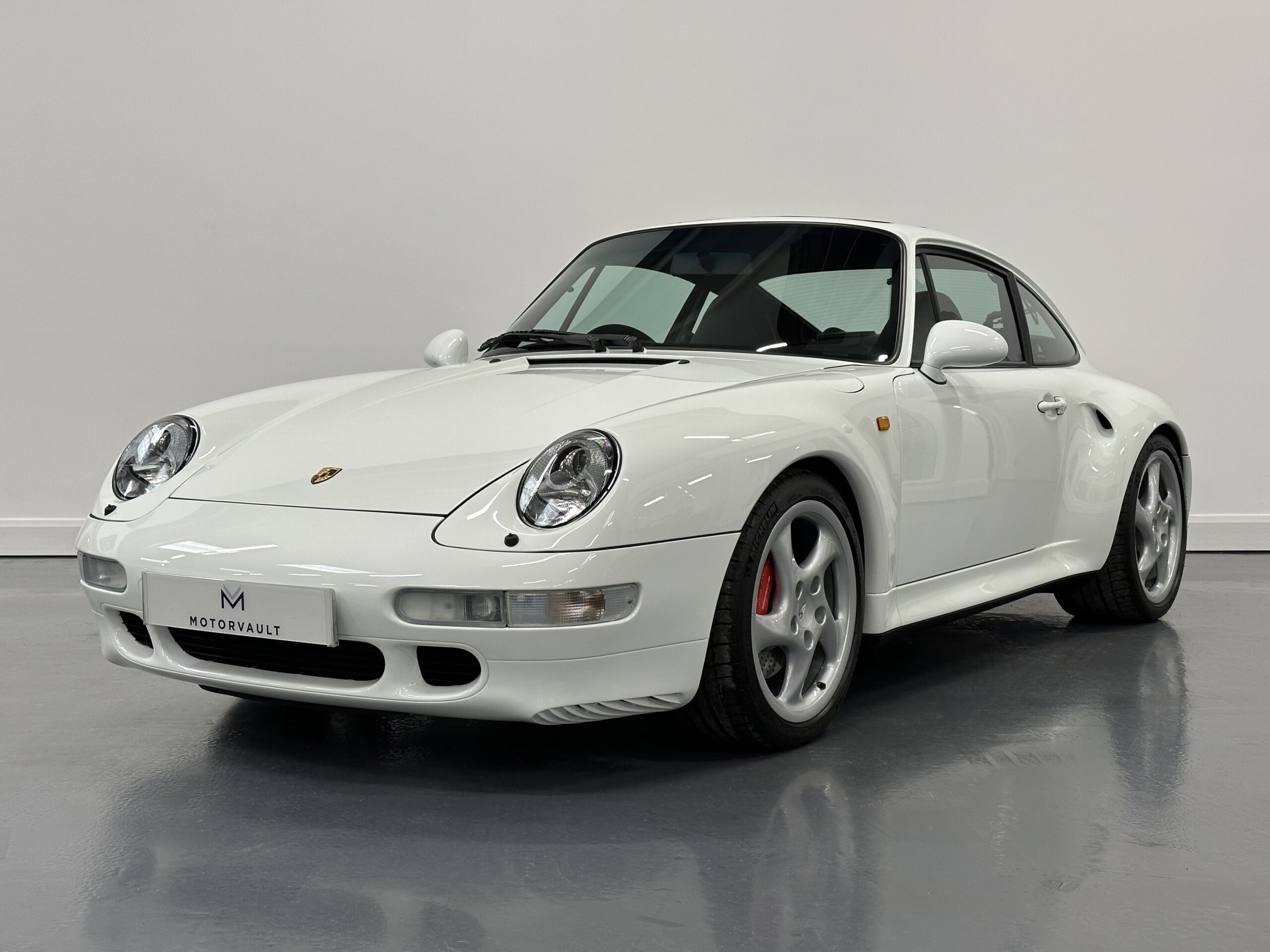
The Porsche 993 Carrera 4S represents the structural and mechanical bridge between air-cooled heritage and modern engineering, pairing the widebody architecture and braking system of the 911 Turbo with a naturally aspirated engine. Its market impact stems from its distinct positioning as the final evolution of the classic air-cooled 911 lineage, establishing a legacy of enduring collector desirability and appreciation.
Introduction to the Porsche 993 Carrera 4S
The Porsche 993 generation—produced from model years 1995 through 1998—occupies a revered space in automotive history. As the final air-cooled 911 produced by Porsche, the 993 series ended an era that began with the original 911 in 1963. Within this final air-cooled family, the Carrera 4S (C4S), introduced for the 1996 model year, emerged as a particularly compelling variant.
By combining the muscular widebody exterior and the heavy-duty braking and suspension geometry of the forced-induction 911 Turbo (993 Turbo) with the tractable, naturally aspirated 3.6-liter flat-six engine, Porsche created a grand touring sports car with unique visual and dynamic properties. This overview examines the engineering characteristics, mechanical specifications, production context, and long-term market trajectory of the Porsche 993 C4S, offering a comprehensive analysis for enthusiasts, historians, and collectors navigating the modern classic market.
Engineering Heritage and Mechanical Specifications
To understand the appeal of the 993 Carrera 4S, one must analyze how Porsche synthesized components from across its model lineup during the mid-1990s. The 993 platform itself represented a major overhaul of the preceding 964 generation, featuring an entirely redesigned multi-link rear suspension that largely eliminated the trailing-throttle oversteer tendencies associated with older rear-engine platforms.
The Widebody Architecture
The most immediately striking aspect of the C4S is its body shell. Unlike the standard Carrera and Carrera 4 models, which utilized a narrow body, the Carrera 4S shared its wider rear quarters and flared wheel arches directly with the 993 Turbo. This added approximately 60 millimeters of width across the rear axle, giving the car an aggressive, planted stance.
This widebody design was not merely cosmetic. It allowed for wider wheels and tires, which increased the mechanical grip of the vehicle. The front end also adopted a subtle aerodynamic treatment derived from the Turbo model, though without the fixed rear wing, retaining the clean, sweeping silhouette of the classic 911 profile while incorporating a speed-activated retractable rear spoiler.
Powertrain and All-Wheel-Drive System
Beneath the rear decklid lies the evolution of Porsche's air-cooled architecture: the M64/21 (and later M64/05/06 variants depending on market and model year) 3.6-liter horizontally opposed flat-six engine. In standard US specification, this engine produced 282 horsepower at 5,900 rpm and 250 lb-ft of torque at 5,000 rpm, utilizing a dual-flow exhaust system and Porsche's Varioram intake system introduced for the 1996 model year to optimize torque delivery across the rev range.
Power is distributed through a sophisticated, viscous-coupling all-wheel-drive system derived from the Porsche 959 supercar via the preceding 964 Carrera 4. Unlike later computerized all-wheel-drive systems, the 993 C4S system is predominantly rear-wheel biased under normal driving conditions, sending approximately 5 to 15 percent of torque to the front wheels via a viscous multi-plate clutch pack. When rear wheel slippage occurs, up to nearly 40 percent of torque can be transferred forward, providing enhanced stability in adverse weather conditions without sacrificing the traditional steering feedback of a rear-drive sports car.
Chassis, Brakes, and Suspension
The chassis of the 993 C4S is heavily reinforced and shares its braking architecture with the top-tier 993 Turbo. This meant the adoption of massive cross-drilled and ventilated brake discs measuring 322 mm front and rear, clamped by distinctive black-anodized four-piston monobloc calipers. The anti-lock braking system (ABS) was state-of-the-art for the era.
Suspension-wise, the C4S sat lower than the standard Carrera, utilizing stiffer springs and dampers designed to manage the wider track and heavier rolling stock. Most examples were equipped with standard 18-inch "Technology" hollow-spoke twist wheels, which were exceptionally light for their size, reducing unsprung weight and improving suspension responsiveness.
Comparative Specifications: 993 Variants
To contextualize the Carrera 4S within the 993 generation, the following table compares key production variants of the era:
| Model | Production Years | Engine | Aspiration | Horsepower | Drivetrain | Body Style |
|---|---|---|---|---|---|---|
| Carrera (Narrow) | 1995–1998 | 3.6L Flat-6 | Naturally Aspirated | 272–285 hp | RWD | Narrow |
| Carrera 4 | 1995–1998 | 3.6L Flat-6 | Naturally Aspirated | 272–285 hp | AWD | Narrow |
| Carrera 4S | 1996–1998 | 3.6L Flat-6 | Naturally Aspirated | 282–285 hp | AWD | Widebody (Turbo) |
| Carrera S | 1997–1998 | 3.6L Flat-6 | Naturally Aspirated | 282–285 hp | RWD | Widebody (Turbo) |
| Turbo | 1996–1997 | 3.6L Flat-6 | Twin-Turbocharged | 400 hp | AWD | Widebody |
Production Context and Rarity
The Porsche 993 Carrera 4S was produced for a relatively short window, spanning the 1996 through 1998 model years. Total production numbers reflect its specialized status within the lineup. While precise global figures can vary slightly depending on regional registry data and club archives, production of the C4S was significantly lower than that of the base narrow-body Carrera models.
In North America, the Carrera 4S was introduced for the 1996 model year alongside the Turbo, satisfying enthusiasts who desired the visual drama and chassis capability of the Turbo without the complexity, heat management considerations, and insurance premiums associated with twin-turbocharged forced induction. Because it arrived late in the air-cooled era, factory options often included full leather interiors, automated climate control, and upgraded audio systems, making most surviving examples relatively well-appointed.
Market Impact and Collector Evolution
The market trajectory of the Porsche 993 Carrera 4S illustrates broader shifts in the vintage and modern classic automotive collector landscape over the past three decades.
Initial Depreciation and the "Air-Cooled Trough"
Following the close of the 993 production run in 1998 and the introduction of the water-cooled 996 generation for 1999, the air-cooled 911s initially experienced standard automotive depreciation. During the early-to-mid 2000s, used 993 models—including the C4S—traded at cyclical lows. Buyers could acquire clean, low-mileage examples for a fraction of their original MSRP. During this period, the C4S was viewed primarily as a heavy, less nimble alternative to the lightweight rear-wheel-drive Carrera or the raw performance of the 993 Turbo.
The Renaissance of Air-Cooled Porsches
Around 2010 to 2015, the collector car market underwent a structural paradigm shift. Enthusiasts and investors began recognizing the 993 generation as the definitive endpoint of classic Porsche engineering. The tactile steering feel of the hydraulic rack, the mechanical resonance of the air-cooled engine, and the analog interior layout contrasted sharply with the increasingly digital experience of modern sports cars.
Within this renaissance, the Carrera 4S emerged as a standout favorite. It captured the quintessential "Turbo look" aesthetic—the wide hips, the red reflector strip spanning the rear decklid, and the lowered stance—while offering the simpler maintenance profile of a naturally aspirated engine. Consequently, demand outpaced supply, propelling values upward across public auctions and private brokerages.
Valuation Drivers and Current Standing
As of 2026, the 993 Carrera 4S commands a substantial premium over standard narrow-body 993 equivalents. Several specific valuation drivers dictate individual market pricing:
- Mileage and Documentation: Original, low-mileage examples with comprehensive Porsche Service History (Presents with stamped maintenance books and dealer records) command top-tier pricing.
- Color Combinations: Traditional enthusiast specifications—such as Guards Red, Nachtblau Blue, or Silver over black or classic grey leather—frequently outperform unusual custom PTS (Paint to Sample) or polarizing interior palettes.
- Mechanical Integrity: Due to the age of the vehicle, engine health (specifically valve guide wear, which is a known service item on high-mileage 993 engines) and suspension bushing condition heavily influence transaction prices.
- Originality: Unmodified examples retaining their original hollow-spoke wheels, exhaust systems, and ride height are prized by purists over cars with aftermarket modifications.
Ownership Considerations and Operational Realities
For prospective buyers and current custodians, maintaining a Porsche 993 C4S requires balancing vintage car stewardship with the realities of late-model German engineering.
Maintenance and Common Service Items
While the air-cooled flat-six is renowned for mechanical longevity, age-related maintenance is inevitable. Key areas of mechanical attention include:
- Valve Guides: Factory valve guides on 1995–1998 models can wear prematurely, leading to carbon buildup or oil consumption. A top-end engine rebuild is often budgeted by owners crossing the 100,000-mile threshold.
- Secondary Air Injection (SAI) Passages: Environmental regulations necessitated an SAI system prone to carbon clogging in the cylinder head passages, triggering check engine lights that require professional cleaning or software tuning solutions.
- All-Wheel-Drive Complexity: The viscous clutch and front differential require periodic inspection for leaks. While generally robust, servicing the all-wheel-drive system requires specialized knowledge.
- Wiring Harness and Electricals: Climate control blend doors, window regulators, and aging wiring insulation require standard diagnostic troubleshooting common to 1990s European automobiles.
Driving Dynamics and Usability
On the road, the 993 C4S feels distinct from both its rear-wheel-drive siblings and modern equivalents. The hydraulic power steering offers unmatched road feedback, communicating surface textures directly to the driver's hands. The extra weight of the all-wheel-drive system and widebody chassis makes the car feel exceptionally stable at high speed on the highway, functioning as a true high-speed grand tourer, though it demands more deliberate steering input on tight, technical backroads compared to a light rear-drive Carrera.
Frequently Asked Questions
What makes the Porsche 993 Carrera 4S different from a standard Carrera?
The Carrera 4S features the widebody exterior shell and braking system of the 993 Turbo combined with a naturally aspirated 3.6-liter engine and an all-wheel-drive system. It sits lower, utilizes wider wheels, and features distinctive styling cues like the rear light bar.
Is the Porsche 993 C4S all-wheel-drive system the same as the 993 Turbo system?
Mechanically, both systems utilize a viscous coupling unit derived from the Porsche 959. However, the Turbo features a slightly different front differential housing layout to accommodate its specific axle arrangements, though the operating principles and power-split dynamics remain fundamentally similar.
Did Porsche make a narrow-body version of the Carrera 4S?
No. The "S" designation in the 993 lineup (applied to both the Carrera S and Carrera 4S for the 1997 and 1998 model years, with the C4S starting in 1996) specifically denotes the widebody aesthetic paired with a naturally aspirated engine. A narrow-body all-wheel-drive model is simply designated as the Carrera 4.
What are the main maintenance concerns for a 993 Carrera 4S?
Primary mechanical considerations include potential valve guide wear on high-mileage engines, carbon clogging in the secondary air injection (SAI) ports, oil leaks from valve covers and timing chain housings, and standard suspension bushing fatigue due to vehicle age.
How does the Carrera 4S compare to the Carrera S in market value?
While both models share the widebody look, the Carrera 4S features all-wheel drive, whereas the Carrera S is rear-wheel drive. Production numbers for both are relatively low, but market demand fluctuates based on regional preferences for all-wheel-drive weather capability versus the purist appeal of rear-wheel steering dynamics.
Conclusion and Strategic Recommendation
The Porsche 993 Carrera 4S occupies a permanent and secure position in automotive history. As the pinnacle of air-cooled, widebody, naturally aspirated 911 evolution, it delivers a driving experience that cannot be replicated by modern water-cooled sports cars. For collectors and driving enthusiasts alike, securing a well-documented, meticulously maintained example requires diligence regarding mechanical history, but rewards the owner with an iconic machine that continues to define the enduring appeal of the air-cooled Porsche lineage.