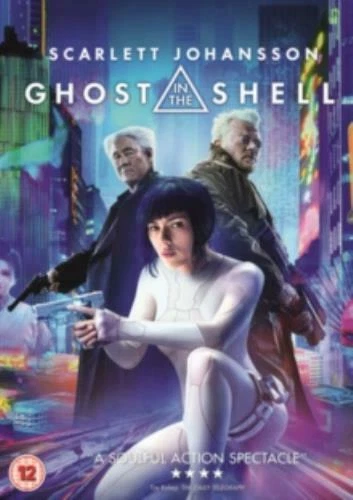
The 2017 live-action adaptation of Ghost in the Shell starring Scarlett Johansson as Major Mira Killian triggered intense global debates surrounding whitewashing, fidelity to Japanese source material, and major narrative shifts—specifically the controversial plot twist transforming the iconic cyborg protagonist into a culturally ambiguous Japanese woman in a synthetic body.
Introduction: The Cultural Impact and Controversy of the 2017 Adaptation
When Paramount Pictures and DreamWorks Pictures released the live-action adaptation of Ghost in the Shell in March 2017, directed by Rupert Sanders, the project arrived under a microscope of high expectations and fierce scrutiny. Based on Masamune Shirow’s influential 1989 cyberpunk manga and Mamoru Oshii’s legendary 1995 anime film, the property occupies a revered space in global science fiction culture. However, long before the film hit theaters, the production became a focal point in a broader Hollywood conversation concerning representation, cultural authenticity, and adaptation ethics.
At the center of this firestorm was the casting of American actress Scarlett Johansson as the lead protagonist. In the original source material, the character is known as Motoko Kusanagi, a Japanese National Public Safety Commission officer whose brain is housed in a full-body cybernetic prosthesis. The decision to cast a bankable Western star—and subsequently introduce a narrative twist that explained her physical appearance—ignited a complex debate that transcended typical film criticism. This analysis examines the primary catalyst behind the controversy: the 1 key narrative change regarding the protagonist's identity, the industry arguments surrounding international box office viability, and the ongoing critical discourse that continues to shape discussions of adaptation in the modern media landscape.
The Core Controversy: Whitewashing and Adaptation Ethics
To understand the debate over Scarlett Johansson’s role in Ghost in the Shell (2017), one must first grasp the concept of "whitewashing" in contemporary cinema. Whitewashing refers to the practice of casting white actors in roles originally written as characters of color. In the realm of Hollywood adaptations of non-Western properties—particularly Japanese anime and manga—this practice has a long, troubled history. Critics argue that such casting choices systematically deny actors of color career-defining opportunities while erasing cultural representation from mainstream narratives.
When Johansson was attached to the project in 2015, the backlash was immediate. Activists, fans of the original anime, and cultural critics pointed out that Hollywood repeatedly bypassed Asian and Asian-American actresses for marquee science fiction roles under the assumption that only Western stars could guarantee box office profitability. The controversy was further intensified by rumors, later denied by producers, that visual effects tests had been conducted to digitally alter white actors to look ethnically Asian—a practice sometimes referred to as "yellowfacing."
Defenders of the casting decision, including the film's producers and director Rupert Sanders, argued that the cyberpunk world of Ghost in the Shell is intentionally multicultural, post-national, and fluid. Because the characters reside in a hyper-technological future where bodies are interchangeable chassis (or "shells"), they contended that the ethnicity of the physical body is ultimately irrelevant. Furthermore, supporters emphasized that Johansson's global box office appeal—cemented by her roles in major franchises like the Marvel Cinematic Universe—was essential for securing the high budget required to visually replicate Shirow's dense futuristic cityscape.
The 1 Key Change: Reimagining Motoko Kusanagi as Mira Killian
The central pivot of the 2017 adaptation—and the focal point of the narrative debate—lies in a major script alteration. In the original 1995 anime, Major Motoko Kusanagi is explicitly Japanese, living and working within a futuristic Japanese counter-cyberterrorist organization, Section 9. Her identity, while complicated by the existential nature of cyberization, is deeply rooted in her heritage and her role as a seasoned government operative.
In the 2017 film, the character’s name is changed to Major Mira Killian. Rather than being a Japanese woman whose brain was placed in a cybernetic body, the film's plot reveals a startling twist: Mira was originally a young Japanese dissident named Motoko who ran away from home to escape corporate control. She and her mother were captured by Hanka Robotics, an antagonistic mega-corporation. While her mother was presumed dead, Motoko’s brain was extracted and placed into the world’s first full-body cybernetic shell. To pacify her and erase her past, the corporation wiped her memory, implanted false memories of a Western upbringing, and convinced her that she was saved from a fatal terrorist attack.
This single key change fundamentally altered the thematic DNA of the franchise:
- From Existential Autonomy to Corporate Trauma: In the 1995 anime, the Major's philosophical crisis centers on what it means to be human in a digital age, exploring consciousness, soul ("ghost"), and individuality. The 2017 film shifts this internal conflict into a narrative of corporate exploitation, identity theft, and reclaiming a stolen heritage.
- The "Whitewashing" In-Universe Explanation: By making her a Japanese woman whose consciousness was placed into a Western-looking shell by a corrupt corporation, the filmmakers attempted to provide an in-universe justification for casting a white actress. However, this plot device backfired among many critics, who viewed it as a narrative sleight-of-hand that inadvertently underscored the erasure it sought to explain—noting that the character's Japanese identity was literally stolen and replaced with a white persona.
Comparative Analysis: 1995 Anime vs. 2017 Live-Action
| Feature / Element | 1995 Anime (Ghost in the Shell) | 2017 Live-Action (Ghost in the Shell) |
|---|---|---|
| Protagonist Name | Motoko Kusanagi | Mira Killian (revealed to be Motoko) |
| Cultural Background | Explicitly Japanese national and operative. | Japanese origin with a manufactured Western identity/shell. |
| Casting & Representation | Animated medium; voice acted by Atsuko Tanaka. | Live-action; played by American actress Scarlett Johansson. |
| Primary Conflict | Philosophical exploration of artificial intelligence and human consciousness. | Corporate conspiracy, memory manipulation, and reclaiming personal history. |
| Aesthetic & Tone | Melancholic, philosophical, noir-infused cyberpunk. | Action-oriented, sleek blockbuster sci-fi with direct homages to Oshii's visual shots. |
Box Office Performance and Financial Realities
The controversy surrounding the casting and narrative changes directly impacted the film's commercial trajectory. Released globally in the spring of 2017, Ghost in the Shell struggled to capture a broad audience, grossing approximately $169.8 million worldwide against an estimated production budget of $110 million to $115 million. When factoring in global marketing and distribution costs, industry analysts deemed the film a box office bomb, resulting in significant financial write-downs for Paramount Pictures.
Several industry factors contributed to this commercial failure:
- The Boycott Effect: The whitewashing controversy generated sustained negative press and organized social media campaigns urging audiences to boycott the film. This alienated a significant segment of genre fans and progressive moviegoers.
- Critical Reception: Film critics offered mixed-to-negative reviews, praising the film's visual fidelity and production design while criticizing its superficial engagement with the complex philosophical themes of the source material. On review aggregator Rotten Tomatoes, the film holds a 43% approval rating.
- Alienation of the Core Fanbase: Hardcore fans of the 1995 anime felt that the live-action adaptation sanitized the mature, cerebral narrative of the original into a standard Hollywood revenge thriller. Conversely, general audiences unfamiliar with anime found the cyberpunk world inaccessible or derivative of older cinematic landmarks like The Matrix (1999) and Blade Runner (1982).
The Ongoing Debate and Long-Term Industry Legacy
Years after its theatrical run, the discourse surrounding the 2017 Ghost in the Shell serves as a critical case study in the evolution of Hollywood adaptation strategies, cultural sensitivity, and international marketing. The film arrived during a transitional period in the entertainment industry, coinciding with heightened awareness regarding diversity, inclusion, and the ethics of adapting non-Western stories for Western-dominated markets.
The ongoing debate highlights several key lessons for modern filmmakers:
- The Limits of "In-Universe" Excuses: The attempt to justify casting choices through plot mechanics (such as cybernetic chassis swapping) proved unconvincing to audiences who recognized that behind-the-scenes casting decisions reflect industry-wide systemic biases rather than pure narrative necessity.
- The Value of Authenticity: Subsequent Hollywood productions adapting international properties have faced increased scrutiny and, in many cases, have pivoted toward more culturally authentic casting and localized storytelling to foster goodwill and critical support.
- Respecting Source Material Depth: The film demonstrated that replicating iconic visual sequences (such as the Major's rooftop leap or water camouflage battle) cannot compensate for stripping away the nuanced philosophical depth that made the original property a cultural touchstone.
Frequently Asked Questions
What is the main controversy surrounding Scarlett Johansson's role in Ghost in the Shell (2017)?
The primary controversy centers on whitewashing—casting a white American actress to play a character who was Japanese in the original manga and anime. Critics argued this practice sidelined Asian actors and erased vital cultural representation from a major global intellectual property.
How does the 2017 film explain Scarlett Johansson's appearance?
The film introduces a specific plot twist: the protagonist's name is Mira Killian, but she is revealed to be a young Japanese woman named Motoko whose brain was placed into a synthetic, Western-looking cybernetic body by a corrupt corporation after her memories were wiped.
Did Mamoru Oshii, director of the 1995 anime, support the 2017 film?
Yes, Mamoru Oshii publicly defended the casting of Scarlett Johansson prior to release. He argued that because the character's brain is human while her body is entirely artificial, associating her physical form with a specific ethnicity is meaningless within the fictional universe of the story.
Was the 2017 Ghost in the Shell film a financial success?
No. The film grossed roughly $169.8 million globally against an estimated $110+ million production budget, falling short of profitability once marketing expenses were factored in. Industry analysts largely classified the release as a box office disappointment.
How did the 2017 adaptation alter the themes of the original story?
While the 1995 anime focused heavily on existentialism, human consciousness, and what defines a soul in a digitized society, the 2017 live-action film streamlined the narrative into a corporate conspiracy thriller centered on identity theft, memory recovery, and corporate malfeasance.
Conclusion and Next Steps
The 2017 adaptation of Ghost in the Shell remains a landmark example of the friction that occurs when Hollywood commercial imperatives collide with beloved international source material. By attempting to bridge Western star power with a Japanese narrative through a controversial identity twist, the production alienated both purists and progressive audiences. For film enthusiasts, scholars, and industry professionals, examining this release offers valuable insight into how casting decisions, narrative adaptations, and cultural representation continue to shape the global entertainment landscape. To further explore this topic, consider revisiting Mamoru Oshii’s 1995 animated masterpiece and Masamune Shirow's original manga to analyze how distinct creative mediums approach the intersection of humanity, technology, and identity.