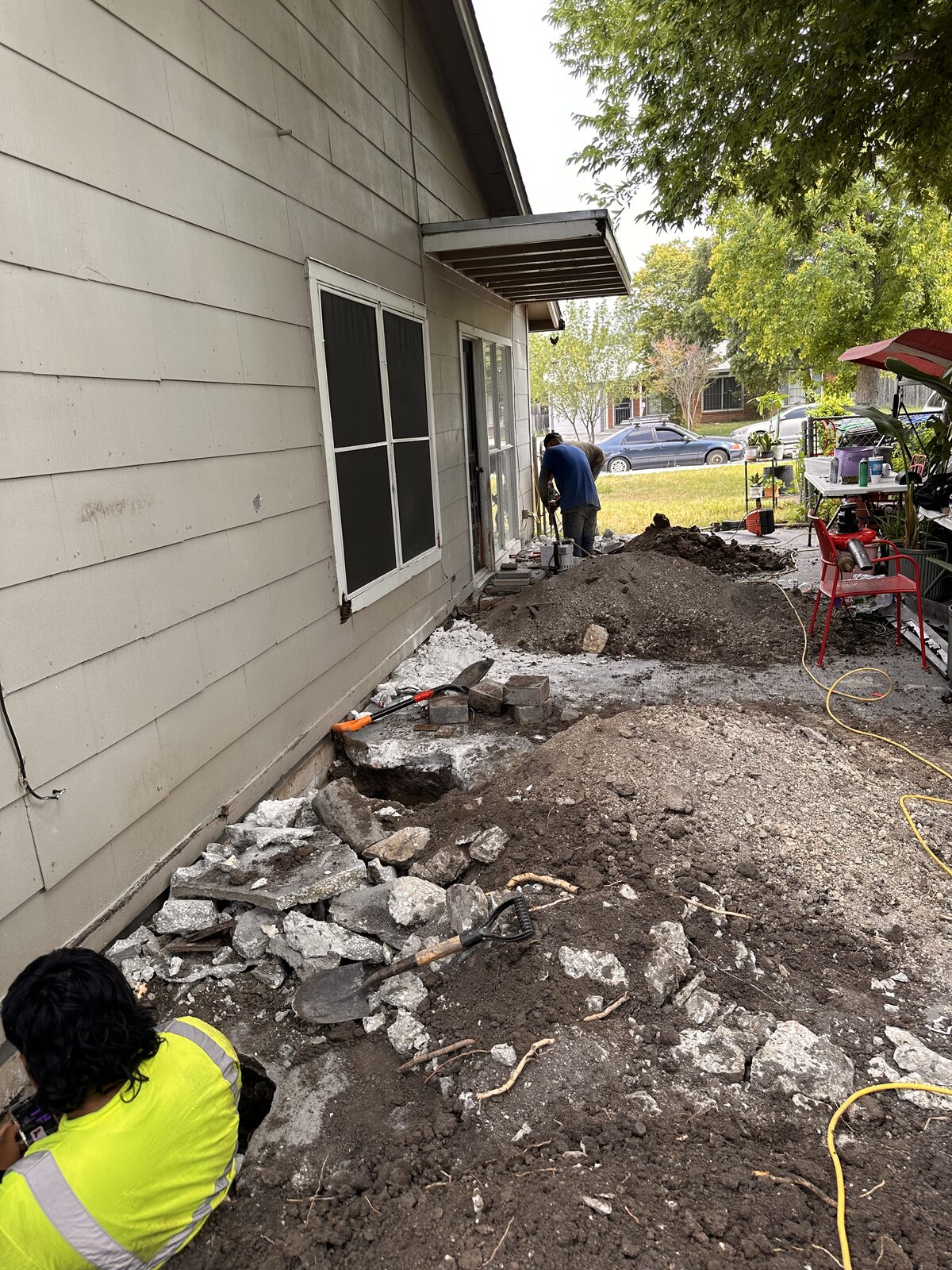
A-1 Guaranteed Foundation Repair is a specialized structural contractor serving Lewisville, Texas, focused on resolving foundation instability caused by North Texas's expansive clay soils. As of 2026, they provide engineered piering systems, drainage correction, and slab stabilization backed by lifetime transferable warranties to ensure long-term residential and commercial structural integrity.
Understanding foundation repair in Lewisville requires a deep dive into the local geology, the specific engineering methods used to counteract soil movement, and the logistical realities of home maintenance in the Dallas-Fort Worth (DFW) metroplex. For homeowners dealing with cracked drywall, sticking doors, or exterior masonry gaps, navigating the services of a specialist like A-1 Guaranteed Foundation Repair is the first step toward preserving property value.
The Geological Context: Why Lewisville Homes Require Foundation Repair
To understand the necessity of a company like A-1 Guaranteed Foundation Repair, one must first understand the ground beneath Lewisville. The city is situated over the Eagle Ford Shale and Woodbine formations, which are notorious for high concentrations of expansive clay.
In North Texas, these clay soils act like a sponge. During the wet spring months, the clay absorbs water and expands (heave), exerting tremendous upward pressure on concrete slabs. Conversely, during the hot, dry Texas summers, the clay loses moisture and shrinks (subsidence), leaving voids beneath the foundation. This constant cycle of expansion and contraction creates "differential settlement," where one part of the house moves at a different rate than another. This is the primary catalyst for structural failure in Lewisville homes.
A-1 Guaranteed Foundation Repair approaches these issues not just as a contractor, but as a soil stabilization specialist. Their overview of services typically begins with a forensic analysis of how the specific moisture levels on a property are interacting with the local soil strata.
Core Services and Engineering Solutions
A-1 Guaranteed Foundation Repair utilizes several industry-standard and proprietary methods to stabilize structures. The choice of method depends on the severity of the settlement, the weight of the structure, and the depth of the competent load-bearing strata (the "rock" or stable soil deep underground).
Pressed Concrete Piers
This is the most common repair method in the Lewisville area. It involves driving pre-cast concrete cylinders into the ground using the weight of the house and a hydraulic ram.
- The Process: Workers excavate small holes (usually 2'x2') around the perimeter of the foundation. They then place a concrete cylinder under the grade beam and use hydraulic pressure to push it down. Successive cylinders are added until the pier reaches "refusal"—the point where the soil can no longer be penetrated, or the house begins to lift.
- Benefits: It is cost-effective and relatively quick to install, making it a popular choice for standard residential slab-on-grade homes.
Steel Pier Systems
For more demanding structural issues or deeper soil requirements, steel piers are often recommended. A-1 Guaranteed Foundation Repair utilizes high-grade steel pipes that can penetrate much deeper than concrete.
- The Process: Similar to concrete piers, but the segments are made of heavy-duty steel and are often coupled together. Because of their thinner profile, they can cut through dense clay layers to reach the actual bedrock.
- Benefits: Steel piers are considered a more "permanent" solution for heavy structures or areas with exceptionally deep active soil zones. They offer a higher factor of safety and less friction during the driving process.
Drainage Correction and Root Barriers
Foundation repair is often a symptom of a larger water management problem. A-1 Guaranteed Foundation Repair emphasizes that lifting a house is only half the battle; keeping it stable requires controlling the water around it.
- Surface Drains and French Drains: These systems redirect rainwater away from the foundation to prevent the clay from over-saturated expansion.
- Root Barriers: In older Lewisville neighborhoods with mature oak or pecan trees, root systems can suck thousands of gallons of water from beneath a house, causing localized shrinking. Installing a root barrier—a deep trench lined with specialized material—prevents trees from dehydrating the soil under the slab.
The "Guaranteed" Promise: Warranty and Long-Term Value
The "Guaranteed" in the company name refers to the Lifetime Transferable Warranty. In the 2026 real estate market, a foundation warranty is a critical document during a home sale.
A lifetime warranty typically means that if the piers installed by the company fail or if the house settles further in the areas where work was performed, the company will return to "adjust" the piers at no cost to the homeowner. The "transferable" aspect is vital; it means the warranty stays with the house, not the owner. When a Lewisville homeowner sells their property, the new buyer inherits the peace of mind that the foundation is backed by A-1.
However, it is important to understand the limitations. Warranties usually cover the specific piers installed. They do not necessarily cover new movement in a different part of the house where piers were not deemed necessary during the initial repair. This is why a comprehensive initial plan is superior to a "patchwork" approach.
Identifying Foundation Failure in North Texas
Homeowners in Lewisville should be vigilant for signs of movement. Because the soil is so active, early detection can save tens of thousands of dollars in secondary repairs (such as plumbing and masonry).
- Interior Indicators: Look for "stair-step" cracks in the sheetrock, especially above door frames and window corners. Doors that suddenly stick, swing open on their own, or no longer latch are classic signs of a shifted frame.
- Exterior Indicators: Examine the brickwork for cracks that follow the mortar lines in a zig-zag pattern. Gaps between the window frames and the brick, or a chimney that appears to be leaning away from the house, are urgent red flags.
- The Frieze Board Gap: Look at the trim where the siding or brick meets the roofline. If there is a widening gap or if the board is pulling away, the foundation is likely sinking in that corner.
- Plumbing Issues: Sudden increases in water bills or slow-draining pipes can indicate that the foundation movement has snapped or "bellied" the under-slab plumbing lines.
The Repair Process: What to Expect in 2026
When engaging with A-1 Guaranteed Foundation Repair in Lewisville, the process generally follows a standardized professional sequence to ensure engineering accuracy.
1. The Initial Inspection and Elevation Survey
A technician or engineer will visit the property to perform an elevation survey. Using a highly sensitive altimeter (often called a ZipLevel), they map out the high and low points of the slab. A deviation of more than 1 to 2 inches over a short distance usually triggers a recommendation for repair.
2. Engineering and Permitting
In Lewisville, structural repairs often require a building permit from the city. This may involve a third-party structural engineer’s report to verify that the proposed repair plan is sound. A-1 coordinates these requirements to ensure the work is compliant with 2026 local building codes.
3. Excavation and Installation
The crew arrives to begin the "dirty work." For an average Lewisville home requiring 15-20 piers, this stage takes 2 to 4 days. Plants and bushes near the repair sites are carefully removed and temporarily replanted or set aside.
4. The Lift and Stabilization
Once all piers are driven to the required depth, the actual "lifting" occurs. This is a delicate process where hydraulic jacks are placed on the piers and the house is slowly raised toward its original level. The goal is "functional recovery"—getting the house level enough so that doors work and cracks close, without causing new damage to the structure.
5. Cleanup and Backfill
After the house is stabilized, the holes are backfilled, concrete is patched, and the site is cleaned. A final elevation survey is performed to document the new, level state of the home for warranty records.
Comparative Overview of Foundation Repair Methods
| Feature | Pressed Concrete Piers | Steel Piers | Helical Piers |
|---|---|---|---|
| Ideal For | Standard residential slabs | Heavy structures / Deep clay | Light structures / Decks / Boardwalks |
| Depth Potential | 12 - 25 feet (Typical) | 30 - 70+ feet | Varies by torque |
| Cost | Most affordable ($) | Premium ($$$) | Moderate ($$) |
| Durability | High, but soil-dependent | Highest; reaches bedrock | High; resists tension/uplift |
| Installation Speed | Fast | Moderate | Fast |
| Lewisville Suitability | Excellent for most neighborhoods | Best for areas near Lake Lewisville | Good for additions and porches |
Cost Factors for Lewisville Homeowners
As of 2026, foundation repair costs in Lewisville are influenced by material prices and labor availability. While a specific quote requires an on-site inspection, several factors consistently drive the final price:
- Number of Piers: Most companies charge "per pier." In the DFW area, this can range from $350 to $600 per concrete pier and $800 to $1,200 per steel pier.
- Pier Type: As noted, steel is significantly more expensive due to the cost of raw materials and the specialized equipment needed to drive them deeper.
- Accessibility: If a house has a large wrap-around deck or if piers must be installed through the interior floor (requiring jackhammering through tile or hardwood), the labor costs increase.
- Plumbing Repairs: If the lift breaks a plumbing line, or if a "static leak test" reveals pre-existing leaks, these must be repaired. It is often recommended to have a plumber on standby during the lift phase.
Common Mistakes to Avoid
When researching A-1 Guaranteed Foundation Repair or any DFW contractor, homeowners should avoid these frequent pitfalls:
- Waiting too long: A small crack in 2024 becomes a major structural failure by 2026. The longer the soil is allowed to move, the more damage occurs to the finishes of the home.
- Ignoring Drainage: Installing piers without fixing the bad gutters or negative grading that caused the problem is a temporary fix. Always address the water source.
- Choosing on Price Alone: In the foundation industry, the quality of the "lift" and the reliability of the warranty are more important than a few hundred dollars in initial savings. A company must be around in ten years to honor that "lifetime" guarantee.
Frequently Asked Questions
How long does the average foundation repair take in Lewisville?
Most residential projects are completed within 3 to 5 business days. This includes the initial excavation, the driving of the piers, the lifting process, and the final backfill and cleanup. Larger commercial projects or those requiring interior piers may take 1 to 2 weeks.
Will my homeowners' insurance cover the cost of foundation repair?
Typically, no. Most standard homeowners' insurance policies in Texas exclude foundation repair caused by "settlement, cracking, shrinking, bulging, or expansion of pavements, foundations, walls, floors, roofs or ceilings." Coverage is usually only triggered if the foundation damage is a direct result of a "covered peril," such as a major pipe burst.
Do I need to move out of my house during the repair?
In the vast majority of cases, you can stay in your home. The work is primarily performed on the exterior of the house. You will hear noise from the hydraulic equipment and some vibration, but the house remains habitable. If interior piers are required, you may need to vacate specific rooms for a day or two.
Can foundation repair close the cracks in my brick?
Yes, often the lifting process will bring the masonry back together, significantly narrowing or completely closing cracks. However, the company cannot guarantee a "perfect" closure because mortar may have fallen out or the bricks may have shifted slightly. Most homeowners plan for minor mortar "tuck-pointing" after the foundation is stabilized.
Is Lewisville soil different from other parts of Texas?
Lewisville sits in a transition zone. While it shares the expansive blackland clay of Dallas, its proximity to Lake Lewisville can create higher localized water tables in certain neighborhoods, leading to more aggressive "heave" issues than seen in drier, more inland areas.
Practical Recommendations for Next Actions
If you suspect foundation issues in your Lewisville property, your first step should be a professional evaluation. Contact A-1 Guaranteed Foundation Repair to schedule an elevation survey. This will provide a data-backed baseline of your home's current status.
Before the technicians arrive, clear a path around your home's perimeter and take photos of any current cracks. If a repair plan is recommended, ensure it includes a "drainage overview." Stabilization is a two-part process: structural support (piers) and moisture management (drainage). Ensuring both are addressed will protect your home well beyond 2026 and preserve its value in the competitive North Texas real estate market.