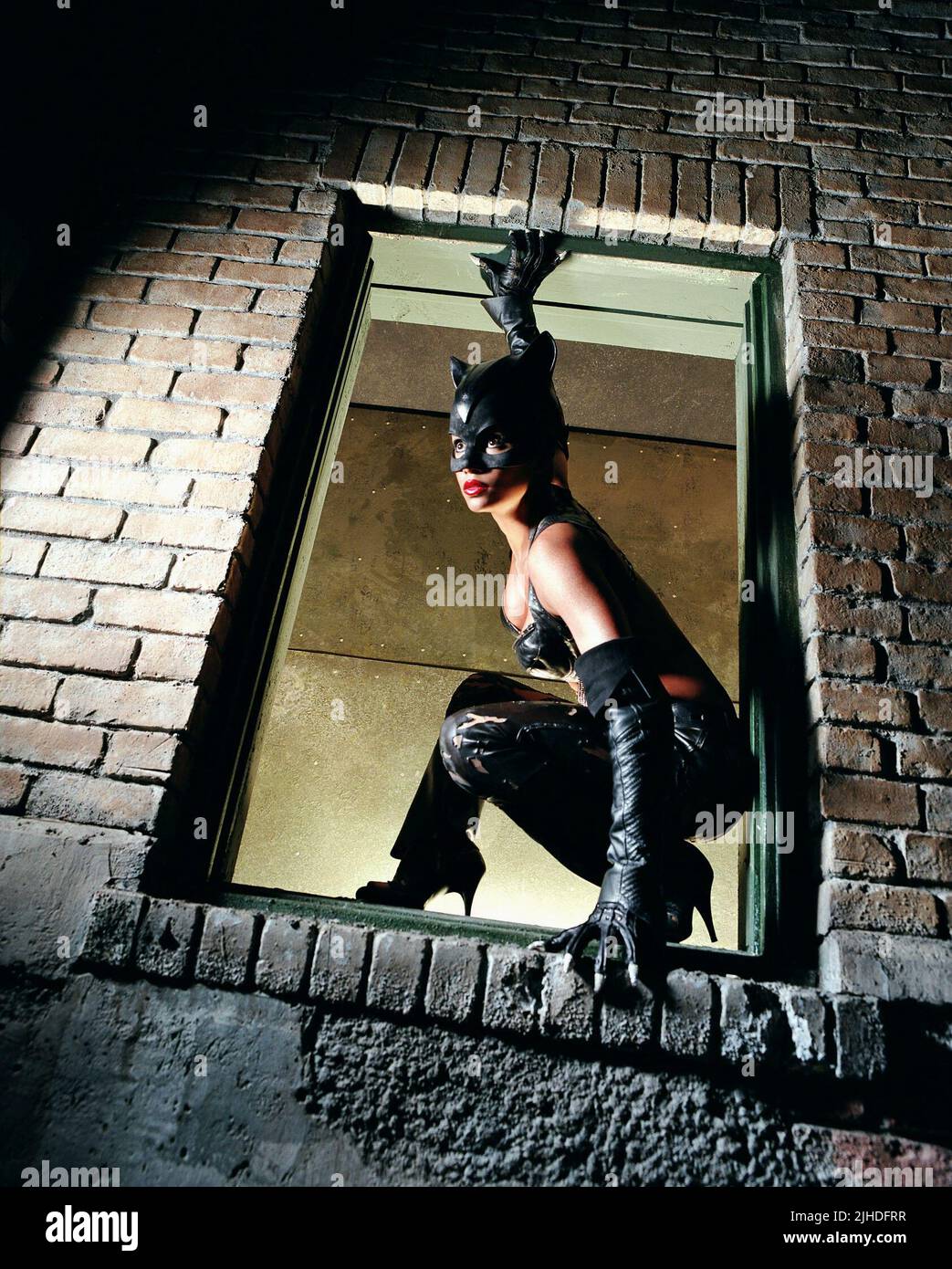
The 2004 Catwoman film features an ensemble led by Academy Award winner Halle Berry as Patience Phillips, supported by Sharon Stone as the villainous Laurel Hedare and Benjamin Bratt as Detective Tom Lone. This standalone reimagining of the DC character focuses on a graphic designer who gains supernatural feline abilities.
Released during a transitional era for superhero cinema, the 2004 production of Catwoman remains one of the most discussed entries in the genre. While it diverged significantly from the traditional Selina Kyle lore found in Batman comics, the film's cast brought a high level of star power to the screen. Directed by Pitof, the movie sought to blend high-fashion aesthetics with supernatural action. As we look back from 2026, the film serves as a fascinating case study in casting choices, character motivations, and the early 2000s approach to female-led action blockbusters.
The Protagonist: Halle Berry as Patience Phillips
Halle Berry took on the role of Patience Phillips at the height of her career, shortly after her historic Oscar win for Monster's Ball. Unlike the traditional Selina Kyle, Patience Phillips is depicted as a shy, socially awkward graphic designer working for a massive cosmetics conglomerate, Hedare Beauty.
Character Arc and Transformation
The transformation of Patience Phillips is the emotional and physical core of the movie. Initially portrayed as a "people pleaser" who lacks the confidence to stand up for herself, her life takes a dark turn when she overhears a secret regarding the company’s new anti-aging product, "Beau-Line." After being murdered to protect the corporate secret, she is resurrected by a Midnight Mau cat, gaining heightened senses, agility, and a predatory instinct.
Berry’s performance was noted for its physicality. To prepare for the role, she underwent extensive training in Capoeira, a Brazilian martial art that combines dance and acrobatics, to ensure her movements mimicked the fluid, unpredictable nature of a cat. She also trained with a professional whip master to master the character's signature weapon. Despite the film's critical reception, Berry’s dedication to the physical demands of the role was a hallmark of the production.
The Legacy of the Razzie
In a moment of Hollywood history that is still celebrated in 2026, Halle Berry famously attended the Golden Raspberry Awards (Razzies) in person to accept her "Worst Actress" trophy. Holding her Oscar in one hand and the Razzie in the other, she displayed a level of grace and humor that has since endeared her to fans who view the film as a "guilty pleasure" or a cult classic.
The Antagonist: Sharon Stone as Laurel Hedare
Sharon Stone plays Laurel Hedare, the cold and calculating face of Hedare Beauty. Stone was cast to provide a formidable foil to Berry, representing the "old guard" of beauty and corporate ruthlessness.
Motivations and the "Beau-Line" Plot
Laurel Hedare is more than just a corporate executive; she is a victim of her own industry’s standards. The character’s primary motivation stems from her fear of being replaced by younger models and the physical toll of using her company’s own toxic product. The "Beau-Line" cream provides eternal youth but makes the user’s skin as "hard as marble" while causing disfigurement if use is discontinued.
Stone’s portrayal is a commentary on the societal pressure placed on women regarding aging. Her performance is characterized by a "steely" resolve, literally and figuratively. In the film's climax, Laurel’s hardened skin makes her nearly impervious to pain, setting up a unique physical confrontation between her and Catwoman. Stone brought a veteran presence to the set, leaning into the campy, melodramatic elements of the script.
The Romantic Interest: Benjamin Bratt as Detective Tom Lone
Benjamin Bratt provides the "moral compass" of the film as Detective Tom Lone. His character serves as the bridge between the civilian life of Patience Phillips and the vigilante activities of Catwoman.
The Conflict of Interest
Tom Lone is a classic "good cop" who falls for the mild-mannered Patience while simultaneously hunting the mysterious Catwoman. This creates a standard superhero trope of the "dual-identity romance," similar to the dynamics seen in Superman or Spider-Man. Bratt’s performance is grounded, providing a necessary contrast to the more heightened, supernatural elements surrounding the female leads.
His role was essentially to humanize Patience. Through her interactions with Tom, the audience sees that Patience still values her human connections, even as her feline instincts threaten to take over her personality. Their relationship is characterized by a "cat and mouse" game—pun intended—as Tom slowly pieces together the truth about Patience’s transformation.
The Supporting Cast and Their Roles
The world of Catwoman (2004) is populated by characters that represent the extremes of the fashion world and the mystical origins of the Catwoman mythos.
Lambert Wilson as George Hedare
Lambert Wilson plays the narcissistic CEO of Hedare Beauty and Laurel’s husband. His character represents the superficiality of the industry. George is a man driven by profit and ego, often dismissing his wife’s contributions, which fuels Laurel’s eventual betrayal. Wilson, a veteran French actor, brought a specific European flair to the role that fit the film's high-fashion aesthetic.
Frances Conroy as Ophelia Powers
Frances Conroy provides the "mentor" figure common in hero's journey narratives. As Ophelia Powers, she is a "cat lady" who explains the history of the Midnight Mau and the lineage of women who have been granted these powers throughout history. This was an attempt by the writers to create a new mythology for the character, independent of the DC Comics "Selina Kyle" origin. Conroy’s performance is eccentric and mysterious, providing the necessary exposition to explain Patience’s new reality.
Alex Borstein as Sally
Alex Borstein, known for her comedic timing, plays Sally, Patience’s best friend and colleague. Her role is primarily comic relief, providing a grounded perspective on Patience’s erratic behavior following her transformation. Sally represents the life Patience is leaving behind as she embraces her new identity.
Technical Cast Overview: 2004 Film Specifications
To understand the scope of the casting and production, it is helpful to look at the primary contributors to the film's development.
| Actor | Character | Role Type | Background/Note |
|---|---|---|---|
| Halle Berry | Patience Phillips / Catwoman | Protagonist | First Oscar-winning actress to play the role. |
| Sharon Stone | Laurel Hedare | Antagonist | Iconic 90s thriller star (Basic Instinct). |
| Benjamin Bratt | Tom Lone | Love Interest | Known for Law & Order and Miss Congeniality. |
| Lambert Wilson | George Hedare | Supporting Villain | Known for The Matrix sequels. |
| Frances Conroy | Ophelia Powers | Mentor | Acclaimed for Six Feet Under. |
| Alex Borstein | Sally | Comic Relief | Future Marvelous Mrs. Maisel star. |
| Byron Mann | Wesley | Henchman | Veteran action and martial arts actor. |
Production Context and Creative Direction
The casting of Catwoman was heavily influenced by the director, Pitof, who was primarily known for his work in visual effects (VFX). His vision for the film was "hyper-stylized," which influenced everything from the costume design to the way the actors were framed.
The Costume Design
The 2004 costume, designed by Angus Strathie, was a radical departure from the full-body jumpsuits of Michelle Pfeiffer or the later sleek designs of Anne Hathaway. It featured shredded leather, straps, and an open-midriff design. This choice was controversial among comic book purists but fit the "edgy," fashion-forward aesthetic the production team was aiming for. Halle Berry has noted in various interviews that the costume was incredibly restrictive yet helped her find the character's movement.
Departure from Source Material
One of the most significant aspects of the 2004 cast and script was the total separation from Gotham City. There is no mention of Batman, Joker, or Selina Kyle. The decision to make Patience Phillips a new character allowed the filmmakers to avoid the "baggage" of existing continuity, though it ultimately became a point of criticism for fans who wanted a more faithful adaptation.
Legacy and Impact as of 2026
From the perspective of 2026, the 2004 Catwoman is often cited in discussions about the evolution of the superhero genre. It was produced at a time when studios were still struggling to figure out how to market female-led action movies.
- Career Resilience: For Halle Berry, the film was a temporary setback that did not define her career. She continued to lead major franchises (such as X-Men) and remains a powerhouse in the industry.
- Cultural Re-evaluation: Modern audiences have begun to appreciate the film's campiness. In an era of gritty, ultra-serious superhero films, the vibrant, somewhat absurd world of Catwoman (2004) offers a unique viewing experience that doesn't take itself too seriously.
- A Lesson in Adaptation: The film serves as a textbook example for producers on the importance of respecting source material while innovating. The "Patience Phillips" experiment led future DC projects to stick closer to established character names even when changing storylines.
Frequently Asked Questions
Why was the main character named Patience Phillips instead of Selina Kyle?
The filmmakers and the studio wanted to create a standalone story that wasn't tied to the Batman universe. By creating "Patience Phillips," they could establish a new mythology involving the Egyptian Midnight Mau cats, allowing for a different origin story that didn't require the presence of Gotham City or other DC characters.
Did Halle Berry perform her own stunts in the movie?
Halle Berry performed a significant portion of her own stunts, particularly those involving the whip and the hand-to-hand combat sequences. She spent months training in Capoeira to achieve the specific feline movement required for the role. However, for the more dangerous wire-work and high-fall sequences, professional stunt doubles were used to ensure safety.
Is the 2004 Catwoman movie part of the DC Extended Universe (DCEU)?
No, the 2004 film is entirely separate from any other DC film continuity. It was produced by Warner Bros. as a standalone project. It does not connect to the Tim Burton films, the Christopher Nolan trilogy, or the later interconnected cinematic universes.
What was the inspiration for Sharon Stone’s character?
Laurel Hedare was designed to be a personification of the "beauty at any cost" mentality. Her character was inspired by corporate thrillers and the fashion industry’s obsession with youth. The writers used her as a mirror to Patience, showing what happens when power is used for vanity rather than liberation.
How was the film's "cat-like" movement achieved?
Beyond Berry's training, the production used early "motion capture" techniques and CGI to enhance her movements. The director, Pitof, utilized his background in visual effects to blend live-action footage with digital animation, allowing the character to perform feats that were physically impossible for a human actor.
Practical Recommendation for Viewers
If you are planning to watch Catwoman (2004) for the first time in 2026, it is best enjoyed as a stylized period piece of the early 2000s. To get the most out of the experience, focus on the chemistry between Halle Berry and Sharon Stone and the "high-camp" energy of the costume and set design. For those interested in the history of superhero cinema, it is a mandatory watch to understand the growing pains the genre went through before the "Golden Age" of the 2010s.