Workers’ compensation payments are generally exempt from federal and state income taxes. Because these benefits are designed to provide essential support for employees who have suffered a work-related injury or occupational illness, the Internal Revenue Service (IRS) treats them as non-taxable income. However, specific scenarios, such as the coordination of these benefits with Social Security Disability Insurance (SSDI) or the lump-sum settlement of a claim, can complicate your tax status. Understanding these nuances is critical for accurate financial planning and compliance during the 2026 tax year.
Understanding the Tax-Exempt Status of Workers' Compensation
Under current federal tax regulations, amounts you receive as workers' compensation for an occupational sickness or injury are fully exempt from tax if they are paid under a workers' compensation act or statute. This status remains constant regardless of whether the payments are made in weekly installments or as a structured settlement.
The rationale behind this exemption is rooted in the social purpose of the compensation system. These funds are intended to replace lost wages and cover medical expenses resulting from a disability caused by employment. Because the underlying event is an injury rather than a form of earned income, the government does not classify these funds as "gross income" for federal tax purposes. This holds true for both the injured employee and their survivors in the event of a fatal workplace accident.
However, the exemption is limited to the amount received for the injury itself. If you receive benefits for lost wages that are not specifically mandated by a workers' compensation statute, those funds may be treated differently. It is essential to ensure that your documentation clearly identifies the source of the funds to maintain this tax-advantaged status.
The Intersection of Social Security Disability and Workers' Compensation
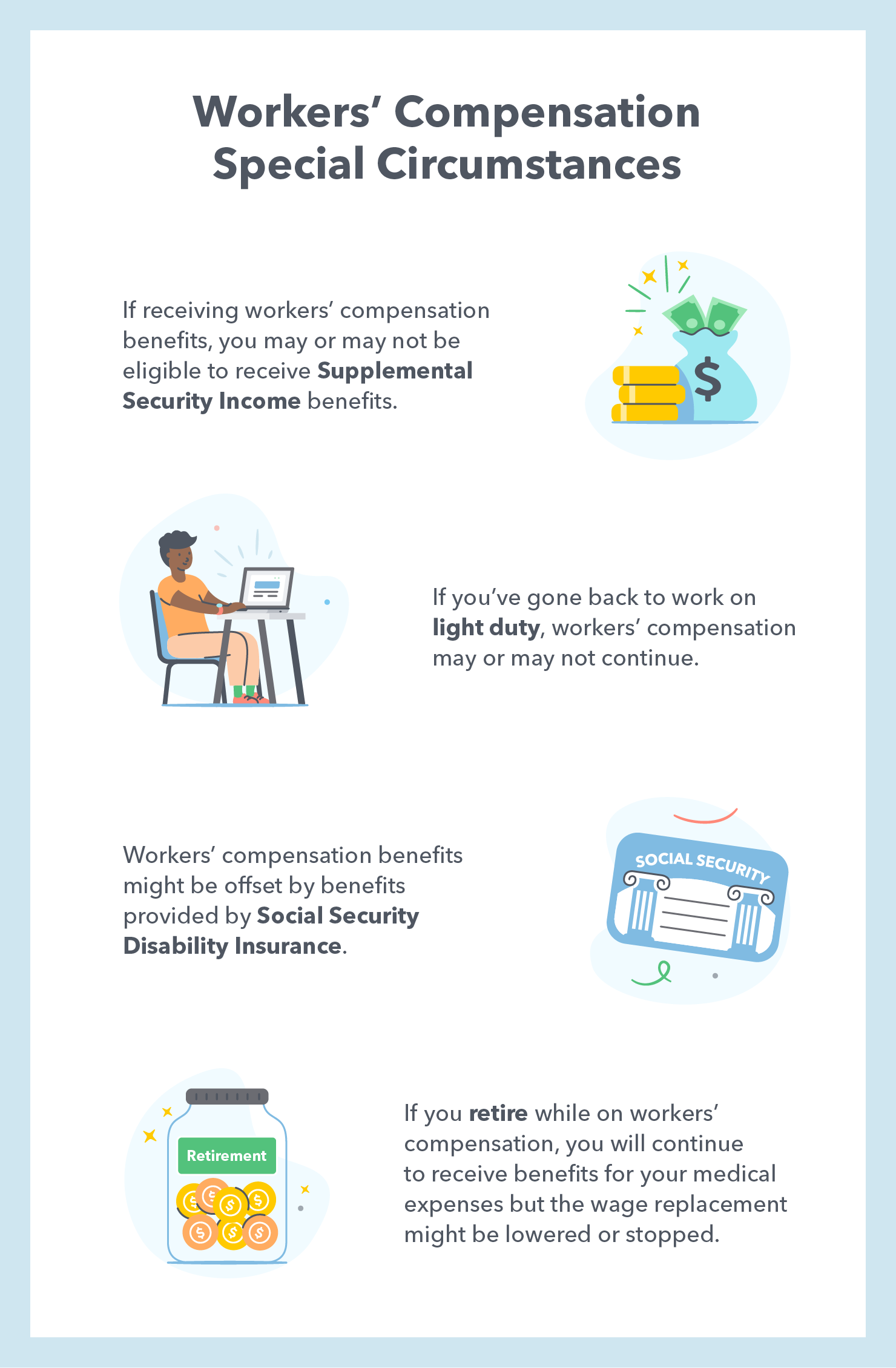
The most common situation where workers' compensation becomes "taxed" is not through a direct levy on the compensation itself, but through a mechanism known as the "workers' compensation offset" when integrated with Social Security Disability Insurance (SSDI).
When an individual receives both workers' compensation and SSDI, the Social Security Administration (SSA) is legally required to ensure that the combined benefits do not exceed a certain percentage of the individual’s average current earnings prior to the disability. If the combined amount is too high, the SSA reduces the SSDI payments, effectively creating a "reverse offset."
While the workers' compensation portion remains tax-free, the reduction in your Social Security benefits can change the taxability of the remaining SSDI payments. Because a portion of your Social Security benefits may become taxable if your total income exceeds certain thresholds, the shift in your benefit structure can indirectly affect your total tax liability.
Key Factors in the Offset Calculation
- Average Current Earnings: The SSA calculates this based on your highest earning years before the injury.
- Benefit Coordination: The offset applies regardless of whether the workers' compensation is paid in a lump sum or periodic payments.
- The "Reverse Offset" States: Some states have specific rules regarding how these offsets are applied; it is vital to check your specific jurisdiction's regulations for the 2026 fiscal year.
Lump-Sum Settlements and Tax Implications
Many workers' compensation cases are resolved through a compromise and release agreement, resulting in a lump-sum settlement. A frequent point of confusion is whether this large payout triggers a tax event.
As a general rule, a lump-sum settlement intended to substitute for future weekly workers' compensation payments remains tax-exempt under the same statutes as periodic payments. However, the complexity arises when the settlement agreement includes provisions for items that are not technically workers' compensation. For instance, if a settlement includes back pay that was not part of the original workers' compensation claim or compensation for non-physical injuries, the IRS may seek to tax those specific portions of the payout.
To protect the tax-exempt status of your settlement, your legal counsel should ensure that the settlement agreement clearly allocates the funds as compensation for the injury and future disability. Vague settlement documents that bundle various types of payments can make it difficult for an accountant to separate the tax-exempt portions from potentially taxable income during tax filing.
Table: Taxability of Workers' Compensation Components
| Benefit Type | Tax Status | Condition for Exemption |
|---|---|---|
| Weekly Wage Replacement | Non-Taxable | Must be paid under a workers' compensation statute. |
| Medical Expense Coverage | Non-Taxable | Covers direct costs of injury treatment. |
| Lump-Sum Settlement | Non-Taxable | Must be clearly designated as injury/disability compensation. |
| Back Pay (non-statutory) | Potentially Taxable | If paid outside of standard workers' compensation rules. |
| SSDI Integration | Partially Taxable | Only the SSDI portion, subject to income thresholds. |
Reporting Requirements and Documentation
Even though workers' compensation is largely tax-exempt, you should maintain meticulous records of your payments throughout the calendar year. While you will not receive a W-2 for these benefits, you may receive periodic statements from your employer’s insurance carrier.
Why Documentation Matters:
- Audit Readiness: Should the IRS inquire about a discrepancy in your reported income versus your bank deposits, having a clear trail of payments labeled as "Workers' Compensation" is your primary defense.
- SSDI Coordination: The SSA will require evidence of the total amount of workers' compensation received to calculate the proper offset. Without accurate records, you risk an overpayment notice from the SSA, which they will demand back.
- Future Claims: If your injury leads to secondary complications, having a clear history of your initial settlement and medical coverage can be vital if you need to re-open a claim or apply for other benefits.
Common Pitfalls and Mistakes to Avoid
The most common error claimants make is assuming that all "injury-related" payments are non-taxable. If you receive a payment from a private insurance policy that you paid for personally, that is generally tax-free. However, if your employer pays for a separate disability policy as part of your compensation package, the benefits from that policy are often considered taxable income. Distinguishing between a state-mandated workers' compensation claim and a private disability insurance claim is essential for 2026 tax filing accuracy.
Another common mistake is failing to include the "offset" information when calculating Social Security taxation. If you are receiving SSDI, ensure you have the "Workers' Compensation Offset" notice from the SSA. This document is crucial for your tax professional to determine how much of your Social Security income is subject to federal tax.
Professional Guidance and Legal Limitations
This guide provides an overview of the general tax rules regarding workers' compensation in the United States as of 2026. Tax law is highly dependent on specific jurisdictional statutes, individual employment contracts, and unique case details.
If your case involves a large settlement, coordination with SSDI, or if you are concerned about how your benefits might affect your overall tax bracket, you should consult with a certified public accountant (CPA) or a tax attorney who specializes in personal injury and workers' compensation. A legal professional can ensure that your settlement agreement is drafted to maximize tax efficiency, while a tax professional can ensure that your annual filings accurately reflect your income, avoiding unnecessary audits or penalties.
Frequently Asked Questions
Does my state tax workers' compensation benefits?
Most states follow the federal lead and do not tax workers' compensation benefits. However, state tax laws vary, and you should verify your specific state’s Department of Revenue guidelines. There are no states that impose a specific "workers' compensation tax" on benefits, but some may consider them in broader calculations.
Is the interest on a late workers' compensation settlement taxable?
Yes. If you receive a settlement that includes interest due to a delay in payment, that interest is generally considered taxable income. The principal amount of the settlement remains tax-exempt, but the interest portion is treated as regular income and must be reported on your tax return.
What if my employer continues to pay my salary while I am on leave?
If your employer continues to pay your full salary while you are out, that is usually considered taxable wages, regardless of whether it is described as "sick pay." If the workers' compensation carrier reimburses your employer, the taxability depends on how the internal payroll department handles the funds. Always review your paystubs to see how these amounts are classified.
Can I deduct medical expenses related to my injury?
You generally cannot deduct medical expenses if they were paid for by your workers' compensation insurance. The IRS does not allow double-dipping; if you were compensated for the medical expense, you cannot claim it as an itemized deduction on your tax return.
Do I need to report workers' compensation on my tax return?
Generally, you do not need to report tax-exempt workers' compensation benefits on your federal tax return. However, if you receive a Form 1099 or similar documentation from an insurance carrier, you should consult with a tax professional to determine if you need to include a note or a specific adjustment to explain why the amount was excluded from your gross income.
Next Actions
If you are currently receiving workers' compensation benefits in 2026, begin by gathering all correspondence from the insurance carrier and the Social Security Administration. Organize these documents by calendar year. If you have a lump-sum settlement, consult the specific language of the agreement to ensure that the compensation is correctly categorized. If you believe your Social Security benefits are being incorrectly offset, contact your local SSA field office immediately to review your benefit records.