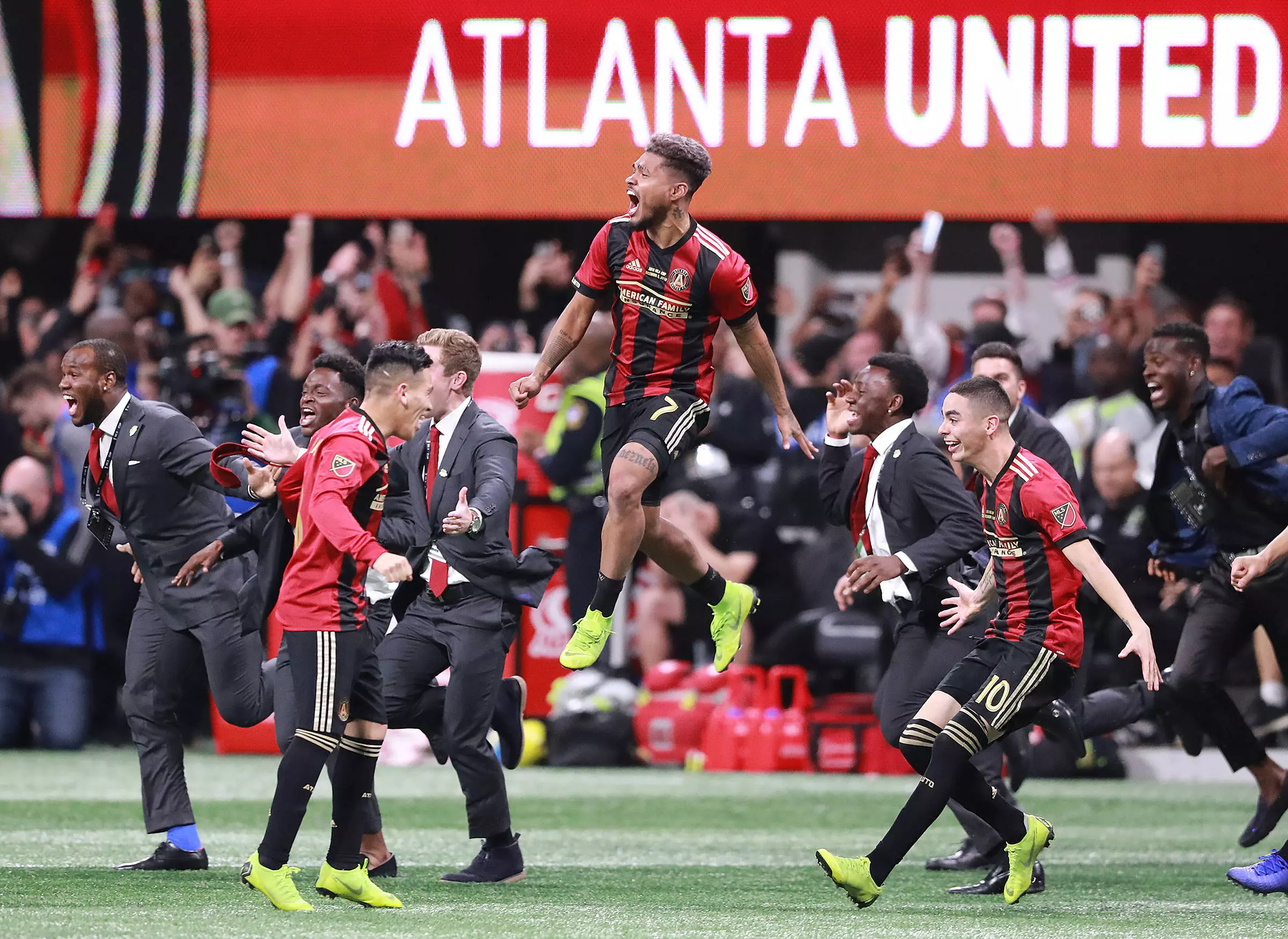
On December 8, 2018, Atlanta United secured their first MLS Cup title by defeating the Portland Timbers 2-0 at Mercedes-Benz Stadium. Led by league MVP Josef Martínez and manager Gerardo "Tata" Martino, the victory capped an extraordinary second season, setting attendance records and cementing the club's status as a North American soccer powerhouse.
The Cultural Significance of the 2018 Victory
As we look back from the perspective of 2026, the 2018 MLS Cup remains a watershed moment for professional sports in the American South. Before Atlanta United’s rise, the city of Atlanta was often unfairly characterized as a "fair-weather" sports town. The 2018 championship shattered that narrative. The club did not just win a trophy; they established a cultural phenomenon that integrated diverse demographics through a shared passion for the "Five Stripes."
The victory was the culmination of a "blank check" philosophy combined with surgical scouting. Owner Arthur Blank and the front office, led by Darren Eales and Carlos Bocanegra, decided to forego the aging European "retirement league" model that had characterized MLS for years. Instead, they focused on young, high-upside South American talent. This strategic pivot culminated in the 2018 title, proving that an expansion team could reach the pinnacle of the league in just two seasons through aggressive investment and tactical sophistication.
The Road to the 2018 MLS Cup Final
Atlanta United’s path to the championship was not without its hurdles. The 2018 regular season was a relentless pursuit of excellence, though it ended with a bittersweet second-place finish in the Supporters' Shield race.
The Regular Season Dominance
Atlanta finished the 2018 regular season with 69 points, a record at the time that was only surpassed by the New York Red Bulls in the final week of the season. Under Martino, the team played an expansive, high-pressing style that focused on quick transitions and the devastating partnership between Miguel Almirón and Josef Martínez. Martínez broke the single-season scoring record during this campaign, netting 31 goals and proving to be the most clinical finisher the league had ever seen.
The Eastern Conference Playoffs
The playoff run began with a dominant performance against New York City FC in the Conference Semifinals, winning 4-1 on aggregate. However, the true test was the Eastern Conference Final against the New York Red Bulls—the team that had snatched the Supporters' Shield from them and defeated them twice in the regular season.
In the home leg at Mercedes-Benz Stadium, Atlanta delivered a masterclass. They abandoned their usual high-risk press for a more disciplined, counter-attacking 3-5-2 formation. The tactical shift caught the Red Bulls off guard, resulting in a 3-0 victory in Atlanta. Despite a 1-0 loss in the return leg at Red Bull Arena, the aggregate score of 3-1 sent the Five Stripes to their first-ever final.
Detailed Match Analysis: Atlanta United vs. Portland Timbers
The final was held on a cold, rainy night in Atlanta, but the atmosphere inside the retractable-roof stadium was electric. A then-record crowd of 73,019 fans created a wall of sound that clearly influenced the tempo of the match.
Tactical Setup and First Half Pressure
Tata Martino stuck with the tactical evolution he introduced in the playoffs. Atlanta lined up in a fluid 3-5-2 that could transition into a 5-3-2 when defending. This was designed to neutralize Portland’s creative engine, Diego Valeri, and their dangerous counter-attacking winger, Sebastian Blanco.
The breakthrough came in the 39th minute. Michael Parkhurst, the veteran captain playing in his fifth MLS Cup final, made a sliding tackle to intercept a Portland clearance. The ball fell perfectly to Josef Martínez, who rounded Portland goalkeeper Jeff Attinella with composure and slotted the ball into the empty net. The stadium erupted in a manner rarely seen in North American soccer, a moment that remains etched in the city’s sporting lore in 2026.
Consolidating the Lead
The second half saw Portland attempt to push higher up the pitch, but Atlanta’s defensive discipline held firm. In the 54th minute, a set-piece proved to be the dagger. Miguel Almirón delivered a curling free-kick into the box; Michael Parkhurst flicked it toward the back post, where defender Franco Escobar arrived to tap it home.
The 2-0 lead allowed Atlanta to manage the game professionally. Brad Guzan, the veteran USMNT goalkeeper, made several crucial saves—most notably a point-blank header from Jeremy Ebobisse—to maintain the clean sheet. When the final whistle blew, it marked the first major sports championship for the city of Atlanta since the Braves won the World Series in 1995.
Key Statistics and Milestones
The 2018 final was not just a victory; it was a record-breaking event that set new benchmarks for Major League Soccer.
| Category | Statistic | Historical Significance |
|---|---|---|
| Attendance | 73,019 | Set a new record for a single-game MLS Cup attendance. |
| MVP | Josef Martínez | First player to win League, All-Star, and Cup MVP in one year. |
| Possession | 46.5% | Demonstrated Atlanta's shift to a more efficient, direct style. |
| Goal Scorers | Martínez (39'), Escobar (54') | Escobar scored in both the Conference Final and the Cup Final. |
| Shots on Target | 3 (Atlanta) vs. 3 (Portland) | Highlighted Atlanta’s clinical nature and defensive solidity. |
| Year of Entry | 2017 (Expansion) | Tied for the fastest expansion team to win a title in the modern era. |
The Influence of Gerardo "Tata" Martino
It is impossible to discuss the 2018 victory without acknowledging the tactical brilliance of Gerardo Martino. Having previously coached Barcelona and the Argentine national team, Martino brought a level of prestige and tactical rigor that was relatively new to MLS at the time.
Martino’s greatest contribution during the 2018 run was his humility and willingness to adapt. Throughout the regular season, Atlanta was known for "Bielsa-esque" high pressing and relentless offense. However, Martino recognized that the playoffs required a different approach. By shifting to a three-man backline and allowing the opposition to have more of the ball, he neutralized the tactical advantages of more pragmatic teams like Portland and the New York Red Bulls.
This tactical flexibility set a precedent for how MLS teams approached the postseason. As of 2026, many championship-winning coaches still cite Martino’s 2018 playoff "pivot" as a blueprint for postseason success, emphasizing that style must sometimes yield to substance in knockout football.
Josef Martínez: The Heart of the Championship
While the 2018 title was a team effort, Josef Martínez was the undisputed protagonist. His 2018 season is still regarded as one of the greatest individual campaigns in global soccer history. Martínez didn't just score goals; he provided the emotional spark for the entire organization.
His goal in the final was his 35th of the calendar year (including playoffs), a tally that underscored his predatory instincts in the box. His partnership with Miguel Almirón was the catalyst for the team's success. Almirón’s ability to carry the ball 60 yards at pace, combined with Martínez’s elite movement, made Atlanta nearly impossible to defend. Following the 2018 win, Almirón was sold to Newcastle United for a then-record MLS transfer fee, a move made possible by the global visibility the 2018 championship provided.
Comparative Evolution: 2018 vs. Subsequent Seasons
When evaluating the 2018 squad from the vantage point of 2026, it stands out for its unique blend of chemistry and timing. While later Atlanta United rosters may have had higher total market values, the 2018 team possessed a "perfect storm" of veteran leadership and youthful exuberance.
- Veteran Leadership: Michael Parkhurst, Jeff Larentowicz, and Brad Guzan provided a "spine" of MLS experience that kept the younger South American stars grounded.
- Tactical Identity: Unlike the 2020-2022 period where the club struggled with identity during coaching transitions, the 2018 team was perfectly aligned with Martino's vision.
- The "Benz" Factor: The 2018 season was the first full year where Mercedes-Benz Stadium truly felt like a fortress, with every home match serving as a 70,000-person endorsement of the club's direction.
Impact on the Future of Major League Soccer
The success of Atlanta United in 2018 forced a league-wide re-evaluation of how clubs were built. It accelerated the transition toward "MLS 3.0," where clubs became sellers as much as buyers, focusing on scouting networks in South and Central America.
The 2018 final proved that soccer could be a major-market draw in the United States, rivaling the NFL or MLB in local relevance. The visual of 73,000 fans in a state-of-the-art stadium was used by MLS for years as the primary marketing tool to attract new investors and international television rights. For the city of Atlanta, it provided a unifying moment that helped launch the careers of various local talents and spurred the development of youth academies across the Southeast.
Frequently Asked Questions
Who won the MVP for the 2018 MLS Cup?
Josef Martínez was named the 2018 MLS Cup MVP. He scored the opening goal in the 39th minute and provided the headed assist for Franco Escobar’s second goal. This capped a historic year for Martínez, where he also won the regular season MVP and the Golden Boot.
What was the final score and who scored the goals?
Atlanta United defeated the Portland Timbers 2-0. The goals were scored by Josef Martínez (39') and Franco Escobar (54'). Both goals were the result of high-pressure turnovers or set-piece execution, reflecting the team's tactical discipline.
Why was the attendance of the 2018 MLS Cup so significant?
The attendance of 73,019 set a new record for the highest-attended single match in MLS Cup history at that time. It demonstrated that soccer had achieved "major league" status in Atlanta and provided a template for other expansion cities to follow.
What happened to the manager, Tata Martino, after the game?
Gerardo "Tata" Martino had announced prior to the playoffs that he would be leaving the club at the end of the season. Following the victory, he became the head coach of the Mexico National Team. His departure marked the end of an era, but his influence on the club's structure remained a cornerstone for years.
How did Atlanta United qualify for the 2018 final?
Atlanta United finished second in the Eastern Conference during the regular season. They defeated New York City FC in the Conference Semifinals (4-1 aggregate) and the New York Red Bulls in the Conference Finals (3-1 aggregate) to earn the right to host the final at Mercedes-Benz Stadium.
Final Recommendation for Fans and Historians
For those looking to understand the growth of North American soccer, studying the 2018 Atlanta United season is essential. The match is available in its entirety through the MLS Season Pass archives. We recommend paying close attention to the tactical positioning of Jeff Larentowicz, whose role as a "destroyer" in the midfield allowed Almirón and Martínez the freedom to dominate the attacking third. For a deeper dive into the club's formation, the official Atlanta United website offers historical retrospectives on the scouting trips that brought this championship squad together.