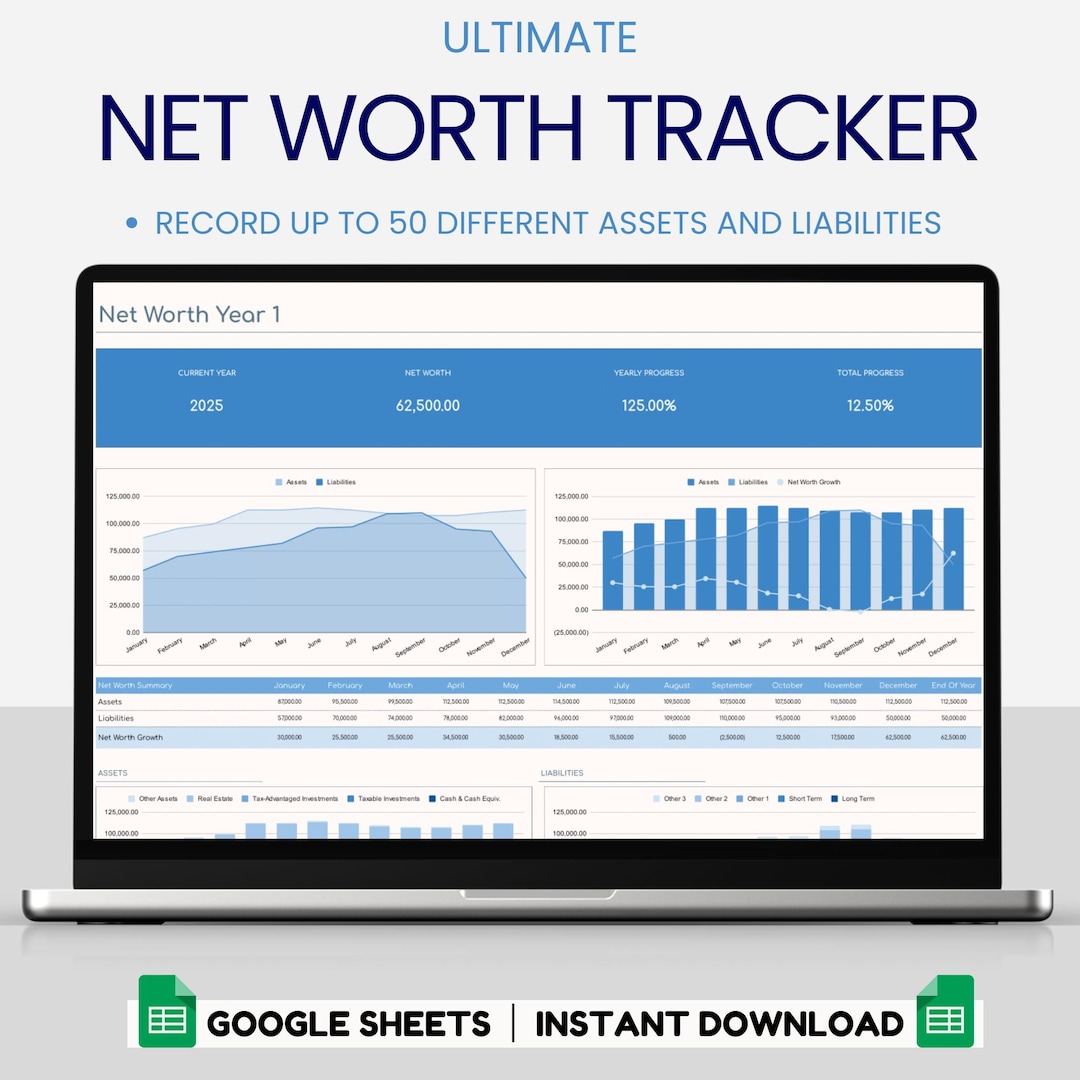
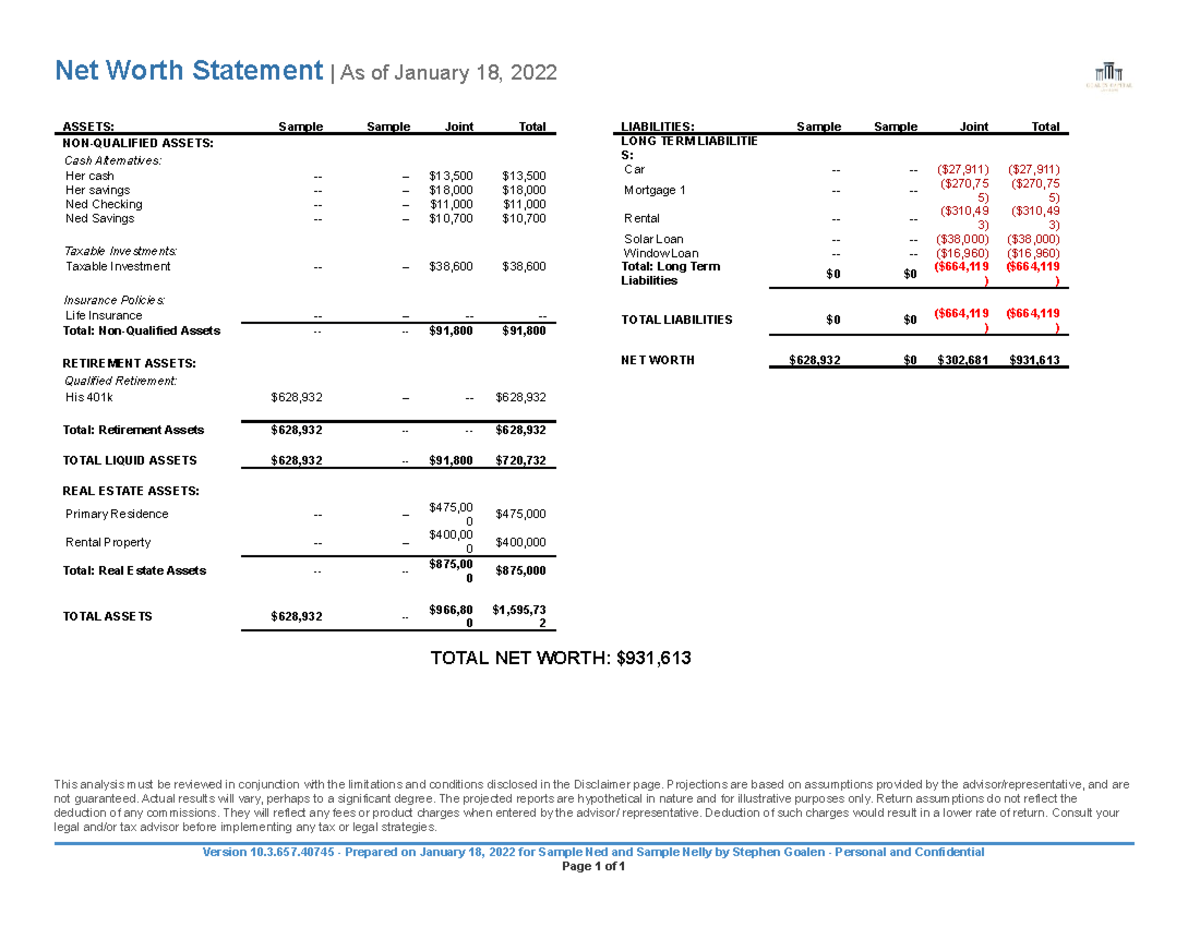
An annual net worth statement for a 30-year-old is a comprehensive financial document that subtracts total liabilities from total assets to determine a single bottom-line figure. In 2026, this statement serves as a critical diagnostic tool, helping individuals transition from early-career wealth accumulation to long-term financial planning, homeownership, and aggressive retirement growth.
Calculating your net worth at age 30 is often described as the "financial weigh-in" of adulthood. By this age, most professionals have been in the workforce for several years, perhaps pivoting through different industries or pursuing advanced degrees. The year 2026 presents a unique economic environment where digital assets, evolving real estate markets, and adjusted retirement contribution limits make a standardized tracking method essential.
A net worth statement is not merely a vanity metric; it is a roadmap. It reveals whether you are "wealthy" in terms of ownership or merely "high income" with high expenses. For a 30-year-old, the focus shifts from simply having a positive balance to optimizing the allocation of assets to ensure that every dollar is working toward a future goal.
The Essential Components of the Asset Column
Assets are everything you own that has a positive cash value. For a 30-year-old in 2026, assets generally fall into three categories: liquid assets, invested assets, and use assets.
Liquid Assets and Cash Equivalents
Liquid assets are the foundation of financial security. By 30, the "emergency fund" should be a prominent fixture on the net worth statement. In the current 2026 interest rate environment, many 30-year-olds utilize High-Yield Savings Accounts (HYSAs) or money market funds that offer competitive returns compared to traditional checking accounts.
When listing these on your statement, include:
- Checking Accounts: For immediate operational expenses.
- Savings Accounts: Including emergency funds (typically 3–6 months of expenses).
- Certificates of Deposit (CDs): If you have locked in rates for short-term goals like a wedding or home down payment.
- Cash on Hand: Though usually a small percentage, it remains part of the total liquidity.
Retirement and Brokerage Investments
This is arguably the most important section for a 30-year-old. Compounding interest is at its most potent during this decade. Assets to track include:
- Employer-Sponsored Plans (401k/403b): Use the current vested balance, not the total balance if you haven't met vesting requirements. In 2026, the contribution limit for 401(k) plans has adjusted to account for inflation, making these accounts a significant portion of a professional's net worth.
- Individual Retirement Accounts (IRA/Roth IRA): These provide tax-advantaged growth.
- Taxable Brokerage Accounts: Stocks, ETFs, and mutual funds held outside of retirement wrappers.
- Health Savings Accounts (HSA): If used as an investment vehicle, the invested portion of an HSA is a potent "triple-tax-advantaged" asset.
Real Estate and Personal Property
By age 30, many individuals have entered or are preparing to enter the real estate market.
- Primary Residence: List the current fair market value. In 2026, utilizing automated valuation models (AVMs) or recent comparable sales in your neighborhood provides a realistic estimate.
- Vehicles: While cars are depreciating assets, they still contribute to net worth. Use the "private party" value from a reputable source like Kelley Blue Book.
- Collectibles and Digital Assets: If you hold significant positions in cryptocurrencies or high-value physical collectibles, these should be listed at their current market trading price, though many conservative planners apply a "haircut" (a percentage reduction) to volatile assets when calculating net worth for planning purposes.
Analyzing Liabilities: What You Owe
The second half of the statement lists liabilities—debts that decrease your total wealth. For 30-year-olds, liabilities often represent the "cost of entry" into adulthood, such as education and housing.
Education and Student Loans
Despite various policy shifts leading up to 2026, student loans remain a primary liability for many 30-year-olds. Whether they are federal or private, the remaining principal balance must be recorded accurately. If you are on a specific forgiveness track (like PSLF), it is still vital to list the full balance, as net worth is a calculation of current legal obligations.
Consumer Debt and Credit Cards
This is the most "toxic" form of liability due to high interest rates. A healthy annual net worth statement for a 30-year-old should ideally show a shrinking or zeroed-out balance in this category. List the statement balance of all credit cards, even if you intend to pay them off at the end of the month, to get a true "snapshot" of your position on that specific day.
Mortgages and Large Installment Loans
- Mortgage Principal: This is usually the largest liability. Only list the remaining principal, not the total of all future interest payments.
- Auto Loans: Record the payoff amount.
- Personal Loans: Any consolidation loans or private debts to individuals should be accounted for to ensure the net worth figure is honest.
Benchmarks: What Should a 30-Year-Old’s Net Worth Be?
Comparisons can be difficult because of varying start dates in the workforce, geographic cost-of-living differences, and educational paths. However, several formulas provide a "north star" for 30-year-olds.
The Salary Multiplier Rule
A common benchmark suggests that by age 30, you should aim to have a net worth equal to one times your annual salary. For example, if you earn $75,000 per year, a total net worth (assets minus liabilities) of $75,000 is a sign of excellent financial health.
The Average vs. Median Reality
It is important to distinguish between the "average" and "median" net worth for this demographic. In 2026, the average is often skewed upward by high-earning outliers. The median net worth for a 30-year-old is typically much lower, often impacted by significant student debt. If your net worth is positive at 30, you are often ahead of the global median.
The Formula for "Wealthy" (The Millionaire Next Door)
A more aggressive formula used by some financial planners is: (Age x Pre-tax Annual Household Income) / 10. For a 30-year-old earning $80,000, this would suggest a target net worth of $240,000. While this is a high bar for most, it serves as a metric for "Prodigious Accumulators of Wealth."
Comparative Profiles: Net Worth Scenarios at Age 30
The following table illustrates how different life paths impact the net worth statement of a 30-year-old in 2026.
| Category | The "Debt-Free" Professional | The New Homeowner | The Late-Start Graduate |
|---|---|---|---|
| Cash/Emergency Fund | $25,000 | $12,000 | $8,000 |
| Retirement (401k/IRA) | $85,000 | $45,000 | $15,000 |
| Home Equity/Assets | $0 (Rent) | $450,000 (Value) | $0 (Rent) |
| Student Loans | $0 | $15,000 | $110,000 |
| Mortgage Balance | $0 | $380,000 | $0 |
| Other Debt (Auto/CC) | $5,000 | $18,000 | $10,000 |
| Total Net Worth | $105,000 | $94,000 | -$97,000 |
How to Create Your Statement: A Step-by-Step Guide
Creating the statement requires a "snapshot" approach. You must pick a single day (usually December 31st or January 1st) to record all values to ensure the data is synchronized.
- Consolidate Accounts: Use a spreadsheet or a dedicated financial tracking app. List every bank account, brokerage, and loan portal.
- Verify Asset Values: For 2026, log into your Social Security Administration account to view your earnings history and check your employer's portal for your latest 401(k) vesting schedule.
- Appraise Large Items: Check local real estate listings for a "realistic" home value. Don't use the highest possible number; use a conservative one.
- Calculate the Delta: Subtract the total liabilities from the total assets.
- Analyze the Trend: Compare this year's figure to last year's. At 30, the direction of the net worth is often more important than the starting number.
Why Age 30 is the "Pivot Point" for Net Worth
In your 20s, net worth can fluctuate wildly due to entry-level salaries and moving costs. At 30, several factors make the annual statement more consequential:
- Insurance Needs: As your net worth grows, your need for life insurance and umbrella liability insurance changes. A 30-year-old with a $200,000 net worth has more to "protect" than they did at 22.
- Investment Risk Tolerance: With approximately 35 years left until standard retirement age, a 30-year-old can still afford high equity exposure. The net worth statement helps identify if you are too heavy in "safe" cash versus "growth" assets.
- Tax Planning: By 30, many individuals move into higher tax brackets. The statement allows you to see if your wealth is concentrated in taxable or tax-advantaged accounts, prompting a shift in strategy for the following year.
Common Mistakes to Avoid
- Including "Lifestyle" Assets: Do not include furniture, electronics, or clothing in your net worth statement. These have very little resale value and inflate your sense of wealth.
- Ignoring Interest Rates: A $10,000 car loan at 2% interest is a very different liability than $10,000 in credit card debt at 24%. Note interest rates next to your liabilities to prioritize repayments.
- Forgetting "Hidden" Assets: Ensure you include security deposits for apartments or the cash value of a permanent life insurance policy if you own one.
- Overestimating Real Estate: Many people fail to account for the costs of selling a home (commissions and fees). Some conservative analysts subtract 6% from the home's value on their statement to reflect "net realizable value."
Frequently Asked Questions
Is it normal to have a negative net worth at 30?
Yes, it is common, particularly for doctors, lawyers, or those with significant student loan debt. A negative net worth at 30 simply means your "human capital" (your future earning potential) is currently your greatest asset, though it doesn't show up on a standard balance sheet. The goal should be a positive year-over-year trend.
Should I include my partner's assets in my net worth statement?
If you are legally married or have fully commingled finances, a "Household Net Worth Statement" is often more useful. However, if you maintain separate finances, it is vital to keep an individual statement to understand your personal financial security and retirement readiness.
How often should I update my net worth statement?
Once a year is standard for a formal "Annual Net Worth Statement." However, many people find that a quarterly update helps them stay motivated and catch errors in their spending or investment contributions early.
Does my net worth include my salary?
No. Salary is income, which is a flow of money. Net worth is a "stock" of money at a specific point in time. Your salary helps build your net worth, but a high salary doesn't guarantee a high net worth if expenses are equally high.
What is a "good" net worth for a 30-year-old in 2026?
A "good" net worth is any number that is higher than it was twelve months ago. Specifically, having a net worth that is positive and equal to or greater than half your annual salary at age 30 puts you in a strong position relative to the broader population.
Final Recommendation
For any 30-year-old in 2026, the first step is to stop guessing and start tracking. Download your statements, open a spreadsheet, and calculate your "true north" number today. Once you have your baseline, focus the next twelve months on either increasing your assets through automated retirement contributions or decreasing your liabilities by targeting your highest-interest debt first.