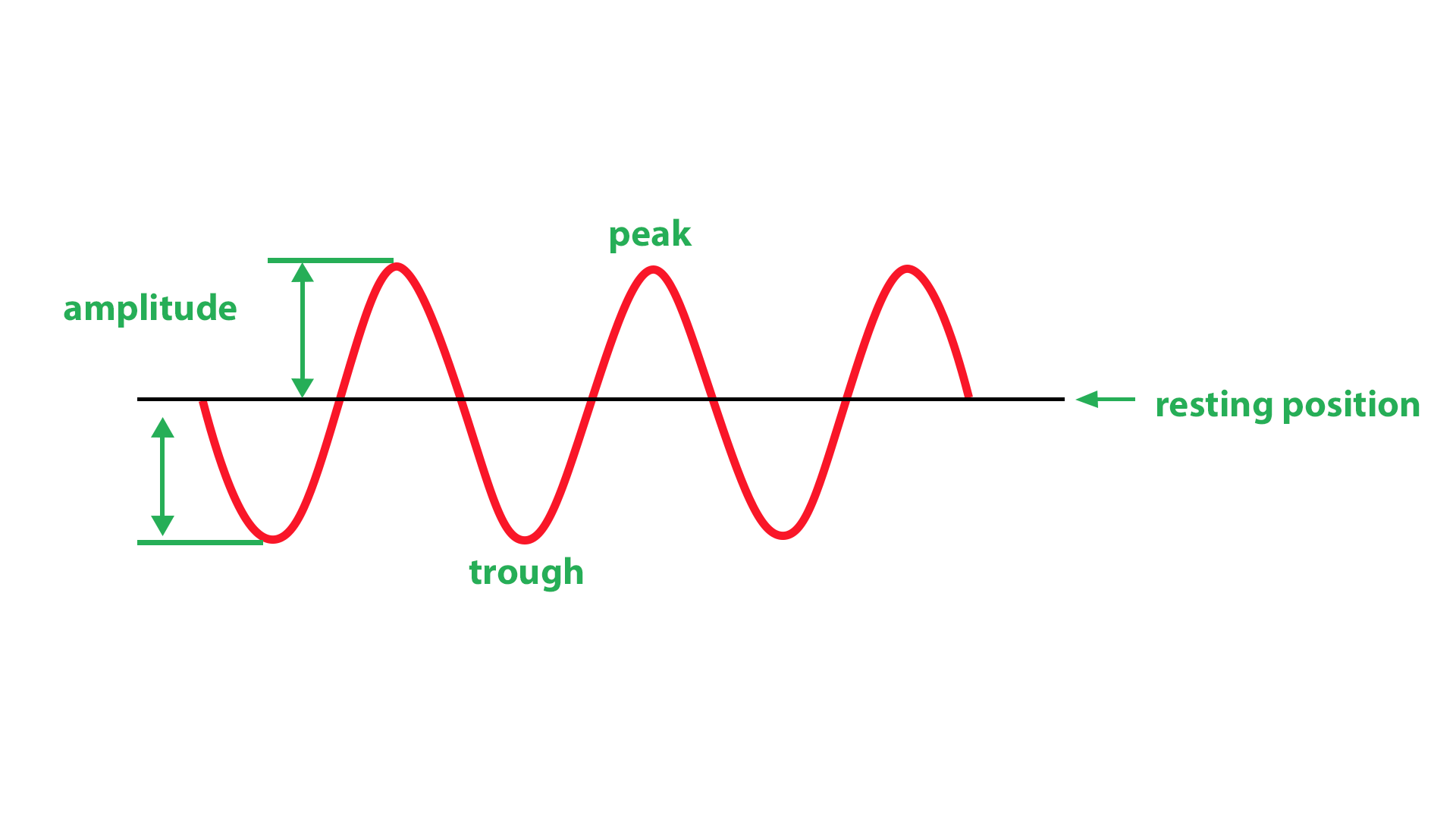
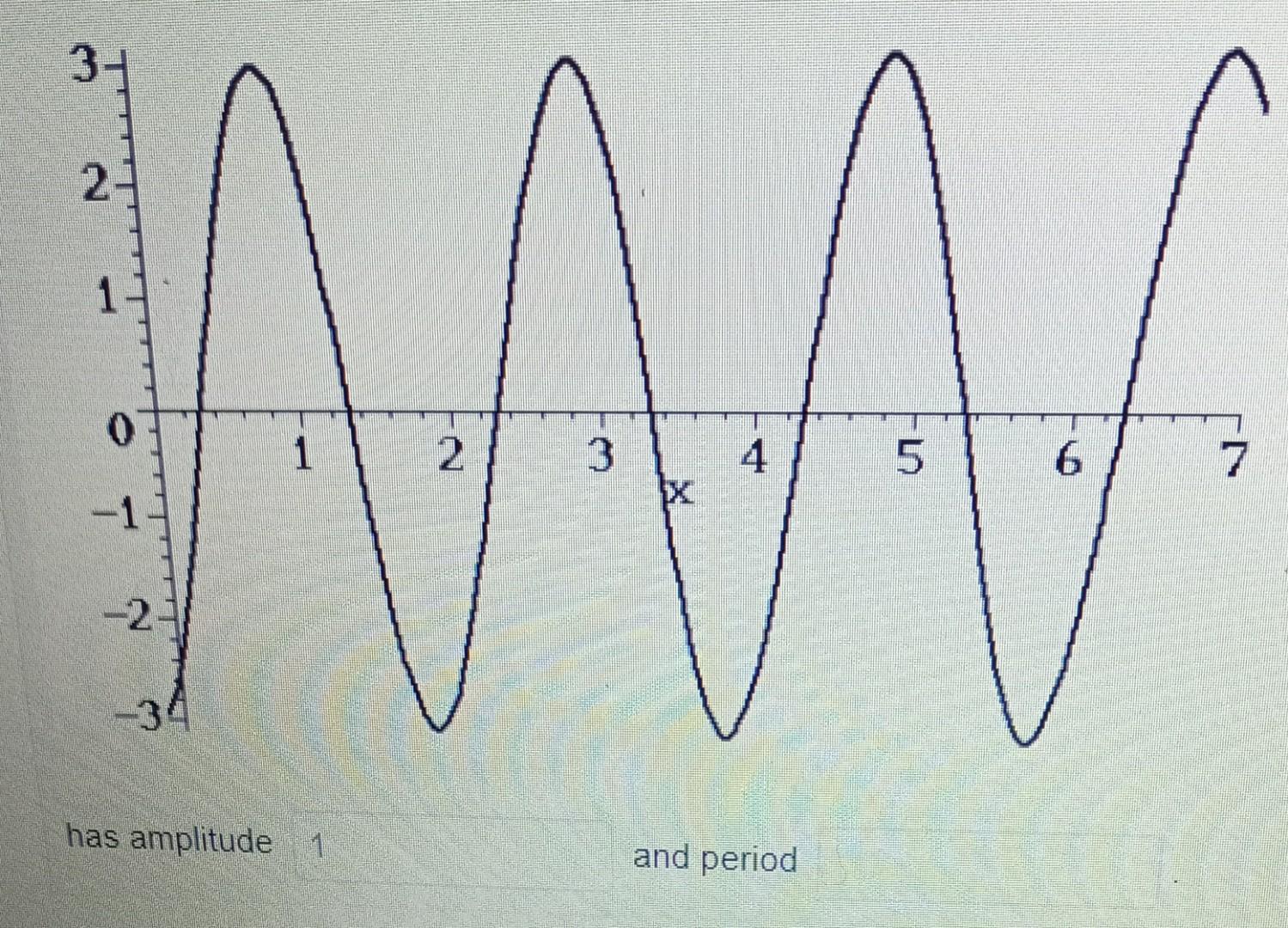
Amplitude in mathematics measures the peak deviation of a periodic function from its central, equilibrium position. It represents half of the total vertical distance between the function's maximum and minimum values, providing a fundamental metric for analyzing waves, oscillations, harmonic motion, and alternating currents across various scientific and engineering disciplines.
Defining Amplitude in Mathematical Terms
The concept of amplitude is rooted in trigonometry and calculus, where functions like sine and cosine model periodic phenomena. To understand amplitude fully, one must examine how periodic functions behave graphically and algebraically.
At its core, a periodic function repeats its values in regular intervals or periods. The graph of such a function oscillates continuously above and below a central horizontal line, known as the midline or sinusoidal axis. Amplitude specifically quantifies the height of these peaks and the depth of these troughs relative to that midline.
Mathematical Formulation
For a general sinusoidal function written in the standard form:
$$y = A \sin(Bx - C) + D$$
or
$$y = A \cos(Bx - C) + D$$
the amplitude is given by the absolute value of coefficient $A$, denoted as $|A|$.
- $A$ (Amplitude): Determines the vertical stretch or compression of the wave. If $A$ is negative, it reflects the wave across the midline, but the amplitude remains a positive distance ($|A|$).
- $B$ (Frequency factor): Affects the period of the function, determining how compressed or stretched the wave is horizontally.
- $C$ (Phase shift): Shifts the wave horizontally to the left or right.
- $D$ (Vertical shift): Moves the entire midline of the wave up or down along the y-axis.
Crucially, the vertical shift $D$ does not affect the amplitude. Amplitude depends exclusively on the distance from the midline to the maximum or minimum extreme values, regardless of where that midline sits on the Cartesian plane.
How to Calculate Amplitude
Calculating the amplitude of a periodic function depends on the information available, whether it is an algebraic equation, a graph, or a set of raw data points from an experiment. Mastery of these calculation methods allows mathematicians and scientists to extract precise physical properties from abstract equations.
Method 1: From the Equation
When given a standard trigonometric equation, finding the amplitude is straightforward.
- Identify the coefficient multiplying the trigonometric function ($\sin$, $\cos$, etc.).
- Take the absolute value of that coefficient.
For example, given the function $f(x) = -4 \cos(3x + \pi) + 2$:
- The coefficient $A$ is $-4$.
- The amplitude is $|-4| = 4$.
- The vertical shift $D$ is $2$, meaning the midline is at $y = 2$, but this does not alter the amplitude of $4$.
Method 2: From Maximum and Minimum Values
When looking at experimental data or a graph where the equation is unknown, you can calculate amplitude using the peak-to-trough measurements. The formula is:
$$\text{Amplitude} = \frac{\text{Maximum Value} - \text{Minimum Value}}{2}$$
For instance, if a water wave reaches a maximum height of $7\text{ meters}$ above the seabed and drops to a minimum height of $3\text{ meters}$, the calculation is:
$$\text{Amplitude} = \frac{7 - 3}{2} = \frac{4}{2} = 2\text{ meters}$$
This confirms that the wave oscillates $2\text{ meters}$ above and below its average depth of $5\text{ meters}$.
Amplitude vs. Other Wave Parameters
In the study of periodic functions, amplitude is frequently confused with other wave characteristics like frequency, period, and wavelength. Distinguishing these parameters is essential for precise mathematical modeling.
| Parameter | Mathematical Definition | Graphical Representation | Primary Unit of Measurement |
|---|---|---|---|
| Amplitude | Peak deviation from the midline ($ | A | $) |
| Period | Duration of one complete cycle ($\frac{2\pi}{B}$) | Horizontal distance per cycle | Seconds ($s$), radians |
| Frequency | Number of cycles per unit time ($\frac{1}{\text{Period}}$) | Reciprocal of the period | Hertz ($Hz$), cycles/second |
| Wavelength | Physical distance of one complete wave cycle | Horizontal spatial length | Meters ($m$), centimeters |
Understanding these distinctions ensures that when analyzing an alternating current or an acoustic wave, one does not conflate the energy of the signal (represented by amplitude) with the pitch or speed of the wave (represented by frequency and wavelength).
Trigonometric Transformations and Amplitude
Modifying the amplitude of a function is a type of vertical transformation. When analyzing trigonometric functions, transformations occur in a specific order to prevent graphing and calculation errors.
Vertical Stretching and Compressing
Multiplying the entire trigonometric function by a constant scales the graph vertically.
- If $|A| > 1$, the wave undergoes a vertical stretch, making the peaks higher and the troughs lower.
- If $0 < |A| < 1$, the wave undergoes a vertical compression, flattening the oscillation.
The Role of Phase and Frequency Shifts
It is vital to separate amplitude transformations from horizontal transformations. Altering parameter $B$ changes the frequency and period, compressing or stretching the wave along the x-axis without changing how high or low the wave reaches. Similarly, phase shifts move the wave horizontally, leaving the vertical span untouched.
Real-World Applications of Amplitude in Math
Mathematics serves as the language of the physical universe, and the concept of amplitude translates abstract trigonometric principles into tangible real-world phenomena.
Sound and Acoustics
In acoustics, the amplitude of a sound wave corresponds directly to its volume or loudness. A sound wave with a larger amplitude displaces air molecules more forcefully, resulting in a louder sound. Mathematically, sound pressure waves are modeled using sine and cosine functions, where the amplitude reflects the peak sound pressure level measured in Pascals or decibels.
Alternating Current (AC) Electricity
Electrical engineering relies heavily on sinusoidal functions to model alternating current circuits. Voltage and current fluctuate in a wave-like pattern over time. The amplitude of an AC voltage waveform represents its peak voltage. For example, standard household electrical outlets supply alternating current where the peak amplitude is significantly higher than the root-mean-square (RMS) voltage reported for consumer use.
Quantum Mechanics and Probability Waves
In advanced physics and mathematics, wave functions describe the quantum state of a particle. According to Max Born's statistical interpretation, the square of the absolute value of a wave function's amplitude represents the probability density of finding a particle at a given point in space. Here, amplitude bridges deterministic calculus with probabilistic physical realities.
Common Misconceptions and Troubleshooting
When solving problems involving amplitude, students and practitioners frequently encounter specific pitfalls. Recognizing these errors helps ensure accurate mathematical analysis.
- Confusing Amplitude with Peak-to-Peak Height: The amplitude is half of the total vertical distance between the maximum and minimum points. A common mistake is defining the total distance from trough to crest as the amplitude.
- Ignoring Negative Signs in Coefficients: Because amplitude represents a physical or geometric distance, it is always expressed as a non-negative real number. If an equation features $y = -5 \sin(x)$, the amplitude is $5$, not $-5$. The negative sign merely indicates a reflection across the x-axis.
- Confusing Vertical Shifts with Amplitude: Adding a constant $D$ to a function shifts the entire wave up or down. It alters the midline, but it does not change the distance from the midline to the crest. Always isolate the scaling factor $A$ to determine the true amplitude.
Frequently Asked Questions
Can amplitude ever be a negative number?
No. Amplitude is defined as a distance from the equilibrium or midline position to a peak or trough. In mathematics and physics, distances are expressed as absolute, non-negative values. Even if a wave equation contains a negative coefficient, the amplitude remains the absolute value of that coefficient.
How does amplitude relate to energy in waves?
In physics, the energy carried by a wave is generally proportional to the square of its amplitude. For example, if you double the amplitude of a mechanical wave or a light wave, the energy it transmits increases by a factor of four. This relationship is crucial in engineering, seismology, and wave mechanics.
Does changing the period of a function affect its amplitude?
No. The period of a function is controlled by the horizontal coefficient (such as $B$ in $\sin(Bx)$), which dictates how fast the wave oscillates over time or space. The amplitude is controlled exclusively by the vertical coefficient ($A$). These two transformations operate independently of one another.
How do you find the amplitude from a table of coordinates?
To find the amplitude from a table of values, first identify the maximum $y$-value and the minimum $y$-value in the dataset. Subtract the minimum value from the maximum value, and then divide the result by two. This yields the exact amplitude regardless of any vertical shifts present in the data.
Conclusion and Next Actions
Mastering amplitude in math requires understanding its dual nature as both an algebraic coefficient and a geometric measurement. By correctly identifying the absolute value of the vertical scaling factor in equations or calculating half the distance between extreme values in datasets, you can accurately analyze periodic functions. For further study, practice graphing various trigonometric transformations, explore how amplitude interacts with phase shifts in harmonic motion, or examine Fourier analysis to see how complex waveforms are broken down into constituent amplitudes and frequencies.