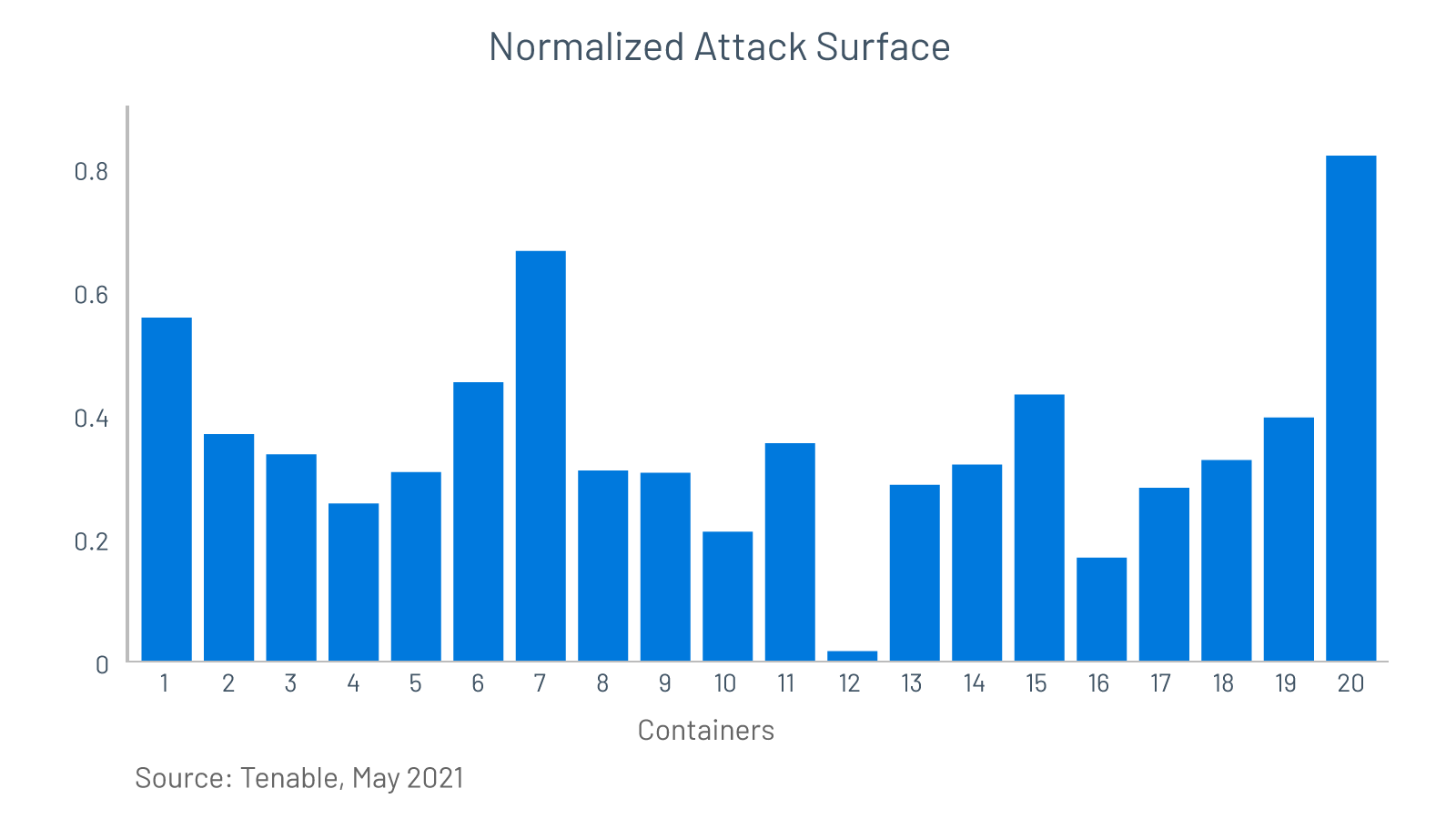
Expanding a digital ecosystem through new technologies like AI, cloud-native architectures, or interconnected IoT devices inherently broadens the attack surface. This expansion introduces unique vulnerabilities—such as prompt injection in machine learning or misconfigurations in serverless functions—that traditional security frameworks are often ill-equipped to detect, requiring a paradigm shift toward continuous exposure management.
The Evolution of the Attack Surface in 2026
By 2026, the concept of a "perimeter" has become an artifact of the past. As organizations integrate increasingly complex layers of technology to maintain a competitive edge, they inadvertently create a larger and more porous environment for adversaries to exploit. In cybersecurity, the attack surface refers to the sum total of all possible points (nodes, interfaces, and users) where an unauthorized user can try to enter or extract data from an environment.
The paradox of modern digital transformation is that every efficiency-gaining tool—be it a new Large Language Model (LLM) integration, a transition to a multi-cloud environment, or the deployment of edge computing—also increases the attack surface by adding vulnerabilities unique to that specific architecture. These are not merely the "same old bugs" in new wrappers; they are fundamentally different threat vectors that require specialized knowledge to mitigate.
To manage risk effectively in this landscape, security leaders must move beyond simple patching. They must understand the structural DNA of the new technologies they adopt and how those structures interact to create systemic weaknesses.
AI and Machine Learning: The New Frontier of Unique Vulnerabilities
The rapid integration of Artificial Intelligence (AI) into core business processes has created one of the most significant expansions of the attack surface in recent years. While traditional software vulnerabilities usually involve flaws in logic or memory management, AI systems introduce probabilistic vulnerabilities.
Prompt Injection and Indirect Attacks
In 2026, prompt injection remains a primary concern for companies using generative AI. Unlike SQL injection, which targets structured databases, prompt injection manipulates the "thought process" of an LLM. An attacker can craft a specific input that forces the model to ignore its safety guidelines, potentially leaking proprietary data or executing unauthorized commands. Indirect prompt injection is even more insidious, where a model processes a third-party document or website that contains hidden malicious instructions, compromising the system without the user ever typing a malicious query.
Data Poisoning and Model Inversion
AI models rely on massive datasets for training and fine-tuning. This reliance introduces the risk of data poisoning, where an adversary subtly alters training data to create backdoors or biases in the model's output. Furthermore, model inversion attacks allow sophisticated actors to "reverse engineer" the model to extract sensitive information from the training set, such as personally identifiable information (PII) that should have been anonymized.
Autonomous Agent Risks
The shift toward autonomous AI agents—systems that can take actions, call APIs, and make decisions without human intervention—has exponentially increased the attack surface. If an agent is compromised, it becomes a "trusted insider" with the ability to traverse the network, access databases, and modify configurations, all while appearing to perform legitimate tasks.
Cloud-Native Complexity and the Infrastructure Surface
The transition from monolithic on-premises servers to cloud-native, microservices-oriented architectures has distributed the attack surface across thousands of ephemeral points.
The Rise of API Sprawl
In a microservices environment, every service must communicate with others via Application Programming Interfaces (APIs). This leads to API sprawl, where organizations lose track of how many APIs are active, who owns them, and what data they expose. Vulnerabilities unique to this environment include "Broken Object Level Authorization" (BOLA) and "Broken Function Level Authorization" (BFLA), where attackers exploit the logic of how services identify users and permissions.
Misconfiguration in IaC and Serverless
Infrastructure as Code (IaC) allows for rapid deployment, but a single line of misconfigured code can expose an entire cloud environment to the public internet. Serverless functions (FaaS) also introduce unique risks; since they are event-driven and short-lived, traditional endpoint security tools often cannot "see" them, creating a blind spot. Attackers may exploit the event-data injection unique to serverless triggers to bypass standard web application firewalls.
Identity as the New Perimeter
In the cloud, identity is the primary gatekeeper. The complexity of Identity and Access Management (IAM) in 2026—managing human users, service accounts, and machine identities—has made "excessive permissions" a critical vulnerability. Attackers no longer "break in"; they "log in" using compromised credentials or by exploiting overly permissive roles to move laterally across cloud buckets and compute instances.
The Convergence of IT and OT: IoT and Edge Vulnerabilities
The physical world is now deeply integrated with the digital one through the Internet of Things (IoT) and the convergence of Information Technology (IT) with Operational Technology (OT). This integration has brought internet-connected vulnerabilities to critical infrastructure, manufacturing, and healthcare.
Legacy Protocol Exposure
Many OT systems—such as those controlling power grids or factory floors—were designed decades ago with no concept of internet connectivity. When these systems are bridged to the IT network for data analytics, they expose legacy protocols (like Modbus or Profibus) that lack encryption or authentication. This "adds vulnerabilities unique to" industrial control systems that were never meant to face the open web.
Edge Computing and Physical Access
Edge computing pushes processing power closer to the data source (e.g., a smart camera or a sensor in a remote field). This increases the attack surface by moving sensitive data processing out of the secure data center and into the physical world. A vulnerability unique to the edge is physical tampering; if an attacker gains access to the hardware, they can potentially extract cryptographic keys or inject malicious firmware that propagates back to the central cloud.
Supply Chain Risks and Third-Party Dependencies
Modern software is rarely written from scratch; it is assembled using open-source libraries and third-party SaaS integrations. This dependency chain is a massive component of the modern attack surface.
Software Bill of Materials (SBOM) Gaps
While the adoption of SBOMs has improved visibility by 2026, the sheer volume of dependencies makes it difficult to track every nested library. Vulnerabilities unique to the supply chain include dependency confusion and typosquatting, where attackers upload malicious packages to public repositories with names similar to popular legitimate ones, hoping a developer will inadvertently include them in a build.
SaaS-to-SaaS Access
The interconnectedness of SaaS platforms (e.g., connecting a CRM to an automated marketing tool) creates a "mesh" of permissions. An attacker who compromises a relatively low-priority SaaS tool can use its authorized tokens to jump into a more sensitive platform, bypassing the primary company's security controls entirely.
Comparative Analysis of Unique Vulnerability Vectors
The following table compares different technological shifts and the specific, unique vulnerabilities they introduce to the enterprise attack surface.
| Technology Segment | Primary Shift | Unique Vulnerability Vectors | Typical Mitigation Strategy |
|---|---|---|---|
| AI / LLMs | Deterministic to Probabilistic | Prompt Injection, Data Poisoning, Model Inversion | Adversarial Testing, Input Sanitization, Differential Privacy |
| Cloud-Native | Static to Ephemeral | API Sprawl, IaC Misconfiguration, IAM Role Over-privilege | CSPM (Cloud Security Posture Management), Zero Trust Architecture |
| IoT / OT | Air-gapped to Connected | Legacy Protocol Exposure, Firmware Tampering, Physical Access | Network Segmentation, Hardware Root of Trust, Protocol Tunneling |
| Supply Chain | Internal to Distributed | Dependency Confusion, Typosquatting, Malicious Updates | SBOM Verification, Automated Composition Analysis (SCA) |
| Edge Computing | Centralized to Decentralized | Side-channel Attacks, Local Data Breaches | Data Encryption at Rest/Transit, Trusted Execution Environments (TEE) |
Strategies for Reducing and Managing the Expanded Surface
Ignoring the expansion of the attack surface is not an option for modern organizations. Instead, a proactive, multi-layered approach is required to mitigate the unique risks introduced by new technologies.
1. Implementing Zero Trust Architecture
The "Never Trust, Always Verify" principle is essential in an environment where the attack surface is vast. By requiring strict identity verification for every person and device trying to access resources, regardless of whether they are sitting inside or outside the network, organizations can significantly limit the damage an attacker can do once they find a unique vulnerability.
2. Continuous Threat Exposure Management (CTEM)
Traditional annual penetration testing is insufficient for 2026. CTEM involves a continuous cycle of discovery, prioritization, and validation. Organizations must constantly scan their external and internal environments to find new APIs, "shadow" AI implementations, and misconfigured cloud buckets before adversaries do.
3. Strengthening the Software Supply Chain
Organizations must move beyond just listing dependencies. They should implement automated tools that verify the integrity of every piece of code entering the environment. This includes "sandboxing" new libraries and using AI-driven security tools to analyze the behavior of third-party integrations for signs of malicious activity.
4. Adversarial AI and Red Teaming
To counter vulnerabilities unique to AI, companies must employ Adversarial Red Teaming. This involves cybersecurity teams purposefully trying to "break" the AI models using prompt injection and poisoning techniques. By understanding how the model fails, engineers can build more robust guardrails and filtering layers.
Frequently Asked Questions
How does adding a new technology "uniquely" increase the attack surface?
Adding new technology doesn't just add more of the same risk; it introduces new types of entry points that didn't exist before. For example, moving to the cloud removes the risk of physical server theft but introduces the risk of a misconfigured S3 bucket being accessible to the entire world—a vulnerability unique to the cloud storage model.
Is it possible to innovate without increasing the attack surface?
In short, no. Every new feature, integration, or platform adds a layer of complexity and a potential point of failure. However, the goal is not to stop innovation but to manage the "attack surface density" by ensuring that for every new capability added, a corresponding security control or monitoring mechanism is implemented.
What is the most dangerous unique vulnerability in 2026?
Currently, Identity-based lateral movement in multi-cloud environments is considered the most dangerous. Because organizations often use dozens of cloud services, an attacker who steals one set of credentials can often find a path through various interconnected permissions to reach the company’s most "crown jewel" data.
Why can't traditional firewalls protect against AI-specific vulnerabilities?
Traditional firewalls look for known malicious patterns or blocked IP addresses. They operate on the network layer. AI vulnerabilities like prompt injection occur at the application and semantic layer; the input might look like a perfectly normal sentence to a firewall, but it contains a logical "instruction" that subverts the AI’s internal programming.
What role does human error play in these unique vulnerabilities?
Human error remains the primary catalyst. Whether it is a developer leaving an API key in a public GitHub repository or a cloud architect granting "admin" rights to a service account for convenience, the unique vulnerabilities of modern tech are almost always "activated" by a lack of proper configuration or oversight.
Recommended Next Actions
To address the risks associated with an expanding attack surface, organizations should prioritize the following steps:
- Inventory Your Assets: You cannot protect what you cannot see. Use automated discovery tools to map your entire digital footprint, including cloud instances, APIs, and AI models.
- Adopt a Zero-Trust Framework: Shift focus from protecting the network to protecting the data and the identities that access it.
- Review Third-Party Access: Audit the permissions granted to SaaS integrations and external vendors, applying the principle of least privilege.
- Invest in Specialized Training: Ensure your security team understands the unique technical nuances of the specific platforms you use, such as AWS IAM structures or LLM security protocols.
For further guidance on maintaining security standards, refer to the NIST Cybersecurity Framework 2.0 or the OWASP Top 10 for LLM Applications.