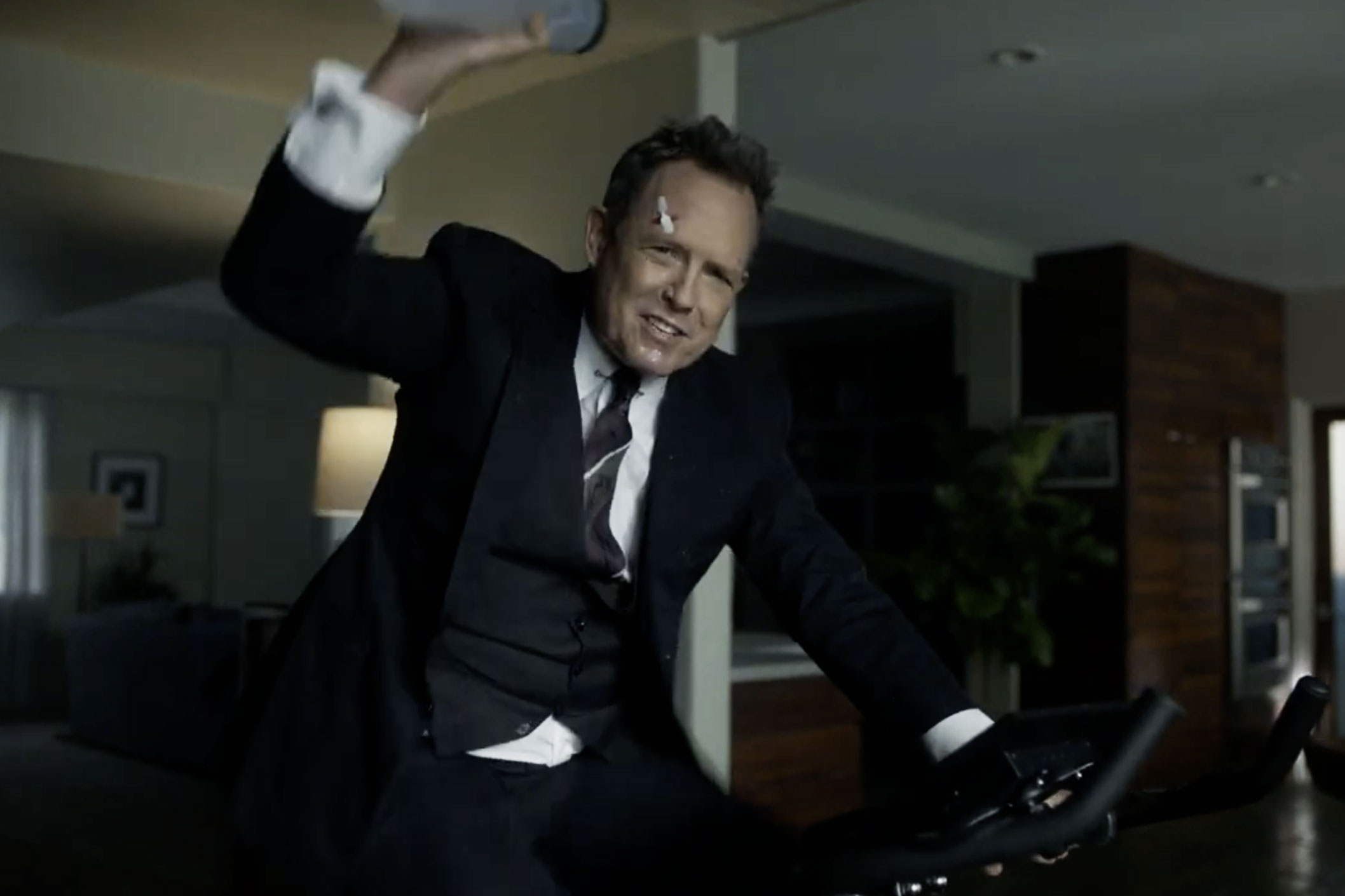
Allstate’s "Mayhem" campaign, personified by actor Dean Winters, revolutionized auto insurance advertising by shifting the focus from low-cost premiums to the value of comprehensive protection. Since its 2010 debut, the character has helped Allstate compete in an aggressive "ad war," highlighting the risks of "cut-rate" insurance through personified disaster scenarios.
The Genesis of Mayhem: A Strategic Shift in Insurance Marketing
To understand the impact of Mayhem on the insurance industry, one must look back at the landscape of the early 21st century. Before Mayhem, the auto insurance market was dominated by a price-war narrative. GEICO’s "15 minutes could save you 15% or more" and Progressive’s introduction of "Flo" in 2008 had conditioned consumers to view insurance as a commodity where the lowest price was the only meaningful metric.
Allstate, historically known for its "Good Hands" slogan and a more somber, trust-based approach, found itself losing market share to these direct-to-consumer giants. The "Good Hands" were comforting, but they weren't particularly memorable in an era of talking geckos and quirky salesclerks. In 2010, Allstate and the ad agency Leo Burnett Chicago introduced "Mayhem."
Unlike the friendly Flo or the charming Gecko, Mayhem was an antagonist. Dressed in a battered suit with a perpetually bruised face, Dean Winters personified the unexpected disasters—from a teenage girl's emotional outburst to a rogue raccoon in the attic—that could ruin a driver's day. The brilliance of the campaign lay in its ability to turn the conversation away from "How much can I save?" to "What am I actually covered for?" By highlighting the gaps in "cut-rate" insurance policies, Allstate successfully repositioned itself as the premium choice for those who value security over a few dollars in monthly savings.
The Anatomy of the Mayhem Character
The success of Mayhem is not just due to the writing, but the specific performance of Dean Winters. The character is designed to be omnipresent and inevitable. He is not a "villain" in the traditional sense; he is a force of nature. In the context of 2026, the character has evolved to represent modern anxieties, but his core traits remain consistent.
The Personification of Risk
Each commercial follows a specific formula: Mayhem introduces himself as a specific risk factor, describes the chaos he is about to cause, executes the disaster, and then warns the viewer that if they have "cut-rate" insurance, they might be paying for the damages themselves. This personification makes abstract insurance concepts—like "comprehensive coverage" or "liability limits"—tangible and frighteningly relatable.
The "Cut-Rate" Antagonist
A crucial element of the campaign is the direct attack on competitors without naming them. By using the term "cut-rate," Allstate implies that the low prices offered by competitors come at a significant cost: lack of protection. This psychological framing forces the consumer to question the validity of their current policy. It moves the decision-making process from the logical (price) to the emotional (fear of loss).
Evolution of the Insurance Ad Wars: 2010 to 2026
The "ad wars" have become a multi-billion dollar arms race. In the years leading up to 2026, the spending on television, digital, and social media advertising by the "Big Four" (State Farm, GEICO, Progressive, and Allstate) has reached unprecedented levels.
The Era of Brand Personas
Allstate’s Mayhem didn't just help Allstate; it forced the entire industry to double down on characters. We saw the rise of:
- State Farm’s "Jake": Transitioning from a one-off joke to a central brand ambassador who represents the helpful, relatable neighbor.
- Liberty Mutual’s "LiMu Emu and Doug": A lean into absurdist humor to capture brand recall.
- Progressive’s "Dr. Rick": A successful spin-off strategy targeting a specific demographic (new homeowners) by focusing on the "parentamorphosis" phenomenon.
The Brief Hiatus and Triumphant Return
In 2020, Allstate briefly paused the Mayhem campaign, opting for a more "purpose-driven" messaging strategy during the global pandemic. However, the absence of Mayhem led to a dip in brand resonance. In 2022, Allstate brought the character back with a renewed focus on modern risks. By 2026, Mayhem has become more integrated into digital ecosystems, appearing in interactive social media ads and even augmented reality experiences where users can see "Mayhem" lurking in their own homes or driveways.
Comparative Analysis of Insurance Advertising Strategies
To see where Allstate fits in the current 2026 market, it is helpful to compare the primary messaging strategies of the leading insurers.
| Insurance Provider | Primary Mascot/Persona | Core Marketing Message | Target Audience |
|---|---|---|---|
| Allstate | Mayhem | Protection against the unexpected; "You get what you pay for." | Risk-averse consumers, families, and high-value asset owners. |
| GEICO | The Gecko | Ease of use and consistent savings. | Price-conscious shoppers and younger drivers. |
| Progressive | Flo / Dr. Rick | Personalization, transparency (Rate Checker), and home/auto bundling. | First-time homeowners and "un-bundlers." |
| State Farm | Jake from State Farm | Reliability, community presence, and personal service. | Consumers seeking a "traditional" agent-based relationship. |
| Liberty Mutual | LiMu Emu & Doug | Customization; "Only pay for what you need." | Budget-conscious individuals looking for modular plans. |
The Financial Impact of the Mayhem Campaign
Marketing experts often point to Mayhem as one of the most effective ROI (Return on Investment) campaigns in the history of the service sector. While the production costs for high-quality stunts and Dean Winters' talent fees are significant, the "earned media" generated by the campaign is massive.
The campaign's effectiveness is measured through "Top-of-Mind Awareness" (TOMA). In an industry where consumers only think about the product once or twice a year (usually during renewal or a claim), staying in the TOMA category is vital. Mayhem ensures that when a consumer experiences a "close call" on the road, they immediately associate the risk with Allstate’s warning.
Furthermore, the campaign has allowed Allstate to maintain a higher average premium than some of its direct-entry competitors. Because the marketing successfully argues that "cheaper is dangerous," Allstate can justify a price point that reflects its comprehensive service and agent network. This "premium" positioning is a direct result of the Mayhem narrative.
Modern Risks: Mayhem in the Year 2026
As we navigate 2026, the nature of "Mayhem" has changed alongside technology. The campaign has successfully pivoted from physical car crashes to more contemporary threats. Recent iterations of the campaign include:
- Cyber Mayhem: Personifying a hacked smart home system or a compromised vehicle computer.
- EV Mayhem: Highlighting the specific risks associated with electric vehicle batteries and the specialized repairs they require.
- Climate Mayhem: Addressing the increasing frequency of "micro-bursts" and localized weather events that traditional "cut-rate" policies might exclude through fine-print loopholes.
- AI Mayhem: A satirical take on "smart" assistants that misunderstand commands, leading to household disasters.
By evolving with the times, the character remains relevant to a younger generation that may not be as concerned about a "teenage girl in a parking lot" as they are about their digital security or eco-friendly investments.
Why Mayhem Resonates with the Human Condition
At its core, the Mayhem campaign taps into the "negativity bias," a psychological phenomenon where humans are more likely to remember and respond to negative stimuli than positive ones. While "The Good Hands" appeals to our desire for safety, "Mayhem" appeals to our primal need to avoid danger.
The humor in the commercials acts as a "buffer," allowing the audience to engage with a scary topic (losing their car or home) without becoming defensive or tuning out. This balance of dark comedy and harsh reality is what has given the campaign such incredible longevity. Most ad campaigns have a shelf life of 3-5 years; Mayhem is entering its 16th year of relevance in 2026, a feat rarely seen in modern advertising.
Challenges and Criticisms
Despite its success, the campaign has faced challenges. Some critics argue that the campaign relies too heavily on fear-mongering. In a world that often feels increasingly chaotic, some consumers have expressed a preference for the calmer, more supportive messaging seen in State Farm’s campaigns.
Additionally, as the insurance industry moves toward telematics (where premiums are based on real-time driving data tracked via apps), the "randomness" of Mayhem slightly contradicts the industry's push toward "predictable risk." If a driver is "perfect," they may feel that Mayhem doesn't apply to them. Allstate has countered this by showing that Mayhem doesn't care how good a driver you are—he represents the other guy on the road, or the tree branch that falls while your car is parked.
Looking Ahead: The Future of Allstate's Strategy
In the hyper-competitive market of 2026, Allstate is likely to continue leveraging Mayhem as its primary "shield" against the commoditization of insurance. We can expect to see deeper integration with data. Imagine a scenario where Allstate’s app sends a notification: "Mayhem is in the area: High winds expected. Move your car under a sturdy roof."
This transition from "advertising character" to "utility-based warning system" would be the ultimate evolution of the persona. It moves the brand from someone who tells you about risk to someone who helps you actively avoid it in real-time.
FAQ
Who plays Mayhem in the Allstate commercials? Actor Dean Winters has played the character since the campaign's inception in 2010. Winters is well-known for his roles in Oz, 30 Rock, and Law & Order: Special Victims Unit. His rugged, gritty delivery is considered a vital component of the campaign's success.
Did Allstate ever cancel the Mayhem campaign? The campaign was never officially canceled, but it did go on a significant hiatus starting in 2020. During this time, Allstate focused on a "minimalist" advertising approach. However, due to popular demand and a need for stronger brand differentiation, Mayhem was reintroduced in early 2022.
What is the "Cut-Rate" insurance Allstate refers to? "Cut-rate" is a marketing term used by Allstate to describe insurance policies that offer very low premiums by providing only the bare minimum of coverage. Allstate uses Mayhem to demonstrate that these policies often have high deductibles or exclusions that leave the policyholder paying out-of-pocket for common accidents.
How does Allstate's Mayhem compare to the GEICO Gecko? The GEICO Gecko is designed to be approachable, friendly, and informative, focusing on the ease of saving money. Mayhem is an antagonist designed to highlight risk and the importance of high-quality coverage. While the Gecko sells "savings," Mayhem sells "protection."
Are the stunts in Mayhem commercials real? While many commercials use CGI for safety, Allstate has a history of using practical effects and professional stunt drivers for the Mayhem campaign to ensure the "chaos" feels visceral and real to the audience. Dean Winters often performs some of his own minor stunts, though professionals handle the high-risk maneuvers.
Has Mayhem won any advertising awards? Yes, the Mayhem campaign has won numerous accolades, including several Cannes Lions, Effie Awards for marketing effectiveness, and Clio Awards. It is frequently cited in marketing textbooks as a prime example of successful brand repositioning.
Practical Recommendation: Evaluating Your Coverage
When watching a Mayhem commercial, the intended takeaway is to review your own insurance policy. In 2026, with the rising costs of vehicle repairs and medical care, a "cut-rate" policy can lead to financial ruin.
To ensure you are protected, you should:
- Check your Liability Limits: Ensure they are high enough to protect your assets if you are found at fault in a major accident.
- Verify Comprehensive and Collision Coverage: Understand your deductibles and whether your policy covers modern risks like sensor recalibration for ADAS (Advanced Driver Assistance Systems).
- Review Uninsured/Underinsured Motorist Coverage: As premiums rise, more drivers may opt to go uninsured; this coverage protects you if you are hit by someone without adequate insurance.
- Consult an Agent: While digital tools are helpful, a professional agent can help identify the "Mayhem" gaps that automated systems might miss.