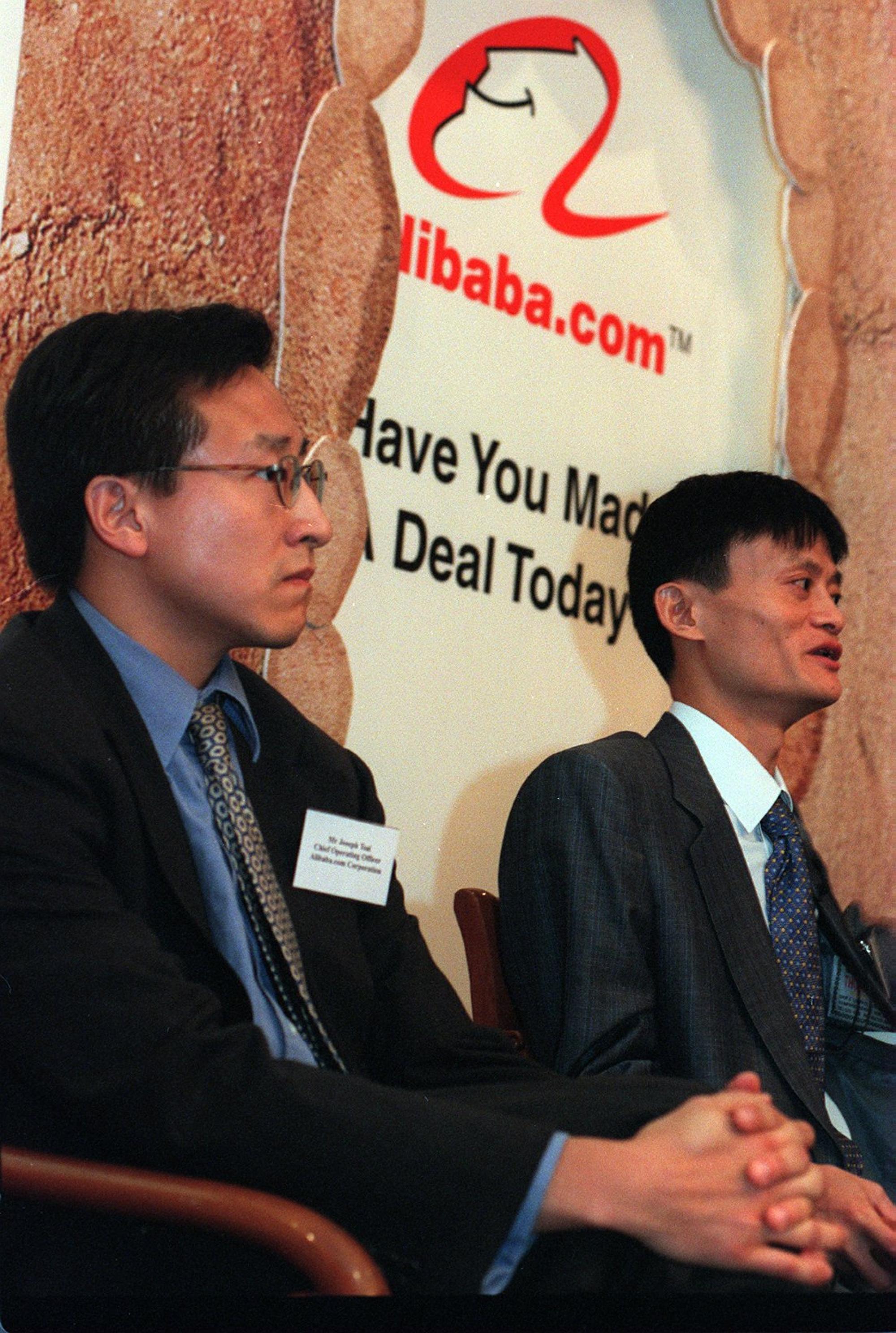
Joseph Tsai’s leadership is defined by a unique synthesis of Western financial discipline and Eastern entrepreneurial agility. As the Chairman of Alibaba Group, Tsai emphasizes intellectual honesty, the decentralization of power to foster innovation, and a rigorous return to customer-centricity. His approach prioritizes long-term institutional stability over short-term market fluctuations, positioning Alibaba to navigate complex regulatory landscapes and the accelerating generative AI revolution.
Since taking the helm as Chairman in late 2023, Joseph "Joe" Tsai has steered Alibaba through one of the most turbulent periods in its history. While Jack Ma provided the visionary spark that ignited the Chinese e-commerce giant, Tsai has historically been the "architect" behind the scenes, building the legal and financial frameworks that allowed the company to scale globally. In the current 2026 landscape, Tsai’s leadership insights have become a blueprint for legacy tech firms attempting to regain their competitive edge in an era dominated by artificial intelligence and shifting consumer behaviors.
The Foundation of Intellectual Honesty
One of Tsai’s most cited leadership traits is his commitment to intellectual honesty. In a corporate world often characterized by defensive PR and "face-saving," Tsai broke convention by publicly acknowledging that Alibaba had "fallen behind" in recent years. He pointed specifically to a period where the company lost sight of its primary customer base—the users—and focused too heavily on internal metrics and legacy dominance.
Admitting and Correcting Strategic Drift
Tsai’s leadership insights suggest that the first step to solving a systemic problem is the ego-less admission of failure. By 2024, Alibaba faced intense pressure from agile competitors like PDD Holdings (Pinduoduo) and ByteDance (Douyin). Tsai’s response was not to double down on existing strategies but to overhaul the executive mindset.
He identified that the company’s organizational "clutter" had slowed decision-making. His leadership led to a strategic "slimming down," where Alibaba began divesting from non-core physical retail assets to refocus resources on core e-commerce (Taobao and Tmall) and cloud infrastructure. For Tsai, leadership is about making the hard choice to cut off a limb to save the body, ensuring the organization remains lean enough to pivot.
Decentralization: The "1+6+N" Framework
A cornerstone of Tsai’s recent leadership is the implementation of the massive structural reorganization known as "1+6+N." Under this model, Alibaba Group transitioned into a holding company for six distinct business groups, each with its own CEO and board of directors.
Empowering the Next Generation of CEOs
Tsai’s insight here is that a multi-billion-dollar entity cannot be managed effectively through a centralized, top-down hierarchy. By decentralizing, he aimed to:
- Increase Agility: Each unit (such as Cloud Intelligence or Local Services) can respond to market changes without waiting for approval from the group's "center."
- Establish Direct Accountability: With separate P&Ls (Profit and Loss statements), leadership at the sub-unit level can no longer hide behind the group's overall success.
- Incentivize Innovation: Younger leaders are given the autonomy to act like founders, which Tsai believes is the only way to compete with hungry startups.
Tsai’s role has shifted from a micro-manager to a "capital allocator" and cultural steward. He views his job as ensuring that the capital is flowing to the most productive areas while the core Alibaba values are maintained across disparate business units.
The Bridge Between East and West
Born in Taiwan, educated at Yale, and seasoned on Wall Street, Joseph Tsai possesses a cultural fluidity that is rare among global CEOs. This perspective is vital for Alibaba’s international expansion and its relationship with global investors.
Navigating Geopolitical Complexity
Tsai operates with the understanding that Alibaba is a "global company with Chinese roots." His leadership involves balancing the requirements of the Chinese regulatory environment with the expectations of the New York and Hong Kong stock exchanges. He advocates for transparency and has been a vocal proponent of clear communication with US regulators regarding audit compliance.
His ownership of the Brooklyn Nets (NBA) and other Western sports assets is not merely a hobby; it serves as a bridge. Tsai uses these platforms to facilitate cultural exchange, humanizing the brand in the eyes of Western consumers and stakeholders. He understands that in 2026, a leader’s ability to manage "soft power" is just as important as managing "hard assets."
Leadership in the Age of Artificial Intelligence
Tsai has consistently identified AI as the most significant "tailwind" for the next decade. His leadership insights regarding technology focus on the democratization of compute power.
AI as an Integrated Utility
Rather than treating AI as a standalone product, Tsai views it as a utility that must be integrated into every facet of the business. Under his chairmanship, Alibaba Cloud has pivoted toward becoming an "open" platform, supporting a vast ecosystem of third-party open-source models (like the Qwen series).
Tsai’s strategic logic is that by providing the "shovels" (the cloud compute and infrastructure) for the AI "gold rush," Alibaba secures its position regardless of which specific AI applications eventually dominate the market. This reflects his background in private equity—identifying the "bottleneck" in a supply chain and owning it.
The Comparison: Leadership Eras at Alibaba
To understand Tsai’s impact, it is helpful to compare his methodology with the eras that preceded him.
| Feature | The Jack Ma Era (1999–2019) | The Daniel Zhang Era (2019–2023) | The Joseph Tsai Era (2023–Present) |
|---|---|---|---|
| Primary Goal | Market Creation & Vision | Operational Scale & Synergy | Restructuring & Re-focusing |
| Leadership Style | Charismatic / Evangelist | Managerial / "The Architect" | Strategic / Capital Allocator |
| Organizational Shape | Centralized Hub | Complex Ecosystem | Decentralized Holding Company |
| Core Focus | Growth at all costs | Process & Stability | ROI, AI, and Customer Value |
| Response to Competition | Aggressive Expansion | Defensive Integration | Agility through Divestment |
Cultivating a "Founder's Mindset" in a Mature Company
One of the most difficult tasks for any leader of a 25-year-old tech firm is preventing the onset of "corporate malaise." Tsai addresses this by emphasizing the "Founder’s Mindset" among the tens of thousands of Alibaba employees.
Hiring for Talent vs. Hiring for Fit
Tsai often speaks about the importance of hiring people who are "smarter than you." He argues that a leader’s primary job is to remove obstacles for talented individuals. However, he also stresses "mission alignment." In Tsai's view, talent without a shared sense of purpose leads to internal friction, while a mission without top-tier talent leads to stagnation.
He has been instrumental in bringing back seasoned veterans from the original "18 founders" era to mentor younger staff, ensuring that the original grit of the company isn't lost to bureaucracy. This "intergenerational leadership" model ensures that while the technology changes, the core tenacity of the company remains intact.
Practical Lessons for Modern Leaders
Aspiring leaders can distill Joseph Tsai's approach into several actionable principles that apply regardless of industry or company size.
- Prioritize "The Math" and "The Vision" Equally: Many leaders are either purely visionary or purely data-driven. Tsai’s strength is his ability to read a balance sheet with the same intensity that he reads market trends. He insists that every strategic move must be mathematically sound.
- Practice Radical Transparency During Crises: When Alibaba faced regulatory scrutiny and declining market share, Tsai did not obfuscate. By being transparent with employees and shareholders about the company’s shortcomings, he built a "reserve of trust" that allowed him to implement painful but necessary reforms.
- Optimize for Adaptability, Not Just Efficiency: In a stable world, efficiency is king. In a volatile world (like 2026), adaptability is more valuable. Tsai’s restructuring of Alibaba was a deliberate move to trade some central efficiency for significantly higher localized adaptability.
- Invest in Your Own "Un-learning": Tsai has spoken about the need for leaders to "un-learn" old habits that no longer serve the current environment. For Alibaba, this meant un-learning the habit of assuming they were the default choice for Chinese consumers.
FAQ: Deep Insights into Joseph Tsai’s Leadership
How does Joseph Tsai define "Customer First" in the current market?
Tsai defines "Customer First" as focusing on the user experience rather than just the merchant's needs. For years, Alibaba was criticized for prioritizing its revenue-generating merchants over the end-user. Tsai’s leadership has shifted the focus back to competitive pricing, logistics speed, and a frictionless interface, recognizing that in a competitive landscape, the user’s "vote" (their click) is the ultimate currency.
What is Tsai’s stance on the "996" work culture?
While Alibaba was historically associated with the "996" (9 am to 9 pm, 6 days a week) culture, Tsai’s leadership has moved toward a more sustainable model. He acknowledges that while hard work is non-negotiable for success, the focus must be on impact and output rather than hours spent at a desk. In 2026, he promotes a culture where AI handles the "drudgery," allowing human talent to focus on high-level strategy and creative problem-solving.
How does his ownership of the Brooklyn Nets influence his business leadership?
Tsai views sports as a laboratory for high-performance leadership. Managing a professional sports team taught him about the "human element" of performance—how psychology, team chemistry, and public pressure affect results. He often applies these lessons to Alibaba, treating business units like sports teams that need the right mix of "star players" and "supporting roles" to win.
Why did Tsai choose to focus on open-source AI rather than closed models?
Tsai believes that the value of AI lies in its widespread adoption. By backing open-source models, Alibaba ensures that it becomes the "platform of choice" for developers worldwide. This is a classic "network effect" strategy: the more people who build on Alibaba’s open infrastructure, the more indispensable that infrastructure becomes. It reflects his belief in building ecosystems rather than silos.
What is Tsai’s advice for managing through regulatory changes?
His primary advice is to maintain a "constructive and proactive" dialogue with regulators. Instead of resisting change, Tsai’s approach is to understand the social and political goals behind regulations (such as "Common Prosperity" in China) and align the company’s business model to support those goals while remaining profitable.
Final Recommendation: Implementing the Tsai Model
For executives and managers looking to emulate Joseph Tsai’s success, the most critical takeaway is the balance of humility and decisiveness. Start by conducting a "brutally honest" audit of your own organization or team. Identify where you have lost touch with your "customer"—whether that is an external consumer or an internal stakeholder.
Once the gaps are identified, do not fear structural change. Like Tsai, be willing to decentralize authority to those closest to the problem. In 2026, the leaders who thrive are those who can institutionalize the "Founder’s Mindset" while maintaining the financial discipline of a seasoned investor.