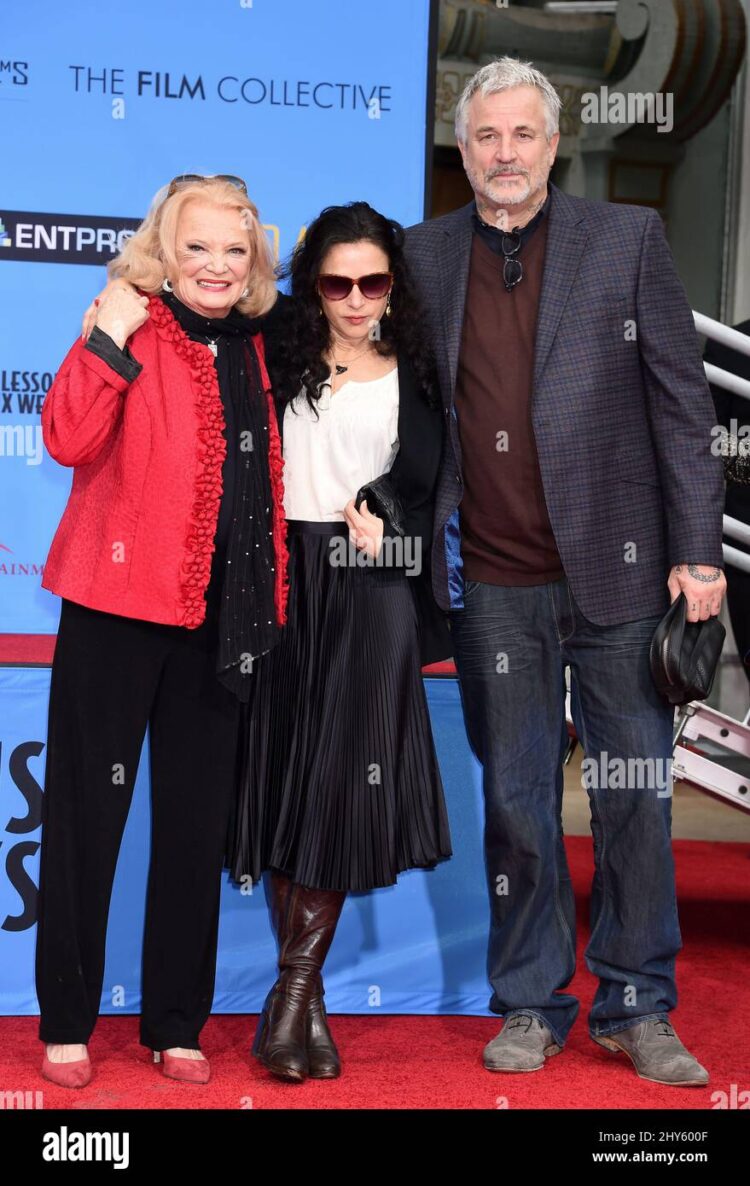
Alexandra "Xan" Cassavetes is a filmmaker and screenwriter who expanded the Cassavetes family’s cinematic influence through her unique focus on niche subcultures and genre-bending storytelling. Unlike the gritty realism of her father, John Cassavetes, Xan’s legacy is defined by a stylized, atmospheric approach to both documentary and narrative feature film.
The Foundations of the Cassavetes Dynasty
To understand the artistic legacy of Alexandra Cassavetes, one must first recognize the environment in which she was raised. As the daughter of John Cassavetes, the "godfather" of American independent cinema, and Gena Rowlands, arguably one of the greatest actresses in film history, Xan was born into a world where film was not merely an industry, but a lifestyle. Growing up in the 1960s and 70s, she witnessed the creation of seminal works like A Woman Under the Influence and The Killing of a Chinese Bookie.
The Cassavetes household was a revolving door for artists, actors, and technicians who were dissatisfied with the Hollywood studio system. This upbringing instilled in Alexandra a fierce independence and a disdain for creative compromise. However, where her father sought a raw, improvisational "truth," Alexandra developed a penchant for the aesthetic, the cultish, and the carefully curated image. In 2026, looking back at the full arc of the family’s contributions, her work stands as the bridge between the grit of the 20th-century indie movement and the high-concept, stylized independent cinema of the 21st century.
The Breakthrough: Z Channel: A Magnificent Obsession
Alexandra Cassavetes first garnered significant critical acclaim as a director with her 2004 documentary, Z Channel: A Magnificent Obsession. This film is a cornerstone of her artistic legacy because it highlighted her ability to analyze the intersection of personality and media.
The documentary explores the history of Z Channel, one of the first pay-cable television stations in the United States, and its visionary but tragic programming director, Jerry Harvey. Z Channel became a legend in Los Angeles for airing letterboxed versions of foreign films and director’s cuts long before such things were mainstream.
Why Z Channel Redefined Cinephilia
Cassavetes did not just make a historical retrospective; she crafted a psychological profile of a man whose life was inextricably linked to the movies. The film was an official selection at the Cannes Film Festival and Sundance, establishing Xan as a major voice in documentary filmmaking.
The technical depth of the documentary is found in how Cassavetes used archival footage and interviews with luminaries like Quentin Tarantino and James Woods to argue that film consumption is a deeply emotional, often dangerous, act of devotion. By 2026, the documentary remains a "must-watch" for film historians studying the evolution of home media and the curation of cinema, a theme that has only become more relevant in the age of streaming algorithms.
Transitioning to Narrative: Kiss of the Damned
In 2012, Alexandra moved into narrative filmmaking with Kiss of the Damned. This film marked a significant departure from the realistic style associated with the "Cassavetes" name. It is a stylish, sensual vampire film that leans heavily into the European "Euro-sleaze" and gothic horror aesthetics of the 1960s and 70s.
Aesthetic and Genre Exploration
The film pays homage to directors like Jean Rollin and Jess Franco. Xan’s decision to tackle the vampire genre was a bold move that helped her step out of the shadow of her father’s shadow. While her father focused on the domestic drama of the human soul, Xan focused on the atmospheric drama of the supernatural.
The film's technical merits include:
- Visual Language: The use of lush, saturated colors and shadow to evoke a dreamlike state.
- Soundscape: A heavy reliance on a moody, synth-driven soundtrack that dictates the film’s pacing.
- Thematic Subversion: Using immortality as a lens to explore addiction and class dynamics, rather than just horror tropes.
By 2026, Kiss of the Damned has maintained a cult following. It serves as a textbook example of "mood-first" filmmaking, where the atmosphere is as much a character as the protagonists.
Artistic Identity vs. Family Expectation
A significant part of Alexandra Cassavetes' legacy is her navigation of the "Cassavetes brand." Her brother, Nick Cassavetes, found mainstream success with films like The Notebook and John Q, while her sister, Zoe Cassavetes, explored modern loneliness in Broken English.
Xan’s work, however, often feels like the most "alternative" of the three. She has consistently resisted the urge to go mainstream, instead choosing projects that allow her to explore darker, more niche corners of the human experience. Her legacy is one of creative integrity. In an era where many "nepo-babies" (a term frequently debated in the 2020s) were accused of following the easiest path to fame, Xan’s career trajectory shows a deliberate choice to remain in the avant-garde and documentary spaces.
Collaborative Works and Acting Roles
While she is primarily known as a director, Xan’s legacy includes her contributions to the work of others. She appeared in her father’s film Husbands as a child and later had roles in films like Alpha Dog, directed by her brother. These roles were rarely about pursuing a career in acting; rather, they were part of the family’s collaborative ethos.
She has also contributed as a writer and consultant on various independent scripts. Her ability to punch up dialogue and create atmospheric tension has made her a sought-after collaborator within the indie circuit. In 2026, she is often cited by younger female directors as an example of how to maintain a multi-hyphenate career without losing one's specific artistic "voice."
The State of the Cassavetes Legacy in 2026
As of 2026, the impact of the Cassavetes family has entered a new phase. Following the death of Gena Rowlands in late 2024, Alexandra and her siblings have become the primary stewards of their parents' massive cultural footprint. This involves:
- Restoration Projects: Overseeing the digital preservation of John Cassavetes’ filmography for new generations.
- Educational Initiatives: Partnering with film schools to teach the "Cassavetes Method," which emphasizes emotional honesty over technical perfection.
- Curation: Xan’s experience with the Z Channel documentary has uniquely positioned her to curate retrospectives and museum exhibits dedicated to mid-century independent film.
Comparison of the Cassavetes Siblings' Filmmaking Styles
| Director | Primary Style | Key Work | Major Influence |
|---|---|---|---|
| Nick Cassavetes | Mainstream Drama / Realism | The Notebook | Character-driven Hollywood |
| Zoe Cassavetes | Indie Romance / Contemporary | Broken English | European Art House |
| Alexandra Cassavetes | Documentary / Genre Horror | Z Channel | Cult Cinema & Retro Aesthetic |
Technical Depth: The Xan Cassavetes Directorial Method
Critics often point to Xan's "obsessive" attention to detail in post-production. Unlike her father, who would often leave in technical imperfections for the sake of emotional "truth," Xan is known for a rigorous editing process. In Z Channel, the pacing is brisk, using the rhythm of the edit to mimic the frenetic energy of the film industry. In Kiss of the Damned, the pacing is intentionally slow, forcing the audience to sit in the discomfort and beauty of the frame.
Her legacy also involves a specific type of feminist lens. She doesn't just put women in the lead; she explores female desire, obsession, and intellect through a lens that refuses to be "pretty" or "compliant." This has made her a foundational figure for the 2010s and 2020s wave of female-led horror and documentary.
Frequently Asked Questions
How does Xan Cassavetes' style differ from her father's?
While John Cassavetes was the master of cinema verité and raw, improvisational drama, Xan leans toward highly stylized, atmospheric, and curated filmmaking. She utilizes genre (horror, documentary) as a framework, whereas her father often discarded genre conventions entirely to focus on character studies.
What was the impact of the Z Channel documentary?
The documentary is credited with introducing a new generation to the importance of film curation. It highlighted how a single visionary programmer could influence the cultural landscape of a city like Los Angeles. It is widely considered one of the most important documentaries about the history of the medium.
Is Alexandra Cassavetes still active in the film industry in 2026?
Yes, in 2026, Xan continues to work in both the documentary and narrative spaces, while also serving as a consultant for independent film festivals and overseeing the preservation of her family's cinematic estate.
What are the main themes of her work?
Her work consistently explores themes of obsession, the power of media, niche subcultures, and the psychological weight of the past. Whether she is looking at a real-life cable executive or a fictional vampire, she focuses on characters who are "outsiders" even within their own communities.
Did Xan Cassavetes win any awards?
Xan Cassavetes has been nominated for several prestigious awards, including an Independent Spirit Award for her work on Z Channel. Her films have been featured in major international festivals such as Cannes, Sundance, and Venice.
Practical Recommendation for Viewers
To truly appreciate the artistic legacy of Alexandra Cassavetes, one should view her work chronologically. Start with Z Channel: A Magnificent Obsession to understand her roots as a cinephile and her respect for the medium's history. Follow this with Kiss of the Damned to see how she translates that historical knowledge into a modern narrative voice.
For those interested in the technical aspects of filmmaking, pay close attention to her use of sound design and music. She often uses non-diegetic sound to create a sense of unease or longing, a technique that has become a hallmark of her directorial style.
As of 2026, most of her work is available through boutique distributors and streaming services dedicated to independent cinema, such as The Criterion Channel or MUBI. Engaging with her work provides a deeper understanding of how the Cassavetes legacy has evolved from the 20th-century "indie" revolution into the multi-faceted, genre-rich landscape of today.
More information on the Cassavetes family history can be found through official archives and film institutions: