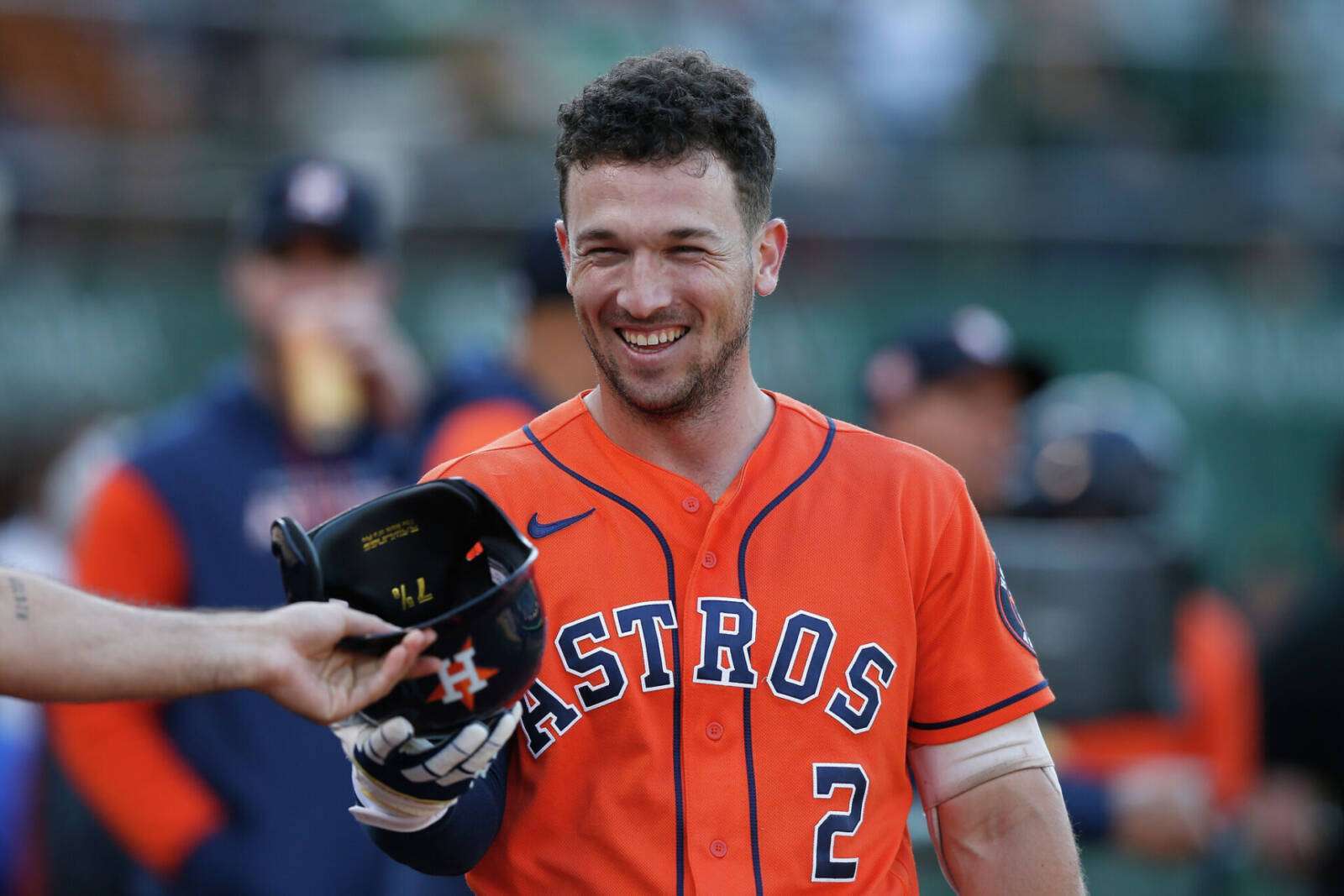
Alex Bregman stands 6 feet 0 inches (183 cm) tall and weighs approximately 192 pounds (87 kg). These physical dimensions have remained remarkably consistent throughout his professional career with the Houston Astros, serving as the foundation for his reputation as one of the most durable and technically sound third basemen in Major League Baseball.
The Physical Profile of an Elite Infielder
In the landscape of professional baseball, where "prototypical" builds often lean toward the towering frames of 6'4" power hitters or 6'3" rangy shortstops, Alex Bregman represents the efficiency of the "compact" athlete. While his 6'0" height is often debated by fans who suspect the "listed" heights in MLB programs are slightly generous, his 192-pound frame is built entirely of functional, lean muscle designed for the specific rigors of the "Hot Corner."
Bregman’s physique is a study in athletic optimization. Unlike players who fluctuate significantly in weight during the off-season, Bregman has maintained a disciplined body composition that balances explosive rotational power with the lateral agility required to play third base at an elite level. By 2026, as he enters the veteran stage of his career, this commitment to physical maintenance has become a blueprint for younger players in the Houston organization and across the league.
Height: The Advantage of a Lower Center of Gravity
In baseball scouting, height is often equated with "leverage." Taller players typically have longer levers (arms and legs), which can translate to higher pitch velocities for pitchers or greater raw power for hitters. However, Bregman’s 6'0" stature provides a different set of advantages, particularly at third base.
- Lower Center of Gravity: A shorter, more compact frame allows for a lower center of gravity. This is crucial for third basemen who must react to high-velocity "screamers" off the bat. Bregman’s ability to stay low to the ground allows for quicker lateral transitions and a more stable base when making cross-diamond throws.
- Compact Swing Path: From a hitting perspective, shorter levers often translate to a more direct path to the ball. Bregman is renowned for his "short-to-the-ball" swing, which minimizes wasted movement. This efficiency allows him to catch up to high-velocity fastballs while remaining disciplined enough to lay off breaking pitches outside the zone.
- Strike Zone Management: Taller players naturally have larger strike zones, giving pitchers more room to exploit. Bregman’s 6'0" frame keeps his strike zone manageable, contributing to his elite walk-to-strikeout ratios.
Weight and Power Generation: The 192-Pound Engine
Weight in professional baseball is about more than just mass; it is about where that mass is distributed. At 192 pounds, Bregman does not carry the "bulk" associated with traditional power hitters, yet he consistently produces high exit velocities.
His weight is concentrated in his lower half—his glutes, quads, and core. This "anchor" allows him to generate massive torque during his swing. Baseball is a sport of rotational mechanics, and Bregman’s 192 pounds act as a stabilized pivot point. By staying lean (typically maintaining a body fat percentage in the 10-12% range during the season), he ensures that his weight does not become a liability for his speed on the basepaths or his range in the field.
Comparing Alex Bregman to League Averages
To understand the "Alex Bregman build," it is helpful to look at how he compares to other elite third basemen in the league as of 2026. While the position has seen an influx of larger players, the "Bregman mold" remains a standard for consistency.
| Player | Listed Height | Listed Weight | Primary Position |
|---|---|---|---|
| Alex Bregman | 6'0" | 192 lbs | 3B |
| Jose Ramirez | 5'9" | 190 lbs | 3B |
| Austin Riley | 6'3" | 240 lbs | 3B |
| Rafael Devers | 6'0" | 240 lbs | 3B |
| Manny Machado | 6'3" | 218 lbs | 3B |
| Nolan Arenado | 6'2" | 215 lbs | 3B |
The data shows that while Bregman is on the lighter side compared to "power-first" third basemen like Austin Riley or Rafael Devers, he shares a similar height profile with many of the game's greats. His weight-to-height ratio is optimized for a high "motor," allowing him to play 150+ games a year without the physical degradation often seen in heavier players.
Athletic Evolution: From LSU to the Pros
Alex Bregman's physical journey began at Louisiana State University (LSU), where he was already noted for his "grinder" mentality. At LSU, he was often listed around 180-185 pounds. Upon being drafted 2nd overall by the Houston Astros in 2015, the team’s strength and conditioning staff worked with him to add "good weight."
The transition from a 180-pound college shortstop to a 192-pound professional third baseman was intentional. The extra 10-12 pounds of muscle were added specifically to handle the 162-game schedule and the transition to a position that requires more impact stability.
The Role of Strength Training
Bregman is famously one of the hardest workers in the weight room. His training focus is rarely on "hypertrophy" (muscle size) and almost exclusively on "explosive power" and "functional mobility."
- Deadlifts and Squats: Used to maintain the lower-body strength that fuels his 90+ mph throws across the diamond.
- Medicine Ball Rotations: These exercises mimic the torque of a swing, ensuring his 192 pounds are fully utilized in his offensive game.
- Pillar Strength: Focus on the core and hips to prevent the lower-back injuries that often plague infielders as they age.
The Impact of Body Composition on Performance
In 2026, with the advancement of Statcast and biomechanical tracking, we can see exactly how Bregman's height and weight influence his "on-field" metrics.
Defensive Range (OAA)
Because he is not carrying excess weight, Bregman’s "Outs Above Average" (OAA) remains high. His first-step quickness is a direct result of his lean 192-pound frame. He doesn't have the longest reach due to his 6'0" height, but he compensates with superior positioning and a lightning-fast "transfer" from glove to hand.
Durability and Availability
One of the most underrated aspects of a player's physical profile is their "availability." Heavier players often suffer from hamstring strains or knee issues due to the repetitive stress of sprinting on dirt and grass. Bregman’s maintenance of a 192-pound weight has allowed him to avoid major lower-body injuries, keeping him in the lineup for the vast majority of the Astros' championship-contending seasons.
Exit Velocity and Launch Angle
Bregman’s power is a result of "perfect mechanics" rather than "raw mass." While he may not hit the 450-foot home runs that a 240-pound player can produce, his 6'0" height allows him to maintain a very tight turning radius. This "internal rotation" speed is what allows him to pull the ball with authority, a hallmark of his offensive strategy at Minute Maid Park.
Nutrition and Maintenance in 2026
As of 2026, Bregman’s approach to maintaining his 192-pound playing weight involves a sophisticated nutritional regimen. Professional baseball players face the challenge of "losing weight" during the heat of the summer months. For a player like Bregman, losing even 5 pounds can lead to a noticeable drop in power.
His routine typically involves:
- High-Protein Intake: To maintain muscle mass during the grueling travel schedule.
- Anti-Inflammatory Diet: Focusing on whole foods to speed up recovery between night and day games.
- Hydration Monitoring: Using wearable tech to ensure fluid loss doesn't impact his muscle elasticity or reaction times.
Scouting Report: The "Small-Big" Player
In scouting parlance, Alex Bregman is often described as playing "bigger than his size." This is a testament to his strength and his high "baseball IQ." Scouts look at his 6'0" frame and see a player who has maximized every inch and every pound.
For aspiring young athletes, Bregman serves as a primary example that you do not need to be 6'4" to be a middle-of-the-order threat or a Gold Glove-caliber defender. The "Bregman mold" emphasizes:
- Technical Proficiency: Using the body's natural levers efficiently.
- Strength over Size: Focusing on power output rather than aesthetic bulk.
- Conditioning: Being the same weight in September as you were in February.
Frequently Asked Questions
Has Alex Bregman ever struggled with his weight?
Early in his career, there were minor concerns about his ability to stay "limber" as he added muscle, but Bregman quickly pivoted to a more mobility-focused training program. He has never been considered "overweight" or "out of shape" by professional standards; if anything, he is known for being hyper-disciplined.
Is 6'0" considered short for a third baseman?
In the modern era, 6'0" is slightly below the average for elite third basemen, which usually hovers around 6'2". However, many of the greatest third basemen in history, such as Mike Schmidt (6'2") or Brooks Robinson (6'1"), were not significantly taller. Bregman's height is perfectly adequate for the position.
How does his weight affect his speed?
Bregman is not a "burner" on the basepaths, but he is an intelligent baserunner. His 192-pound weight allows him to maintain a respectable sprint speed, which is more about his "power-to-weight" ratio than raw track speed. He is consistently efficient in taking extra bases and reading pitchers' deliveries.
Does he change his weight for the off-season?
Like most MLB players, Bregman may enter the off-season slightly lighter due to the caloric burn of the season, or heavier as he builds muscle in the winter. However, his goal is always to report to Spring Training at his optimal playing weight of 190-195 pounds.
What is Alex Bregman's reach/wingspan?
While official wingspan measurements aren't publicly tracked as they are in the NBA, Bregman’s reach is proportional to his 6'0" height. He compensates for not having an "extra-long" reach with some of the best glove-work and anticipation in the league, allowing him to get to balls that taller players might miss due to slower reaction times.
Final Practical Takeaway
The takeaway from Alex Bregman’s height and weight is one of athletic intentionality. He has not let his "average" 6'0" height limit his ceiling as a power hitter or a defensive anchor. Instead, he has meticulously sculpted a 192-pound frame that prioritizes durability and rotational power. For fans and analysts, these numbers are more than just bio-data; they are the result of a decade of professional refinement that has allowed Bregman to remain a cornerstone of his franchise well into 2026.
If you are a young player looking to emulate Bregman, focus less on reaching a specific number on the scale and more on achieving a weight where you feel explosive and agile. Bregman’s success proves that in baseball, it isn't just about how big you are, but how well you move the mass you have.