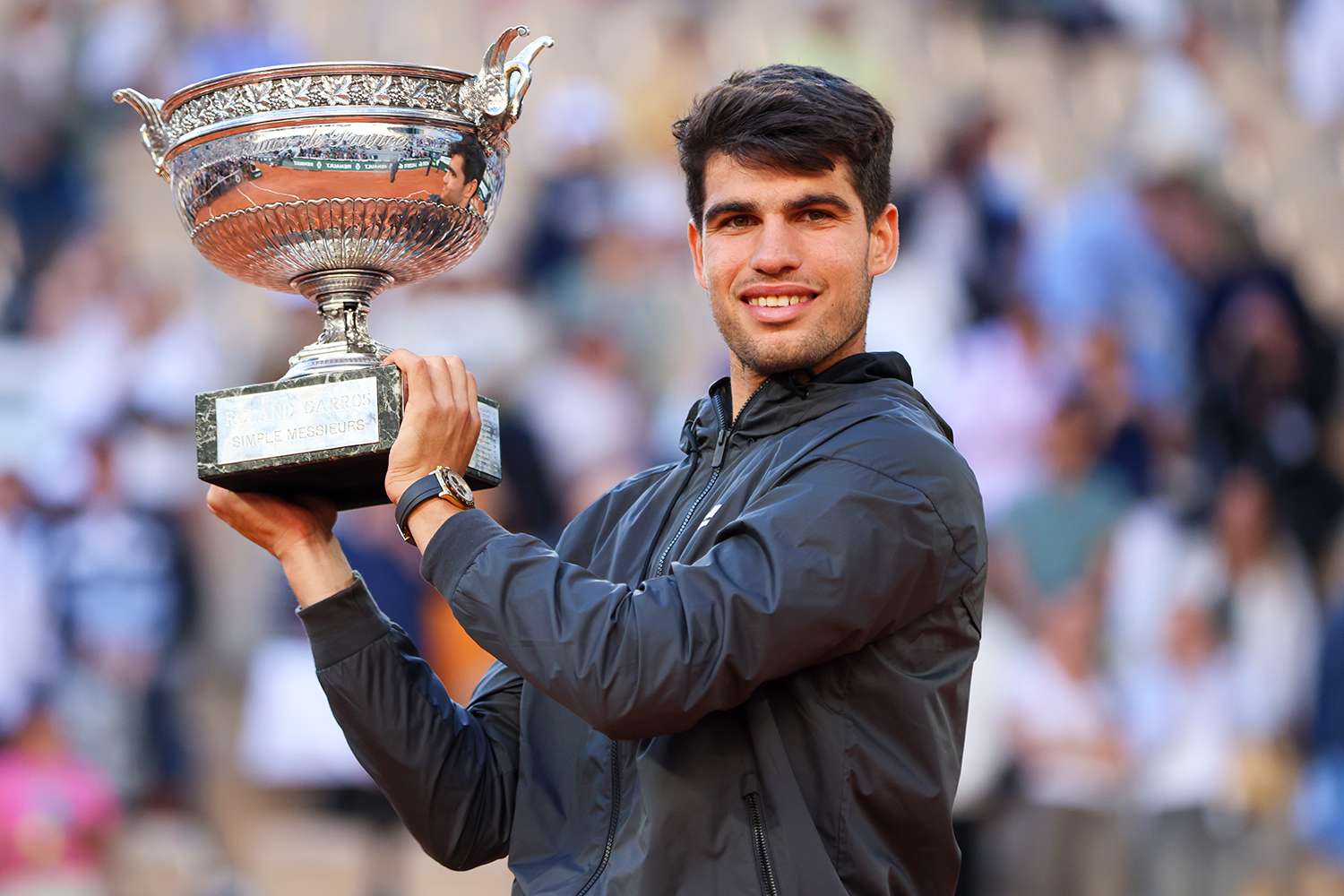
Carlos Alcaraz marks his historic tennis milestones with symbolic tattoos that represent his "Grand Slam ritual." His collection includes the "CCC" mantra (Cabeza, Corazón, Cojones) on his forearm, the US Open 2022 date, a Wimbledon strawberry, and a Roland Garros Eiffel Tower, each signifying a major professional achievement and personal growth.
The Narrative of Ink: Carlos Alcaraz’s Commemorative Tradition
For Carlos Alcaraz, tattoos are not merely aesthetic choices; they are a permanent record of a meteoric rise in professional tennis. Since bursting onto the ATP Tour, the Spaniard has adopted a specific tradition: tattooing a unique symbol or date to commemorate each of his Grand Slam victories. This practice serves as a visual autobiography, allowing fans and historians to trace his journey from a teenage prodigy to a multi-surface champion.
In the world of elite tennis, where players like Rafael Nadal and Roger Federer maintained "clean" aesthetics, Alcaraz represents a shift in the sport's culture. His ink reflects a younger generation's willingness to blend personal expression with professional legacy. As of 2026, his collection has grown into a sophisticated map of his career highlights, characterized by minimalist designs and deep familial or cultural connections.
To understand the artistry of Alcaraz's tattoos, one must look beyond the needle and ink. Each piece is carefully selected to represent the specific atmosphere of the tournament he conquered. This "Grand Slam ritual" has become a point of fascination for the media, with journalists often asking in post-match press conferences what the next design will be. By exploring these tattoos, we gain insight into the psychological framework of a player who values history, family, and the grit required to stay at the top of the rankings.
The "CCC" Tattoo: A Grandfather’s Legacy and a Player’s Mantra
The most famous and arguably most significant of Alcaraz’s tattoos is the "CCC" located on his left forearm. This was his first tattoo, and it carries a weight that transcends his professional statistics. The letters stand for Cabeza, Corazón, Cojones (Head, Heart, Balls).
The Origin of the Mantra
The phrase was passed down to Carlos by his grandfather, Carlos Alcaraz Lerma. In the Alcaraz household, these three words represented the essential pillars of success, not just in sports but in life.
- Cabeza (Head): The ability to stay focused, execute strategy, and remain mentally resilient under pressure.
- Corazón (Heart): The passion for the game and the emotional drive to compete with integrity.
- Cojones (Balls): The courage to take risks, hit the big shots in crucial moments, and never back down from a challenge.
Psychological Impact on Court
Fans often see Alcaraz tapping his head or gesturing to his heart during high-stakes tie-breaks. The tattoo serves as a physical anchor for these cues. When the "triple C" is visible on his arm as he prepares to serve or return, it acts as a constant reminder of the identity he must inhabit to win. This specific piece of ink was completed toward the end of 2022, shortly after he secured his first major title, bridging the gap between his childhood lessons and his adult triumphs.
Marking the Breakthrough: The US Open 2022 Tattoo
The 2022 US Open was the catalyst for "Alcaraz-mania." By defeating Casper Ruud in the final, Alcaraz became the youngest World No. 1 in the history of the ATP Rankings. To honor this life-changing event, he opted for a minimalist date tattoo.
Design and Placement
Located just above his right elbow, the tattoo reads "11.09.22". The choice of a simple date reflects the significance of the moment itself rather than a complex visual metaphor. In the world of fine-line tattooing, which has gained immense popularity by 2026, this style is known for its "souvenir" quality—a precise, understated mark of a specific point in time.
The Significance of New York
The US Open is known for its loud, energetic, and often chaotic atmosphere. For Alcaraz, winning in New York was proof that he could handle the biggest stage in the world. The tattoo serves as a permanent reminder of the fortnight where he played multiple five-set matches, including a late-night thriller against Jannik Sinner, to prove his physical and mental endurance.
The Wimbledon Strawberry: Elegance and Tradition
When Alcaraz defeated Novak Djokovic in a legendary five-set final at Wimbledon in 2023, the tennis world was stunned. Wimbledon is the pinnacle of tennis tradition, and Alcaraz chose to honor it with one of the most iconic symbols of the All England Club: the strawberry.
Artistic Execution
Unlike the purely typographic "CCC" or the date tattoo, the Wimbledon tattoo features a small, illustrative strawberry accompanied by the date of the final: 16.07.23. It is located on his right ankle (or lower leg area). The choice of a strawberry is a playful yet respectful nod to the tournament's famous "strawberries and cream" tradition.
Symbolism of the Surface
Winning on grass was a significant milestone for Alcaraz, as many critics initially doubted his movement on the surface. The strawberry tattoo represents his adaptability. It marks the moment he transitioned from a clay-court specialist to a truly all-court threat. The artistry here lies in the contrast—a tough, high-intensity athlete choosing a delicate, small fruit to represent his dominance on the world's most prestigious lawn.
The Roland Garros Eiffel Tower: Conquering the Clay
In June 2024, Alcaraz completed another chapter of his Grand Slam journey by winning the French Open. Given his Spanish heritage and the long line of Spanish success in Paris, this victory felt like a homecoming.
The Iconography of Paris
To commemorate the Roland Garros title, Alcaraz chose a silhouette of the Eiffel Tower, paired with the date 09.06.24. This tattoo is situated on his left ankle, mirroring the placement of his Wimbledon ink. The Eiffel Tower is the universal symbol of Paris, but for Alcaraz, it represents the specific dirt of Court Philippe-Chatrier.
Technical Detail
The tattoo utilizes a silhouette style, a popular choice in 2026 for those wanting recognizable landmarks without excessive shading. It represents the "King of Clay" lineage that he has inherited from his idol, Rafael Nadal. By placing the Eiffel Tower on his ankle, he keeps his Grand Slam milestones balanced across his physique, creating a symmetrical record of his "Channel Slam" (winning Wimbledon and the French Open in the same year).
Summary of Carlos Alcaraz's Commemorative Tattoos
The following table summarizes the known tattoos and the specific milestones they represent as of the 2026 season.
| Tattoo Design | Meaning / Event | Location | Date of Event |
|---|---|---|---|
| CCC | Cabeza, Corazón, Cojones (Family Mantra) | Left Forearm | Late 2022 |
| 11.09.22 | US Open Victory / World No. 1 | Right Arm (above elbow) | Sept 11, 2022 |
| Strawberry & Date | Wimbledon Championship | Right Ankle | July 16, 2023 |
| Eiffel Tower & Date | Roland Garros (French Open) Title | Left Ankle | June 9, 2024 |
| Olympic Rings (Anticipated) | Paris 2024 Participation/Medal | TBD | Aug 2024 |
The Artistry of Fine-Line Tattoos in Professional Sports
The technical style Alcaraz prefers is known as fine-line tattooing. This technique uses small needle groupings (often a single needle) to create thin, delicate lines. For an athlete, this style offers several practical benefits:
- Healing Time: Fine-line tattoos generally heal faster than heavy, traditional pieces with deep saturation. This is crucial for a tennis player who is constantly sweating and moving.
- Discretion: The tattoos are small enough that they do not distract from his sponsors or on-court appearance, yet they are visible enough for fans to identify.
- Scalability: Because the designs are minimalist, Alcaraz can continue to add to his "Grand Slam map" without running out of "real estate" on his body too quickly.
In 2026, we see more players following this trend. The "sticker" style—where small, unrelated tattoos are placed across the body like stickers on a laptop—has replaced the large sleeves that were popular in previous decades. Alcaraz is a trendsetter in this regard, proving that body art can be both professional and deeply personal.
The Future: What’s Next for the Alcaraz Collection?
As Alcaraz continues his career into the late 2020s, the primary question for fans is what symbol will represent the Australian Open. Common speculation suggests a Kangaroo or the Sydney Opera House (though the tournament is in Melbourne, the Opera House remains a dominant Australian icon).
Furthermore, Alcaraz has expressed interest in marking his Olympic achievements. Following the 2024 Paris Olympics, where he secured a medal for Spain, the iconic Olympic Rings are a likely candidate for his next piece of ink. His approach suggests that he will only add tattoos for the highest honors, ensuring that his skin remains a curated gallery of excellence rather than a cluttered canvas.
FAQs About Carlos Alcaraz’s Tattoos
Why does Carlos Alcaraz get a tattoo after every Grand Slam?
Alcaraz views tattoos as a way to "immortalize" the hardest-fought moments of his career. He has stated in interviews that winning a Grand Slam is a life-altering event, and the tattoo is a personal reward and a reminder of the discipline required to reach that level. It has become a ritual that his fans now expect after every major victory.
Who is the artist behind Alcaraz's tattoos?
Alcaraz has worked with several artists, but many of his Spanish-based tattoos are attributed to artists in his home region of Murcia or in Madrid. He often seeks out specialists in fine-line work and minimalism to ensure the dates and small icons remain sharp and legible over time.
Does Alcaraz have any tattoos that are not related to tennis?
The "CCC" tattoo is the only one that is not directly tied to a specific tournament trophy, although it is deeply connected to his tennis philosophy. It represents his upbringing and his grandfather’s influence, making it more of a "personal identity" tattoo than a "trophy" tattoo.
How many tattoos does Carlos Alcaraz have as of 2026?
As of 2026, Alcaraz has at least four major verified tattoos: the CCC mantra, the US Open date, the Wimbledon strawberry, and the Roland Garros Eiffel Tower. He may have added smaller, more private pieces or an Olympic-themed tattoo following his success in Paris.
Does the "CCC" tattoo have a specific color?
No, Alcaraz generally sticks to black and grey ink. The fine-line style he prefers relies on black ink for longevity and clarity. Colored tattoos, especially small ones like a strawberry, can sometimes fade or blur faster under the intense sun of outdoor tennis courts, so he and his artists prioritize high-contrast black work.
Final Recommendation for Fans and Aspiring Athletes
If you are looking to emulate the artistry of Carlos Alcaraz’s ink, focus on meaning over magnitude. His tattoos are successful because they represent specific, earned achievements. For those considering their own commemorative ink, choose a fine-line specialist who understands how to place small designs in areas that allow for future expansion. Always wait until a milestone is fully realized before "inking" it—much like Alcaraz, let the victory happen first, then let the art tell the story.