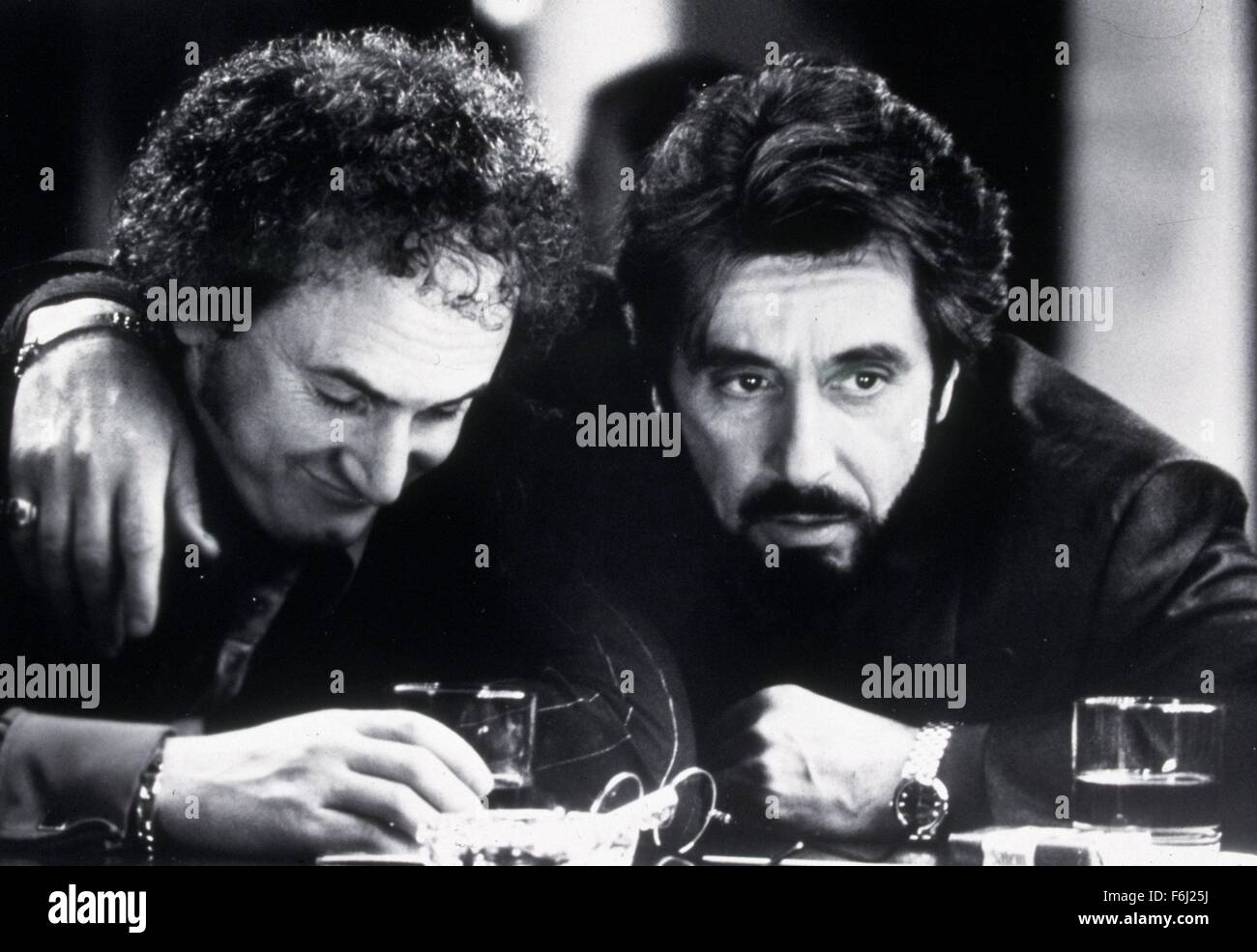
Al Pacino was 53 years old when Carlito’s Way was released in theaters on November 10, 1993. During the film’s principal photography, which took place from March 22 to July 20, 1993, Pacino began the shoot at age 52 and celebrated his 53rd birthday on April 25, midway through production.
The age of the actor was a critical component of the film’s narrative gravity. Carlito’s Way is not a story of a rising criminal, but rather a somber meditation on a man trying to outrun his past. Pacino’s mature appearance—marked by his iconic goatee and weathered expressions—provided the necessary realism for a character who had spent five years in prison and felt the world had moved on without him. As we look back from 2026, the performance remains a benchmark for how an actor can leverage their actual age to enhance the internal exhaustion of a fictional persona.
The Production Timeline and Pacino’s Chronological Age
To understand the exact age of Al Pacino during the making of Carlito’s Way, one must look at the specific filming dates provided by the production records of Universal Pictures. Al Pacino was born on April 25, 1940.
Filming for the crime drama began in the spring of 1993. On the first day of shooting, March 22, Pacino was 52 years and 11 months old. Just over a month into the rigorous schedule, he turned 53. The production lasted roughly 18 weeks, wrapping in late July. By the time the film reached its premiere in November of that year, Pacino had been 53 for several months.
This specific time in Pacino’s life was part of a major career resurgence. Only a year prior, he had finally won the Academy Award for Best Actor for his role as Lieutenant Colonel Frank Slade in Scent of a Woman (1992). Coming off that high-energy, Oscar-winning performance, Pacino’s age and stature allowed him to bring a more restrained, "weary" gravitas to the role of Carlito Brigante.
Character vs. Actor: The Age of Carlito Brigante
In the film, Carlito Brigante is released from prison after serving five years of a thirty-year sentence, thanks to the legal maneuvering of his friend and lawyer, David Kleinfeld. While the film does not explicitly state Carlito’s exact birth year, the internal logic of the story and the source novels by Edwin Torres suggest a man in his mid-to-late 40s.
The screenplay for Carlito’s Way was actually based primarily on Torres’s second novel, titled After Hours. The producers opted to use the title of the first book, Carlito's Way, because Martin Scorsese had already used the title After Hours for his 1985 dark comedy. In the books, Carlito is depicted as a man who feels the weight of his years in the "game."
There is a slight age discrepancy between Pacino and his character. At 52/53, Pacino was nearly a decade older than the character as originally envisioned in the novels. However, this gap worked to the film’s advantage. Brian De Palma, the director, utilized Pacino’s age to emphasize the theme of "the tired warrior." Carlito’s desire to retire to the Caribbean and sell rental cars is more poignant when played by a man in his early 50s than it would have been by a man in his 30s.
The 10-Year Reunion: From Scarface to Carlito’s Way
Carlito’s Way famously reunited Al Pacino with director Brian De Palma exactly ten years after their collaboration on the 1983 classic Scarface. The contrast in Pacino’s age and physicality between these two films is one of the most studied transitions in cinema history.
- Scarface (1983): Pacino was 42 during filming. He portrayed Tony Montana as a volatile, high-energy, and youthful force of nature. His movements were frantic, and his voice was pitched with aggressive ambition.
- Carlito’s Way (1993): At 52/53, Pacino’s movement as Carlito is more deliberate and fluid. He portrays a man who has seen it all and has no desire to prove himself to the "street" anymore.
De Palma noted in several retrospective interviews that he and Pacino were both different men in 1993. De Palma was also 53 at the time of the film’s release, making the director and the star almost exact contemporaries. This shared maturity allowed them to craft a more soulful, tragic crime story compared to the operatic violence of their earlier work.
Casting and Age Dynamics of the Supporting Ensemble
The effectiveness of Pacino’s performance was bolstered by the age dynamics of the supporting cast. The film’s tension often relies on the contrast between Carlito’s "old school" codes and the erratic behavior of the younger generation.
- Sean Penn (David Kleinfeld): Penn was 33 years old during filming. The 20-year age gap between Pacino and Penn perfectly captured the relationship between a seasoned veteran and a cocaine-addled, desperate lawyer who is "trying to be a gangster."
- Penelope Ann Miller (Gail): Miller was 29 years old. Her youthful energy represented the future and the "normal" life that Carlito so desperately wanted to join.
- John Leguizamo (Benny Blanco from the Bronx): Leguizamo was only 28 during the shoot. As the antagonist Benny Blanco, his youth and lack of respect for the old ways served as the primary foil to Pacino’s mature, disciplined character.
Technical Execution: Aging Pacino for the Role
While Pacino was naturally in his early 50s, the production used specific stylistic choices to define his "look" for the 1975 setting of the film.
The Goatee and Hair
The decision to give Carlito a neatly trimmed goatee was a deliberate choice by Pacino and the makeup department. In the mid-1970s setting of the film, this look was sophisticated but also served to mask some of Pacino's natural facial contours, giving him a harder, more "street-hardened" edge. It distinguished him significantly from the clean-shaven Tony Montana.
Wardrobe and Physicality
The costume design, particularly the long black leather coat, was meant to give Carlito a silhouette of a man who is "armored" against the world. Despite his age, Pacino performed a significant amount of the physical acting himself, including the famous climactic chase through Grand Central Station. His ability to convey physical exhaustion while maintaining the agility of a former drug kingpin was a testament to his physical condition at 53.
Comparative Age Table: Carlito’s Way Cast (1993)
The following table outlines the ages of the primary cast members during the 1993 production window to provide context for the film's generational themes.
| Actor | Character | Age During Filming (1993) | Role Significance |
|---|---|---|---|
| Al Pacino | Carlito Brigante | 52-53 | The aging protagonist seeking redemption. |
| Sean Penn | David Kleinfeld | 32-33 | The younger, corrupt legal counsel. |
| Penelope Ann Miller | Gail | 29 | The romantic interest and symbol of a new life. |
| John Leguizamo | Benny Blanco | 28 | The "new breed" of disrespectful gangster. |
| Luis Guzmán | Pachanga | 36-37 | Carlito’s right-hand man from the old days. |
| Viggo Mortensen | Lalin | 34 | A broken, wheelchair-bound former associate. |
The "Tired Hero" Archetype in Pacino’s Career
Carlito’s Way represents a bridge between Pacino’s high-intensity roles of the 70s and 80s and the "elder statesman" roles he would inhabit in the 2000s and beyond. At 53, he was at the perfect age to play a character whose primary motivation is exhaustion.
In film theory, this is often referred to as the "Twilight of the Idols" phase for an actor. Pacino’s Carlito isn't looking for a bigger throne; he's looking for an exit. This resonated with audiences in 1993 and continues to resonate in 2026 because it reflects the universal human experience of realizing that time is finite.
Frequently Asked Questions
How old was Al Pacino in Scarface compared to Carlito's Way?
Al Pacino was 42 turning 43 during the filming of Scarface (1983) and 52 turning 53 during the filming of Carlito's Way (1993). This ten-year gap is often discussed by fans because both films were directed by Brian De Palma and deal with the criminal underworld, but they feature vastly different versions of Pacino's acting style.
Did Al Pacino win an Oscar for Carlito’s Way?
No, Al Pacino did not win an Oscar for Carlito’s Way. However, he had won the Best Actor Oscar the previous year (1993 ceremony) for Scent of a Woman. Sean Penn received a Golden Globe nomination for Best Supporting Actor for his role in Carlito’s Way, but the film was largely overlooked by the Academy Awards at the time.
Was Carlito Brigante a real person?
No, Carlito Brigante is a fictional character created by Judge Edwin Torres. Torres, who served as a New York State Supreme Court Judge, drew from his real-life experiences in the criminal justice system to create the characters and atmosphere for his novels. While the character is fictional, the "street codes" and historical setting of 1970s New York were based on Torres's observations.
How old was Sean Penn in the movie?
Sean Penn was 33 years old when the movie was released. He famously wore a prosthetic hairline and permed hair to look older and more disheveled as the lawyer David Kleinfeld. Despite the 20-year age difference with Pacino, the two actors developed a legendary chemistry on set, characterized by intense improvisation.
What was the significance of the leather coat in relation to his age?
The leather coat was a specific choice to help Pacino look "out of time." By 1975, the year the film is set, the styles were changing. Carlito clings to his leather coat as a form of uniform from his glory days. It adds weight to his frame, making him look more substantial and "heavy" with his past, which fits the theme of an aging man unable to shed his history.
Final Practical Recommendation
For those looking to appreciate Al Pacino’s performance through the lens of his age, it is recommended to watch Carlito’s Way as the middle chapter of a "gangster trilogy" alongside The Godfather (1972) and The Irishman (2019). Viewing these films in sequence provides a masterclass in how an actor’s real-world aging process can be used to tell a lifelong story of crime, power, and eventual regret.
In 2026, with the benefit of high-definition 4K restorations, viewers can see the subtle details in Pacino's performance—the tired eyes, the slight hesitation in his step, and the nuance of a 53-year-old man who knows his time is running out. This maturity is what makes the film's tragic ending significantly more impactful than a standard action-movie finale.