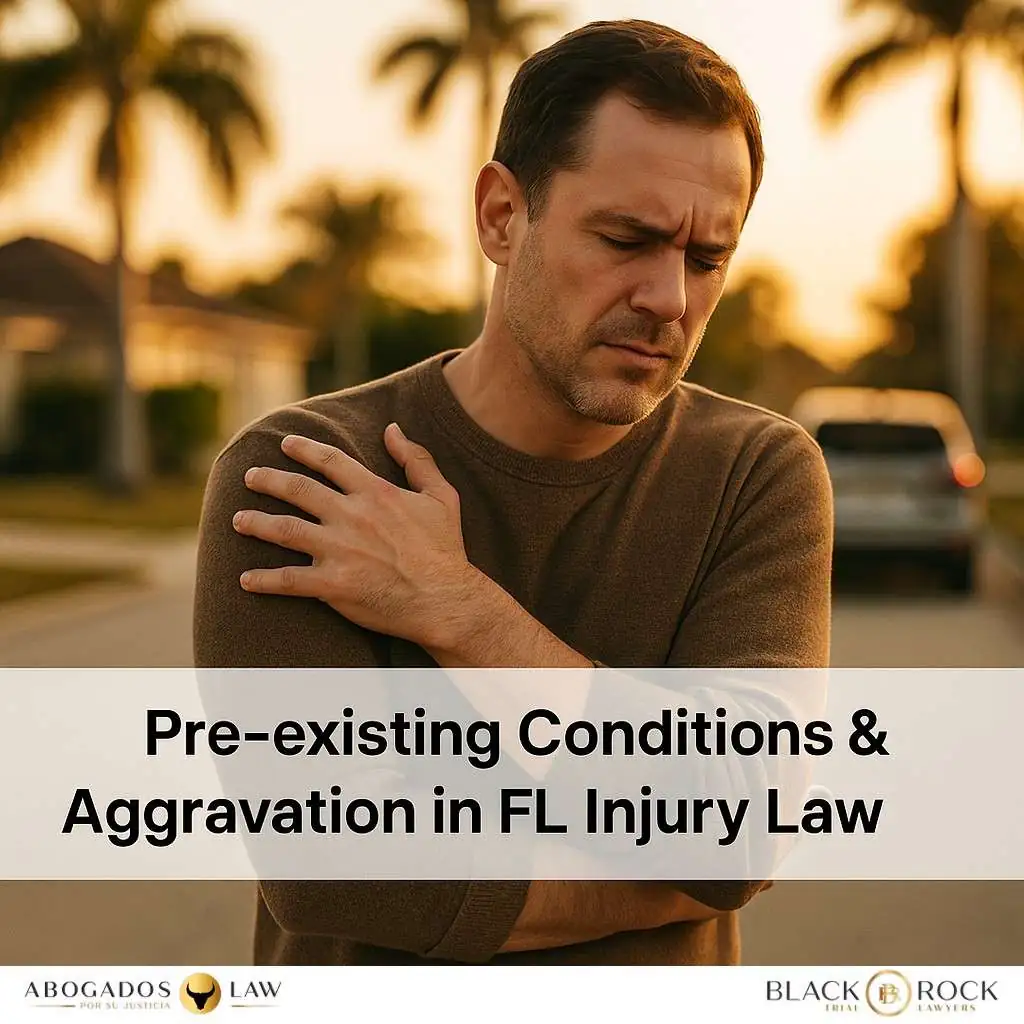
In Queensland, you are eligible to claim workers' compensation for the aggravation of a pre-existing condition if your employment was a significant contributing factor to the worsening of that injury or illness. This applies to both physical and psychological conditions, provided the work-related incident caused a measurable deterioration, acceleration, or exacerbation beyond the condition's natural progression.
The Queensland workers' compensation scheme, primarily governed by the Workers' Compensation and Rehabilitation Act 2003, is designed to protect employees even if they were not in perfect health before starting a job. Many workers mistakenly believe that a history of back pain, a previous knee surgery, or a diagnosed mental health condition disqualifies them from receiving support following a workplace incident. This is not the case. Understanding the nuances of "aggravation" is essential for securing the medical treatment and financial support required for recovery.
Understanding the Legal Definition of Aggravation in QLD
Under Section 32 of the Workers' Compensation and Rehabilitation Act 2003, an "injury" is defined as a personal injury arising out of, or in the course of, employment where the employment is a significant contributing factor. Crucially, this definition extends to the aggravation of a pre-existing condition.
In legal and medical terms, aggravation occurs when a work event causes a stable or managed condition to become symptomatic or more severe. This can manifest in three primary ways:
- Exacerbation: A temporary flare-up of symptoms that eventually returns to the baseline state of the pre-existing condition.
- Deterioration: A permanent worsening of the underlying pathology of the condition.
- Acceleration: A work event that causes a degenerative condition (like osteoarthritis) to progress much faster than it would have in the absence of the work duties.
The core requirement for a successful claim in 2026 remains the "significant contributing factor" test. This means that while work does not have to be the sole cause of the condition, it must be a major reason why the condition worsened.
Identifying Pre-existing Conditions
A pre-existing condition is any health issue, injury, or disease that existed before the current work-related incident. These conditions can be categorized into two main groups:
Physical Conditions
Common physical aggravations seen in the Queensland workforce include:
- Degenerative Disc Disease: Age-related wear and tear in the spine that is made symptomatic by heavy lifting or repetitive strain.
- Joint Injuries: Previous ACL tears or rotator cuff issues that are re-injured or worsened by physical labor.
- Arthritis: Inflammatory or degenerative joint diseases that flare up due to environmental factors or physical exertion.
- Previous Surgical Sites: Scar tissue or hardware from past surgeries that becomes painful due to work activities.
Psychological Conditions
Psychological aggravations are equally valid under QLD law. Examples include:
- Depression or Anxiety: A managed mental health condition that spirals due to workplace bullying, excessive stress, or a traumatic event.
- Post-Traumatic Stress Disorder (PTSD): Past trauma that is "triggered" or worsened by a specific incident at the current workplace.
The "Significant Contributing Factor" Threshold
The most contested aspect of an aggravation claim is often whether the work was a "significant" factor. WorkCover QLD or self-insured employers will review medical history to determine if the condition would have worsened anyway due to natural progression.
To meet this threshold, medical evidence must show a clear link between the work duties (or a specific incident) and the change in the worker's health. For instance, if a worker with mild, asymptomatic scoliosis is required to lift heavy machinery and suddenly develops acute nerve pain, the lifting is likely a significant contributing factor. However, if the worker’s pain gradually increased over five years while performing light clerical work, the insurer might argue the worsening is simply the natural progression of the scoliosis.
Disclosure Requirements and Section 571A
In Queensland, there are specific rules regarding the disclosure of pre-existing conditions during the recruitment process. Under Section 571A-571C of the Act, an employer may request a prospective worker to disclose "pre-existing injuries or medical conditions" that could be aggravated by the tasks of the position.
For this disclosure request to be valid:
- The request must be made in writing.
- The request must outline the nature of the duties required for the position.
- The worker must be informed that a failure to disclose (or providing false/misleading information) may disqualify them from workers' compensation rights for an aggravation of that specific condition.
If you intentionally withheld information about a chronic back injury when applying for a warehouse role that specifically asked about back health, your subsequent claim for a back aggravation might be denied. However, if the employer never asked, or if the new injury is unrelated to the undisclosed condition, your right to claim remains intact.
Steps to Filing an Aggravation Claim in 2026
If you believe your work has worsened a pre-existing condition, you should follow these steps to protect your rights:
1. Immediate Reporting
Report the worsening of your symptoms to your supervisor or employer as soon as possible. Even if there wasn't a single "accident" (like a fall), you must document when the pain became unmanageable or when the symptoms changed.
2. Consult a General Practitioner (GP)
See a doctor and explicitly state that you are suffering an aggravation of an old issue due to work. Request a Work Capacity Certificate. The doctor needs to note the difference between your "baseline" health and your current state.
3. Lodge the Claim with WorkCover QLD
Most claims in Queensland are lodged directly with WorkCover Queensland or through your employer if they are self-insured. You can lodge online or via phone.
4. Provide Detailed Medical History
The insurer will likely request access to your past medical records to see how you managed the condition previously. While this feels invasive, it is a standard part of the "aggravation" assessment process.
The Role of Medical Evidence
In aggravation cases, the insurer relies heavily on Independent Medical Examinations (IMEs). An IME is a consultant specialist (e.g., an Orthopaedic Surgeon or Psychiatrist) who reviews your history and examines you to answer specific questions:
- Was there a pre-existing condition?
- Has an aggravation occurred?
- Is the employment a significant contributing factor?
- Has the aggravation "ceased" (i.e., has the worker returned to their pre-injury baseline)?
If an IME determines that the aggravation was only temporary and you have returned to your baseline state, WorkCover may stop paying benefits, even if you are still in some pain. This is because the "work-related" portion of the injury is considered resolved.
Benefits Available for Aggravation Claims
If your claim is accepted, you are entitled to the same statutory benefits as any other injured worker in Queensland:
| Benefit Type | Description |
|---|---|
| Weekly Payments | Compensation for lost wages if you are unable to work or are working reduced hours. |
| Medical Expenses | Coverage for GP visits, specialist consultations, physiotherapy, and medication. |
| Rehabilitation | Support for return-to-work programs, including occupational therapy and workplace modifications. |
| Lump Sum Compensation | If the aggravation results in a Permanent Impairment (DPI), you may be offered a lump sum. |
| Hospital & Surgery | Coverage for necessary surgical interventions caused by the aggravation. |
Statutory Claims vs. Common Law Claims
In Queensland, the workers' compensation system is "no-fault" for statutory benefits. This means you don't have to prove the employer did something wrong to get your wages and medical bills paid.
However, if the aggravation was caused by the negligence of your employer (e.g., they forced you to perform tasks that clearly exceeded your medical restrictions), you may be able to pursue a Common Law Claim.
Common law claims seek damages for pain and suffering, future loss of earnings, and future medical care. To succeed, you must prove the employer breached their duty of care. For aggravation cases, this often involves showing that the employer knew about your pre-existing condition but failed to provide a safe system of work to prevent it from worsening.
Common Challenges in Aggravation Claims
Insurers often scrutinize aggravation claims more closely than new injuries. Common reasons for dispute include:
- Natural Progression: The insurer argues the condition was going to get worse regardless of work.
- Baseline Argument: The insurer claims the "aggravation" has resolved and any remaining pain is just the original condition.
- Non-Disclosure: Using Section 571A to deny a claim because the worker didn't mention the history during hiring.
- Intervening Events: Claiming an event outside of work (like a weekend sports injury) caused the worsening.
To counter these challenges, it is vital to have a supportive treating doctor who can clearly articulate how the workplace demands specifically impacted your pathology.
FAQ
Can I claim if I never told my employer about my old injury?
Yes, unless they specifically asked you in writing during the recruitment process as per Section 571A. If they did not ask, you had no general duty to volunteer your entire medical history, and you are still covered for aggravations.
How do I prove work "significantly" contributed to the worsening?
This is proven through medical evidence. Your doctor will compare your pre-work functionality (e.g., "could lift 20kg without pain") with your post-incident functionality (e.g., "cannot sit for more than 10 minutes"). Diagnostic imaging like MRIs can also show new structural damage.
What happens if WorkCover says my aggravation has "ceased"?
If WorkCover determines you have returned to your "pre-injury state," they will issue a notice of assessment or a closure of the claim. If you disagree, you have the right to seek a review through the Regulator (Workers' Compensation Regulatory Services) or appeal to the Industrial Relations Commission.
Can I still get a lump sum for a pre-existing condition?
You can receive a lump sum for the degree of permanent impairment caused specifically by the aggravation. If you already had a 5% impairment and the work incident increased it to 10%, you are generally compensated for the 5% increase.
Does a pre-existing psychological condition make it harder to claim?
Psychological claims are generally more complex. The "significant contributing factor" test still applies, but the insurer will look for "reasonable management action." If the aggravation was caused by a manager's reasonable performance review, the claim might be excluded under Section 32(4).
Is there a time limit for lodging an aggravation claim?
In Queensland, you generally have six months from the date you become aware of the injury (or the worsening of the condition) to lodge a statutory claim. For common law negligence claims, the limit is generally three years.
Practical Recommendations
Navigating the intersection of past health issues and current workplace injuries requires a proactive approach. If you are dealing with an aggravation in 2026, prioritize the following:
- Be Transparent with Your Doctor: Ensure your GP knows exactly what your job entails. If you are performing heavy manual labor, the link between the task and the aggravation is easier to establish.
- Keep a Symptom Diary: Record how your symptoms change after specific shifts. This provides a "real-time" map of the aggravation that can assist medical experts.
- Review Your Contract: Check if you signed a pre-employment health disclosure. If you did, ensure your current claim doesn't contradict what you previously disclosed.
- Seek Specialized Legal Advice: Because aggravation claims involve complex medical evidence and "baseline" disputes, consulting a lawyer who specializes in Queensland workers' compensation can help ensure you aren't prematurely cut off from benefits.
The Queensland system is designed to keep people in the workforce. Even with a pre-existing condition, you have a right to a safe workplace that does not accelerate your physical or mental decline. If work has made your health worse, you are entitled to the protections provided by the law.

.jpg)