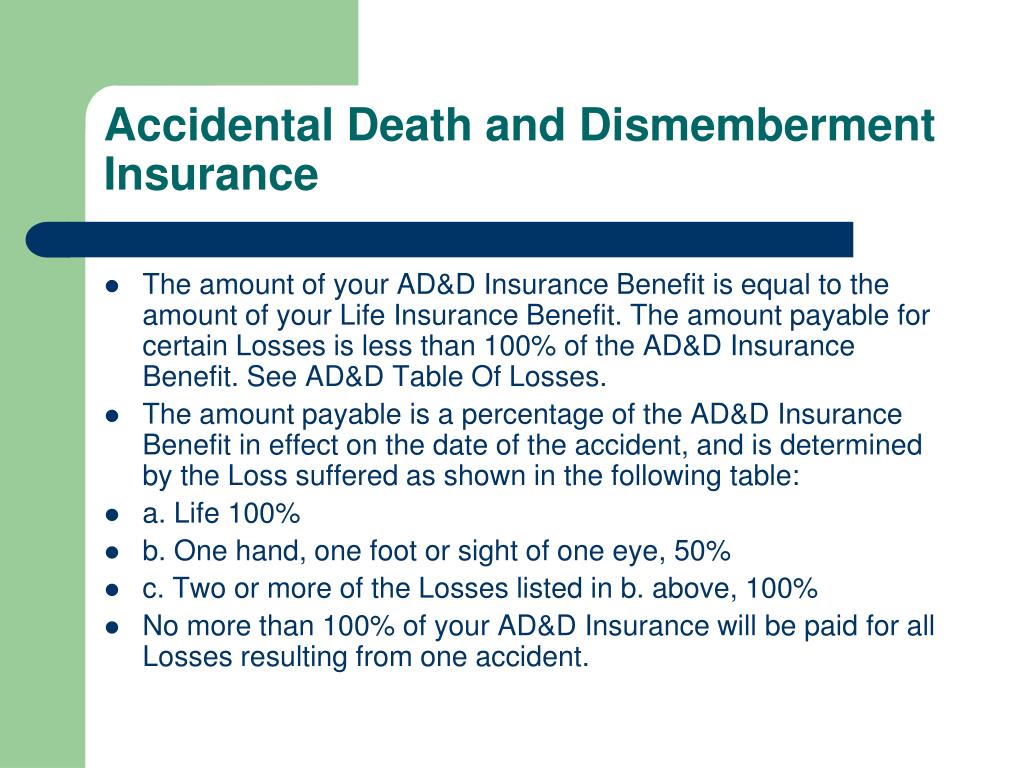
Accidental Death and Dismemberment (AD&D) insurance extends financial protection beyond standard life insurance by covering living benefits for catastrophic, life-altering injuries such as loss of limbs, speech, hearing, sight, or severe paralysis. While traditional life insurance pays out primarily upon death from natural causes or illness, AD&D acts as targeted supplemental coverage designed specifically for severe, unexpected physical accidents.
Understanding AD&D Insurance vs. Traditional Life Insurance
To evaluate how Accidental Death and Dismemberment (AD&D) insurance functions beyond standard life insurance, it is essential to first understand how the core mechanisms of these two financial products differ. Traditional life insurance—whether term life, whole life, or universal life—is designed to provide broad financial security to surviving beneficiaries regardless of how the insured person passes away, subject to basic contestability periods and standard exclusions like suicide within the first two years of policy issuance.
In contrast, AD&D insurance is an narrow, event-driven policy. It pays benefits only under strict, contractually defined conditions where an injury or death is the direct result of a external, sudden, violent, and purely accidental event.
- Accidental Event Occurs
- Accidental Death: Pays 100% of Principal Sum
- Severe Dismemberment:
- Single Limb/Eye: Pays 50%
- Two Limbs/Eyes: Pays 100%
- Speech/Hearing: Pays 50-100%
The fundamental distinction lies in the concept of cause of loss. A term life policy covers deaths stemming from cardiovascular disease, cancer, stroke, old age, and accidental injuries alike. An AD&D policy will pay nothing if the cause of death or disability is an underlying health condition, chronic illness, or natural medical event. However, because AD&D policies focus exclusively on accidental occurrences, they generally do not require full medical underwriting, health questionnaires, or physical exams. This distinction makes AD&D significantly more accessible and less expensive on a per-dollar-of-coverage basis, serving as a layer of supplemental risk management rather than a complete replacement for standard life insurance.
What Does AD&D Cover Beyond Death Benefits? The Living Benefits
The primary structural advantage of AD&D insurance over conventional life insurance is its provision for living benefits. Standard life insurance policyholders typically cannot access death benefit funds while alive unless their contract includes specific accelerated death benefit riders for certified terminal illnesses or long-term care needs. AD&D insurance, by design, pays substantial lump-sum benefits directly to the policyholder while they are alive if they survive a catastrophic accident that leaves them permanently impaired.
Living benefits under an AD&D policy are triggered by specific, irreversible physical losses. Insurance contracts categorize these losses into standardized schedules, reimbursing a set percentage of the policy’s total coverage amount (known as the Principal Sum).
| LIVING BENEFITS (PAID TO YOU) | DEATH BENEFITS (PAID TO HEIRS) |
|---|---|
| • Loss of limbs (arms, legs) | • Fatal motor vehicle accidents |
| • Loss of sight (one or both eyes) | • Accidental falls & blunt trauma |
| • Loss of speech or hearing | • Industrial & equipment accidents |
| • Permanent quadriplegia/paralys | • Severe burns or drownings |
Severe Limb and Digital Amputation
Policies define loss of a hand or foot as complete anatomical severance at or above the wrist or ankle joint. Partial loss, such as losing fingers or toes, may be covered under comprehensive commercial policies according to a fractional benefit schedule (e.g., loss of the thumb and index finger on the same hand).
Vision, Speech, and Hearing Impairment
AD&D policies compensate for the total, permanent, and irrecoverable loss of functional capacities even when no physical amputation occurs. Loss of sight usually requires complete blindness in an eye that cannot be corrected with surgery or lenses. Loss of hearing requires total and irreversible loss of hearing in one or both ears, while loss of speech refers to the complete inability to speak vocally due to physical trauma.
Paralysis and Neurological Trauma
Many modern AD&D contracts extend coverage to traumatic neurological outcomes caused by external injury. Quadriplegia (total paralysis of all four limbs), paraplegia (paralysis of the lower limbs), and hemiplegia (paralysis of one side of the body) frequently qualify for maximum or partial policy payouts, helping survivors cover massive immediate rehabilitation and lifestyle modification costs.
Payout Schedules: How Benefit Amounts Are Calculated
AD&D policies compensate policyholders or their designated beneficiaries using a tiered percentage model tied directly to the policy's Principal Sum. If a policy features a $250,000 principal sum, that figure represents the maximum amount payable for a single accident.
When an accident results in death, the beneficiary receives 100% of the principal sum. When an accident results in severe injury without fatal outcome, the insured person receives a partial percentage of that principal sum based on the policy schedule.
| Loss Type / Condition | Typical Percentage of Principal Sum Paid | Example Payout ($250,000 Principal Sum) |
|---|---|---|
| Accidental Death | 100% | $250,000 |
| Loss of Two Major Limbs (both hands, both feet, or one of each) | 100% | $250,000 |
| Loss of Entire Sight in Both Eyes | 100% | $250,000 |
| Quadriplegia (Total paralysis of four limbs) | 100% | $250,000 |
| Loss of Speech AND Hearing in Both Ears | 100% | $250,000 |
| Loss of One Major Limb (one hand or one foot) | 50% | $125,000 |
| Loss of Entire Sight in One Eye | 50% | $125,000 |
| Loss of Speech OR Hearing in Both Ears | 50% | $125,000 |
| Paraplegia (Paralysis of lower limbs) | 50% to 75% | $125,000 - $187,500 |
| Loss of Thumb and Index Finger (Same hand) | 25% | $62,500 |
Note: Specific benefit schedules vary by carrier and contract. Always review the exact schedule of losses in your policy document for detailed benefit percentages.
Double Indemnity Provisions
In employer-sponsored group policies and voluntary supplemental plans, AD&D coverage often incorporates a double indemnity clause. This clause doubles the payout (e.g., from $250,000 to $500,000) if the fatal accident or dismemberment occurs under specific high-risk public conditions, such as traveling as a fare-paying passenger on a licensed common carrier (such as a commercial airline, passenger train, or city bus).
Key Exclusions and Policy Limitations
While AD&D insurance provides cost-effective, high-limit protection against severe accidents, its primary vulnerability lies in its strict list of standard exclusions. Insurers enforce strict boundaries around what qualifies as an "accidental event." Understanding these limitations prevents policyholders from operating under a false sense of comprehensive security.
| STANDARD AD&D EXCLUSIONS | |
|---|---|
| ❌ Medical Illness & Disease | ❌ High-Risk / Extreme Sports |
| ❌ Intoxication & Controlled Subs | ❌ Suicide & Self-Inflicted Injury |
| ❌ Surgical / Medical Accidents | ❌ War, Insurrection & Illegal Acts |
Medical Causes and Pre-Existing Health Conditions
If a bodily injury or death is contributed to, caused by, or results directly or indirectly from a physical illness, bacterial infection, stroke, or heart attack, the claim will likely be denied. For instance, if an individual suffers a severe myocardial infarction (heart attack) while driving, loses control of the vehicle, and crashes fatally, the insurer may classify the primary cause of death as natural/medical rather than accidental, rendering the claim non-payable under AD&D terms.
Intoxication and Substance Use
Accidents that occur while the insured is under the influence of alcohol (typically exceeding the legal blood alcohol limit for driving in the governing jurisdiction) or non-prescribed controlled substances are routinely excluded from coverage. Insurers require post-accident toxicological reports during claim evaluations for fatal transport accidents.
High-Risk Activities and Extreme Occupations
Standard individual and group AD&D policies exclude injuries or death resulting from high-risk recreational activities. Excluded activities frequently include skydiving, hang gliding, scuba diving beyond specified depths, auto racing, and mountaineering. Similarly, specialized commercial fields (such as offshore oil rig operations, active military service, or hazardous aviation) require specialized commercial endorsements or riders rather than basic off-the-shelf AD&D contracts.
Time Limits on Injuries and Death
To establish legal causation, AD&D contracts mandate that death or dismemberment must occur within a specified timeframe following the date of the underlying accident—typically 90 days to 365 days, depending on state regulations and insurer policy wording. If a victim remains in a coma following an auto collision and passes away 14 months after the initial event, the claim may face coverage challenges based on the policy's defined accident window.
Comparing Life Insurance and AD&D Insurance
Choosing the right combination of policies requires clear visibility into how these coverages interact. The table below outlines how standard life insurance compares directly with standalone or supplemental AD&D coverage.
| Policy Feature | Term / Whole Life Insurance | Accidental Death & Dismemberment (AD&D) |
|---|---|---|
| Primary Trigger | Passing away from almost any cause (illness, disease, natural causes, accidents) | Death or specific severe dismemberment/paralysis resulting solely from a covered accident |
| Living Benefits | Minimal (typically restricted to terminal illness accelerated benefit riders) | Robust (pays high percentage lump sums for loss of sight, hearing, speech, or limbs while living) |
| Underwriting Requirements | Full underwriting often required (medical exams, blood work, historical medical records) | Guaranteed issue or simplified underwriting (no physical exams required for basic coverage) |
| Cost per $100k Coverage | Moderate to High (increases significantly with age and pre-existing conditions) | Extremely Low (flat rates, fixed pricing regardless of health history) |
| Coverage for Illness | Full coverage (Cancer, Heart Disease, Diabetes, Neurological conditions covered) | Zero coverage for any illness, organ failure, or natural death |
| Primary Role in Financial Plan | Core foundational income replacement and debt protection for family | Low-cost supplemental cushion for high-risk accidents and catastrophic bodily loss |
When Does AD&D Insurance Make Financial Sense?
Because AD&D insurance leaves significant coverage gaps regarding natural deaths and illnesses—which statistically account for the vast majority of adult fatalities—it should rarely serve as a family's sole financial safety net. However, incorporating AD&D beyond standard life insurance provides distinct strategic value under several common circumstances.
High-Hazard Occupations (Construction, Logistics, Field Ops)
Uninsurable Individuals (Severe Pre-Existing Health Conditions)
Budget-Constrained Households Needing Rapid Extra Coverage
Frequent Travelers and Commuters Exposed to Traffic Risks
High-Hazard Commuting or Occupations: Individuals who work in heavy industrial, construction, manufacturing, or agricultural sectors—or who drive extensively for work—face significantly elevated statistical exposure to physical injury and accidental trauma. Supplemental AD&D provides low-cost protection tailored to these operational risks.
Uninsurability Due to Health Conditions: Individuals who cannot qualify for affordable traditional term life insurance due to severe pre-existing chronic conditions (such as advanced diabetes, past cancer history, or cardiac conditions) can use AD&D as a guaranteed-issue option to secure base-level accident protection for their families without medical screening.
Budget-Constrained Supplemental Needs: Young families or individuals who cannot currently afford to scale up their primary term life insurance policy limits to match rising income can use low-cost AD&D policies to bolster total protection during peak financial liability years.
Primary Disability Gap Coverage: Short-term and long-term disability insurance programs usually replace only a portion (50% to 60%) of a worker’s monthly wage. Receiving a lump-sum AD&D living benefit following the accidental loss of a limb or sight can cover immediate capital expenditures, such as home modifications, specialized wheelchair equipment, or upfront medical rehabilitation fees.
How to File an AD&D Claim: Verification and Steps
Securing approval for an AD&D claim requires rigorous proof of causation, establishing that an accidental event directly caused the qualifying death or dismemberment without underlying disease contributions.
- Step 1: Immediate Notification
- Contact insurer & request official AD&D Claim Packet.
- Step 2: Collect Core Documentation
- Official Death Certificate (listing accident as cause) OR
- Detailed Attending Physician Statement (dismemberment/paralysis).
- Step 3: Secure Police & First Responder Evidence
- Complete Law Enforcement Accident Report.
- Emergency Medical Services (EMS) run logs & hospital intake records.
- Step 4: Insurer Claims Review & Forensic Verification
- Verification of exclusion parameters (toxicology, timeline).
- Payout issued directly to insured (living benefit) or named beneficiary.
Step 1: Immediate Claim Notification
Notify the insurer as soon as possible after the incident occurs. Most insurers require initial notice of claim within 20 to 90 days of the date of the loss.
Step 2: Comprehensive Medical Documentation
For living benefit claims (dismemberment, sight loss, hearing loss, or paralysis), the claimant must submit an extensive Attending Physician’s Statement (APS) completed by a board-certified specialist. The report must detail the exact anatomical level of severance, the permanent nature of functional loss, and confirmation that physical trauma was the sole cause.
Step 3: Official Incident and First Responder Reports
For accidental death or injury claims, insurers require independent third-party evidence. Required files generally include:
- Official Police Incident Reports or Highway Patrol Accident Reconstruction files.
- Emergency Medical Services (EMS) transport reports and emergency room intake logs.
- Coroner or Medical Examiner Autopsy Reports (essential in fatal claims to rule out pre-existing organ failure, stroke, or cardiac events).
- Toxicology reports establishing the absence of non-prescribed controlled substances or unlawful alcohol intoxication levels.
Step 4: Claim Review and Settlement
Once all required documentation is submitted, the insurer's specialized claims committee evaluates the file against policy wording and statutory rules. Approved payouts are distributed as a tax-free lump sum directly to the living insured (for dismemberment claims) or to the designated primary beneficiary (for accidental death claims).
Frequently Asked Questions
Can I hold both traditional life insurance and AD&D insurance at the same time?
Yes. Holding both policies simultaneously is standard practice. If you pass away as a direct result of a covered accident, both your primary life insurance policy and your AD&D policy will pay out their full respective benefits to your named beneficiaries—a scenario often referred to as receiving double benefits.
Are AD&D insurance payouts taxable?
In most jurisdictions, including under U.S. Internal Revenue Code guidelines, lump-sum death benefits and living dismemberment payouts received from an AD&D policy are generally exempt from federal gross income tax, provided the premiums were paid using post-tax dollars. If an employer pays 100% of the premium using pre-tax funds, consult a qualified tax professional regarding your specific tax obligations.
Does AD&D cover death or injury caused by a surgical mistake or medical procedure?
No. Standard AD&D insurance contracts explicitly exclude bodily injury or death caused directly or indirectly by medical treatment, surgical procedures, diagnostic tests, or reactions to prescribed pharmaceuticals. Losses arising from medical procedures fall under medical malpractice considerations rather than accidental insurance coverage.
What happens if an accident leads to dismemberment, but I later die from those injuries?
If an insured person suffers a covered dismemberment, receives a partial living benefit payout (e.g., 50% of the principal sum for losing one leg), and subsequently succumbs to those accident injuries within the policy's defined timeframe (e.g., within 90 or 365 days), the insurer will pay the remaining balance of the principal sum (the remaining 50%) to the beneficiary. The total cumulative payout for a single accident cannot exceed 100% of the policy's principal sum.
Does AD&D insurance cover total permanent disability from illness?
No. AD&D insurance does not cover disabilities caused by illness, such as loss of mobility from multiple sclerosis, loss of vision due to diabetic retinopathy, or inability to work following a stroke. To protect against health-related or illness-driven functional disabilities, you must purchase a dedicated Disability Income Insurance policy.
Actionable Recommendations and Next Steps
- Audit Existing Coverage: Check your employer-provided benefits package. Many companies offer basic AD&D coverage equal to one times your annual salary at no cost, along with options to purchase voluntary supplemental coverage.
- Identify Your Coverage Gaps: Determine whether your financial plan requires living benefits for accidental trauma. If you work in a high-risk physical field, drive extensively, or lack adequate disability insurance, supplemental AD&D can provide affordable risk mitigation.
- Do Not Rely Solely on AD&D: Never use AD&D as a total replacement for comprehensive term life insurance. Illnesses cause vastly more deaths annually than accidents; rely on term or whole life for baseline family income replacement, using AD&D purely as an additive layer.
- Review Exclusions Carefully: Read the policy's fine print before purchasing individual AD&D coverage or signing up for voluntary group plans. Pay close attention to exclusions regarding personal hobbies, aviation, occupational hazards, and claim submission windows.
Disclaimer: This article is for informational and educational purposes only and does not constitute formal financial, legal, or insurance advice. Policy terms, exclusions, benefit schedules, and tax regulations vary by jurisdiction, employer plan, and insurance carrier. Always review your specific insurance policy documents and consult a licensed insurance professional or financial advisor before purchasing coverage.