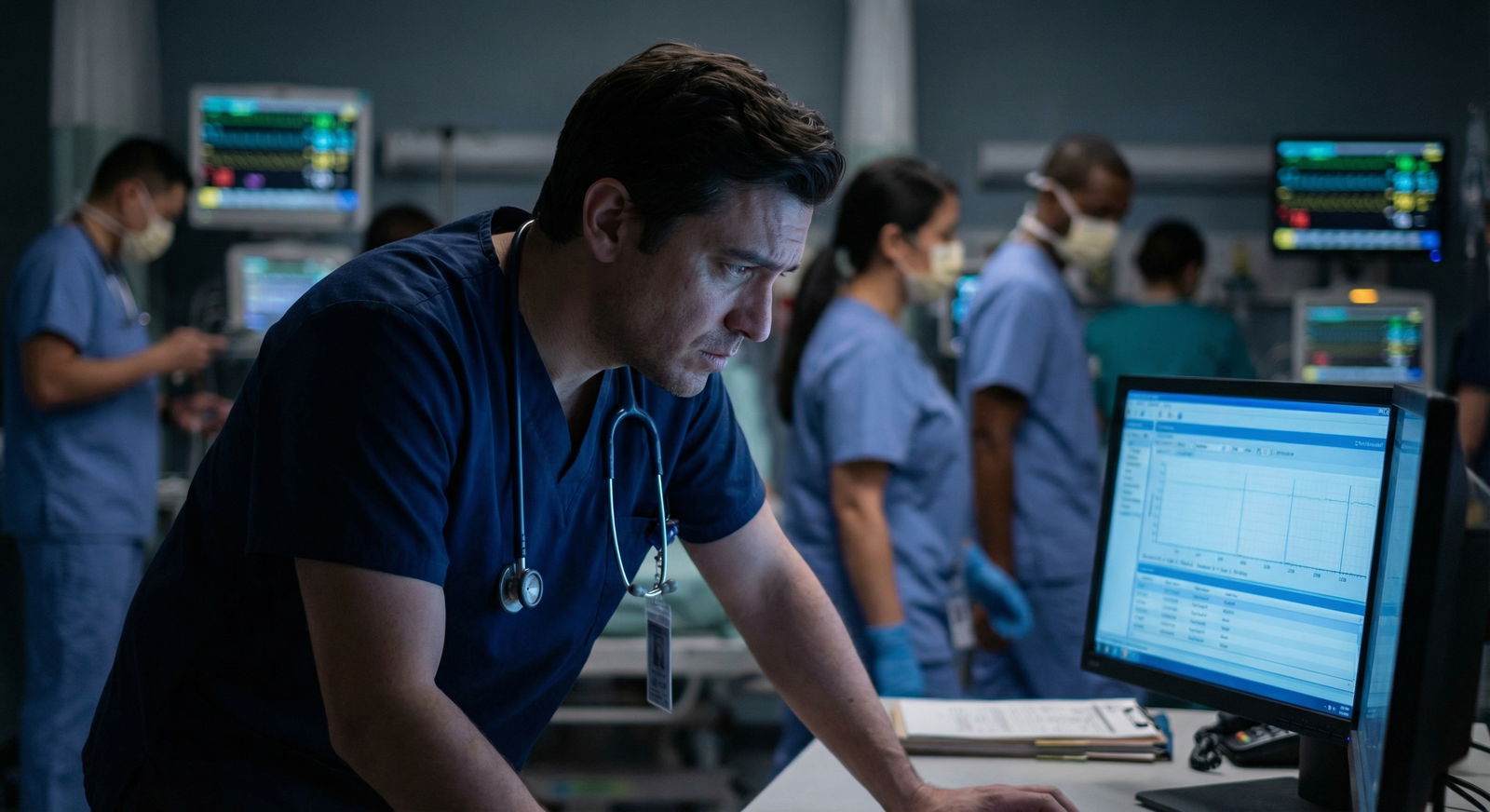
Adam Scott’s commentary on shifts in emergency care models addresses the critical need to transition from traditional, reactive hospital-based emergency department (ED) structures toward integrated, patient-centered, and community-based health networks. This evolution seeks to manage the growing burden of chronic disease, alleviate ED overcrowding, and optimize resource allocation by utilizing telehealth, urgent care triage, and advanced predictive analytics.
The current landscape of emergency medicine is defined by a paradoxical struggle: while medical technology has advanced exponentially, the models used to deliver that care have remained largely static for decades. Emergency departments across the globe are experiencing systemic strain, characterized by increased wait times, physician burnout, and a lack of coordination between primary care and acute intervention. The perspective often attributed to clinicians and policy analysts like Adam Scott—who have advocated for systemic reform—centers on the idea that the "front door" of the hospital is being overwhelmed by conditions that do not necessarily require the intensity or cost of a Level 1 trauma center or a high-acuity ED.
The Problem of Traditional Emergency Department Dependency
The conventional emergency care model was built on a "one-size-fits-all" premise: a central location where patients with varying degrees of illness—from minor lacerations to life-threatening cardiac events—all converge for assessment. For many years, this was the most efficient way to centralize specialized equipment and highly trained staff. However, as of 2026, this centralization has become a bottleneck.
In this traditional model, the ED acts as the primary safety net for the healthcare system. When primary care access is restricted, or when patients lack the health literacy to distinguish between an urgent-care-appropriate condition and an emergency, they present to the ED. This results in "boarding"—a phenomenon where patients remain in the emergency department for hours or even days after a decision to admit has been made because no inpatient beds are available. This ripple effect degrades the quality of care for new arrivals, as staff are preoccupied with managing boarding patients rather than initiating acute treatment for new emergencies.
Key Pillars of the Shift in Emergency Care
To address these inefficiencies, the shift in emergency care models focuses on several structural changes that prioritize throughput, patient stratification, and site-of-care optimization.
1. Advanced Triage and Patient Stratification
Modern emergency care models are moving toward more sophisticated digital triage systems. Instead of relying solely on a nurse-led manual assessment, integrated systems now utilize AI-driven decision support tools. These tools analyze historical health records, patient-reported symptoms, and physiological data to predict the patient’s clinical trajectory before they even reach the triage desk. This allows for early redirection to appropriate care pathways, such as virtual consultations or direct-to-specialist transfers, bypassing the main ED flow entirely.
2. Decentralization via Urgent Care and Retail Health
The shift involves moving lower-acuity patients away from the central hospital hub. By integrating urgent care centers with hospital electronic health records (EHR), health systems can ensure that the clinical information captured in a community-based clinic is immediately available to hospital specialists should a transfer become necessary. This integration reduces diagnostic duplication—where a patient has to repeat blood tests or imaging studies because the hospital doesn't have access to the urgent care clinic's records.
3. Telemedicine as an Emergency Extension
Telehealth has evolved from a convenience tool into a core component of emergency medicine. In 2026, many hospitals employ "virtual emergency departments." In this model, patients in rural or remote areas, or even those presenting to community clinics, can be evaluated by a board-certified emergency physician via high-definition video link. This capability ensures that high-level clinical judgment is available in real-time, regardless of the physical location of the specialist.
Comparative Analysis of Care Delivery Models
To understand the shift, it is essential to compare the legacy models with the emerging, integrated frameworks currently being piloted and adopted by major health networks.
| Feature | Traditional Emergency Model | Modern Integrated Model |
|---|---|---|
| Primary Access Point | Central Hospital ED | Diversified (Telehealth, Urgent, ED) |
| Data Silos | Limited to Hospital Systems | Interoperable across Networks |
| Triage Process | Manual/Standardized | AI-Enhanced/Predictive |
| Disposition | Admission or Discharge | Community Care or Acute Intervention |
| Resource Focus | High-Acuity Only | Risk-Stratified Patient Flow |
The Role of Technology in Streamlining Emergency Care
Technology acts as the backbone of this transition. Without robust, interoperable data systems, the "shift" in care models would lead to fragmented care and potential safety lapses. The current focus is on "Clinical Decision Support Systems" (CDSS) that provide practitioners with evidence-based recommendations at the point of care.
For example, when a patient presents with chest pain, the CDSS can pull the patient’s past cardiac screenings, medication history, and risk factors to assist the clinician in determining whether the patient requires an immediate ECG and cardiac workup or can be safely managed with an outpatient follow-up. This not only improves patient outcomes by ensuring faster intervention for critical cases but also optimizes the use of high-cost emergency assets for those who truly need them.
Challenges to Implementation
Despite the clear benefits of shifting to these new care models, several barriers remain prevalent in 2026.
- Financial Reimbursement Structures: Many healthcare systems are still operating under fee-for-service models that incentivize volume. Shifting to a model that emphasizes "right-site" care often requires a transition to value-based care, where providers are reimbursed for outcomes and efficiency rather than the number of tests performed.
- Cultural Resistance: Emergency medicine has long prided itself on being the "everything" department. A shift in the emergency care model often meets resistance from staff who feel that delegating care to non-ED environments may compromise patient safety or professional autonomy.
- Interoperability Standards: While EHR integration has improved, many hospitals still utilize proprietary systems that do not "talk" to one another. Achieving a seamless data bridge between a city’s various urgent care centers and the main hospital emergency department remains a significant technical challenge.
Patient Safety and the "Front Door" Concept
The ultimate goal of these shifting models is to preserve the emergency department as a specialized resource for genuine medical crises. When the ED is cluttered with non-emergent cases, the "signal-to-noise ratio" drops. A doctor managing a dozen minor cases is less likely to detect the early, subtle signs of a complex medical emergency in a new arrival.
By diversifying the front door, systems ensure that the ED staff can maintain a high-level focus on critical interventions. Patient safety is theoretically improved not by having "more" emergency care, but by having the "right" emergency care. Patients benefit from shorter wait times and more specialized attention when they are in their most vulnerable states, while those with minor ailments receive more efficient care in settings better suited to their needs.
Future Perspectives: What to Expect in Emergency Medicine
As we look toward the remainder of the decade, the integration of wearable devices into the emergency workflow will likely be the next frontier. Patients with chronic conditions, such as congestive heart failure, may soon be able to provide real-time telemetry to hospital command centers. This will allow for "preventative emergency medicine," where an intervention occurs before the patient reaches the point of needing an emergency department visit.
Furthermore, the expansion of community paramedicine programs—where emergency medical technicians are trained to perform specific in-home evaluations—will further reduce the necessity for transport to the hospital. These models demonstrate that the "shift" in emergency care is not merely about changing the building where care occurs, but about changing the philosophy of when, where, and how care is initiated.
Frequently Asked Questions
What is the primary driver behind the push for new emergency care models? The primary driver is the systemic failure of the traditional ED to manage the volume of patients effectively. Overcrowding and boarding have forced health systems to seek ways to distribute the patient load to community-based or virtual settings without compromising the standard of care.
How does AI assist in the shift of emergency care? AI assists by providing predictive analytics and clinical decision support. It helps triage staff identify high-risk patients faster, flags patients who are suitable for discharge to primary care or urgent care, and provides physicians with relevant historical data to make faster, evidence-based decisions.
Is virtual emergency care safe for all patients? No. Virtual emergency care is designed for low-to-moderate acuity conditions that do not require physical diagnostic procedures like imaging or blood work. Patients with red-flag symptoms, such as chest pain or neurological deficits, are always routed for immediate in-person assessment.
How do these models impact insurance and cost? By avoiding unnecessary high-acuity ED visits, these models can significantly reduce the overall cost of care. However, their full implementation often requires a shift in insurance reimbursement policies to reward outcomes rather than the site of service.
What is the role of community paramedicine? Community paramedicine leverages the skills of paramedics to assess and treat patients in their homes or the community. This acts as an "emergency department on wheels," which can prevent the need for an ambulance transport and ED admission entirely for many chronic disease exacerbations.
Recommendation for Health Systems
For healthcare administrators and clinicians evaluating these models, the recommendation is to pursue a phased, data-driven integration. Begin by optimizing the "triage-to-urgent-care" pipeline within your existing network. Use existing EHR data to identify the percentage of ED visits that could have been handled by lower-acuity services. By investing in the middleware required to ensure seamless communication between these sites, you will immediately relieve pressure on your ED while establishing the foundation for a more resilient, technology-enabled care network.