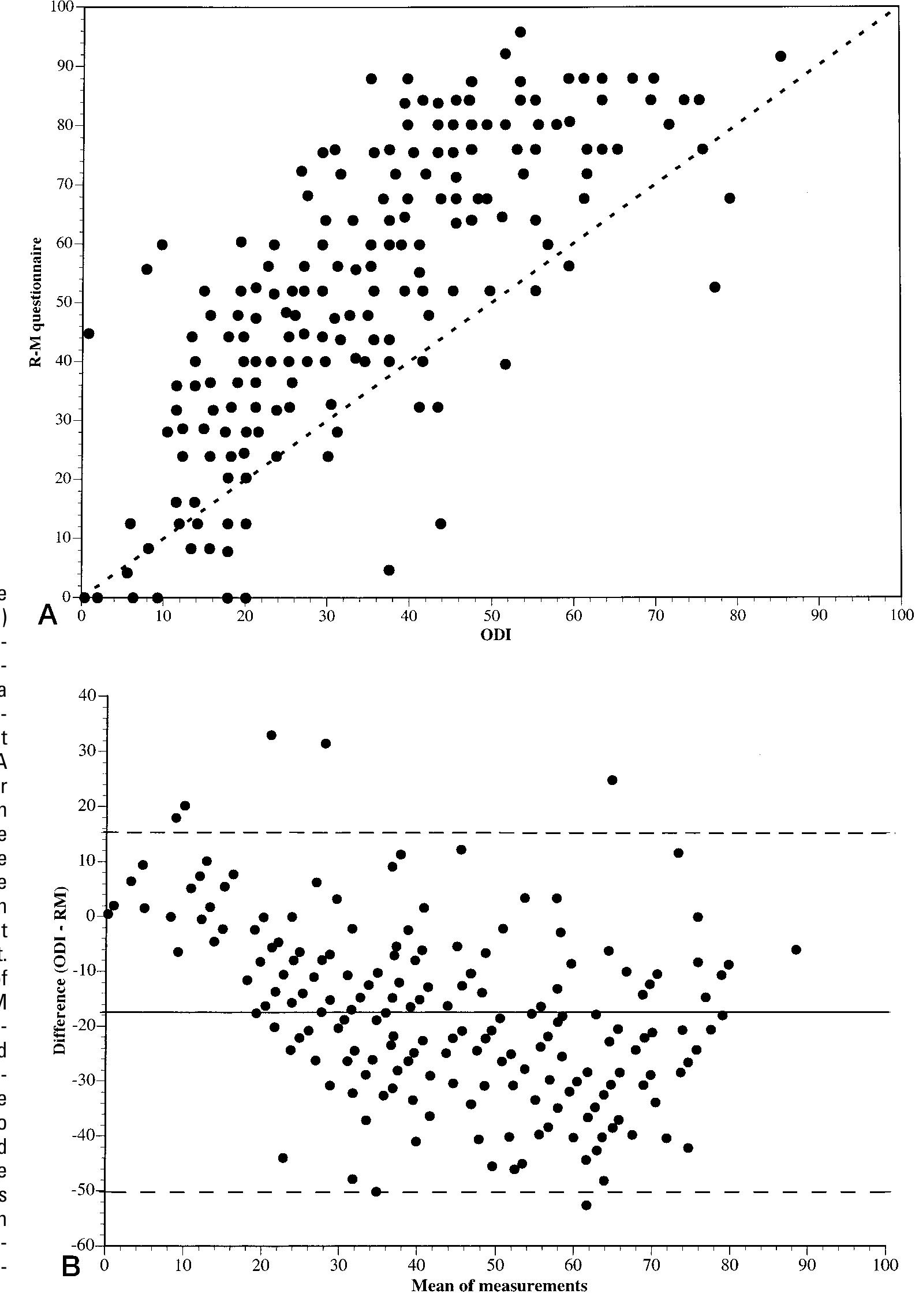
The Oswestry Disability Index (ODI), often referred to as the Oswestry Questionnaire, is a gold-standard, self-administered diagnostic tool used to measure a patient's permanent functional disability resulting from low back pain. To access a legitimate PDF version, researchers and clinicians typically rely on official orthopedic society portals or academic repositories that house the validated, copyright-protected forms, ensuring the scoring metrics remain consistent with the original 1980 publication by J.C.Y. Fairbank.
Understanding the Oswestry Disability Index
The Oswestry Disability Index is a cornerstone of spinal research and clinical practice. It was developed to quantify the impact of low back pain on a patient’s ability to manage everyday life. Unlike clinical assessments performed by physicians, the ODI is a patient-reported outcome measure (PROM), meaning it captures the subjective experience of the individual.
The questionnaire consists of ten sections. Each section evaluates a different aspect of functional activity, such as pain intensity, personal care, lifting, walking, sitting, standing, sleeping, sex life, social life, and traveling. Each section is scored from 0 to 5, where 0 represents the least disability and 5 represents the most severe limitation. The total score is calculated and expressed as a percentage of disability.
Why Clinical Integrity Matters
When searching for an "Oswestry questionnaire PDF," it is vital to differentiate between official versions and modified or unauthorized derivatives. Because the ODI is a copyrighted instrument, researchers and clinicians must ensure they are using the version that aligns with their specific study or clinical requirements. Unauthorized, modified versions may lack the psychometric validity of the original, leading to inconsistent data collection that could compromise clinical decision-making or research integrity.
Identifying Reliable Sources for the ODI
Accessing a verified PDF of the Oswestry Questionnaire requires knowledge of where such instruments are archived. The tool is frequently distributed through reputable medical organizations.
Academic and Professional Sources
- Orthopedic Societies: National and international spine societies often host the validated PDF versions of outcome measures on their professional development portals.
- Clinical Trial Registries: Institutions running major longitudinal studies on spinal health often maintain public-facing repositories of the outcome measures they utilize.
- Institutional Repositories: University libraries and hospital quality-assurance portals frequently host versions intended for clinical use, provided they include proper attribution to the original authors.
The Problem with Unvetted Third-Party PDFs
A simple search engine query for "Oswestry questionnaire PDF" will return thousands of results, many of which are hosted on document-sharing websites. These versions are often:
- Outdated: They may not reflect minor scoring adjustments or formatting requirements implemented in later revisions.
- Non-Compliant: They may lack the necessary copyright notices or licensing requirements for use in professional or commercial settings.
- Altered: Some websites "summarize" or "simplify" the questionnaire, which inherently breaks the validated scoring system. If you use a version that has been tampered with, you cannot compare your results to existing medical literature.
Steps for Verifying Your Document
Before utilizing a downloaded PDF, you must perform a brief audit of the document to ensure it is appropriate for clinical or research use.
1. Check for Attribution
A legitimate copy of the Oswestry Disability Index will always acknowledge the source material. Look for references to Fairbank and the original 1980 publication in Physiotherapy or the updated 2000 publication in Spine. If the document lacks a citation or a reference to the authors, it is likely an unverified derivative.
2. Verify the Scoring Instructions
The ODI is only useful if it is scored correctly. The calculation involves adding the points from all answered sections, dividing by the maximum possible score (which varies if some questions are left unanswered), and multiplying by 100. A high-quality PDF will include the "Scoring Instructions" section on the second page. If these instructions are missing or unclear, the document may not be an official clinical version.
3. Review for "Modified" Labeling
Some variations exist, such as the "Modified Oswestry Disability Index." If your project requires the original tool, ensure the document does not contain "Modified" in the title. Using the wrong version can lead to errors in clinical outcomes research, where consistency across a dataset is paramount.
Comparison of Access Methods
| Access Method | Reliability | Effort Required | Recommended For |
|---|---|---|---|
| Official Society Portals | Very High | Low | Clinicians, Researchers |
| University/Library Archives | High | Medium | Academic Students |
| Medical Institution Intranet | High | Low | Hospital Staff |
| General Web Searches | Low | Very Low | Personal Awareness Only |
Navigating Legal and Licensing Requirements
While the Oswestry Disability Index is widely used, it is important to understand that it is intellectual property. For the majority of clinical practices, use is permitted under standard medical practice guidelines. However, if you are incorporating the ODI into a commercial software application, a proprietary mobile health app, or a large-scale pharmaceutical study, you may be required to obtain formal licensing or permission.
Always check the "Copyright" or "Permissions" section of the professional society providing the PDF. They will often provide clear guidance on whether an academic license is required or if the document is free for non-profit clinical usage. Ignoring these requirements can result in legal challenges, particularly in the digital age where software-based collection of patient data is heavily regulated.
Practical Guidance for Clinical Implementation
Once you have secured a verified PDF, the implementation phase involves ensuring that patients understand the objective of the tool.
Educating the Patient
The ODI is a self-reported tool, which means its accuracy depends entirely on the patient's honesty and understanding. Clinicians should instruct the patient to:
- Answer every question as truthfully as possible.
- Not overthink the answers; the initial response is usually the most accurate representation of their current pain state.
- Leave the section blank if it truly does not apply to them, but understand that this will change the total score calculation.
Troubleshooting Common Issues
- "My patient cannot read the text." Ensure your digital distribution methods allow for font scaling. If you are printing the PDF, use a standard 12-point font.
- "The patient is confused by the scoring." The patient should only focus on filling out the checkboxes. The scoring is a post-processing step for the clinician to perform, not the patient.
- "The patient skipped a question." The scoring methodology for the ODI accommodates this, but it requires the scorer to adjust the denominator (the maximum possible score) accordingly.
Frequently Asked Questions
1. Is the Oswestry Questionnaire free to use in my clinic? The Oswestry Disability Index is widely available for clinical practice, but it is not public domain. While many medical settings use it freely, you should ensure you are using a version obtained from an authoritative source that explicitly outlines the usage policy.
2. Where can I find the official scoring instructions for the ODI? The scoring instructions are standard and should be included on any professional-grade PDF version. The total score is calculated by dividing the sum of the points by the total possible points, multiplied by 100.
3. Are there different versions of the Oswestry Questionnaire? Yes. While the original 1980 version remains the primary standard, several variations exist, including the "Modified Oswestry" and various language translations. Always ensure the version you download matches the language and regional requirements of your patients.
4. Can I host a PDF of the ODI on my personal blog? No. Distributing copies of copyrighted medical assessments on personal websites or public blogs without explicit permission from the copyright holders can constitute an infringement. You should always link to an official, reputable source instead of hosting the file yourself.
5. How often should the Oswestry Questionnaire be administered? The frequency of administration depends on the clinical protocol, but it is common to use the ODI at the start of treatment, during major milestones, and at the end of a rehabilitation program to measure progress objectively.
Next Actions for Practitioners and Researchers
For those looking to begin using the ODI immediately, the recommended action is to visit the website of a major regional spinal surgery society or a recognized physical therapy association. These organizations act as gatekeepers for accurate, validated documentation. If you are working within a hospital system, contact your medical librarian or clinical quality department first, as they often maintain internal libraries of validated forms that are pre-approved for use within the facility’s specific regulatory environment. Always document the version date of the questionnaire you are using in your clinical notes or research methodology to ensure the reproducibility of your data.