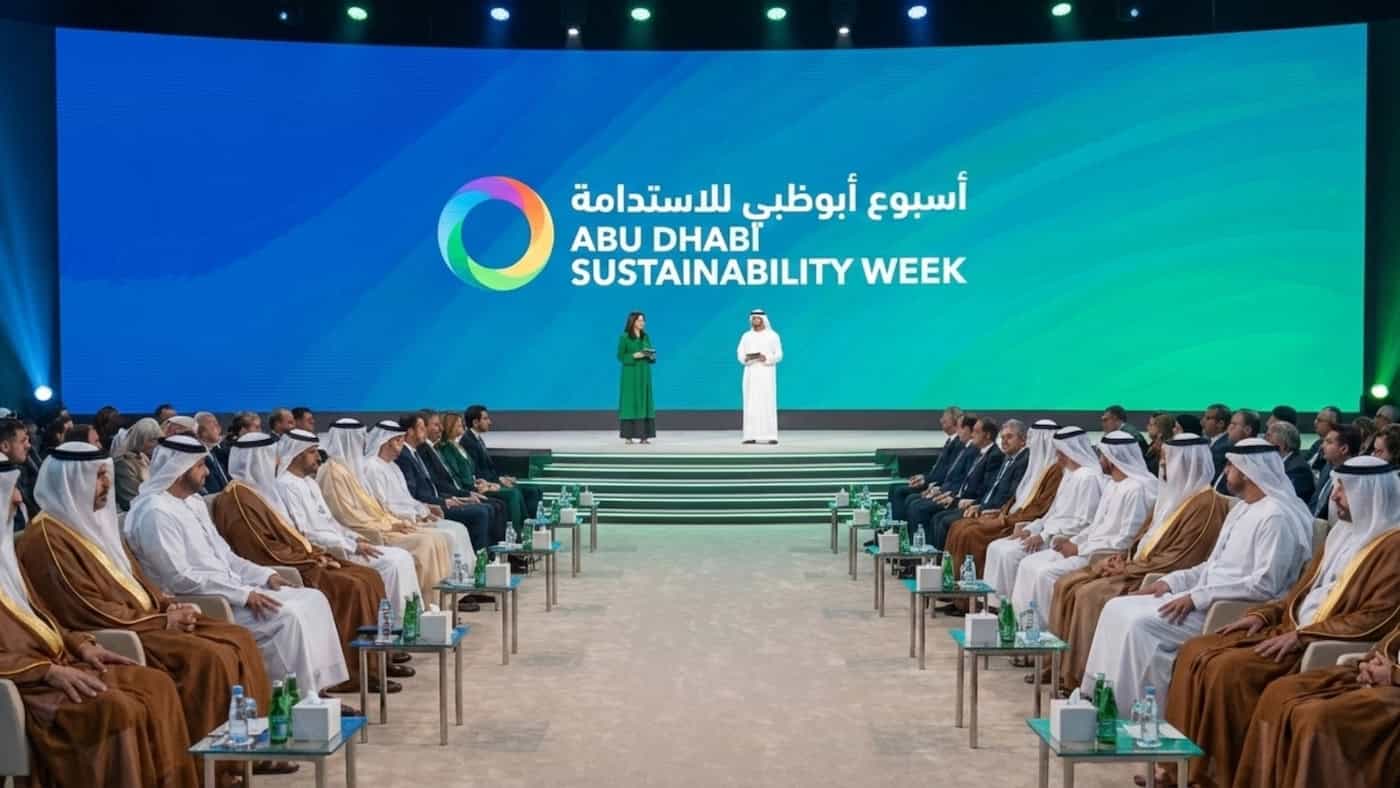
Abu Dhabi Sustainability Week (ADSW) in 2023 served as a critical global platform for accelerating sustainable development, taking place just months before the UAE hosted COP28. The event focused on driving concrete climate action, energy security, and the diversification of economies through technological innovation, multi-stakeholder collaboration, and the mobilization of climate finance to support the global energy transition.
The Significance of ADSW 2023 in the Global Context
Abu Dhabi Sustainability Week is an annual global initiative championed by the United Arab Emirates and Masdar, the Abu Dhabi Future Energy Company. While ADSW has been a fixture on the international calendar for over a decade, the 2023 edition held particular strategic importance. Occurring in January 2023, the event functioned as a precursor to the UN Climate Change Conference (COP28), which was also held in the UAE later that year.
The primary objective of ADSW 2023 was to bridge the gap between high-level climate commitments and real-world implementation. By convening heads of state, policymakers, industry leaders, investors, and youth advocates, the week sought to create a roadmap for achieving net-zero emissions while ensuring energy affordability and reliability—a balancing act that became increasingly difficult due to global geopolitical instability and energy price volatility in the preceding years.
Core Themes and Strategic Pillars
The 2023 program was structured around several high-priority themes that reflected the evolving needs of the global energy landscape. These pillars were designed to move discussions beyond mere advocacy and into the realm of actionable policy and investment.
1. Energy Security and the Transition
With the world facing supply chain disruptions and volatile energy markets, the 2023 event placed significant emphasis on energy security. The consensus among participants was that the energy transition is not merely an environmental imperative but a foundation for long-term economic stability. Discussions highlighted the need for simultaneous investment in renewable energy infrastructure and the decarbonization of traditional energy sources.
2. Scaling Climate Finance
A recurring challenge identified throughout the week was the "finance gap." Developing nations often struggle to access the capital required for climate adaptation and mitigation. ADSW 2023 prioritized the mobilization of institutional capital, exploring how blended finance models—combining public and private funding—could de-risk projects in emerging markets and incentivize large-scale investment in clean technology.
3. Industrial Decarbonization
Recognizing that sectors such as heavy industry, aviation, and shipping are among the hardest to abate, the 2023 agenda featured deep dives into hydrogen technology, carbon capture and storage (CCS), and the electrification of industrial processes. The event served as a showcase for advancements in green hydrogen, highlighting its potential as a clean fuel for energy-intensive sectors that cannot rely solely on direct electrification.
Key Events and Components of the 2023 Program
ADSW 2023 was not a single conference but a series of high-level meetings, forums, and exhibitions. Understanding the structure of these events is essential for grasping the multifaceted approach taken during the week.
- The ADSW Opening Ceremony: This inaugural event set the tone for the week, featuring addresses from world leaders and heads of international organizations who emphasized the urgency of the "decade of action."
- The World Future Energy Summit (WFES): As the centerpiece of the exhibition, WFES provided a physical space for businesses to showcase innovations in solar, wind, and storage technology. It served as a commercial engine for the week, facilitating partnerships and technology transfers.
- The Zayed Sustainability Prize Awards: This event recognized the impact of small-to-medium enterprises, non-profits, and high schools that have developed localized solutions to sustainable development challenges in health, food, energy, and water.
- The Youth for Sustainability (Y4S) Forum: Understanding that the transition will span generations, this platform empowered young climate advocates to engage with industry leaders, ensuring that the perspective of the next generation of decision-makers was represented in policy discussions.
Comparing ADSW 2023 Objectives with Previous Editions
To understand the evolution of the event, it is helpful to contrast the focus of 2023 with previous years. While early iterations of ADSW were primarily focused on raising awareness of renewable energy, the 2023 edition was markedly more industrial and financial in its orientation.
| Focus Area | Early ADSW Editions | ADSW 2023 Edition |
|---|---|---|
| Primary Goal | Awareness & Advocacy | Implementation & Scalability |
| Target Audience | Government & Research | Finance, Industry & Policy |
| Tech Focus | Pilot Projects/Concepts | Industrial-scale Deployment |
| Economic View | Clean Energy as Alternative | Clean Energy as Economic Engine |
This shift demonstrates a maturation in the global climate discourse. By 2023, the question was no longer "Is renewable energy viable?" but rather "How can we deploy these technologies at the scale and speed required to meet the Paris Agreement targets?"
Challenges Addressed: The "Trilemma"
One of the most persistent issues discussed during ADSW 2023 was the "Energy Trilemma." This concept refers to the difficulty of balancing three competing priorities:
- Energy Security: Ensuring that energy supplies remain stable and resilient against geopolitical shocks.
- Energy Equity: Making energy affordable and accessible to all populations, particularly in the Global South.
- Environmental Sustainability: Reducing the carbon intensity of the energy mix to meet climate goals.
The 2023 discussions frequently highlighted that ignoring any one of these three elements leads to failure. For instance, prioritizing environmental sustainability without ensuring affordability can result in social backlash, while prioritizing security without transition leads to long-term climate catastrophe. The event aimed to synthesize these needs, providing a policy framework for governments to navigate the trade-offs.
The Role of Technological Innovation
Innovation remained the heartbeat of the week. Exhibitors at the World Future Energy Summit presented tangible advancements in battery storage, which is increasingly viewed as the "holy grail" of the transition. Without robust storage capacity, solar and wind power remain intermittent, limiting their ability to replace base-load power from fossil fuels.
Furthermore, hydrogen-based technologies received significant attention. Experts noted that while green hydrogen—produced via electrolysis using renewable power—is currently expensive, the scale of projects planned in the UAE and elsewhere is expected to drive down costs significantly by the end of the decade. The presence of international research institutions alongside commercial firms underlined the collaborative nature of this technological push.
Lessons and Next Actions for Stakeholders
For businesses and policymakers attending or observing ADSW 2023, the key takeaway was the necessity of long-term planning and cross-border cooperation. Climate change is a transboundary issue that no single nation can solve.
- For Investors: The event highlighted that the risk profile of clean energy is shifting. As technologies mature and policy support (such as carbon pricing) strengthens, clean energy investments are increasingly viewed as stable, long-term assets rather than speculative ventures.
- For Policymakers: The importance of consistent regulatory environments was stressed. Investors require certainty to commit capital; therefore, government-backed net-zero roadmaps are essential to provide the transparency needed for institutional investors to enter the market.
- For Industry Leaders: The focus must remain on decarbonizing existing supply chains. Efficiency, circularity, and the integration of renewable energy into manufacturing are no longer optional "green" marketing features but essential requirements for future market competitiveness.
Frequently Asked Questions
What was the primary goal of ADSW 2023? The primary goal was to mobilize international cooperation and finance to bridge the gap between climate commitments and real-world implementation, effectively acting as a launchpad for COP28 later in the year.
Who hosts and organizes the event? ADSW is hosted by the United Arab Emirates and organized by Masdar, the Abu Dhabi Future Energy Company, often in partnership with international organizations and government entities.
Is ADSW strictly about solar and wind energy? No, while solar and wind are foundational, the scope of the event is much broader. It covers energy policy, water security, waste-to-energy technologies, green hydrogen, and climate finance, among other sustainability-related sectors.
Did ADSW 2023 introduce new climate policies? While ADSW is not a legislative body, it acts as an incubator for policy. Many of the discussions and commitments made regarding clean hydrogen and climate finance helped shape the agenda and collaborative agreements established during the COP28 proceedings.
Can individual companies participate? Yes, ADSW is open to various stakeholders, including corporations, SMEs, and startups. Companies can participate by exhibiting their technology at the World Future Energy Summit or by attending the specialized forums to network and discuss industry trends.
What is the "Energy Trilemma" discussed at the event? It is a conceptual framework that explains the challenge of balancing three competing, yet essential, goals: energy security, energy equity, and environmental sustainability.
Conclusion and Next Steps
The legacy of Abu Dhabi Sustainability Week 2023 lies in its success in framing the climate transition as a tangible economic opportunity. For those interested in the ongoing outcomes of these discussions, the next phase of action involves tracking the deployment of capital in the projects that were initiated during the week. Stakeholders should prioritize participating in subsequent ADSW iterations and leveraging the networks formed during these events to monitor progress on the commitments made toward decarbonization and technological integration.