An abscessed tooth is a painful pocket of pus caused by a bacterial infection, typically resulting from untreated dental decay, a cracked tooth, or severe gum disease. True relief requires professional dental intervention to drain the infection and treat the root cause, though temporary management strategies can help control discomfort while you wait for urgent care.
Understanding the Anatomy of an Abscessed Tooth
To understand why an abscessed tooth causes such intense pain, you must first look at the internal architecture of a tooth. Beneath the hard outer layer of enamel and the underlying dentin lies the dental pulp. This central chamber contains living blood vessels, connective tissue, and sensory nerve fibers that extend down through the root canals into the jawbone.
When bacteria breach the protective barriers of enamel and dentin—usually via deep cavities, physical trauma, or failing dental restorations—they invade the pulp chamber. This invasion causes inflammation known as pulpitis. As the bacteria multiply, they destroy the pulp tissue and travel down through the root tip into the surrounding alveolar bone.
The body mounts an immune response, sending white blood cells to fight the infection. The accumulation of dead white blood cells, bacteria, and tissue debris forms pus. Because the bone and the surrounding tooth structures are rigid, the accumulating pus creates immense pressure inside a confined space. This pressure compresses the sensory nerve endings within the root, triggering severe, throbbing pain that often radiates to the jaw, neck, or ear.
Types of Dental Abscesses
Dental professionals generally categorize abscesses based on where the infection originates:
- Periapical Abscess: This occurs at the tip of the root and is almost always the result of a dead or dying nerve inside the tooth pulp, usually stemming from severe decay.
- Periodontal Abscess: This starts in the gums and the bone supporting the teeth, typically caused by advanced periodontal disease rather than direct decay inside the tooth structure.
- Gingival Abscess: This affects only the gum tissue and does not typically involve the tooth itself, often caused by a foreign object (like a popcorn hull or toothbrush bristle) becoming lodged in the gum line.
Root Causes: How an Infection Develops
Tooth abscesses do not develop overnight. They are almost always the final stage of a progressive pathological process inside the oral cavity. Recognizing the contributing factors helps illustrate why routine dental visits are critical for prevention.
Untreated Dental Caries (Cavities)
Cavities are the most common gateway for bacteria. Acid-producing bacteria in dental plaque break down the tooth's mineralized enamel. If left unfilled, the decay progresses through the dentin layer, which is softer and more porous than enamel, allowing bacteria rapid access to the pulp chamber.
Trauma and Fractures
A physical blow to the mouth, a sports injury, or chronic teeth grinding (bruxism) can cause structural cracks, chips, or vertical root fractures. Even hairline fractures that are invisible to the naked eye can act as microscopic highways for bacteria to bypass enamel and enter the inner pulp.
Compromised Dental Work
Old, leaking, or damaged fillings, crowns, and bridges can deteriorate over time. Micro-gaps form between the restoration and the natural tooth structure, trapping food particles and bacteria where toothbrush bristles cannot reach, allowing decay to fester underneath.
Advanced Gum Disease (Periodontitis)
When plaque hardens into calculus (tartar) below the gum line, it creates deep pockets between the teeth and gums. Bacteria thrive in these oxygen-deprived pockets, eventually destroying the supporting jawbone and creating a pathway for a periodontal abscess.
Recognizing the Symptoms
While throbbing pain is the hallmark symptom, an abscessed tooth presents a constellation of clinical signs that indicate the severity and spread of the infection.
- Severe, Continuous Pain: A sharp, throbbing, or shooting pain that worsens when chewing, biting down, or lying flat.
- Temperature Sensitivity: Extreme discomfort or lingering pain when consuming hot or cold foods and liquids.
- Swelling and Facial Edema: Swelling in the gums near the affected tooth, often resembling a small pimple or blister (a fistulous tract), as well as visible swelling in the cheek, jaw, or face.
- Lymph Node Tenderness: Enlarged and tender lymph nodes under the jaw or in the neck as the immune system fights the spreading bacteria.
- Fever and Malaise: A systemic fever and general fatigue indicating that the infection is no longer localized strictly to the oral cavity.
- Unpleasant Taste and Odor: A sudden, foul-tasting, salty discharge in the mouth if the abscess ruptures and drains pus.
| Symptom Category | Clinical Presentation | What It Indicates |
|---|---|---|
| Local Pain | Constant, throbbing ache radiating to jaw/ear | Pressure on nerve endings inside the root canal |
| Visual Signs | Gum boil (pimple), facial swelling, redness | Pus accumulation seeking an exit route through tissue |
| Systemic Effects | Fever, chills, swollen lymph nodes | Immune system response to spreading bacterial toxins |
| Sensory Changes | Foul taste, sudden release of salty fluid | Spontaneous rupture and drainage of the abscess pocket |
How to Stop the Pain: Immediate Home Measures
An abscessed tooth is a medical emergency that requires professional dental treatment. Home remedies will never cure the underlying infection, because antibiotics and analgesics cannot penetrate the closed, dead space of a necrotic tooth root. However, if you cannot see a dentist immediately, certain measures can help manage the pain safely while you secure an emergency appointment.
Over-the-Counter Pain Relievers
Nonsteroidal anti-inflammatory drugs (NSAIDs) such as ibuprofen help reduce both pain and the inflammatory response surrounding the tooth root. Follow packaging guidelines carefully. If medical conditions prevent you from taking NSAIDs, acetaminophen can serve as an alternative, though it lacks anti-inflammatory properties.
Gentle Warm Salt Water Rinses
Dissolve half a teaspoon of salt in a glass of warm water. Gently swish the solution around the affected area for 30 seconds and spit it out. This helps cleanse the oral cavity, reduce mild surface inflammation, and soothe irritated gum tissues. Avoid extremes of hot or cold water, which can trigger sharp nerve pain.
Cold Compresses
Apply an ice pack or a cold compress wrapped in a cloth to the outside of your cheek near the painful area for 15-minute intervals. The cold constricts blood vessels, which helps reduce external facial swelling and dulls acute nerve signals.
What to Avoid
- Do not place aspirin directly on the gums: Placing acetylsalicylic acid against gum tissue causes chemical burns and ulcerations of the oral mucosa.
- Do not attempt to pop or drain the abscess: Squeezing or piercing the swelling at home can force bacteria deeper into the surrounding facial planes and bloodstream, worsening the systemic infection.
- Avoid hard, sugary, or extremely hot/cold foods: These irritate exposed nerves and exacerbate mechanical stress on the compromised tooth structure.
Professional Dental Treatments
Because an abscessed tooth cannot heal on its own, a dentist must eliminate the source of infection and preserve or extract the tooth structure. The appropriate clinical intervention depends on the extent of the damage.
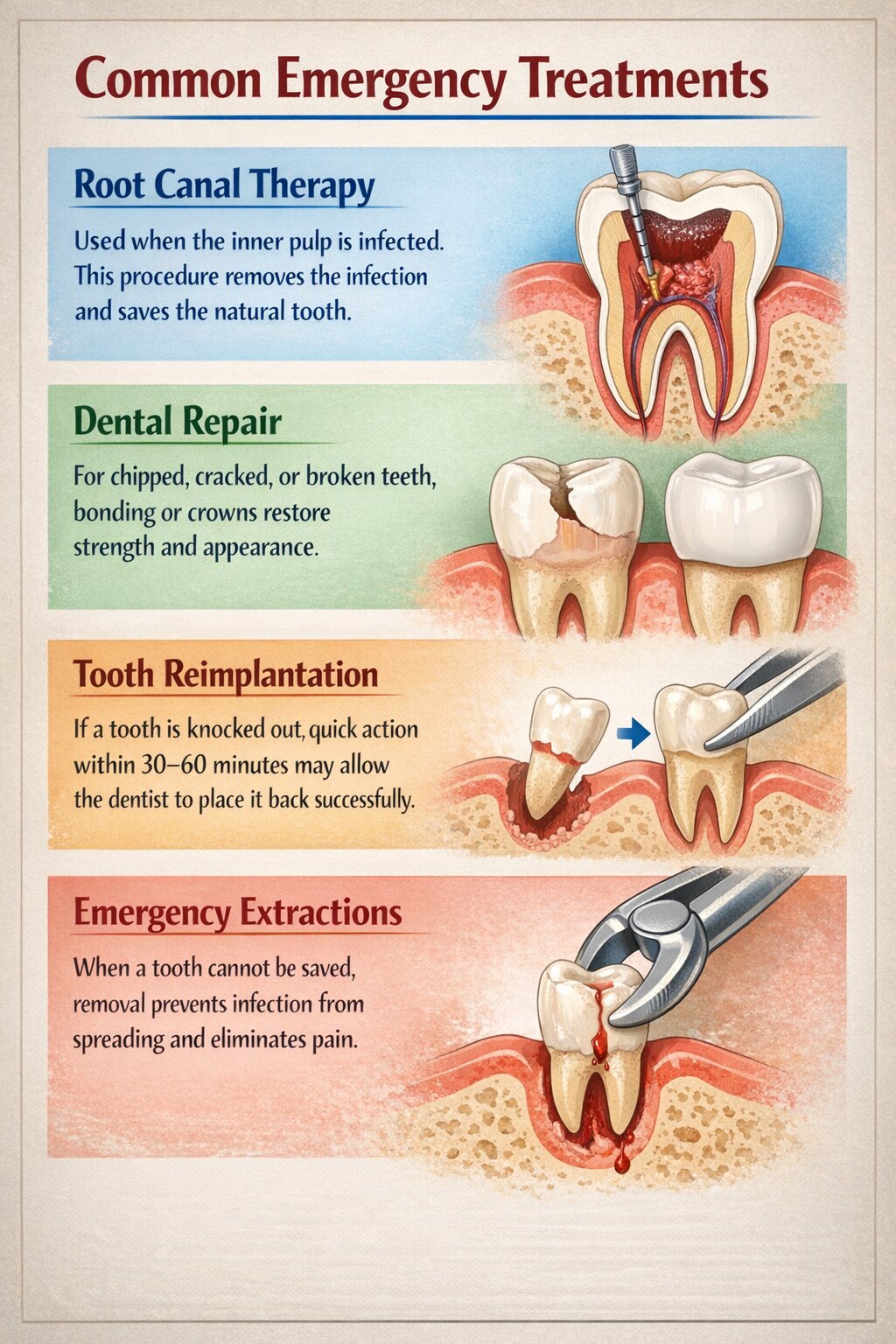
Root Canal Treatment
If the tooth structure is still salvageable, a root canal procedure is the preferred method for saving the natural tooth.
- Access: The dentist drills a small opening through the top of the tooth into the pulp chamber.
- Cleaning: Specialized instruments remove the infected pulp tissue, bacteria, and debris from the pulp chamber and root canals.
- Disinfection: The canals are irrigated with antibacterial solutions to eradicate remaining microorganisms.
- Sealing: The empty canals are filled with a biocompatible rubber-like material called gutta-percha and sealed.
- Restoration: Because root-treated teeth become brittle over time, a custom dental crown is typically placed on top to restore full chewing strength and protect the tooth from fracture.
[Infected Tooth] ➔ [Access & Cleaning] ➔ [Disinfection] ➔ [Gutta-Percha Sealing] ➔ [Crown Placement]
Tooth Extraction
If the tooth is severely fractured, compromised by advanced bone loss, or structurally ruined beyond repair, a root canal will not succeed. In these cases, the dentist must perform an extraction. After removing the tooth, the dentist cleans out the remaining infection in the socket. To replace the missing tooth and prevent shifting of adjacent teeth, options such as dental implants, fixed bridges, or partial dentures can be discussed once the infection has fully cleared.
Incision and Drainage
If an associated soft-tissue swelling or gum abscess has formed, the dentist may make a small incision into the swelling to allow accumulated pus to drain safely. A small rubber drain may be temporarily placed to keep the wound open until all fluid discharges.
Antibiotic Therapy
Dentists do not prescribe antibiotics for every dental issue, but they are essential if the infection has spread beyond the local tooth socket, causing fever, facial swelling, or compromised immune response. Common antibiotics include penicillin derivatives or amoxicillin. It is vital to complete the entire prescribed course even if pain subsides, stopping early can lead to antibiotic-resistant bacterial strains.
Complications of Leaving an Abscess Untreated
Ignoring tooth abscess pain under the assumption that it will resolve on its own is dangerous. When the nerve inside an abscessed tooth eventually dies entirely, the acute pain may temporarily disappear. This "pain relief" is deceptive, the underlying bacterial infection continues to multiply and spread through the jawbone and surrounding tissues.
Untreated dental infections can lead to severe, life-threatening complications:
- Osteomyelitis: A serious bacterial infection of the jawbone that destroys bone tissue and requires aggressive intravenous antibiotic treatment.
- Cavernous Sinus Thrombosis: Infection spreading from upper teeth can travel upward to the venous sinuses at the base of the brain, forming a dangerous blood clot.
- Ludwig's Angina: A rapidly spreading cellulitis affecting the floor of the mouth and neck, which can quickly cause airway obstruction and asphyxiation.
- Sepsis: A systemic, whole-body inflammatory response to infection that can lead to septic shock, multi-organ failure, and death. If you experience difficulty breathing, rapid heart rate, high fever, or swelling that spreads to your neck or eye, seek emergency hospital care immediately.
Frequently Asked Questions
Can an abscessed tooth go away on its own?
No. An abscessed tooth never heals on its own. While the pain might temporarily subside if the nerve dies or if the abscess ruptures and drains pressure, the bacterial infection remains active inside the bone and root. Without professional dental treatment like a root canal or extraction, the infection will continue to spread.
How quickly does an abscessed tooth spread?
The speed at which an infection spreads varies based on individual immune health, oral hygiene, and the specific strain of bacteria. Some infections remain localized for weeks or months, while others can spread rapidly through facial tissues within hours, leading to dangerous systemic complications. Any dental abscess requires prompt evaluation.
Is an abscessed tooth considered a medical emergency?
Yes. Severe throbbing pain, facial swelling, fever, and difficulty swallowing or breathing are signs of a dental emergency. If you experience these symptoms, contact an emergency dentist immediately or visit a hospital emergency department if airway swelling occurs.
Can warm saltwater rinses cure a tooth abscess?
Saltwater rinses cannot cure an abscess because they cannot reach the bacteria trapped inside the root canals or jawbone. They are useful only as a temporary palliative measure to reduce surface inflammation, cleanse the mouth, and soothe irritated gum tissues while awaiting professional care.
Why does the pain from an abscessed tooth often worsen at night?
When you lie down to sleep, blood pressure in the head and oral cavity increases. This increased blood flow exerts additional pressure inside the confined, infected pulp chamber and root tip, intensifying the throbbing sensation against sensitive nerve endings.
Next Actions
If you are currently experiencing tooth pain accompanied by swelling, fever, or a foul taste in your mouth, do not wait for the symptoms to resolve spontaneously. Contact a licensed dentist immediately to schedule an emergency evaluation. Prompt diagnosis, proper drainage, and targeted dental procedures are the only ways to eliminate the infection, relieve pain permanently, and protect your overall health.