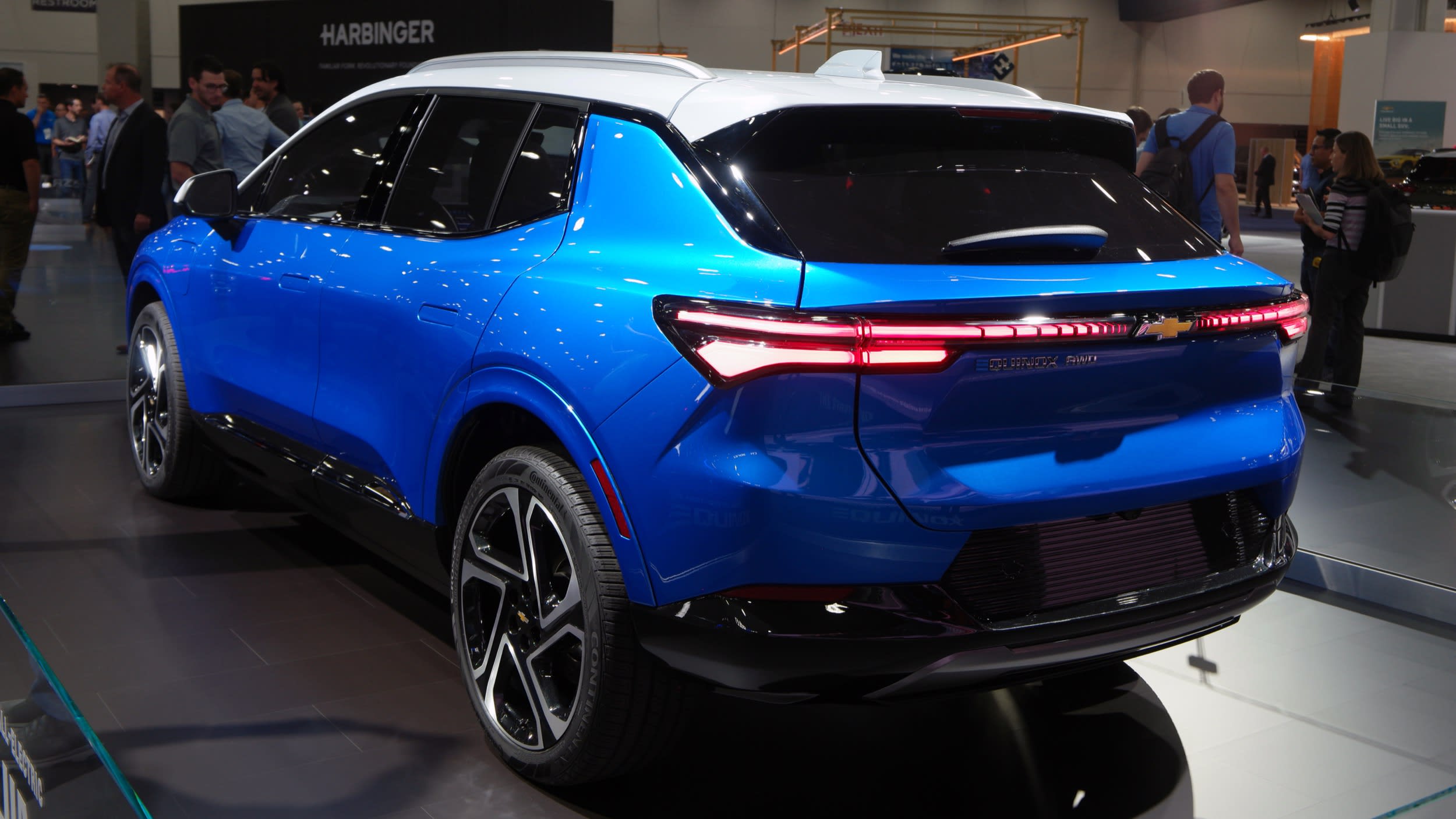
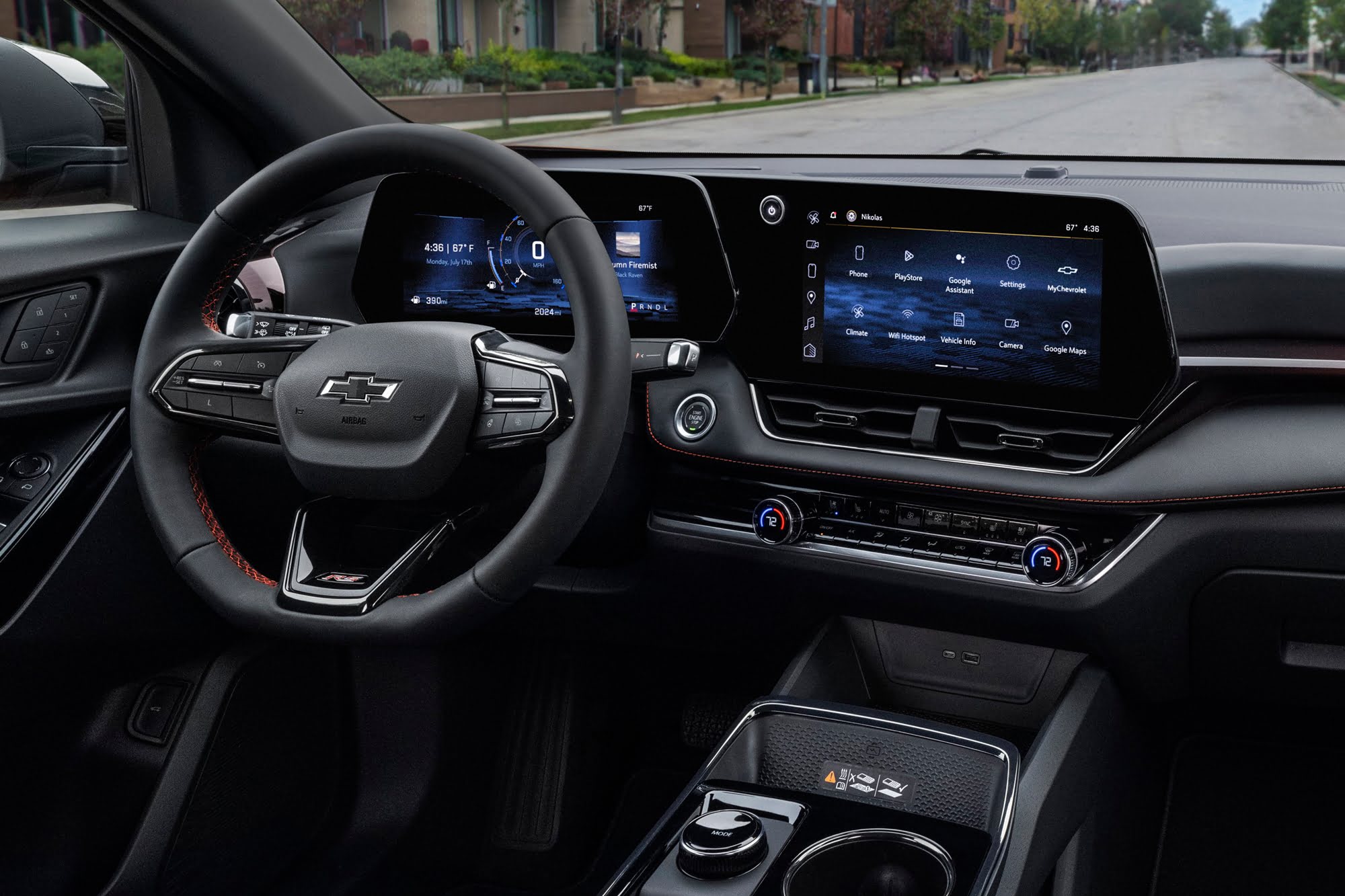
The Chevrolet Equinox 0-60 mph times vary significantly depending on the powertrain, ranging from a brisk 5.9 seconds in the Equinox EV AWD to a more sedate 8.9 seconds in the standard 1.5L turbocharged gasoline models. Over its four generations, the Equinox has prioritized fuel efficiency and utility over raw acceleration.
1. The Generational Shift in Acceleration Dynamics
The Chevrolet Equinox has occupied the compact crossover segment since 2005, and its performance profile has shifted dramatically through four distinct iterations. In the early years, Chevrolet utilized larger-displacement V6 engines to achieve competitive 0-60 times. For instance, the 2008 Equinox Sport featured a 3.6-liter V6 that could propel the vehicle to 60 mph in roughly 7 seconds—a respectable figure for that era's SUV landscape.
As the industry moved toward downsizing and turbocharging, the third generation (2018–2024) introduced a split personality. It offered a base 1.5-liter engine focused on economy and an optional 2.0-liter turbo that became a favorite for enthusiasts. However, by the launch of the fourth-generation Equinox in 2025, Chevrolet consolidated the internal combustion engine (ICE) lineup, focusing almost exclusively on a refined 1.5-liter turbocharged four-cylinder paired with either a CVT (for FWD) or an 8-speed automatic (for AWD). This shift reflects a broader market trend where manufacturers prioritize "adequate" power for daily commuting over high-performance metrics in family-oriented crossovers.
2. The Legacy of the 2.0L Turbocharged "Unicorn"
For those researching the fastest gasoline-powered Equinox models, the 2018–2020 2.0-liter turbocharged engine remains the gold standard. Producing 252 horsepower and 260 lb-ft of torque, this engine allowed the Equinox to achieve a 0-60 mph time of approximately 6.6 to 6.8 seconds. This engine was paired with a 9-speed automatic transmission that provided crisp shifts and helped the vehicle feel significantly more energetic than its competitors.
The "0-60" appeal of the 2.0T was its ability to handle highway merging and overtaking with ease, even when fully loaded with passengers. Unfortunately, due to shifting consumer preferences and the push toward higher fleet fuel economy standards, Chevrolet discontinued this engine option after the 2020 model year. Today, in 2026, these specific models remain highly sought after in the used market by buyers who want an Equinox with a bit more "zip" than the current new models provide.
3. Understanding the Modern 1.5L Turbo Performance
If you are looking at a 2025 or 2026 gasoline Chevy Equinox, you are likely looking at the 1.5-liter turbocharged inline-four engine. This engine produces 175 horsepower and 184 lb-ft of torque (increasing to 203 lb-ft in AWD configurations). In terms of 0-60 mph performance, this translates to a time of roughly 8.8 to 9.1 seconds.
While these numbers might seem slow on paper, it is important to understand the engineering intent:
- Torque Delivery: The turbocharger allows peak torque to arrive early in the RPM range, making the car feel responsive when pulling away from a stoplight, even if the total 0-60 sprint isn't record-breaking.
- Transmission Tuning: The use of a Continuously Variable Transmission (CVT) in front-wheel-drive models is designed for smoothness and efficiency. For those who want a more traditional feel, the all-wheel-drive models use an 8-speed automatic, which provides better gear hunting for acceleration but doesn't significantly alter the total 0-60 time.
- Weight Factors: The Equinox is a heavy vehicle. Moving nearly 3,500 to 3,800 pounds with a 1.5-liter engine requires a balance of boost and gearing that favors steady progress over explosive speed.
4. The Equinox EV: A New Benchmark for Quickness
The introduction of the Equinox EV (launched in mid-2024) fundamentally rewrote the performance rules for this nameplate. Built on the Ultium platform, the EV version offers immediate torque that gasoline engines simply cannot match at this price point.
The Equinox EV comes in two primary configurations:
- Front-Wheel Drive (FWD): With roughly 213 horsepower, the FWD EV manages a 0-60 time of about 7.7 to 8.0 seconds.
- All-Wheel Drive (eAWD): The dual-motor setup increases output to 288 horsepower and 333 lb-ft of torque. This version is the quickest Equinox ever produced, hitting 60 mph in approximately 5.8 to 6.0 seconds.
This leap in performance is due to the inherent nature of electric motors, which provide 100% of their available torque at 0 RPM. For a driver coming from a 1.5L gas Equinox, the EV feels like a completely different class of vehicle during acceleration.
5. How the Equinox Compares to Its Compact SUV Rivals
To put the Equinox 0-60 times in context, it is helpful to see how it stacks up against its primary competition. The compact SUV segment is incredibly crowded, and performance varies based on whether the competitor offers a "performance" engine upgrade or a hybrid powertrain.
| Vehicle Model | Engine Type | Approx. 0-60 MPH (Seconds) |
|---|---|---|
| Chevy Equinox (Current ICE) | 1.5L Turbo Gas | 8.9 |
| Chevy Equinox EV (eAWD) | Dual Motor Electric | 5.9 |
| Honda CR-V Hybrid | 2.0L Hybrid | 7.6 |
| Toyota RAV4 (Gas) | 2.5L Natural Aspirated | 8.0 |
| Toyota RAV4 Prime (PHEV) | 2.5L Plug-in Hybrid | 5.5 |
| Mazda CX-5 | 2.5L Turbo Gas | 6.2 |
| Hyundai Tucson | 2.5L Gas | 8.8 |
As the table illustrates, the gasoline Equinox is on the slower end of the spectrum, while the Equinox EV (AWD) is highly competitive, only being bested by specialized performance hybrids like the RAV4 Prime.
6. Real-World Variables Impacting Your Sprint Times
It is a common mistake to assume that a manufacturer's 0-60 time will be achieved every time you floor the pedal. Several technical and environmental factors can add a full second or more to these times:
- Altitude: For gasoline engines, thin air at high altitudes (like in Denver) reduces the oxygen available for combustion. Even with a turbocharger, you can expect a 10-15% decrease in performance. The Equinox EV, however, is immune to altitude-related power loss.
- Payload: The 0-60 times published by MotorTrend or Car and Driver are usually tested with only a driver and minimal fuel. Adding four passengers and a cargo bay full of gear can easily add 500-800 pounds, significantly slowing the 1.5L engine.
- Wheel and Tire Choice: Larger wheels (like the 20-inch options on the RS trim) add unsprung weight and rotational mass, which can slightly dull acceleration compared to the lighter 17-inch wheels found on the LT trim.
- Fuel Quality: While the 1.5L turbo is designed to run on 87-octane regular gas, using lower-quality fuel in extreme heat may cause the engine's computer to pull back timing to prevent "knock," resulting in a sluggish 0-60 sprint.
7. Does 0-60 Actually Matter for an Equinox Buyer?
When analyzing the Chevy Equinox, it is essential to distinguish between "racing speed" and "usable power." Most Equinox owners are not taking their vehicles to a drag strip; they are navigating suburban traffic and merging onto freeways.
The 0-60 metric is often a proxy for confidence. A vehicle that takes 9 seconds to reach highway speeds requires the driver to plan their merges more carefully. In contrast, a vehicle like the Equinox EV AWD allows for "point-and-shoot" driving, where the driver can see a gap in traffic and accelerate into it instantly.
Chevrolet has leaned into the philosophy that for the average family, interior volume (which the Equinox excels at), safety tech, and fuel economy are more important than a sub-7-second 0-60 time. However, the pivot to EVs proves that Chevy recognizes speed is a secondary benefit of electrification that can attract buyers who previously found the Equinox too "boring."
Frequently Asked Questions
Which Chevy Equinox year is the fastest? The fastest internal combustion Equinox is the 2018–2020 model equipped with the 2.0L turbocharged engine, hitting 0-60 in about 6.6 seconds. However, the overall fastest Equinox is the current Equinox EV with eAWD, which completes the sprint in approximately 5.9 seconds.
Is the Chevy Equinox underpowered? The 1.5L gasoline model is often described as "adequate" rather than underpowered. It handles city driving well due to its early torque delivery, but it can feel strained during high-speed passing maneuvers or when climbing steep grades with a full load of passengers.
Does AWD make the Equinox 0-60 faster? In the gasoline models, AWD adds weight, which can actually make the 0-60 slightly slower or neutral compared to the FWD version, despite the better traction. In the Equinox EV, however, the AWD version is significantly faster because it adds a second electric motor, increasing total horsepower from 213 to 288.
How does the Equinox EV 0-60 compare to a Tesla Model Y? The Equinox EV eAWD (5.9 seconds) is slower than the Tesla Model Y Long Range (approx. 4.8 seconds) and significantly slower than the Model Y Performance (3.5 seconds). The Equinox EV is positioned as a more affordable, mainstream alternative rather than a performance-first EV.
Can I tune the 1.5L Equinox to be faster? While aftermarket ECU tunes exist for GM’s 1.5L turbo engines, they are not recommended for the Equinox. The gains are minimal, and such modifications often void the manufacturer's warranty and can put undue stress on the CVT or 8-speed transmission.
Practical Recommendation
If 0-60 acceleration is a priority for your driving style, you should skip the gasoline-powered Equinox and look specifically at the Equinox EV with eAWD. The difference in responsiveness and passing power is night and day. If you must stay with a gasoline engine, searching for a well-maintained 2019 or 2020 Equinox with the 2.0T engine will provide the best balance of utility and speed without the higher price tag of a new electric vehicle. For most drivers who simply need a reliable commuter, the current 1.5L turbo is functional, but it requires a patient foot on the accelerator.