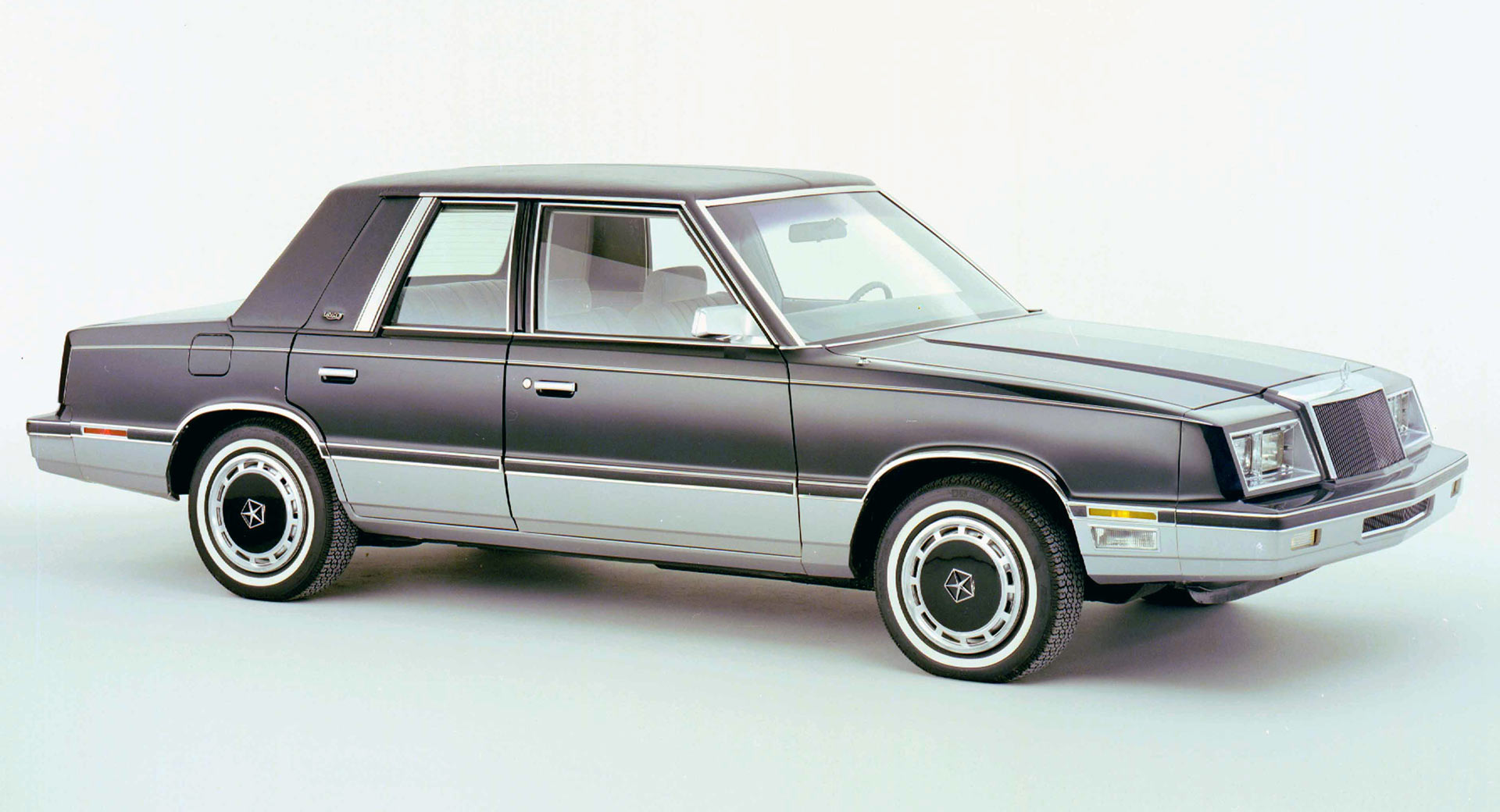
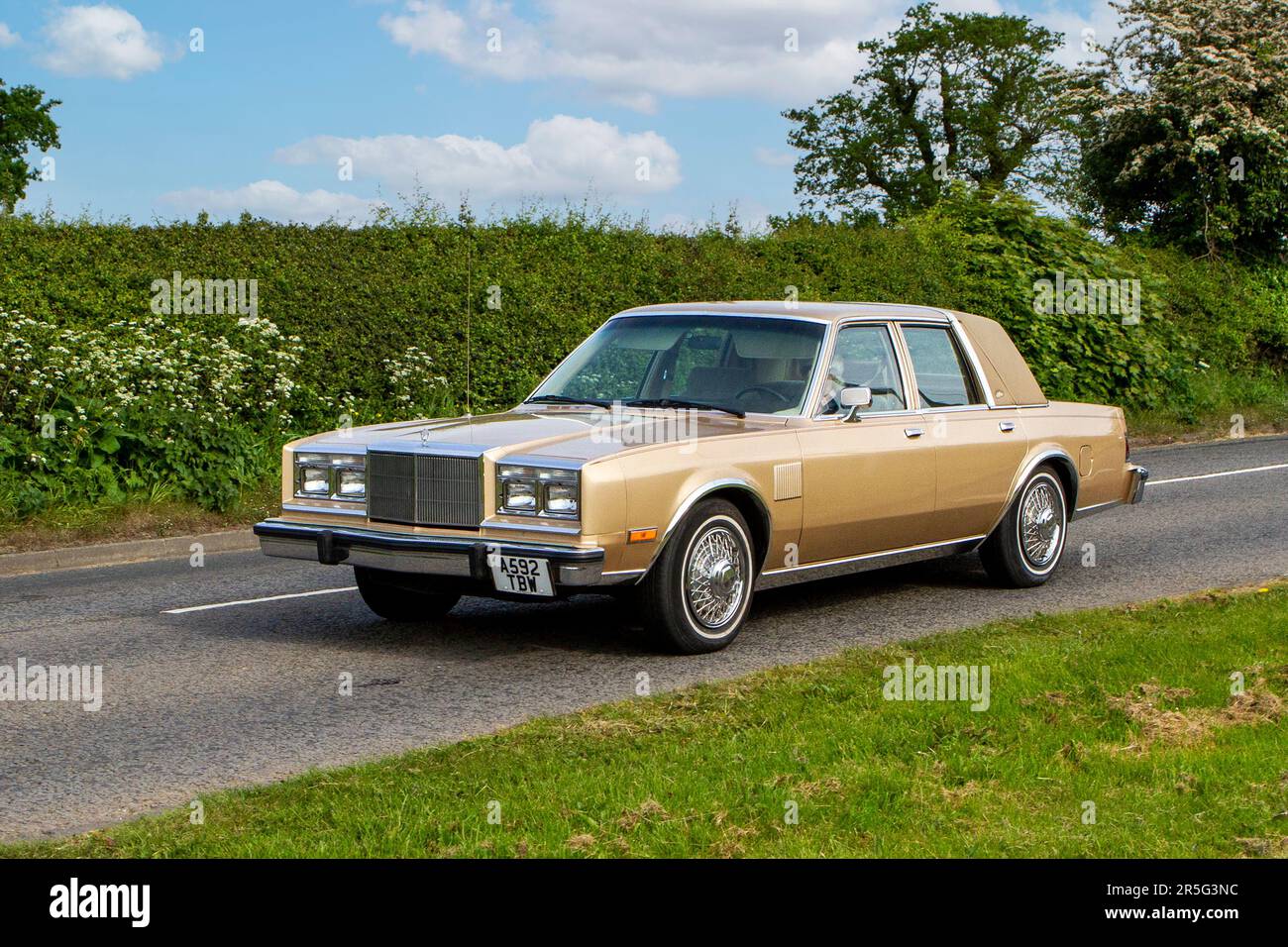
During the 1980s, Chrysler Corporation executed one of the most remarkable turnarounds in industrial history. Under the leadership of Chairman Lee Iacocca, Chrysler leveraged government-backed loan guarantees, standardized engineering platforms, front-wheel-drive packaging, and turbocharging to rescue itself from impending bankruptcy. The resulting Chrysler-badged automobiles defined 1980s automotive culture, introducing groundbreaking vehicle segments and high-tech features.
The seven most iconic Chrysler cars of the 1980s—the Chrysler LeBaron, Chrysler Town & Country, Chrysler Laser, Chrysler Conquest TSi, Chrysler Fifth Avenue, Chrysler Executive Limousine, and Chrysler TC by Maserati—showcase the company's range. These vehicles span from economical mass-market commuters and turbocharged sports coupes to traditional rear-wheel-drive luxury sedans and international coachbuilt collaborations.
1. Chrysler LeBaron: The Convertible Pioneer and Brand Savior
| Attribute | Details |
|---|---|
| Model | Chrysler LeBaron (K-Car) |
| Introduced | 1982 (K-Body) / Redesigned: 1987 (J-Body Coupe/Cabrio) |
| Layout | Transverse Front-Engine, Front-Wheel Drive |
| Engine Options | 2.2L I4, 2.5L I4, 2.2L Turbo I/II, 2.5L Turbo I |
When Chrysler launched the front-wheel-drive K-car platform in late 1980 for the 1981 model year, the upscale Chrysler LeBaron stood as the flagship of this engineering gamble. Built on the lightweight, space-efficient K-platform, the LeBaron shifted Chrysler away from heavy, fuel-inefficient rear-wheel-drive architectures toward standardized, scalable manufacturing.
In 1982, Lee Iacocca made a bold product decision by reintroducing a factory-built convertible version of the LeBaron. Major U.S. automakers had virtually abandoned open-top body styles in the late 1970s due to low sales volumes and expected federal rollover standards that never materialized. The 1982 LeBaron Convertible became an instant cultural hit, revitalizing the American convertible market.
Technical Evolution and Performance
- Engine Options: Early models relied on a naturally aspirated 2.2-liter inline-four engine producing roughly 84 horsepower, alongside an optional Mitsubishi-sourced 2.6-liter "Astron" inline-four with a silent-shaft balance system. By mid-decade, Chrysler introduced its own forced-induction engines, including the 2.2-liter Turbo I producing 146 horsepower.
- The 1987 Redesign (J-Body): In 1987, Chrysler separated the LeBaron coupe and convertible onto the sleeker J-body platform. Featuring hidden headlights, aerodynamic body panels, and available electronic gauge clusters, the second-generation LeBaron became one of the best-selling convertibles in North America throughout the late 1980s.
2. Chrysler Town & Country: The Station Wagon's Evolution into the Modern Minivan
| Attribute | Details |
|---|---|
| Model | Chrysler Town & Country (1989) |
| Platform | S-Platform Derivative (Chrysler AS Body) |
| Layout | Transverse Front-Engine, Front-Wheel Drive |
| Engine | 3.3L EGA V6 (150 hp / 180 lb-ft torque) |
The "Town & Country" nameplate historically designated Chrysler's premium, wood-grained station wagons. In the early 1980s, the name applied to the K-car-based LeBaron station wagon, featuring faux-wood exterior paneling. However, late in the decade, Chrysler applied this classic moniker to a vehicle category it had invented: the modern minivan.
Although Dodge (Caravan) and Plymouth (Voyager) launched Chrysler's original minivans in late 1983 as 1984 models, the flagship Chrysler Town & Country minivan debuted for the 1989 model year. Built to celebrate the 5th anniversary of Chrysler's minivan platform, the 1989 Town & Country established the luxury minivan segment.
Features and Luxury Packaging
- Standard V6 Power: Unlike early Dodge and Plymouth minivans that relied on four-cylinder engines, the 1989 Chrysler Town & Country came standard with Chrysler's newly designed 3.3-liter V6 engine mated to an Ultradrive four-speed automatic transmission.
- Exterior Styling: The Town & Country retained signature simulated wood-grain trim, cascading chrome grille architecture, light-gold alloy wheels, and body-colored bumper fascias.
- Interior Refinement: Inside, the vehicle featured leather-trimmed seating, dual-zone air conditioning, power windows and locks, and an upgraded Infinity II acoustic audio system, setting the standard for premium family transportation.
3. Chrysler Laser: The Digital-Age Turbocharged Sports Coupe
| Attribute | Details |
|---|---|
| Model | Chrysler Laser (1984–1986) |
| Platform | Chrysler G-Body |
| Layout | Transverse Front-Engine, Front-Wheel Drive |
| Top Trim | Laser XE (Electronic Dash & Turbocharging) |
Launched for the 1984 model year alongside its mechanical sibling, the Dodge Daytona, the Chrysler Laser was marketed as the company's first true dedicated sports coupe of the decade. Built on the sports-oriented G-body platform (derived from the core K-car architecture), the Laser was designed to compete directly against European and Japanese personal sport coupes like the Toyota Celica, Nissan 300ZX, and Audi Coupe.
The Laser emphasized high-technology aesthetics, featuring angular hatchback styling, pop-up pop-over hood accents, and an available fully digital instrument panel.
Laser XE Digital Cockpit Highlights:
| Highlight |
|---|
| Vacuum Fluorescent Digital Speedometer & Tachometer Graphic |
| Electronic Voice Alert (EVA) System ("A door is ajar") |
| Multi-Function Trip Computer & Digital Boost Gauge |
Mechanical Specifications
- Engine: The Laser XE featured Chrysler's 2.2-liter turbocharged inline-four engine, delivering 142 horsepower in its initial 1984 tune and upgrading to 146 horsepower for 1985–1986.
- Handling Package: Chrysler fitted the Laser XE with performance suspension hardware, including larger front anti-roll bars, gas-charged struts, and 15-inch aluminum wheels wrapped in Goodyear Eagle GT tires.
- Market Position: After 1986, Chrysler phased out the Laser nameplate, consolidating sports coupe production under the Dodge Daytona banner while shifting Chrysler's sports coupe focus toward the imported Conquest and joint-venture models.
4. Chrysler Conquest TSi: The Intercooled Widebody Import Fighter
| Attribute | Details |
|---|---|
| Model | Chrysler Conquest TSi (1987–1989) |
| Platform | Mitsubishi Starion (Captive Import) |
| Layout | Longitudinal Front-Engine, Rear-Wheel Drive |
| Engine | 2.6L G54B Turbocharged I4 with Intercooler |
The Chrysler Conquest TSi stands out among 1980s Chrysler cars because it departed completely from the company's front-wheel-drive K-platform philosophy. Developed through Chrysler's long-standing partnership with Mitsubishi Motors, the Conquest was a rebadged version of the Mitsubishi Starion. Initially sold under Dodge and Plymouth nameplates, Chrysler consolidated the vehicle under the Chrysler brand from 1987 to 1989.
The Conquest TSi represented a high-performance rear-wheel-drive sports car capable of competing with the Porsche 944, Mazda RX-7 Turbo, and Toyota Supra.
Mechanical Blueprint and Engineering Highlights
- G54B Turbocharged Engine: Under the long hood was a 2.6-liter single-overhead-cam (SOHC) four-cylinder engine equipped with electronic fuel injection, a Mitsubishi TD05 turbocharger, and a top-mounted air-to-air intercooler.
- Power Output: The intercooled TSi trim generated 176 horsepower and 223 lb-ft of torque in 1987, reaching up to 188 horsepower in late manual-transmission variants.
- Widebody Aesthetics: The TSi featured aggressive factory box-flared fenders, staggered 16-inch aluminum wheels (8 inches wide front, 9 inches wide rear), rear wheel anti-lock braking systems (ABS), and a driver-focused interior with heavily bolstered sport seats.
5. Chrysler Fifth Avenue: The Last Guard of Traditional V8 American Luxury
| Attribute | Details |
|---|---|
| Model | Chrysler Fifth Avenue (1983–1989) |
| Platform | Chrysler M-Body |
| Layout | Longitudinal Front-Engine, Rear-Wheel Drive |
| Engine | 318 cu in (5.2L) LA Small-Block V8 |
While Lee Iacocca converted most of Chrysler's assembly lines to modern front-wheel-drive architectures, the company kept one traditional rear-wheel-drive full-size platform active: the M-body Chrysler Fifth Avenue. Produced from 1983 through 1989, the Fifth Avenue targeted traditional American luxury car buyers who preferred full-frame feel, rear-wheel drive, and V8 power over lightweight efficiency.
The Fifth Avenue featured classic design cues: a prominent vertical waterfall grille, stand-up Pentastar hood ornament, padded vinyl landau roof with opera lamps, and pillow-padded leather seating.
1983-1989 Fifth Avenue Mechanical Summary:
| Feature | Specification |
|---|---|
| Engine | 318 cu in (5.2L) 2-barrel V8 |
| Power Output | 130 hp @ 3,600 RPM / 235 lb-ft @ 1,600 RPM |
| Transmission | TorqueFlite A904 3-speed automatic |
| Suspension | Front transverse torsion bar / Rear leaf |
Despite its modest power output due to 1980s smog-control systems, the 318 V8 combined with the proven TorqueFlite transmission offered remarkable reliability. The Fifth Avenue became one of Chrysler's most profitable models per unit during the mid-to-late 1980s, providing stable revenue while the company developed its next generation of vehicles.
6. Chrysler Executive Limousine: The Factory K-Car Stretched Experiment
| Attribute | Details |
|---|---|
| Model | Chrysler Executive Limousine (1983–1986) |
| Platform | Stretched K-Body (131-inch wheelbase) |
| Production Volume | ~1,700 total units |
| Layout | Transverse Front-Engine, Front-Wheel Drive |
Among the rarest and most unusual vehicles produced by an American automaker in the 1980s was the Chrysler Executive Limousine. Recognizing a potential niche for fuel-efficient executive transportation following the 1970s energy crises, Lee Iacocca authorized a factory-backed limousine program based on the K-car platform.
Chrysler partnered with ASC (American Sunroof Corporation) to stretch standard K-car sedans by 31 inches, expanding the wheelbase to 131 inches.
- Standard LeBaron Sedan Wheelbase: 103.3 in.
- Engine
- Front Cab
- Rear Passengers
- Chrysler Executive Limousine: 131.0 in.
- Engine
- Driver
- Divider Window / Rear Lounge
- Rear Seats
Interior Features and Unique Challenges
- Executive Amenities: The rear passenger compartment offered seating for five, dual rear compartment climate controls, plush velvet or cloth-upholstered seating, real wood trim accents, and an optional glass privacy partition with built-in intercom.
- Drivetrain Constraints: Because the Executive Limousine retained front-wheel drive, it was powered initially by the Mitsubishi-sourced 2.6-liter four-cylinder engine, later succeeded by Chrysler's 2.2-liter Turbo I engine. Driving a heavy, fully loaded limousine with a four-cylinder turbocharged engine proved unique, yet the vehicle delivered significantly better fuel economy than traditional V8 Cadillac or Lincoln limousines.
- Production Totals: With roughly 1,700 total units built between 1983 and 1986 (including short-wheelbase Executive Sedans), the Chrysler Executive remains a prized novelty among Mopar collectors today.
7. Chrysler TC by Maserati: The Italian-American Grand Tourer
| Attribute | Details |
|---|---|
| Model | Chrysler TC by Maserati (1989) |
| Assembly | Milan, Italy (Maserati Factory) |
| Platform | Modified Q-Body (K-Derivative) |
| Top Engine | 2.2L DOHC 16-Valve Turbo II ("Maserati Head") |
Conceived as a personal joint venture between Chrysler Chairman Lee Iacocca and Maserati owner Alejandro de Tomaso, the Chrysler TC by Maserati debuted in late 1989. The goal was to elevate the brand's prestige by creating a luxurious grand touring convertible that combined American forced-induction engineering with hand-crafted Italian coachbuilding.
The TC was assembled in Milan, Italy, featuring a removable hardtop with opera windows, a soft convertible top that folded under a flush tonneau cover, and an interior hand-upholstered in soft Italian leather.
Engine Configurations & Performance
For its 1989 introduction, buyers could select from two distinct powertrains:
- The 2.2L DOHC 16-Valve Turbo II: The most desirable variant featured an engine block built in Trenton, Michigan, fitted with a cylinder head cast in Italy by Cosworth and finished by Maserati. Producing 200 horsepower, this engine featured a Getrag five-speed manual transmission, a Garrett turbocharger, and an intercooler.
- The 2.2L SOHC Turbo II with Automatic: Paired with a heavy-duty Chrysler automatic transmission, this version produced 160 horsepower.
Although development delays meant the TC arrived after the second-generation LeBaron convertible—which looked remarkably similar to casual buyers at a fraction of the cost—the TC by Maserati remains an intriguing landmark of late-1980s automotive joint ventures.
Technical Comparison of 1980s Chrysler Icons
To compare how Chrysler adapted its engineering across diverse vehicle classes during this decade, the chart below outlines key specifications across all seven icons:
| Model | Platform / Layout | Typical Engine Options | Peak Horsepower Range | Key Defining Feature |
|---|---|---|---|---|
| Chrysler LeBaron | K-Body / J-Body (FWD) | 2.2L I4 / 2.5L I4 / 2.2L Turbo | 84 hp – 146 hp | Single-handedly revived the American factory convertible in 1982. |
| Chrysler Town & Country | S-Platform / AS-Body (FWD) | 3.3L V6 | 150 hp | Established the luxury minivan segment with woodgrain trim and standard V6 power. |
| Chrysler Laser | G-Body (FWD) | 2.2L I4 / 2.2L Turbo I | 99 hp – 146 hp | Digital cockpit design featuring Electronic Voice Alert (EVA) technology. |
| Chrysler Conquest TSi | Mitsubishi A180 (RWD) | 2.6L G54B Turbocharged I4 | 176 hp – 188 hp | Factory widebody sports coupe with an intercooled turbo engine and rear-wheel drive. |
| Chrysler Fifth Avenue | M-Body (RWD) | 318 cu in (5.2L) V8 | 130 hp | Last traditional American rear-wheel-drive luxury sedan built by Chrysler in the 80s. |
| Chrysler Executive | Stretched K-Body (FWD) | 2.6L I4 / 2.2L Turbo I | 93 hp – 146 hp | World's first factory-built front-wheel-drive 4-cylinder stretched limousine. |
| Chrysler TC by Maserati | Q-Body (FWD) | 2.2L DOHC 16V Turbo / 2.2L Turbo II | 160 hp – 200 hp | Hand-assembled in Milan, Italy, featuring a Cosworth/Maserati 16-valve cylinder head. |
Collector’s & Preservation Guide: Maintaining an 80s Chrysler
Restoring or maintaining an 80s Chrysler requires understanding the period-specific technologies that Chrysler introduced during the Lee Iacocca turnaround era.
1. Vacuum Systems and Early Turbochargers
Chrysler Turbo I and Turbo II 2.2-liter engines rely heavily on intricate vacuum lines to control wastegate actuation, fuel pressure regulation, and evaporative emissions.
- Inspection: Leaking or brittle plastic vacuum lines cause erratic idling, overboost, or lean fuel mixtures. Replace aging lines with high-temperature silicone vacuum hoses.
- Turbo Care: Ensure turbochargers receive proper oil cooling. Inspect oil feed and return lines for carbon buildup, especially on non-water-cooled 1984–1986 Turbo I systems.
2. Early Electronic Systems & Voice Modules
Vehicles equipped with the Electronic Voice Alert (EVA) system or digital vacuum-fluorescent dashboards frequently suffer from grounding failures.
- Troubleshooting: Check main chassis grounding straps near the battery and engine block. Intermittent gauge readings or false voice warnings often stem from corroded ground contacts rather than failed control modules.
3. Mitsubishi G54B Jet Valves (Conquest TSi)
The 2.6-liter turbocharged engine in the Chrysler Conquest TSi uses a auxiliary "Jet Valve" inside each cylinder's combustion chamber to introduce air-fuel mixture near the spark plug for emission control.
- Maintenance: Jet valves are prone to cracking or burning out under high thermal loads. Many Conquest owners install aftermarket "Jet Valve Elimination Kits" during cylinder head rebuilds to improve reliability under boost.
Frequently Asked Questions
What made the Chrysler K-Car platform so important in the 1980s?
The K-Car platform saved Chrysler Corporation from financial collapse. By engineering a single, lightweight, front-wheel-drive chassis that could be lengthened, shortened, or re-bodied, Chrysler cut design and manufacturing costs dramatically. This modular design allowed Chrysler to build sedans, coupes, wagons, convertibles, and minivans from a shared pool of parts, returning the company to profitability by 1983.
Was the 1980s Chrysler Town & Country available as a station wagon or a minivan?
It was available as both. From 1982 to 1988, the Town & Country nameplate was used on a wood-grained station wagon built on the front-wheel-drive K-car platform. For the 1989 model year, Chrysler shifted the Town & Country nameplate exclusively to a luxury minivan, creating the high-end minivan category.
Why is the Chrysler Conquest TSi so different from other 80s Chrysler cars?
The Conquest TSi was a "captive import" engineered and manufactured in Japan by Mitsubishi as the Starion. Unlike Chrysler's domestic lineup, which relied almost entirely on front-wheel-drive platforms, the Conquest featured rear-wheel drive, a widebody design, a 2.6-liter intercooled turbo engine, and independent rear suspension.
How many 16-Valve DOHC Chrysler TC by Maserati models were produced?
Out of the 7,300 total Chrysler TC by Maserati vehicles produced between 1989 and 1991, only 501 units were built with the highly desirable 2.2-liter DOHC 16-valve engine paired with the Getrag 5-speed manual transmission. These rare models featured cylinder heads cast by Cosworth and finished by Maserati in Italy.
Are 1980s Chrysler Turbo engines reliable today?
When properly maintained, Chrysler's 2.2L and 2.5L four-cylinder turbo engines are reliable and simple to work on. However, because early turbo engines lacked modern synthetic oil formulations and cool-down cycles, original components may show wear on turbo bearings and vacuum lines. Replacing rubber vacuum lines, upgrading to modern ignition components, and maintaining proper cooling systems resolves most common failure points.
Preserving 80s Mopar Heritage
The automobiles produced by Chrysler during the 1980s reflect a critical era of automotive reinvention. Whether you are seeking a weekend cruiser like the LeBaron Convertible, a rare high-performance classic like the Conquest TSi, or a hand-crafted hybrid like the TC by Maserati, these vehicles showcase how modular engineering and creative design saved an American icon.
To preserve these vehicles, source factory service manuals (FSMs), join dedicated enthusiast registries such as the Chrysler K-Car Club or StarQuest Club, and inspect original engine wiring harnesses for heat degradation before undertaking major mechanical restorations.