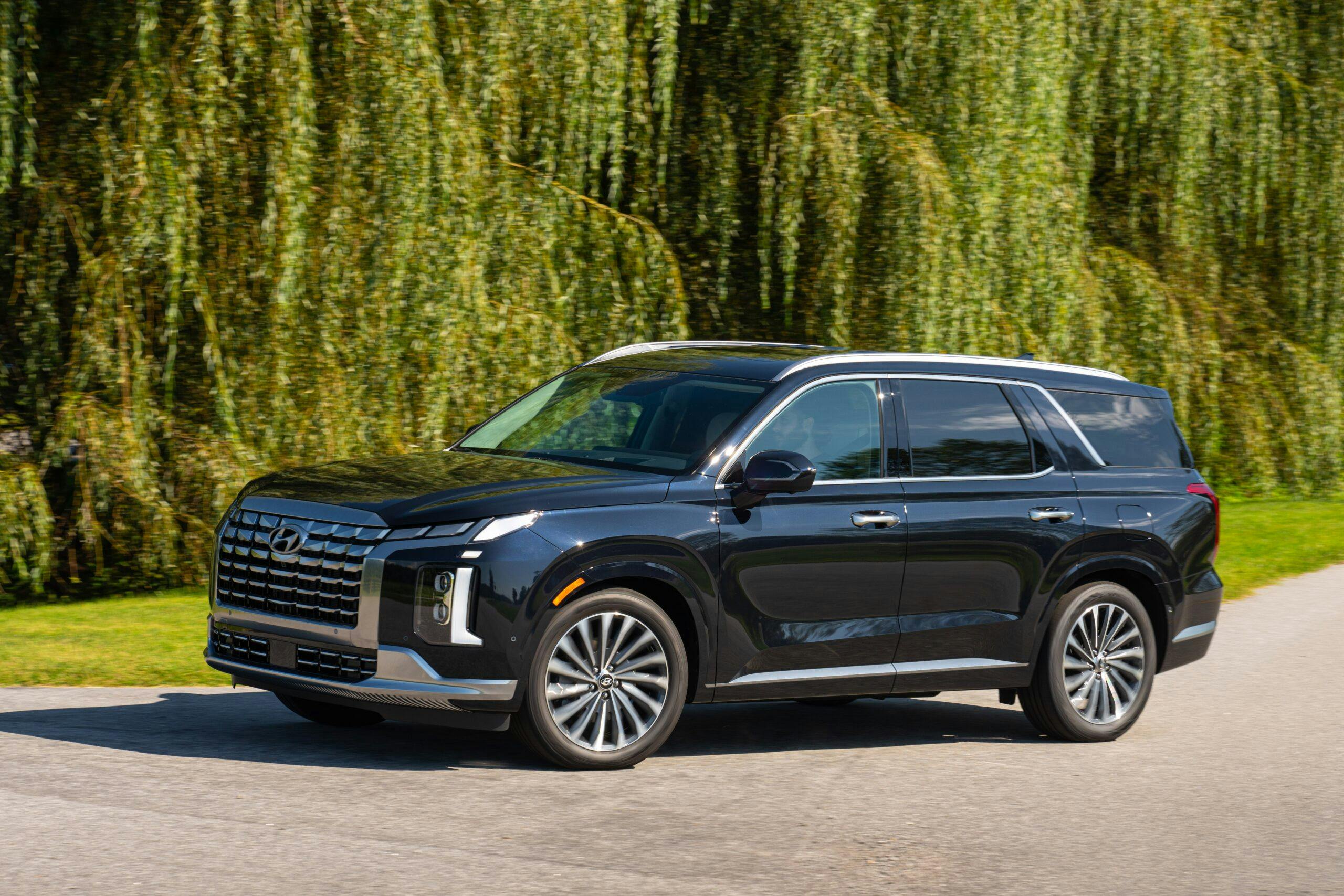
Choosing a midsize SUV with top-tier safety ratings ensures robust protection for families and passengers, balancing advanced crash-test performance, structural integrity, and cutting-edge driver assistance technologies. These vehicles represent the peak of modern automotive safety engineering, combining high structural resilience with proactive crash-avoidance systems.
When shopping for a family vehicle, safety is frequently the primary deciding factor for buyers. Midsize SUVs occupy a unique space in the automotive market: they are large enough to offer substantial crumple zones and mass advantages during a collision, yet nimble enough to maintain responsive handling and effective braking dynamics. Evaluating these vehicles requires looking past basic marketing claims and examining rigorous, independent evaluation metrics established by prominent safety institutions such as the Insurance Institute for Highway Safety (IIHS) and the National Highway Traffic Safety Administration (NHTSA).
Safety testing protocols have grown significantly more stringent over recent years. Modern testing evaluates not only how well a vehicle protects its occupants during a high-speed frontal or side impact, but also how effectively its automated systems prevent collisions with pedestrians, cyclists, and other vehicles altogether. Furthermore, headlight efficacy, child seat anchor accessibility, and roof strength under rollover conditions now heavily influence overall safety designations. For buyers navigating the 2025 marketplace, understanding which models consistently achieve top honors helps narrow choices down to the most secure options available.
Understanding Modern Safety Ratings and Testing Protocols
To appreciate why specific midsize SUVs earn top safety honors, it is essential to understand the institutions that test them and the evolving nature of their criteria. Vehicle safety is no longer measured solely by how well a cabin maintains its shape during a crash. Today, active safety technologies play an equally crucial role in determining whether a vehicle receives a top-tier recommendation.
The Insurance Institute for Highway Safety (IIHS) serves as an independent, scientific organization funded by the auto insurance industry. Its evaluations have become progressively tougher, introducing updated side-impact crash tests that use a heavier barrier striking at a higher speed to simulate modern, large vehicle impacts. Additionally, pedestrian crash prevention evaluations test a vehicle's autonomous emergency braking systems in both daylight and dark conditions. Vehicles that excel across these grueling tests earn the coveted TOP SAFETY PICK or TOP SAFETY PICK+ designations.
Simultaneously, the National Highway Traffic Safety Administration (NHTSA)—an agency of the U.S. government—administers the Federal Motor Vehicle Safety Standards and conducts the New Car Assessment Program (NCAP). The NHTSA uses a star-rating system ranging from one to five stars, evaluating frontal crashes, side crashes, and rollover resistance. Achieving a 5-star overall rating indicates a statistically lower risk of injury in severe accidents.
Key Evaluation Criteria for Midsize SUVs
- Structural Crashworthiness: The ability of the safety cage to absorb and deflect crash energy away from the cabin occupants.
- Frontal Crash Prevention: The effectiveness of forward collision warning and automatic emergency braking systems at city and highway speeds.
- Pedestrian Protection: Systems designed to detect and react to vulnerable road users under varied lighting conditions.
- Headlight Performance: The illumination, glare control, and curve-adaptive capabilities of standard and upgraded headlights.
- LATCH Ease of Use: The physical accessibility and clarity of lower anchors and tethers for securing child safety seats.
1. Subaru Ascent
The Subaru Ascent has consistently prioritized family safety, leveraging the brand's renowned symmetrical all-wheel-drive system and robust engineering to secure top-tier marks. Midsize three-row SUVs face unique engineering challenges because they must protect occupants in three distinct rows while maintaining balanced driving dynamics.
Structural Integrity and Crash Performance
The Ascent utilizes Subaru’s Global Platform, which incorporates high-strength steel and strategic crumple zones designed to absorb and redirect impact energy away from the passenger compartment. In IIHS evaluations, the Ascent routinely achieves high marks across traditional frontal, side, and roof-strength assessments. The rigid body architecture minimizes cabin intrusion during severe collisions, reducing the likelihood of occupant trauma.
Advanced Driver-Assistance Technologies
Every 2025 Ascent comes standard with EyeSight Driver Assist Technology. This suite integrates dual color cameras mounted near the rearview mirror to monitor traffic movement, optimize cruise control, and sway warning systems.
- Pre-Collision Braking: Capable of applying full braking force in emergency scenarios to mitigate or entirely avoid frontal impacts.
- Advanced Adaptive Cruise Control with Lane Centering: Reduces driver fatigue on long highway journeys by maintaining a set distance and keeping the vehicle centered in its lane.
- DriverFocus Distraction Mitigation System: Uses a dedicated camera to monitor driver attention, issuing visual and audible alerts if signs of drowsiness or distraction are detected.
2. Hyundai Palisade
The Hyundai Palisade has established a strong reputation in the three-row midsize segment, offering a compelling blend of luxury, utility, and advanced protective systems. Hyundai equips the Palisade with an extensive suite of active and passive safety features as standard equipment across nearly all trim levels.
Comprehensive Protection Systems
The Palisade's body structure is engineered with a high percentage of advanced high-strength steel, creating a durable safety cell. In NHTSA testing, the vehicle consistently secures high marks, while the IIHS has recognized it with top-tier safety designations due to its exceptional crash avoidance and mitigation scores.
Innovative Safety Enhancements
Beyond standard airbags and crumple zones, the Palisade introduces unique technological solutions designed to protect passengers both on the road and after parking:
- Blind-Spot View Monitor: Projects a live video feed of the vehicle's blind spots directly onto the digital instrument cluster when the turn signal is engaged, reducing lane-change risks.
- Safe Exit Assist: Prevents rear doors from opening if an approaching vehicle, bicycle, or pedestrian is detected in the blind spot, protecting exiting children and passengers.
- Ultrasonic Rear Occupant Alert: Monitors the rear seats using ultrasonic sensors to detect movement after the vehicle is locked, alerting the driver if a child or pet is accidentally left behind.
3. Toyota Highlander / Grand Highlander
Toyota’s midsize SUV lineup—spanning the classic Highlander and the larger Grand Highlander—represents an industry benchmark for reliability and safety integration. Built on the Toyota New Global Architecture (TNGA-K), these SUVs are designed from the ground up to handle structural impacts efficiently while integrating sophisticated electronic safeguards.
Passive Safety and Structural Design
The platform architecture utilizes ring-shaped frame structures and hot-stamped steel reinforcements to maximize energy dissipation. In the event of a side-impact collision, the floor crossmembers and robust B-pillars work in tandem to maintain structural integrity. This engineering approach earned the Highlander family impressive marks across rigorous independent crash tests.
Toyota Safety Sense 3.0
The inclusion of Toyota Safety Sense 3.0 (TSS 3.0) brings enhanced sensor capabilities, featuring an upgraded camera and millimeter-wave radar with broader detection ranges:
- Proactive Driving Assist: Provides gentle braking or steering support to maintain distance from preceding vehicles, pedestrians, or cyclists when natural obstacles appear ahead.
- Lane Tracing Assist: Works with Dynamic Radar Cruise Control to keep the vehicle centered in marked lanes, even on gentle highway curves.
- Road Sign Assist: Detects speed limit signs, stop signs, and yield signs, displaying alerts on the multi-information display to keep drivers informed.
4. Mazda CX-90
The Mazda CX-90 enters the midsize SUV market with a premium focus, offering rear-biased performance platforms and meticulous structural engineering. Mazda has long prioritized driver engagement, but this design philosophy extends directly to vehicle safety, emphasizing predictable handling and instantaneous collision avoidance.
Engineering for Stability and Control
A stable vehicle is fundamentally safer because it can maneuver out of hazardous situations more effectively. The CX-90 features Kinematic Posture Control, a system that applies slight braking to the inner rear wheel during cornering to suppress body roll and maintain tire contact. This enhanced stability reduces the risk of loss-of-control scenarios on slick or uneven road surfaces.
Safety Suite and Occupant Protection
The i-Activsense safety suite comes standard, providing robust driver support functions:
- Smart Brake Support: Automatically applies the brakes if an impending collision with a vehicle or pedestrian is detected.
- Emergency Lane Keeping: Assists the driver in steering back into the lane if unintentional drifting is detected near road edges or solid lane markers.
- Front Cross-Traffic Alert: Monitors traffic approaching from the sides when pulling out of blind intersections or driveways, issuing immediate audio-visual warnings.
5. Honda Pilot
The Honda Pilot is a perennial favorite for families requiring versatile cargo room, comfortable seating, and dependable safety engineering. Redesigned to meet the latest, most stringent testing protocols, the Pilot incorporates advanced occupant protection measures across all trim configurations.
Advanced Compatibility Engineering (ACE) Body Structure
A defining feature of the Pilot is Honda’s proprietary Advanced Compatibility Engineering (ACE) body structure. This front frame design utilizes a network of interconnected structural elements to absorb and distribute frontal crash energy more evenly across the vehicle. By dispersing the force of an impact away from the passenger compartment, the ACE architecture helps reduce occupant injury severity during frontal and offset collisions.
Honda Sensing Suite
The standard Honda Sensing suite equips the Pilot with a broad array of driver-assistive technologies:
- Collision Mitigation Braking System: Designed to stop the vehicle when an unavoidable frontal collision is detected, applying maximum braking pressure if the driver fails to react.
- Road Departure Mitigation: Uses a windshield-mounted camera to identify lane boundaries, applying steering torque or braking if the vehicle begins to drift off the road without signaling.
- Traffic Jam Assist: Combines lane-keep assist and adaptive cruise control to manage steering, acceleration, and braking inputs during low-speed, congested highway driving.
Comparative Analysis of Top Safety Rated Midsize SUVs
To help determine which vehicle best aligns with your safety priorities and passenger requirements, the following comparison table highlights their fundamental safety architectures, structural ratings, and standout driver-assist systems.
| Vehicle Model | Standard Safety Suite | Structural Design Highlight | Notable Safety Tech | Typical Seating Capacity |
|---|---|---|---|---|
| Subaru Ascent | EyeSight Driver Assist | Subaru Global Platform | DriverFocus Distraction Mitigation | Up to 8 passengers |
| Hyundai Palisade | Hyundai SmartSense | Advanced High-Strength Steel | Blind-Spot View Monitor | Up to 8 passengers |
| Toyota Grand Highlander | Toyota Safety Sense 3.0 | TNGA-K Platform Architecture | Proactive Driving Assist | Up to 8 passengers |
| Mazda CX-90 | i-Activsense Suite | Kinetic Posture Control | Smart Brake Support | Up to 8 passengers |
| Honda Pilot | Honda Sensing Suite | ACE Body Structure | Traffic Jam Assist | Up to 8 passengers |
Common Mistakes When Evaluating SUV Safety
When shopping for a safe midsize SUV, buyers often rely on outdated assumptions or superficial features. Avoiding these common missteps ensures a more accurate evaluation of true vehicle safety:
- Confusing Size with Safety: While larger vehicles generally offer mass advantages in multi-vehicle collisions, size alone does not guarantee protection. A smaller SUV with advanced structural design and superior crash test ratings can outperform a poorly engineered larger vehicle.
- Overlooking Active Safety Limitations: Driver-assistance technologies are designed to assist, not replace, attentive driving. Systems like automatic emergency braking have operational limits, particularly in severe weather or low-visibility conditions.
- Ignoring Headlight Ratings: Headlights vary significantly between trim levels. A base model may feature lower-scoring halogen or basic LED headlights, while upper trims receive superior adaptive systems that drastically improve nighttime visibility and overall safety scores.
- Neglecting Child Seat Compatibility: Not all LATCH systems are equally accessible. Reviewing ease-of-use ratings ensures that car seats can be installed securely and correctly without excessive frustration.
Frequently Asked Questions
Do all trim levels of these midsize SUVs receive the same safety ratings?
Not always. Safety ratings frequently apply specifically to trims equipped with upgraded active safety features, specific headlight assemblies, or optional crash-avoidance packages. Always verify the exact safety rating for the specific trim level and package combination you intend to purchase.
How do independent testing agencies evaluate advanced driver-assistance systems?
Agencies like the IIHS test automated braking, lane-keeping, and pedestrian detection systems across controlled test tracks using standardized dummy targets at various speeds. These tests measure how effectively the vehicle warns the driver and autonomously applies brakes to prevent or mitigate impact.
Are midsize SUVs safer than midsize sedans?
Midsize SUVs typically offer advantages in high-impact scenarios due to their heavier weight and higher seating position, which can help clear bumper heights in collisions with smaller vehicles. However, sedans often boast superior handling agility and a lower center of gravity, which can help prevent rollover accidents entirely.
What is the single most important safety feature to look for in a 2025 midsize SUV?
Autonomous Emergency Braking (AEB) with pedestrian detection is widely considered the most critical active safety feature, as it actively intervenes to prevent or lessen the severity of frontal collisions when a driver fails to react in time.
How often are vehicle safety evaluation protocols updated?
Testing organizations continuously update their protocols to reflect new automotive technologies and real-world crash data. Protocols frequently become more demanding over time, meaning a top rating from a prior year may require additional testing achievements under current standards.
Next Actions for Buyers
When preparing to purchase a top safety-rated midsize SUV, begin by reviewing the latest official reports directly from the IIHS and NHTSA for the exact model year and trim you are considering. Schedule a comprehensive test drive that specifically evaluates visibility, blind spots, and the responsiveness of driver-assistance features in real-world traffic conditions. Confirm that the dealer provides documentation on standard versus optional safety packages to ensure your chosen vehicle delivers the complete protective capability you expect.