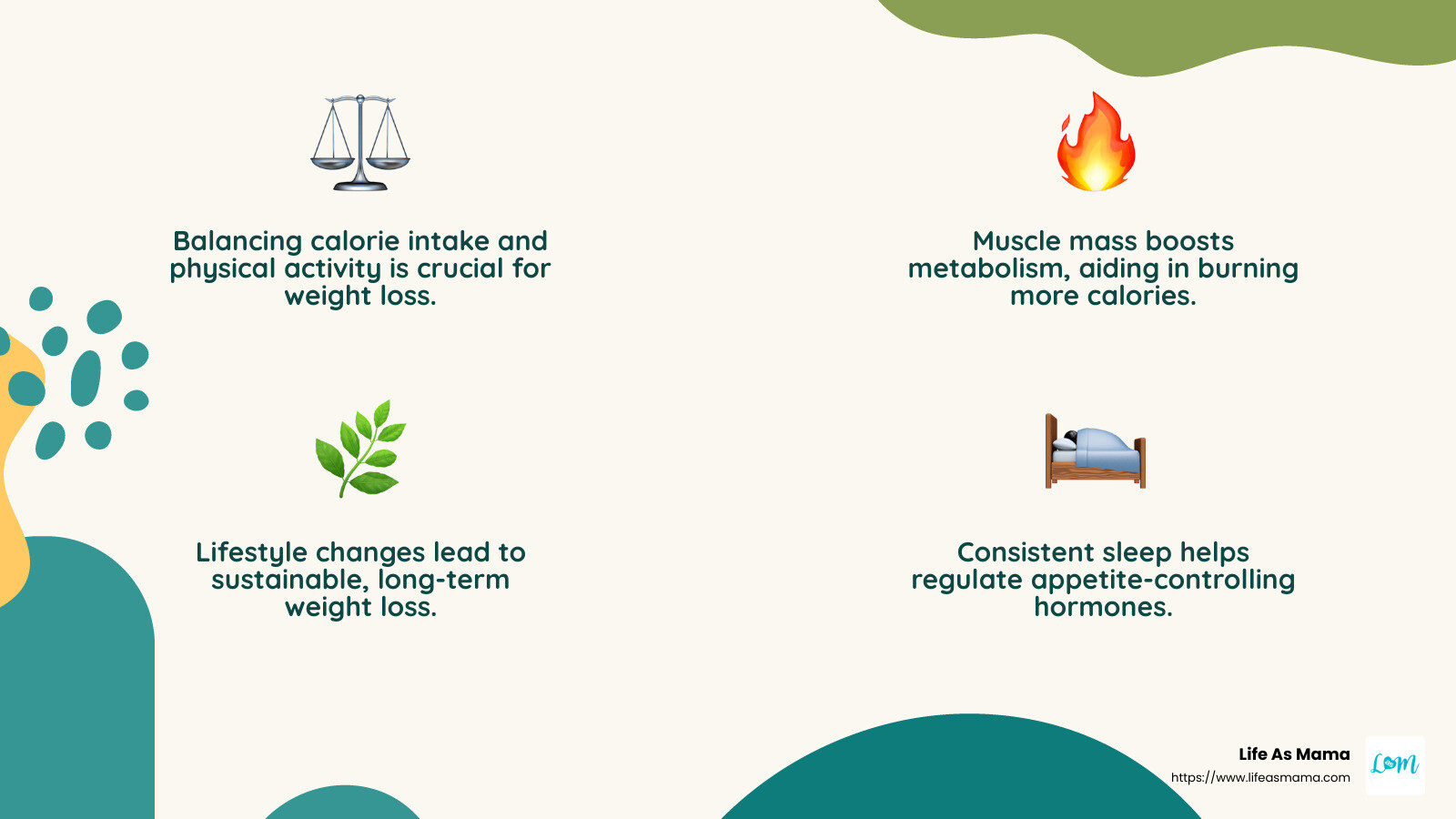
The most effective, evidence-based weight loss techniques for 2026 include Calorie In, Calories Out (CICO), Intermittent Fasting, the Ketogenic Diet, the Mediterranean Diet, and Medical GLP-1 Therapy. Success depends on selecting a method that aligns with your metabolic profile, lifestyle, and long-term adherence capabilities, as sustainability is the primary driver of permanent weight management.
The Foundation of Weight Loss: Understanding Metabolic Balance
Before comparing specific techniques, it is essential to understand that weight loss is fundamentally a physiological process of energy management. Regardless of the specific dietary "label" or medical intervention used, the body must be in a state where it consumes more energy than it takes in. This is known as a negative energy balance.
In 2026, clinical consensus emphasizes that "weight loss" should actually be termed "fat loss." Indiscriminate weight loss can lead to the depletion of lean muscle mass, which lowers the resting metabolic rate (RMR) and makes long-term maintenance significantly harder. Therefore, the most successful techniques are those that preserve muscle while targeting adipose tissue.
The Role of Insulin and Hormones
While calories are the unit of energy, hormones like insulin, ghrelin, and leptin act as the traffic controllers. High insulin levels, often caused by frequent consumption of refined carbohydrates, signal the body to store fat rather than burn it. Conversely, hormones like ghrelin signal hunger. The techniques compared below vary in how they address these hormonal signals—some focus strictly on the energy balance (calories), while others focus on the hormonal environment (insulin or appetite suppression).
1. Calorie In, Calories Out (CICO): The Quantitative Standard
The Calorie In, Calories Out (CICO) method remains the foundational principle of weight loss. It is based on the First Law of Thermodynamics, stating that energy cannot be created or destroyed. To lose weight, one must consume fewer calories than the Total Daily Energy Expenditure (TDEE).
How CICO Works
Users typically calculate their Basal Metabolic Rate (BMR)—the calories burned at rest—and adjust for their activity level to find their TDEE. By consuming roughly 500 calories fewer than their TDEE daily, an individual can theoretically lose about one pound of body weight per week.
Prerequisites for CICO:
- Accurate Tracking: Use of digital scales and comprehensive databases to track every gram of food.
- Consistency: Daily logging is required to account for "hidden" calories in oils, sauces, and beverages.
- Metabolic Awareness: Understanding that as weight drops, the TDEE also drops, requiring periodic adjustments to the calorie target.
Pros and Cons
The primary advantage of CICO is its flexibility; no food is strictly "off-limits" as long as it fits within the daily budget. However, its main drawback is that it ignores food quality. Consuming 1,500 calories of processed sugar will have a vastly different effect on hunger and health than 1,500 calories of whole foods, despite the identical energy value.
2. Intermittent Fasting (IF): The Timing-Based Approach
Intermittent Fasting (IF) is not a diet in the traditional sense but rather an eating pattern. It involves cycling between periods of eating and periods of voluntary fasting. As of 2026, IF has gained significant traction due to its simplicity and the metabolic benefits associated with prolonged periods of low insulin.
Popular Protocols
- 16/8 Method: Fasting for 16 hours and eating during an 8-hour window.
- One Meal a Day (OMAD): A 23-hour fast with a single one-hour eating window.
- 5:2 Diet: Consuming normal calories for five days and restricting to 500–600 calories for two non-consecutive days.
The Mechanism of Action
During the fasting window, the body exhausts its glycogen stores (stored sugar) and begins to mobilize fat for energy. This process is often accompanied by autophagy, a cellular "cleanup" process where the body breaks down damaged components. Studies published in the National Institutes of Health (NIH) database suggest that IF can improve insulin sensitivity as effectively as continuous calorie restriction, making it a potent tool for those with pre-diabetes.
Suitability
IF is highly effective for individuals who struggle with portion control but find it easy to skip meals. It is less suitable for those with a history of disordered eating or individuals with high athletic demands who require constant fuel for performance.
3. The Ketogenic Diet: Metabolic Switching
The Ketogenic (Keto) Diet is a high-fat, moderate-protein, and very-low-carbohydrate regimen. The goal is to transition the body from a "glycolytic" state (burning glucose) to a "ketogenic" state (burning ketones derived from fat).
Achieving Ketosis
To enter ketosis, carbohydrate intake is typically limited to under 50 grams per day. This depletion of carbs forces the liver to produce ketones from stored and dietary fat.
Standard Keto Macros:
- 70-75% Calories from Fat
- 20-25% Calories from Protein
- 5-10% Calories from Carbohydrates
Why It Works for Weight Loss
The Keto diet is particularly effective because of its impact on satiety. High fat and protein intake tend to be more filling than carbohydrates, naturally leading to a reduction in total calorie intake without the "hunger pangs" associated with traditional dieting. Furthermore, the stabilization of blood sugar prevents the energy crashes that often lead to overeating.
Risks and Considerations
The "Keto Flu"—a period of fatigue, headaches, and irritability during the first week—is a common hurdle. Furthermore, long-term adherence can be challenging due to the strict social and dietary limitations. It is vital to focus on "Clean Keto" (avocados, nuts, olive oil) rather than "Dirty Keto" (processed meats and excessive saturated fats) to maintain cardiovascular health.
4. The Mediterranean Diet: The Sustainable Gold Standard
While other methods focus on restriction, the Mediterranean Diet focuses on food quality and a specific pattern of consumption based on the traditional eating habits of people in countries bordering the Mediterranean Sea.
Core Components
- High Consumption: Vegetables, fruits, whole grains, beans, nuts, and seeds.
- Primary Fat Source: Extra virgin olive oil.
- Moderate Consumption: Poultry, eggs, cheese, and yogurt.
- Limited Consumption: Red meat and sweets.
Evidence for Weight Loss
Unlike Keto or IF, the Mediterranean diet is rarely marketed as a "rapid" weight loss solution. Instead, it is the premier choice for long-term weight maintenance and disease prevention. The World Health Organization (WHO) has frequently highlighted this diet for its role in reducing the risk of cardiovascular disease and Type 2 diabetes.
Weight loss on this plan is typically achieved through high fiber intake, which promotes satiety, and the replacement of high-calorie processed foods with nutrient-dense whole foods. It is the most "livable" technique for the general population.
5. Medical GLP-1 Therapy: The Pharmacological Breakthrough
By 2026, GLP-1 (Glucagon-Like Peptide-1) Receptor Agonists, such as Semaglutide and Tirzepatide, have fundamentally changed the weight loss landscape. Originally developed for Type 2 diabetes, these medications are now widely prescribed for obesity management.
How GLP-1s Function
These medications mimic a natural hormone produced in the gut. They work through two primary mechanisms:
- Gastric Emptying: They slow the rate at which food leaves the stomach, making the patient feel full longer.
- Brain Signaling: They target the "reward centers" of the brain to reduce food cravings and the "food noise" that often leads to binge eating.
Comparison to Lifestyle Methods
GLP-1 therapy often produces more significant and rapid weight loss than diet alone. Clinical trials have shown average weight losses of 15% to 22% of total body weight. However, these are not "easy way out" options. They require a prescription, can be expensive without insurance, and may cause gastrointestinal side effects like nausea or constipation.
Important Note: Medical therapy should always be used in conjunction with lifestyle changes. If a patient stops the medication without having established better eating habits, the weight is frequently regained.
Detailed Comparison of Weight Loss Techniques
The following table provides a direct comparison of the five techniques based on key metrics relevant to the average person in 2026.
| Technique | Primary Mechanism | Difficulty Level | 12-Month Sustainability | Best For |
|---|---|---|---|---|
| CICO | Energy Deficit | Moderate | Moderate | Data-driven individuals who want food flexibility. |
| Intermittent Fasting | Insulin Regulation | Low to Moderate | High | Busy professionals and those who dislike breakfast. |
| Ketogenic Diet | Fat Adaptation | High | Low | People with insulin resistance or significant sugar cravings. |
| Mediterranean | Nutrient Density | Low | Very High | Long-term health and sustainable, slow weight loss. |
| GLP-1 Therapy | Hormonal Signaling | Low (Physical) | High (with meds) | Individuals with clinical obesity or metabolic syndrome. |
Potential Pitfalls and Common Mistakes
Choosing a technique is only the first step; avoiding common errors is what ensures the weight stays off.
1. The "Starvation Mode" Myth
While extreme calorie restriction can slow the metabolism (adaptive thermogenesis), the idea that you will stop losing weight because you aren't eating enough is generally a misunderstanding of the plateaus that occur as your body becomes smaller and requires less energy.
2. Neglecting Protein Intake
Regardless of the method, protein is non-negotiable. Aim for 1.2 to 1.6 grams of protein per kilogram of body weight to prevent muscle wasting. This is especially critical for those on GLP-1 medications, where rapid weight loss can lead to significant muscle loss.
3. Lack of Resistance Training
Weight loss is a catabolic process (breaking down). To ensure the body breaks down fat instead of muscle, resistance training (weightlifting, bodyweight exercises) is required. This keeps the metabolic "fire" burning.
4. Overestimating Exercise Burn
Many people "eat back" the calories they think they burned during a workout. Most fitness trackers overestimate calorie burn by 20-40%. It is safer to treat exercise as a bonus for cardiovascular health rather than a primary driver of the calorie deficit.
Frequently Asked Questions
Which technique is fastest for weight loss?
The Ketogenic diet and GLP-1 therapy typically produce the fastest initial results. Keto causes a rapid drop in water weight within the first week as glycogen stores are depleted, while GLP-1s provide a powerful hormonal suppression of appetite. However, "fast" does not always mean "permanent," and the Mediterranean diet often wins in long-term success rates.
Can I combine Intermittent Fasting with the Ketogenic Diet?
Yes, this is a common strategy. Combining IF and Keto can accelerate the transition into ketosis because the fasting window further depletes glucose. This combination is highly effective for weight loss but requires careful monitoring of electrolytes (sodium, potassium, magnesium) to avoid dehydration and cramping.
Are GLP-1 medications safe for long-term use?
In 2026, long-term data suggests that GLP-1s are safe when used under medical supervision for those who meet the clinical criteria (usually a BMI over 30, or over 27 with comorbidities). However, potential risks such as pancreatitis or gallbladder issues must be discussed with a healthcare provider. They are generally considered chronic medications for a chronic condition (obesity).
Does "Calories In, Calories Out" work if I have a slow metabolism?
CICO always works because it is a physical law, but "slow metabolism" means your "Calories Out" number is lower than the average person's. If you have a slow metabolism due to thyroid issues or age, your target calorie intake for weight loss will simply be lower than someone with a higher metabolic rate.
How do I know which technique is right for me?
Consider your "failure points" in past diets. If you fail because you are always hungry, GLP-1 or Keto might be best. If you fail because you hate counting things, Intermittent Fasting or the Mediterranean diet is likely a better fit. If you like structure and data, CICO is the standard.
Recommendation and Next Actions
To select the right path, start by consulting with a healthcare professional to check your current metabolic markers (A1C, lipid panel, and blood pressure). If you are looking for a lifestyle change without medical intervention, the Mediterranean Diet combined with a mild 16/8 Intermittent Fasting schedule offers the best balance of health benefits and sustainability for most people.
Your immediate next steps:
- Calculate your TDEE using an online calculator to understand your daily energy needs.
- Track your current eating for three days without changing anything to see your baseline.
- Choose one technique and commit to it for at least 30 days before evaluating its effectiveness.
Disclaimer: This information is for educational purposes only and does not constitute medical advice. Always consult with a physician before starting a new diet or medication regimen, especially if you have underlying health conditions.