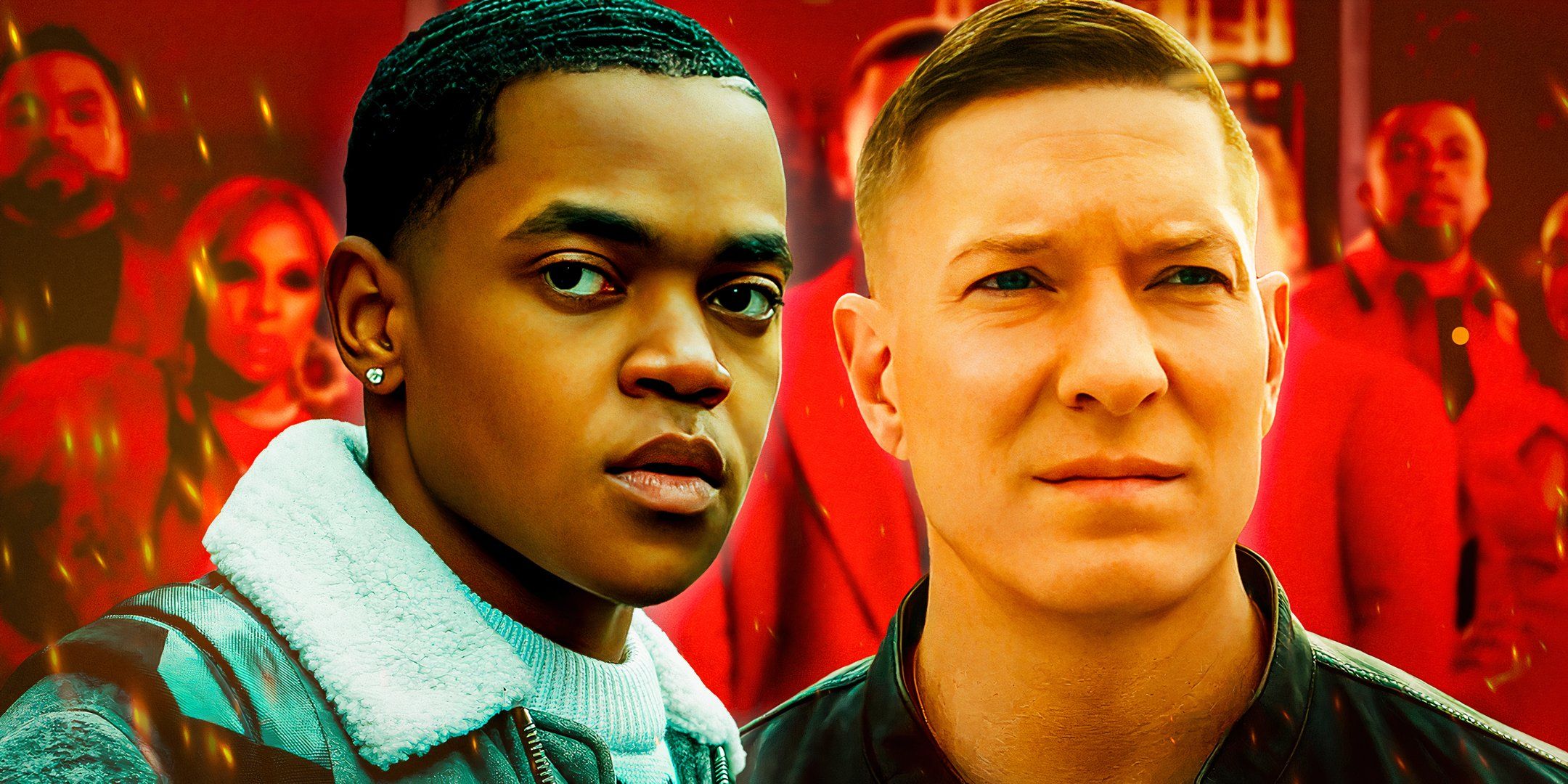
The ending of Power Book IV: Force Season 2, titled "Powers," fundamentally reshaped the Chicago drug landscape by dismantling the Flynn dynasty and leaving Tommy Egan more isolated than ever. The finale focused on the fallout of Vic Flynn’s cooperation with the Feds, the abduction of Mireya Galindo, and the fragile expansion of CBI under the looming threat of a federal RICO investigation.
As of 2026, the Power Universe remains one of the most complex interconnected narratives in television. Power Book IV: Force, centered on the fan-favorite character Tommy Egan (Joseph Sikora), sought to prove that Tommy could thrive outside the shadow of James "Ghost" St. Patrick. However, the Season 2 finale proved that no matter the city, the "Power" remains a volatile and often isolating force. The ending left viewers with several critical shifts in the status quo that redefined the series' trajectory.
1. The Total Collapse of the Flynn Legacy
The primary narrative arc of the first two seasons centered on the Flynn family—Walter, Vic, and Claudia—and their iron grip on Chicago’s North Side. By the end of the Season 2 finale, this dynasty was effectively extinct. The most significant insight from the ending is how thoroughly Tommy Egan managed to dismantle his rivals, though not without significant collateral damage.
Vic Flynn’s transition from an aspiring kingpin to a federal informant (a "rat") served as the catalyst for the finale’s tension. Throughout the season, Vic was coerced by the Feds, specifically Stacy Marks, to provide evidence against Tommy. However, the ending revealed that Tommy was, as always, several steps ahead. By the time the dust settled, Vic was left with nothing: his father Walter was dead (killed earlier in the season), and his sister Claudia was seemingly neutralized.
The insight here is the reversal of the "family first" theme. In the original Power series, family was the motivation for every move. In Force, the Feds attempted to use family loyalty to break the Flynns, but the ending showed that in the Chicago underworld, survival-based individualism eventually overrode blood ties. Vic’s betrayal didn’t just end his career; it signaled the end of old-school, family-run organizations in the Power version of Chicago.
2. Mireya’s Disappearance: Tommy’s Ultimate Vulnerability
For the first time since the death of Holly in the original series, Tommy Egan allowed himself to be emotionally vulnerable with Mireya Galindo, the sister of his rival Miguel Galindo. The Season 2 ending delivered a crushing blow to this relationship, providing a deep insight into the "curse" of Tommy Egan.
In the finale, Miguel Galindo discovers the secret relationship between his sister and his business rival. Instead of a direct confrontation or a murder, Miguel opts for a more psychological punishment: he makes Mireya disappear. The ambiguity of her fate—whether she was sent away, imprisoned, or killed—leaves Tommy in a state of uncharacteristic desperation.
This plot point serves a specific narrative purpose: it strips Tommy of his newfound humanity. Throughout Season 2, we saw a "softer" Tommy who was considering a life that involved more than just "the work." The ending brutally re-established that for Tommy to be the king of Chicago, he cannot have a heart. This insight suggests that Tommy’s greatest strength—his lack of attachments—is also his mandatory state of existence. Without Mireya, Tommy returns to being the stone-cold tactician, setting the stage for a much more ruthless version of the character.
3. The Federal RICO Noose and the Ghost of New York
The legal stakes in the Power Book IV: Force ending reached a fever pitch with the introduction of a serious RICO (Racketeer Influenced and Corrupt Organizations Act) investigation led by Stacy Marks. The insight here is the parallel between Tommy’s current situation and the downfall of the St. Patrick empire in New York.
The Feds in Chicago are portrayed as more competent and relentless than their New York counterparts. By the end of the finale, they had successfully flipped Vic Flynn and were closing in on the connection between CBI (Chicago Brothers Inc.) and the international pipeline.
Key legal pressures established in the ending:
- The Paper Trail: The Feds began connecting the dots between legitimate businesses and drug money laundering, a tactic that famously brought down Tommy’s associates in the past.
- The Informant Game: Unlike previous seasons where informants were easily dispatched, Vic Flynn’s position as a high-profile "legacy" figure made him a much more dangerous witness for the government.
- The Multi-Agency Task Force: The ending showed the Feds moving beyond local police interference, suggesting that the "Wild West" era of Tommy’s Chicago reign is over.
This suggests that the ending wasn't just about street wars, but about the institutional "Power" that Tommy has always struggled to defeat with bullets alone.
4. The Fragility of the Tommy and Diamond Partnership
The alliance between Tommy Egan and Diamond Sampson (Isaac Keys) is the backbone of CBI. However, the Season 2 ending provided a nuanced insight into the cracks forming within this partnership. While they ended the season "on top" of the Chicago drug trade, the cost of that victory has created a significant ideological rift.
Diamond represents a more measured, community-focused approach to the drug trade, whereas Tommy represents pure, unadulterated expansion and violence. In the finale, the way Tommy handled the Serbs and the Flynns—without always keeping Diamond in the inner circle of his tactical planning—highlighted a power imbalance.
The insight provided by the ending is that CBI is a "house divided." Diamond’s struggle with his brother Jenard and his desire to keep his hands relatively clean (or at least focused on his neighborhood) is increasingly at odds with Tommy’s "nationwide" ambitions. As they move forward, the ending suggests that the biggest threat to Tommy isn't an outside cartel, but the internal collapse of the one partnership he relies on.
5. Shanti and Jenard: The Enemy Within
While Tommy was focused on the Flynns and the Galindos, a new threat was quietly maturing in the background. The alliance between Shanti and Jenard is one of the most critical insights from the ending. Throughout the finale, it became clear that while Jenard appeared to be back in the fold of CBI, he and Shanti were playing a much longer game to usurp Tommy and Diamond.
Shanti is portrayed as a master manipulator who understands the psychology of the Chicago streets better than Tommy does. The ending highlights that Tommy is still viewed as an "outsider" or a "tourist" by some of the local players.
The insight here is the shift in conflict type. If Season 1 was about "Arrival" and Season 2 was about "War," the ending points toward a Season of "Infiltration." Jenard and Shanti aren't looking to kill Tommy in a shootout; they are looking to dismantle his reputation and his supply chain from the inside. This internal sabotage is something Tommy is historically bad at detecting until it is almost too late.
Character and Faction Status Post-Finale
| Character/Faction | Status at Season 2 Ending | Primary Motivation |
|---|---|---|
| Tommy Egan | Active / Isolated | Reclaiming Mireya and securing Chicago |
| Diamond Sampson | Active / Uncertain | Maintaining CBI stability and community ties |
| Vic Flynn | Informant / Exile | Survival through federal protection |
| Claudia Flynn | Incapacitated / Betrayed | Revenge against Tommy and Vic |
| Miguel Galindo | Active / Aggressive | Eliminating Tommy for the "betrayal" with Mireya |
| Jenard & Shanti | Infiltrated | Usurping leadership of the Chicago drug trade |
| The Feds (Stacy Marks) | Active / Building Case | Securing a RICO conviction against Tommy |
Frequently Asked Questions
Did Mireya die in the Power Book 4 Season 2 finale?
No, Mireya’s death was not shown. The finale ended with Miguel Galindo implying he had "dealt" with her, but the standard rule in the Power Universe is that if there is no body, the character is likely still alive. Her disappearance serves as a cliffhanger to drive Tommy’s motivations in subsequent episodes. Miguel likely moved her to a secure location or out of the country to leverage her against Tommy or to protect his family's reputation from the scandal of her dating a rival.
What happened to Vic Flynn at the end of the season?
Vic Flynn ended the season as a federal informant. After his attempts to play both sides failed, he was forced into a corner by Stacy Marks. By the end of the "Powers" episode, Vic is a man without a country—he is hated by the streets for being a rat and no longer has the protection of his family name. His role has shifted from a secondary antagonist to a primary threat to Tommy’s freedom.
Does Tommy Egan return to New York after the ending?
While Tommy remains in Chicago at the conclusion of the finale, the ending hints at his past catching up with him. The federal investigation involves interstate crimes, which naturally brings up his history in New York. However, his primary focus remains on the Chicago empire he built with Diamond. He has not officially returned to NYC as a permanent resident, though crossovers within the Power Universe are frequent.
Who is the main villain heading into the next chapter?
The ending sets up a "triad" of antagonists. Miguel Galindo remains the primary physical threat due to his resources and personal vendetta regarding Mireya. Stacy Marks and the federal government represent the existential threat to Tommy’s empire. Finally, Jenard and Shanti are the "hidden" villains, working to destroy Tommy and Diamond from within CBI.
Is Claudia Flynn dead?
In the finale, Claudia was brutally attacked, but like Mireya, her ultimate fate was left slightly ambiguous to allow for narrative flexibility. However, her influence in Chicago is effectively neutralized. Even if she survived the immediate aftermath of the finale, she has no remaining allies, no money, and no territory, marking a total fall from grace for the former "Queen of the North Side."
Practical Recommendations for Fans
To fully grasp the implications of the Power Book IV: Force ending, viewers should revisit the original Power Season 6, particularly the episodes involving Tommy’s departure from New York. Understanding Tommy’s previous "losses"—specifically Holly and LaKeisha—provides essential context for his reaction to Mireya’s disappearance in the Chicago finale. Additionally, monitoring official Starz announcements regarding the Power Universe expansion is recommended, as the events in Chicago are designed to eventually ripple across the other spin-offs, including Power Book II: Ghost and Power Book III: Raising Kanan.