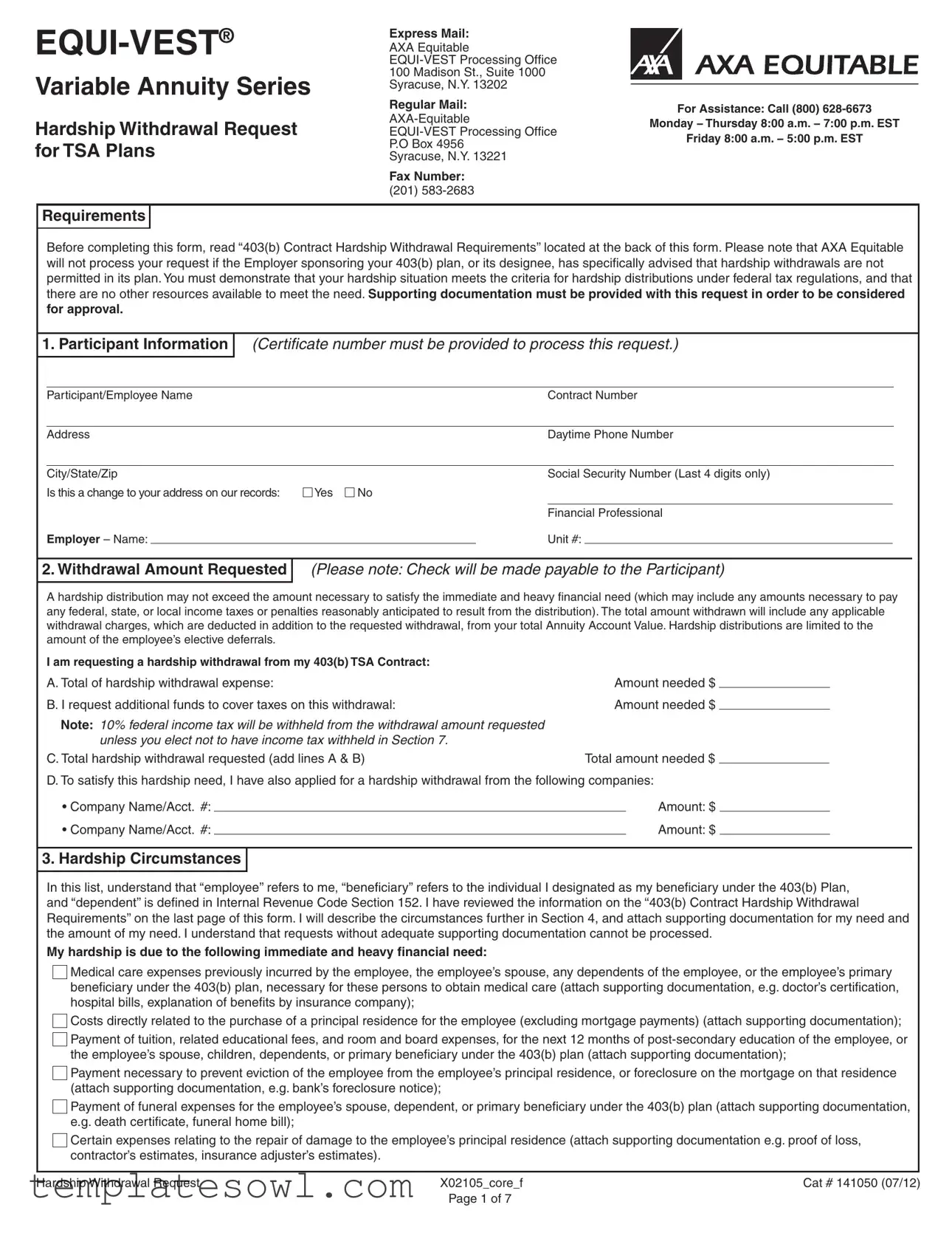
403(b) hardship withdrawals allow employees of non-profits, public schools, and religious organizations to access retirement funds for an "immediate and heavy" financial need. In 2026, these rules permit self-certification for specific expenses such as medical bills or preventing eviction. However, these withdrawals are generally taxable and may incur a 10% early withdrawal penalty.
A 403(b) plan, often referred to as a tax-sheltered annuity (TSA), is a retirement account specifically designed for employees of tax-exempt organizations and public schools. While these accounts are intended for long-term growth, the Internal Revenue Service (IRS) recognizes that life-altering financial crises can occur. To address this, hardship withdrawal rules provide a mechanism for participants to access their savings before reaching retirement age. Navigating these rules in 2026 requires an understanding of the "immediate and heavy" requirement, the impact of the SECURE Act 2.0 provisions on self-certification, and the long-term tax consequences.
Defining the "Immediate and Heavy" Financial Need
The cornerstone of any 403(b) hardship withdrawal is the IRS requirement that the distribution must be made on account of an immediate and heavy financial need. This definition is specific; it does not simply mean a desire for extra cash or a "financial emergency" as defined by the participant. Instead, the need must be urgent and significant enough that other resources are not reasonably available to satisfy it.
In 2026, the burden of proof for this need has shifted significantly toward participant self-certification, a practice that has become the industry standard following the full implementation of the SECURE Act 2.0. However, "immediate and heavy" still excludes many common expenses. For example, purchasing a luxury vehicle or paying off high-interest credit card debt accumulated through discretionary spending generally does not qualify. The need must be personal to the employee, their spouse, their children, or their primary beneficiary.
The IRS also stipulates that the amount of the distribution cannot exceed the amount necessary to satisfy the financial need. This includes any additional funds required to pay federal, state, or local income taxes or penalties reasonably anticipated to result from the distribution. Essentially, you can withdraw what you need to fix the problem plus what you will owe the government for taking the money out early.
Qualified Expenses Under IRS Safe Harbor Rules
To simplify the administration of hardship withdrawals, most 403(b) plan sponsors utilize the "Safe Harbor" list provided by the IRS. If your expense falls into one of these categories, it is automatically deemed to be an immediate and heavy financial need. As of 2026, the standard Safe Harbor reasons include:
- Medical Expenses: Unreimbursed medical expenses for the participant, their spouse, or dependents. This includes costs for diagnosis, cure, mitigation, treatment, or prevention of disease.
- Costs Related to the Purchase of a Principal Residence: This applies only to the purchase of a primary home (excluding mortgage payments).
- Tuition and Related Educational Fees: Payment for the next 12 months of post-secondary education tuition and related fees, including room and board, for the participant or their family.
- Preventing Eviction or Foreclosure: Payments necessary to prevent the participant's eviction from their principal residence or foreclosure on the mortgage of that residence.
- Funeral and Burial Expenses: Costs associated with the funeral or burial of a parent, spouse, child, or dependent.
- Casualty Loss Repair: Expenses for the repair of damage to the participant's principal residence that would qualify for a casualty deduction (such as damage from fire, storm, or shipwreck).
- Expenses Resulting from a Federally Declared Disaster: This includes expenses and losses (including loss of income) incurred by the employee who lives or works in an area designated by FEMA for individual assistance.
It is important to note that while the IRS allows these reasons, individual 403(b) plans are not required to offer hardship withdrawals at all. You must check your specific Summary Plan Description (SPD) to confirm which Safe Harbor reasons your employer has adopted.
The Evolution of Self-Certification in 2026
One of the most significant shifts in 403(b) administration over the last few years has been the widespread adoption of self-certification for hardship withdrawals. Prior to legislative updates, participants were often required to submit mountains of paperwork—such as hospital bills, eviction notices, or tuition statements—to their plan administrator for review.
In 2026, the SECURE Act 2.0 provisions allow plan sponsors to rely on an employee's written representation that they are facing a qualified hardship. This means that if you state you need $5,000 to prevent foreclosure, the plan administrator can generally take your word for it without requiring the underlying mortgage documents upfront.
However, this does not grant participants a "free pass" to fabricate needs. The IRS still retains the right to audit these distributions. If an audit reveals that the withdrawal was not used for a qualified purpose, the participant could face significant penalties, and the plan's tax-qualified status could even be jeopardized. Participants should always maintain a digital or physical "paper trail" of their hardship documentation (bills, notices, etc.) for at least three years after the withdrawal.
Tax Implications and the 10% Early Withdrawal Penalty
A 403(b) hardship withdrawal is not a "free" distribution; it is a taxable event. Because the money in a traditional 403(b) is contributed pre-tax, the IRS requires that you pay ordinary income tax on any amount withdrawn. This can significantly reduce the actual cash you receive. For example, if you are in the 22% tax bracket and withdraw $10,000, you could immediately lose $2,200 to federal taxes, not including state or local levies.
Furthermore, if you are under the age of 59½, you will generally be subject to a 10% early withdrawal penalty. This penalty is designed to discourage participants from using retirement funds for current consumption.
There are, however, limited exceptions to the 10% penalty that align with some hardship reasons. For instance, if the withdrawal is for medical expenses that exceed 7.5% of your adjusted gross income, the penalty might be waived. Additionally, under newer "Emergency Savings" provisions active in 2026, some plans allow for a penalty-free withdrawal of up to $1,000 once per year for personal or family emergency expenses, though this must be repaid or a waiting period applies before a second withdrawal can be taken.
Contribution Limits and Withdrawal Restrictions
When considering a hardship withdrawal, it is vital to understand which funds can actually be touched. IRS regulations generally limit 403(b) hardship distributions to the total amount of elective deferrals (the money you contributed from your paycheck).
In many cases, the earnings on those contributions, as well as employer matching or discretionary contributions, may not be available for hardship withdrawal. This varies based on the specific type of 403(b) plan:
- 403(b)(1) Annuity Contracts: These generally have more flexible withdrawal rules.
- 403(b)(7) Custodial Accounts (Mutual Funds): These are often more restrictive regarding which portions of the account balance can be accessed for a hardship.
Another historical rule that has changed: Previously, participants were often suspended from making new contributions to their 403(b) for six months after taking a hardship withdrawal. In 2026, this suspension is no longer required by the IRS. Most plans now allow you to continue contributing to your retirement account immediately after the withdrawal, which is beneficial for maintaining your long-term savings momentum and receiving any employer match.
Comparing Hardship Withdrawals vs. 403(b) Loans
Before proceeding with a hardship withdrawal, it is often wise to consider a 403(b) loan. While both provide access to capital, their long-term financial impacts are drastically different.
| Feature | 403(b) Hardship Withdrawal | 403(b) Loan |
|---|---|---|
| Repayment | No repayment required or allowed. | Must be repaid within 5 years (longer for home purchase). |
| Tax Impact | Taxed as ordinary income. | No tax if repaid according to the schedule. |
| Early Penalty | 10% penalty if under age 59½ (usually). | No penalty if repaid. |
| Credit Impact | None. | None (unless defaulted). |
| Ownership | Money is gone from your retirement nest egg. | Money is returned to your account with interest. |
| Prerequisites | Must prove "immediate and heavy" need. | Usually available regardless of need. |
In 2026, many financial advisors recommend the loan route first because the "interest" you pay on the loan goes back into your own account. A hardship withdrawal permanently removes that capital from the market, resulting in a significant loss of compound interest over time. However, if your debt-to-income ratio is already high or if you are at risk of leaving your employer (which might trigger an immediate loan repayment), a hardship withdrawal may be the only viable option.
Step-by-Step Guide to Applying for a Hardship Distribution
If you have determined that a hardship withdrawal is your best path forward, the process in 2026 is largely digital. Follow these steps to ensure a smooth transaction:
- Review the Summary Plan Description (SPD): Check your plan's specific rules. Some plans require you to exhaust all other available distributions or loans before a hardship becomes available.
- Verify Your Balance: Ensure you have enough in "elective deferrals" to cover the need. Most provider portals (like TIAA, Vanguard, or Fidelity) will show you your "available for withdrawal" balance.
- Determine the Total Amount Needed: Calculate the actual cost of the hardship plus roughly 20-30% for taxes and penalties so you aren't left short.
- Submit the Application: Most 403(b) providers offer an online "Withdrawal" or "Distribution" menu. You will select "Hardship" as the reason and choose the appropriate Safe Harbor category.
- Self-Certify: You will likely check a box or sign an electronic statement confirming that the need is immediate and heavy, and that you have no other reasonable way to pay for it.
- Direct Deposit or Check: Choose your payment method. Direct deposit is significantly faster, often arriving within 3 to 5 business days.
Frequently Asked Questions
Can I take a 403(b) hardship withdrawal to pay off credit card debt?
Generally, no. Paying off credit card debt is not considered an "immediate and heavy financial need" under the IRS Safe Harbor rules. The only exception would be if the credit card debt was specifically incurred for one of the qualified reasons, such as paying for emergency medical surgery or tuition, and you can provide documentation connecting the debt to the hardship.
Does a hardship withdrawal affect my credit score?
No, taking money out of your own retirement account is not a credit transaction. It will not appear on your credit report, nor will it impact your credit score. However, if you fail to pay the resulting taxes to the IRS, a tax lien could eventually be placed against you, which would severely damage your credit.
How long does it take to receive the funds in 2026?
With the shift to digital self-certification, the process is much faster than in previous decades. Once the application is submitted and approved by your employer's plan sponsor (which often happens automatically through the provider's system), funds are typically disbursed via ACH transfer within 3 to 7 business days.
What happens if I lose my job after taking a hardship withdrawal?
Unlike a 403(b) loan, which usually requires full repayment if you leave your employer, a hardship withdrawal is a permanent distribution. There is no requirement to pay it back, so leaving your job has no impact on the withdrawal itself. However, you will still owe the taxes and potential penalties on the amount distributed during that tax year.
Can I withdraw from my Roth 403(b) for a hardship?
Yes, if your employer offers a Roth 403(b) option, you can take a hardship withdrawal. The tax treatment differs: the portion of the withdrawal representing your original contributions is tax-free (since you already paid tax on that money). However, the earnings on those contributions may be subject to tax and the 10% penalty if the withdrawal is not "qualified" (i.e., you haven't held the account for five years and aren't 59½).
Final Recommendation
While 403(b) hardship withdrawals provide a vital safety net in 2026, they should be treated as a last resort. The combination of immediate taxation, the 10% early withdrawal penalty, and the permanent loss of compound interest can set your retirement goals back by years. Before applying, consult with a financial advisor or a tax professional to explore alternatives, such as 403(b) loans or the $1,000 emergency savings distribution. If you must proceed, ensure you keep meticulous records of your expenses to protect yourself in the event of an IRS audit.
For more information on specific tax codes and retirement plan regulations, refer to official resources: