The fastest 400-meter times ever recorded are 43.03 seconds for men, set by South Africa’s Wayde van Niekerk at the 2016 Rio Olympics, and 47.60 seconds for women, set by East Germany’s Marita Koch in 1985. These marks represent the absolute pinnacle of human speed endurance, requiring a delicate balance of pure sprinting power and aerobic capacity.
The 400-meter sprint is often described as "the ultimate anaerobic challenge." Unlike the 100-meter dash, which is a pure explosion of speed, or the 1500-meter run, which relies heavily on aerobic efficiency, the 400m forces the human body to maintain near-maximum velocity for nearly three-quarters of a minute. By the 2026 season, the sport has seen a massive resurgence in depth, with new shoe technologies and track surfaces pushing more athletes toward the legendary sub-44 and sub-48-second barriers.
The Pinnacle of Sprinting: Men’s All-Time Fastest 400m Times
In the history of men's athletics, breaking the 44-second barrier was once considered the "four-minute mile" of sprinting. Today, while still elite, it is the standard required for global medals. The list of the fastest men ever is dominated by a mix of legendary figures from the 1990s and the explosive talents of the 2020s.
Wayde van Niekerk’s Impossible Lane 8 Run (43.03)
The current world record of 43.03 seconds, set by Wayde van Niekerk during the Rio 2016 Olympic final, remains one of the greatest individual performances in sporting history. What makes this time particularly staggering is that Van Niekerk achieved it from Lane 8. In the 400m, Lane 8 is traditionally considered a disadvantage because the runner is "blind" to the rest of the field and cannot gauge their pace against competitors. Van Niekerk’s split times (10.7s for the first 100m, reaching 200m in 20.5s) showed a level of aggression that redefined how the race is coached.
Michael Johnson and the 1999 Seville Legacy (43.18)
Before Van Niekerk, the 400m was synonymous with Michael Johnson. His 43.18-second clocking at the 1999 World Championships in Seville stood for 17 years. Johnson’s upright running style and incredibly high stride frequency allowed him to maintain a higher percentage of his maximum velocity during the "death zone"—the final 100 meters where lactic acid typically causes a catastrophic drop in speed.
The Modern Era: Paris 2024 and Beyond
As we look back from 2026, the 2024 Paris Olympic Games serve as a landmark for 400m depth. The final in Paris was one of the fastest in history, with Quincy Hall (USA) surging to a 43.40 and Matthew Hudson-Smith (GBR) clocking 43.44. These times moved both men into the top five fastest of all time, proving that the combination of "super spikes" and advanced metabolic conditioning is narrowing the gap to Van Niekerk’s record.
Breaking the Barrier: Women’s All-Time Fastest 400m Times
The women's 400m record books are a blend of long-standing marks from the 1980s and a modern explosion of talent from the Caribbean and the Middle East.
Marita Koch’s 47.60 (1985)
Marita Koch’s world record of 47.60 seconds has stood since October 6, 1985. While it remains the official benchmark, it is often discussed within the context of the era's training and medical practices. Regardless of the controversy, the technical execution of her race—specifically her 200m split of 22.4 seconds—remains the blueprint for 400m dominance.
Marileidy Paulino and the New Generation
In the 2020s, Marileidy Paulino of the Dominican Republic has emerged as the most consistent force in the event. Her 48.17-second performance to win the Paris 2024 Olympic gold broke Marie-José Pérec’s long-standing Olympic record (48.25). Paulino’s ability to finish the final 50 meters with minimal deceleration has made her the primary candidate to eventually challenge the 48-second barrier more consistently.
Salwa Eid Naser and Shaunae Miller-Uibo
The 2019 World Championships final in Doha produced two of the fastest times in history. Salwa Eid Naser clocked 48.14 seconds, the fastest time in over 30 years, while Shaunae Miller-Uibo ran 48.37 for silver. These performances shifted the paradigm, showing that sub-48.5 times were no longer outliers but requirements for gold.
Comprehensive Comparison: The Fastest 400m Performers
The following table outlines the current top performers in history as recognized by World Athletics as of 2026.
| Athlete | Country | Time (Seconds) | Date | Location |
|---|---|---|---|---|
| Wayde van Niekerk | South Africa | 43.03 | Aug 14, 2016 | Rio de Janeiro |
| Michael Johnson | USA | 43.18 | Aug 26, 1999 | Seville |
| Butch Reynolds | USA | 43.29 | Aug 17, 1988 | Zurich |
| Quincy Hall | USA | 43.40 | Aug 7, 2024 | Paris |
| Matthew Hudson-Smith | UK | 43.44 | Aug 7, 2024 | Paris |
| Marita Koch | East Germany | 47.60 | Oct 6, 1985 | Canberra |
| Jarmila Kratochvílová | Czechoslovakia | 47.99 | Aug 10, 1983 | Helsinki |
| Salwa Eid Naser | Bahrain | 48.14 | Oct 3, 2019 | Doha |
| Marileidy Paulino | Dominican Republic | 48.17 | Aug 9, 2024 | Paris |
| Marie-José Pérec | France | 48.25 | July 29, 1996 | Atlanta |
Physics and Physiology: How These Times are Achieved
To understand how an athlete runs a 43-second or 47-second 400m, one must look at the energy systems involved. The 400m is roughly 60-70% anaerobic and 30-40% aerobic.
The Pacing Strategy (The "Event Critical" Phases)
A common misconception is that 400m runners maintain a steady speed. In reality, every world-class 400m time is a result of calculated deceleration.
- The Drive Phase (0-50m): Athletes accelerate to roughly 95% of their maximum velocity.
- Transition and Float (50-200m): The runner attempts to maintain maximum speed while relaxing the upper body to conserve ATP (adenosine triphosphate) stores.
- The Re-Acceleration / Maintenance (200-300m): This is where the race is often won. Athletes like Michael Johnson were famous for "attacking" the second curve.
- The Tie-Up (300-400m): Lactic acid accumulation causes the muscles to stiffen. The fastest times come from those who can maintain their stride length and mechanics despite extreme acidosis.
The Role of Super Spikes
Since 2020, the introduction of "super spikes"—shoes containing stiff carbon-fiber plates and ultra-resilient Pebax foams—has changed the landscape of the 400m. These shoes increase energy return and reduce the metabolic cost of running at high speeds. Statistical analysis suggests that these technological advancements may account for a 0.3 to 0.5-second improvement in 400m times compared to the spikes used in the early 2000s.
Historical Evolution: From Cinders to Synthetic
The progression of the 400m world record is not just a story of human evolution, but one of engineering.
- 1960s and 70s: The shift from cinder tracks to Tartan (synthetic) surfaces allowed for better traction and energy return. Lee Evans’ 43.86 in the 1968 Mexico City Olympics (held at high altitude) stood for 20 years.
- The 440-Yard Era: Before the metric system became standard, many records were set over 440 yards (402.34 meters). This slightly longer distance makes historical comparisons with pre-1970s athletes difficult, as a 440-yard time is typically 0.3 seconds slower than a 400m time.
- Electronic Timing: Official world records now require fully automatic timing (FAT). Prior to the late 1970s, many times were hand-timed, which carried a human-error margin of roughly 0.24 seconds.
Common Challenges and Training Requirements
Achieving a top-tier 400m time requires a specific type of athlete: one with the "twitch" of a 200m sprinter but the "grit" of an 800m runner.
- Lactic Threshold Training: Athletes must perform "special endurance" workouts, such as 300-meter sprints at 95% intensity with short recovery, to teach the body to buffer hydrogen ions.
- Maximal Velocity: You cannot run a 43-second 400m if you do not have the speed to run a sub-20-second 200m. Top 400m runners spend significant time on pure speed development (30m-60m sprints).
- The Psychological Barrier: The "wall" hit at 320 meters is a physical sensation of pain caused by the body's pH dropping. Mentally pushing through this is what separates elite performers from the rest.
Frequently Asked Questions
What is considered a "good" 400m time for high school athletes?
For male high school athletes, breaking 50 seconds is a significant milestone that often leads to college recruitment. For female high school athletes, breaking 58 seconds is considered elite, while sub-55 times are typically required for national-level competition.
Why hasn't the women's 400m world record been broken since 1985?
Marita Koch’s 47.60 is incredibly fast, even by modern standards. The longevity of the record is attributed to the exceptional athletic talent of Koch, combined with the less stringent drug testing protocols of the mid-1980s. However, with the current crop of athletes like Paulino and Naser, many experts believe the record could fall by the end of the 2020s.
How much does lane assignment affect 400m times?
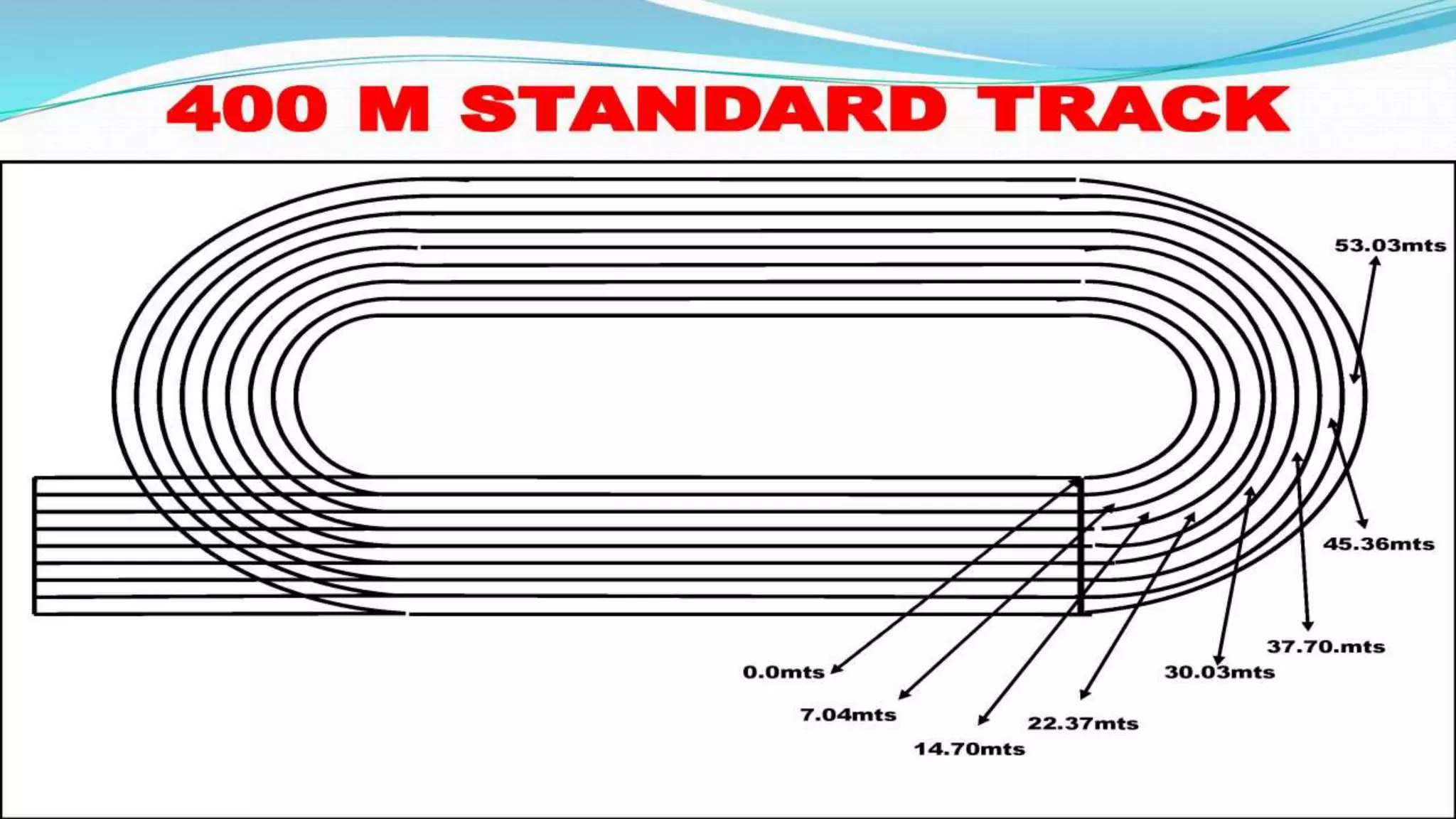
Generally, lanes 3, 4, 5, and 6 are preferred because the curves are less tight than in lanes 1 and 2, and the athlete can see their competitors. Lane 8 has the gentlest curve but is difficult because the runner has no visual feedback. Wayde van Niekerk’s world record from lane 8 is considered a statistical anomaly.
Can a 100m sprinter successfully run the 400m?
It is rare. A pure 100m specialist often lacks the aerobic capacity to survive the final 100m of a 400m race. Conversely, 400m runners often find success in the 200m, as the two events share similar speed-endurance requirements.
Is the 400m harder than the 800m?
This is a subjective debate. The 800m is often called the "most painful" due to the extended duration of lactic acid exposure, but the 400m is considered "more intense" because it is run at nearly 100% of maximum effort from start to finish.
Moving Forward: The Quest for the 42-Second Barrier
As we move through 2026, the question in the athletics community is no longer if the world record will be challenged, but when. With advancements in biomechanical analysis and the optimization of carbon-fiber footwear, the physical limits of the 400-meter sprint are being redefined.
For aspiring athletes, the lesson of the fastest times in history is clear: success in the 400m is not just about raw speed; it is about the technical mastery of the first 200 meters and the mental fortitude to endure the final 100. Whether you are aiming for a sub-60-second club time or eyeing a professional career, focusing on speed reserve and mechanics under fatigue is the key to unlocking your fastest 400m performance.