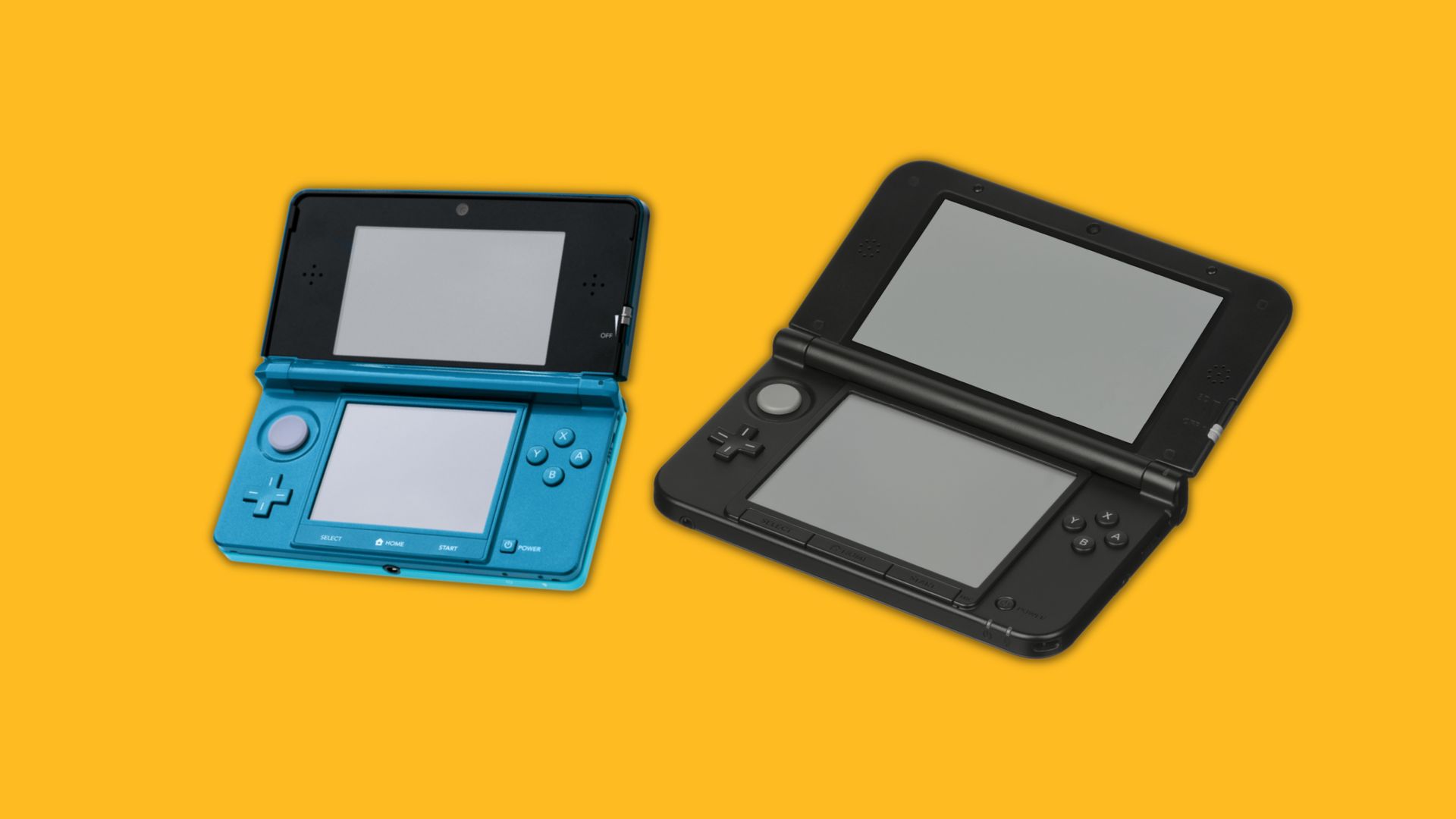
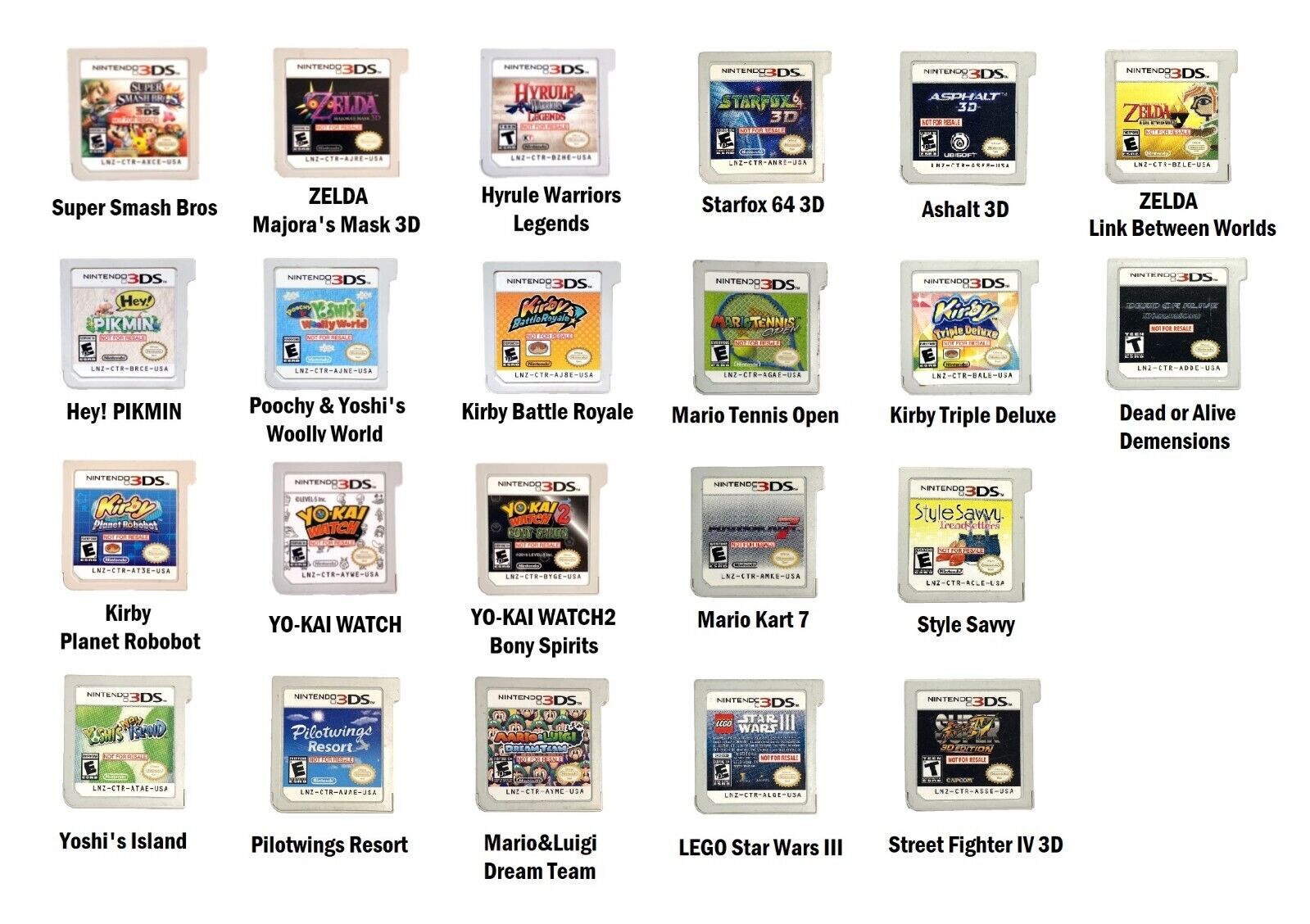
As of 2026, the Nintendo 3DS stands as a cornerstone of handheld gaming history. The three highest-rated games for the platform—The Legend of Zelda: Ocarina of Time 3D, Fire Emblem Awakening, and The Legend of Zelda: A Link Between Worlds—represent the pinnacle of design, leveraging the system's unique stereoscopic 3D and dual-screen interface to deliver experiences that remain benchmarks for the industry.
The Nintendo 3DS era (2011–2020) was a transformative period for portable entertainment. While the hardware faced an uphill battle at launch, it eventually curated a library that rivaled its predecessor, the Nintendo DS, in both quality and variety. In 2026, following the closure of the 3DS eShop in March 2023, these titles have transitioned from contemporary hits to essential physical collectibles. Understanding why these three games achieved such critical acclaim requires an analysis of their technical execution, gameplay innovations, and how they solved the unique challenges of the autostereoscopic hardware.
The Landscape of 3DS Gaming in 2026
To appreciate these high-rated titles, one must understand the technical environment of the 3DS. The system utilized a PICA200 graphics processor and featured a top screen resolution of 800x240 pixels (400x240 per eye in 3D mode). By 2026 standards, these specifications are modest, yet the artistry found in top-tier 3DS titles continues to hold up due to strong art direction and clever use of the hardware’s depth perception capabilities.
Accessing these games today primarily involves the second-hand physical market. Since the digital storefront is no longer active for new purchases, collectors and enthusiasts focus on "Nintendo Selects" prints or original black-label cartridges. For players maintaining original hardware, battery preservation and screen calibration have become the primary technical hurdles to enjoying these classics in their native format.
1. The Legend of Zelda: Ocarina of Time 3D
Metacritic Score: 94
Originally released in 2011, The Legend of Zelda: Ocarina of Time 3D is more than a simple port; it is a meticulous restoration of what many consider the greatest video game of all time. Developed by Grezzo in collaboration with Nintendo, this title set the standard for how to modernize a classic without losing its soul.
Technical Enhancements and 3D Integration
The 3DS version addressed the primary technical limitations of the 1998 Nintendo 64 original. Most notably, the frame rate was increased from a cinematic but sometimes sluggish 20 frames per second (FPS) to a stable 30 FPS. While 60 FPS is the modern standard in 2026, the jump to 30 FPS on the 3DS provided a significant improvement in input latency and visual clarity.
The stereoscopic 3D effect was used to provide a genuine sense of scale within Hyrule Field and the various dungeons. By utilizing the 3DS’s depth slider, players could perceive the distance between Link and distant landmarks like Death Mountain, making the world feel more expansive than the hardware’s small screen would normally allow.
Quality of Life Improvements
The dual-screen layout solved one of the original game's most persistent "pain points": the Water Temple.
- Touchscreen Inventory: Players could swap items, including the Iron Boots, with a single tap rather than pausing the game. This turned a tedious navigation process into a fluid mechanical loop.
- Gyroscope Aiming: The 3DS’s internal sensors allowed for "look-around" aiming with the Slingshot and Fairy Bow. In 2026, this remains one of the most intuitive ways to play the game, offering precision that an analog stick alone cannot match.
- Master Quest: Included as an unlockable, this high-difficulty mode featured mirrored environments and redesigned dungeon puzzles, providing immense value for returning veterans.
2. Fire Emblem Awakening
Metacritic Score: 92
Released globally in 2013, Fire Emblem Awakening is credited with single-handedly saving the Fire Emblem franchise. Prior to its release, the series faced declining sales; Awakening responded by refining its core strategy mechanics while introducing features that broadened its appeal to a massive audience.
The Support System and Narrative Depth
The defining feature of Awakening is its "Support" system, which allows units to build relationships on the battlefield. When two characters fight adjacent to one another, they gain stat bonuses. Eventually, these characters can marry and have children, who then become playable units with inherited stats and skills.
This mechanic created a deep emotional investment in the characters. In a genre often criticized for being cold and mathematical, Awakening made every death feel personal. This was further emphasized by "Classic Mode," where fallen units are gone forever (permadeath), a staple of the series that Awakening balanced by introducing "Casual Mode" for newcomers.
Strategic Complexity
Underneath its character-driven narrative lies a rigorous tactical engine. The game introduced the "Pair Up" mechanic, allowing two units to occupy a single tile. This added a new layer of strategy:
- Defense vs. Offense: Do you pair units to boost the stats of a single powerhouse, or keep them separate to cover more ground?
- Skill Customization: With an extensive class-change system (using Master Seals and Second Seals), players could "grind" characters to learn specific skills, creating "super-units" capable of tackling the game’s brutal Lunatic+ difficulty.
In 2026, Fire Emblem Awakening is still cited by game designers as a masterclass in "difficulty scaling," providing a welcoming entry point for beginners while maintaining a ceiling high enough for the most hardcore strategy enthusiasts.
3. The Legend of Zelda: A Link Between Worlds
Metacritic Score: 91
Released in late 2013, A Link Between Worlds serves as a spiritual successor to the 1991 SNES classic A Link to the Past. It is frequently cited as one of the most innovative entries in the Zelda series because of how it challenged the "Zelda Formula" that had existed for decades.
Breaking the Linear Progression
For years, Zelda games followed a strict "Item A opens Dungeon B" progression. A Link Between Worlds introduced the Item Rental System. Early in the game, a character named Ravio sets up shop in Link's house, allowing players to rent or buy classic items like the Hookshot, Hammer, and Fire Rod in any order.
This change allowed the world of Hyrule (and its dark counterpart, Lorule) to be truly open. Players could tackle the main dungeons in almost any order they chose. This philosophy of player freedom directly paved the way for the open-air design of Breath of the Wild and Tears of the Kingdom.
The Wall Merging Mechanic
The game's standout technical and gameplay feature was the ability for Link to become a 2D painting and move along walls. This mechanic transformed how players viewed the environment:
- Perspective Shifts: Puzzles often required moving "around" corners or through cracks in walls to reach hidden areas.
- 3D Utilization: While many 3DS games treated 3D as a gimmick, A Link Between Worlds used it for verticality. Dungeons were designed with multiple floors visible at once, and the 3D effect helped players judge the distance of falling objects or the height of platforms.
Technical Comparison of Top-Rated 3DS Titles
The following table compares the key attributes of these three legendary titles to help players and collectors understand their technical footprints.
| Feature | Ocarina of Time 3D | Fire Emblem Awakening | A Link Between Worlds |
|---|---|---|---|
| Release Year | 2011 | 2013 | 2013 |
| Genre | Action-Adventure | Tactical RPG | Action-Adventure |
| Developer | Grezzo / Nintendo | Intelligent Systems | Nintendo EPD |
| 3D Usage | Atmospheric Depth | Battle Scene Layering | Vertical Puzzle Solving |
| Frame Rate | 30 FPS | 60 FPS (UI) / 30 FPS (Battle) | 60 FPS (Overworld/Dungeon) |
| Storage Size | ~460 MB (3,600 Blocks) | ~1.1 GB (8,500 Blocks) | ~685 MB (5,400 Blocks) |
| Primary Innovation | Gyro-aiming & UI cleanup | Support/Marriage System | Non-linear Item Rental |
Maintenance and Playability in 2026
If you are looking to play these high-rated games on original hardware in 2026, there are several technical considerations to ensure the best experience.
Battery Health and Replacement
The original Nintendo 3DS and 3DS XL models use lithium-ion batteries that are now over a decade old. In 2026, "battery bloat" is a common issue. Owners should inspect their systems for any bulging of the back plate. Fortunately, the 3DS was designed with user-replaceable batteries. Using a standard #00 Phillips screwdriver, you can swap out an old CTR-003 or SPR-003 battery for a fresh cell to ensure safety and longevity.
Screen Calibration and "Ghosting"
The autostereoscopic 3D technology (parallax barrier) can sometimes fall out of alignment or cause "ghosting" (double images). On the "New" Nintendo 3DS models, the "Super-Stable 3D" feature uses the front-facing camera to track your eyes. If the 3D effect feels off, re-run the 3D Calibration tool in the System Settings. This is particularly important for A Link Between Worlds, where depth perception is a core gameplay mechanic.
Physical Cartridge Care
3DS game cards are generally robust, but the copper contacts can oxidize over time. If a game fails to boot, a gentle cleaning of the contacts with 90% isopropyl alcohol on a cotton swab is usually sufficient. Avoid "blowing" into the cartridge slot, as moisture can accelerate corrosion over the long term.
Frequently Asked Questions
Can I still download these games from the eShop in 2026?
No. Nintendo officially closed the 3DS eShop for new purchases in March 2023. While you can still re-download games you previously owned, new users must purchase physical cartridges from secondary markets like eBay or local retro gaming stores.
Do these games play better on the "New" Nintendo 3DS?
Yes. While all three games are compatible with every model in the 3DS family (including the 2DS), the "New" Nintendo 3DS and "New" Nintendo 2DS XL offer faster processing speeds and "Super-Stable 3D." In The Legend of Zelda: Ocarina of Time 3D, the C-Stick on the "New" models can be used for camera control, though the game was originally designed without it.
Is the 3D effect necessary to enjoy these games?
While the 3D effect is a defining feature of the era, it is not required. Fire Emblem Awakening and Ocarina of Time 3D play perfectly well in 2D. However, A Link Between Worlds utilizes the 3D effect to help the player understand floor heights in dungeons. If you are playing on a 2DS, the game provides visual cues (like shadows and varying object sizes) to compensate for the lack of depth.
Why are these specifically the "highest rated"?
These titles consistently hold the highest aggregate scores on review platforms because they successfully married Nintendo's traditional design philosophy with the specific technical capabilities of the handheld. They weren't just "good games"; they were games that felt impossible to play on any other system at the time.
Are there regional differences I should worry about?
The Nintendo 3DS is region-locked. This means a North American console can only play North American cartridges. If you are a collector in 2026, ensure the region of the game matches your hardware (e.g., NTSC-U for North America, PAL for Europe, NTSC-J for Japan).
Final Recommendation for New Players
If you are just beginning your journey into the 3DS library in 2026, start with The Legend of Zelda: A Link Between Worlds. Of the three highest-rated games, it feels the most "modern" due to its 60 FPS performance and non-linear structure. It serves as a perfect bridge between the classic era of gaming and the modern open-world era. Once you have mastered its mechanics, move on to Fire Emblem Awakening for a deeper narrative experience, and finish with Ocarina of Time 3D to see the definitive version of a historical masterpiece.